The fight over media access and government transparency has intensified as the Trump administration faces a growing legal battle with major news organizations over access to the White House.
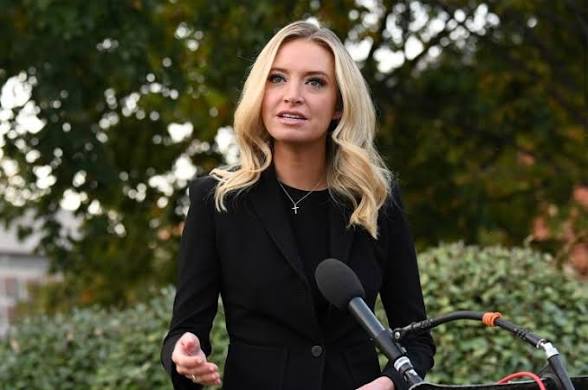
Kayleigh McEnany, a former White House press secretary and current Fox News host, has repeatedly made transparency and media access central themes in her political commentary. Her past criticism of restrictions on journalists shows why the current dispute has particular significance.
The latest controversy comes as CNN, MS NOW and Politico challenge the administration’s decision to restrict their access to the White House. The news organizations argue that the restrictions violate constitutional protections for the press. The administration, however, maintains that access to the White House is a privilege rather than an automatic right.
The dispute has created a larger question for Americans: How much access should journalists have to the government they are responsible for covering?
Kayleigh McEnany and the fight for transparency

Kayleigh McEnany has experience on both sides of the media divide.
Before becoming a Fox News commentator, she served as White House press secretary during Donald Trump’s first administration. She later joined Fox News and became a prominent television commentator.
Fox News currently lists McEnany as a co-host of Outnumbered and host of Saturday in America.
That background gives her commentary on government-media relations added weight. She has previously criticized administrations when she believed journalists were being denied meaningful access.
In 2021, for example, McEnany criticized the Biden administration over restrictions on press access to migrant holding facilities. She argued that journalists needed access to see conditions for themselves rather than relying exclusively on official statements. Fox News reported that she described the situation as an “unprecedented” approach to limiting press access.
That earlier argument is relevant to today’s controversy.
The principle is straightforward: official statements should not become the only source of information about government actions.
The current White House media-access battle
The latest confrontation escalated in September 2026 when President Donald Trump announced restrictions affecting CNN, MS NOW and Politico.
Reuters reported that Trump announced the ban on September 18, accusing the organizations of publishing what he called “FAKE NEWS.” The affected organizations challenged the decision, while press-freedom advocates raised serious First Amendment concerns.
The dispute quickly moved into federal court.
A temporary restraining order subsequently restored access for the affected outlets. According to The Associated Press, that order is scheduled to expire on October 8, 2026. The news organizations are seeking a preliminary injunction that would preserve their access while the broader legal case continues.
The legal battle matters because White House access is not simply about where reporters can stand.
It also affects how quickly independent journalists can question officials, observe events, verify statements and report directly to the public.
Why the information blackout argument is gaining attention
The phrase “information blackout” is powerful, but it should be used carefully.
A government does not necessarily create a complete information blackout simply because it restricts some reporters. Government officials can still issue statements, hold briefings and communicate through other outlets.
However, restricted access can create an information gap.
That distinction is important.
If reporters cannot independently observe an event, interview officials or participate in established press pools, the public may have fewer opportunities to hear questions that officials would otherwise face.
That is one reason the current fight has attracted national attention.
The Associated Press reported that the dispute has also affected the White House television pool. The pool traditionally allows participating networks to share coverage of presidential events and distribute information to other broadcasters.
When one network is excluded from that system, the other networks face a difficult decision.
Should they continue covering the president normally?
Or should they limit participation in protest?
That question has already produced unusual cooperation among competing networks.
Fox News and other networks push back
The controversy has not been limited to the organizations directly affected by the White House restrictions.
Fox News Media joined ABC News, CBS News, CNN and NBC News in a joint statement on September 21.
The networks said the public has a vital interest in receiving accurate and independent information about the government. They also argued that administrations should not restrict a news organization because they dislike its reporting.
That statement is significant because the networks do not always agree politically or editorially.
Yet access to the presidency creates a shared institutional interest.
If one outlet can be excluded because government officials dislike its coverage, other organizations may eventually face similar pressure.
That is the broader concern behind the current dispute.
McEnany’s history makes the debate more complicated
McEnany’s position is especially interesting because she previously defended the Trump administration while serving as its press secretary.
Now, as a television host, she is part of a media organization covering the administration.
That creates a unique perspective.
She understands how the White House controls information.
She also understands the pressures journalists face when trying to obtain answers from government officials.
Her previous criticism of restrictions on border coverage demonstrates that her broader argument about access did not begin with the current controversy.
In 2021, she argued that journalists should be able to see conditions at the border rather than depend only on official descriptions.
That same principle can be applied more broadly.
Transparency requires verification.
And verification often requires access.
The White House argues access is a privilege
The administration has presented a different argument.
According to the AP, officials have maintained that access to the White House is a privilege rather than an unrestricted right. Attorney General Todd Blanche reiterated that position publicly.
That creates the central legal and political disagreement.
The White House says it can determine who receives access to its facilities.
The news organizations argue that presidential access involves a public function and therefore cannot be restricted simply because officials object to unfavorable coverage.
The courts will ultimately have to consider the constitutional questions.
For now, however, the dispute continues.
First Amendment questions dominate the controversy
The First Amendment protects freedom of the press.
That does not mean every journalist has an unlimited right to enter every government building.
Presidential residences and secure facilities have legitimate security requirements. Officials can also establish rules governing press credentials, pool rotations and physical access.
The difficult question is whether those rules are being applied neutrally.
If access decisions are based on security, logistics or legitimate operational concerns, the government has a stronger argument.
If access is denied because officials dislike a particular organization’s reporting, the constitutional issues become much more serious.
That is why the current lawsuit is attracting attention beyond the immediate dispute.
Why independent reporting still matters
Modern audiences can receive information from countless sources.
Government websites publish statements.
Officials post directly on social media.
Presidential administrations distribute videos and photographs.
Political organizations issue press releases.
But none of those sources completely replaces independent journalism.
Journalists can ask follow-up questions.
They can challenge inconsistencies.
They can compare statements with documents.
They can interview people outside government.
They can investigate claims that officials would prefer to remain unexamined.
That is why press access remains an important part of democratic accountability.
The danger of relying on official statements alone
A government naturally presents its policies in the most favorable way.
That does not automatically mean officials are lying.
It means the public benefits from independent scrutiny.
Consider a major policy announcement.
An administration might describe a program as successful.
Independent journalists may then investigate whether the numbers support that claim.
They might speak with affected residents.
They could examine government records.
They may discover information that was absent from the original announcement.
That process is not necessarily hostile to government.
It is one of the basic functions of journalism.
The White House press pool dispute
The television pool has become one of the most visible flashpoints.
According to the AP, the traditional broadcast pool includes CNN, ABC, CBS, NBC and Fox News. When CNN was excluded from a pool assignment, the other networks faced a choice about whether to continue participating.
That situation demonstrates how interconnected modern presidential coverage has become.
One network may physically cover an event while others rely on the shared pool.
If the government prevents the designated network from participating, the system can break down.
The consequences may extend beyond one company.
They can affect every viewer who relies on television coverage of the president.
What McEnany’s transparency argument means
The strongest version of the transparency argument is not that every government decision must be broadcast live.
It is that the public should have meaningful opportunities to independently evaluate what officials say.
That requires access.
It requires records.
It requires questions.
It requires journalists who are willing to challenge both political parties.
McEnany’s earlier criticism of restrictions on border access fits into that broader framework. Her argument at the time was that pictures and direct reporting could reveal realities that differed from official descriptions.
The same logic applies to White House coverage.
When journalists have access, they can independently report what they see.
When access is restricted, the public may have to depend more heavily on official accounts.
Is this really a media cover-up?
That depends on what is meant by “cover-up.”
There is currently no verified evidence establishing a coordinated secret media cover-up involving McEnany or proving that the White House has concealed a specific undisclosed event.
The documented controversy is instead about media access, press restrictions and government transparency.
That distinction matters.
Strong headlines can attract attention, but accurate reporting requires separating verified facts from political interpretation.
The current evidence clearly establishes a serious dispute over White House press access. News organizations have taken legal action, courts have intervened temporarily, and the administration continues to defend its position.
Those facts alone make the controversy significant.
The legal battle could have lasting consequences
The court fight could establish an important precedent for future administrations.
If the White House wins broad authority to restrict media organizations based on disputes over reporting, future presidents could potentially use similar arguments.
If the news organizations prevail, the ruling could strengthen protections against viewpoint-based restrictions on presidential press access.
Either outcome could influence the relationship between the executive branch and journalists for years.
The October 8 expiration date for the current temporary restraining order is therefore an important milestone in the dispute.
Transparency versus control
At the heart of the controversy is a familiar conflict.
Governments want to control how information is released.
Journalists want to control how that information is independently investigated.
Neither side can completely eliminate the other.
A government needs communications systems.
A free press needs access.
The democratic challenge is finding rules that protect security and orderly operations without allowing political retaliation.
That balance becomes even more important during periods of intense political polarization.
Why the public should pay attention
The controversy may look like an argument between television networks and the White House.
It is bigger than that.
The public ultimately pays the price when reliable information becomes harder to obtain.
Americans need to know what their government is doing.
They also need to know whether government statements survive independent scrutiny.
That is why the question of press access matters even to people who dislike CNN, support Trump, favor Fox News or prefer another political viewpoint.
Press freedom is not designed only to protect journalists.
It protects the public’s ability to receive information from competing sources.
What happens next?
The immediate focus will remain on the federal court proceedings.
CNN, MS NOW and Politico are seeking continued protection against the White House access restrictions. The administration continues to argue that it has authority over access to its facilities.
Meanwhile, the broader media industry is watching closely.
The joint statement from Fox News Media, ABC News, CBS News, CNN and NBC News demonstrates that the major networks recognize the larger implications of the dispute.
For McEnany, the issue also reflects a recurring question in her political career: how should journalists cover government power when officials and media organizations sharply disagree?
Her history on both sides of the press briefing room gives her an unusual perspective on that debate.
Final thoughts
The current media-access fight is not simply about one network or one administration.
It is about the boundaries between presidential power, press freedom and public accountability.
Kayleigh McEnany’s previous criticism of limited media access shows why transparency remains an important issue in political journalism. Her earlier arguments focused on the need for journalists to see events firsthand rather than rely exclusively on official statements.
Today, a similar question surrounds White House access.
Can journalists independently observe and question the government?
Can officials restrict reporters because of disagreements over coverage?
And where should courts draw the line?
Those questions remain unresolved.
What is clear is that the battle over access has become a major test of the relationship between the White House and the American press.
For the public, the most important demand is simple: accurate information, meaningful access and full transparency wherever possible.
FAQs
Who is Kayleigh McEnany?
Kayleigh McEnany is a Fox News television host and political commentator who previously served as White House press secretary during Donald Trump’s first administration. Fox News currently lists her as a co-host of Outnumbered and host of Saturday in America.
Why is Kayleigh McEnany associated with the transparency debate?
McEnany has previously criticized restrictions on journalists’ access to government facilities. In 2021, she argued that limited press access to migrant facilities prevented journalists from independently seeing conditions on the ground.
What is the current White House media-access controversy?
The controversy concerns restrictions placed on CNN, MS NOW and Politico by the Trump administration. The affected organizations have challenged the restrictions in federal court and argued that they violate press freedoms.
What did the court do about the media restrictions?
A federal judge issued a temporary restraining order restoring access to the affected news organizations. The order is currently scheduled to expire on October 8, 2026, while the legal dispute continues.
Did Fox News oppose the White House media restrictions?
Fox News Media joined ABC News, CBS News, CNN and NBC News in a September 21 joint statement saying the public has a vital interest in accurate and independent information and that news organizations should not be restricted because officials object to their reporting.
Does press freedom give journalists unlimited White House access?
No. Governments can impose legitimate security and operational rules. The major legal question is whether access restrictions are being imposed for legitimate reasons or because officials object to particular reporting.
Is there proof of a coordinated media cover-up?
There is no verified evidence in the sources reviewed establishing a coordinated secret media cover-up involving McEnany. The documented issue is a major dispute over media access, transparency and press freedom.
Why does White House press access matter?
Press access allows journalists to ask questions, observe events, verify official statements and provide independent reporting. Restrictions can reduce the public’s ability to receive information from sources outside the government.
What happens next in the White House media case?
The affected news organizations are seeking continued protection from the access restrictions while their lawsuit proceeds. The expiration of the current temporary restraining order on October 8 is an important upcoming date in the case.
Why is the controversy important for Americans?
The dispute could influence how future administrations interact with the press. The outcome may affect the balance between government control over physical access and the public’s interest in independent reporting.
About the Author