Former U.S. Secretary of State Mike Pompeo has sharply criticized political streamer Hasan Piker, calling his commentary “reprehensible” in a recent television appearance. The exchange has drawn renewed attention to the growing role of online political personalities and the increasingly heated debate over how controversial statements about U.S. foreign policy, terrorism and historical political figures should be interpreted.
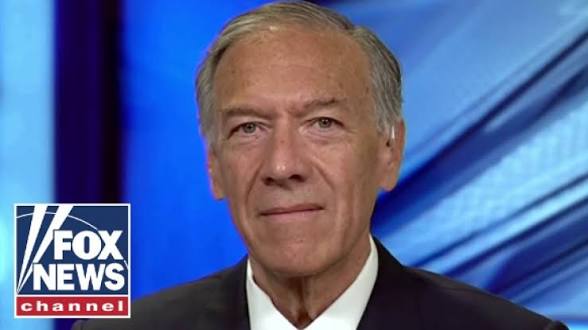
Pompeo’s comments came during a discussion of remarks attributed to Piker concerning the United States, al-Qaeda and former Chinese Communist leader Mao Zedong. Fox News also published a September 18, 2026, segment in which Pompeo criticized Piker over his praise of Mao Zedong, describing the reaction as “nutso.”
The latest confrontation highlights a broader divide in American political commentary. Pompeo comes from a traditional Republican national-security background, having served as CIA director and secretary of state. Piker, meanwhile, has built a large online audience through livestreamed political commentary from a left-wing perspective.
Mike Pompeo Criticizes Hasan Piker

The latest controversy centers on comments by Mike Pompeo about Hasan Piker’s political commentary.
A video published September 20, 2026, describes Pompeo as criticizing Piker over comments comparing the United States with al-Qaeda. The video headline says Pompeo “decries” Piker as “reprehensible.”
The dispute is significant because Pompeo’s criticism comes from a former senior national-security official. Pompeo served as director of the Central Intelligence Agency before becoming the 70th U.S. secretary of state. Columbia University’s Institute of Global Politics identifies him as having served four terms in Congress, as CIA director and as secretary of state.
Pompeo’s career has included extensive involvement in U.S. foreign policy and national-security issues. That background helps explain why comments involving terrorism, U.S. military policy and America’s international role have particular significance when he responds publicly.
At the same time, Piker’s role is fundamentally different. He is a political commentator and livestreamer rather than a government official or traditional journalist.
That difference is central to understanding the dispute.
Who Is Hasan Piker?
Hasan Piker, also known online as HasanAbi, is a political commentator and livestreamer known for discussing U.S. politics, international affairs and social issues.
Piker developed his audience through Twitch and other digital platforms. His style combines political analysis, reactions to current events and extended livestream discussions. His large online following has made him an influential voice among younger audiences interested in left-wing politics.
Piker has frequently criticized U.S. foreign policy and has expressed support for progressive and socialist policies. His political commentary has also generated controversy over statements concerning terrorism, Israel and Palestine, China and other international issues.
That history helps explain why his comments can attract responses from politicians and former government officials.
His public profile has also expanded beyond conventional online streaming. Piker has appeared at political events and has interacted with Democratic politicians and candidates. His involvement in electoral politics has consequently made his past statements more relevant to mainstream political debates.
Why Mao Zedong Became Part of the Debate
One of the issues highlighted in the recent Pompeo-Piker dispute involves Mao Zedong.
Fox News published a September 18 segment titled “Mike Pompeo blasts Hasan Piker’s praise of Mao Zedong as ‘nutso.’” The segment specifically focused on Piker’s comments about the former Chinese Communist leader.
Mao remains one of the most controversial political figures of the 20th century. His rule over China was associated with enormous political and social upheaval, including policies connected to the Great Leap Forward and the Cultural Revolution.
Because of that history, positive or sympathetic comments about Mao frequently generate strong reactions from political opponents.
Pompeo’s criticism therefore reflects a larger ideological dispute over how historical communist governments should be assessed.
Piker’s supporters can interpret discussions of Mao through the lens of China’s economic and social development, while critics focus on political repression, mass deaths and the human consequences of Mao-era policies.
These competing interpretations often produce sharply different conclusions about what constitutes legitimate historical analysis and what crosses the line into praise.
The Broader Dispute Over U.S. Foreign Policy
The Pompeo-Piker disagreement is not limited to Mao.
The recent video also references Piker’s comparison of the United States with al-Qaeda.
Comparisons between U.S. foreign policy and militant organizations are particularly contentious because they raise questions about moral equivalence, terrorism and the historical consequences of American military intervention.
Piker has frequently criticized U.S. foreign policy from a left-wing perspective. His broader commentary has questioned American military interventions and the country’s role in international conflicts.
Critics argue that such comparisons can minimize the ideological and operational differences between the United States and terrorist organizations.
Supporters of Piker’s approach, however, may view provocative comparisons as part of a broader argument about the consequences of American foreign policy.
The distinction matters because criticism of government policy is a normal part of political debate, while comparisons involving terrorist organizations can carry very different implications depending on the context and wording.
Pompeo’s National-Security Background
Mike Pompeo’s reaction also reflects his long career in national security.
According to Columbia University’s Institute of Global Politics, Pompeo graduated from the U.S. Military Academy at West Point, served as a U.S. Army cavalry officer and later attended Harvard Law School. He subsequently entered business and politics before serving in Congress.
President Donald Trump appointed Pompeo as CIA director in 2017. He later became secretary of state in 2018. During his tenure, Pompeo played a prominent role in U.S. foreign-policy debates involving Iran, China, North Korea, Israel and other international issues.
His background means that his criticism of political commentary is likely to receive attention beyond the immediate online dispute.
For Pompeo, questions involving terrorism and America’s international role are connected to issues he addressed professionally while in government.
For Piker, those same subjects are part of a broader political commentary platform.
Hasan Piker’s History of Controversial Remarks
The current dispute follows several previous controversies involving Piker.
One of the most widely discussed incidents dates to 2019, when Piker made a comment about the September 11 attacks. Piker later characterized the wording as inappropriate and said he was attempting to make an argument about U.S. foreign policy rather than endorse the attacks.
The issue resurfaced during the 2025 New York City mayoral campaign because Piker had a public relationship with then-candidate Zohran Mamdani.
During that campaign, Mamdani said he considered Piker’s 9/11 comments “objectionable and reprehensible,” while maintaining that he could still engage with Piker.
That episode demonstrated how comments made by online personalities can become political issues for candidates and elected officials who interact with them.
The controversy also illustrates an important distinction between endorsing someone’s political arguments and appearing with or communicating with them.
Piker and the Rise of Online Political Commentary
The Pompeo-Piker dispute also reflects a significant change in how Americans consume political information.
Traditional political commentary once centered heavily on newspapers, television networks, radio programs and established political organizations.
Platforms such as Twitch, YouTube and other social-media services have created a different environment.
Political streamers can speak directly to audiences for hours at a time. They can react immediately to breaking news, discuss clips from television programs and interact with viewers in real time.
This format has several advantages for creators. It allows them to build strong relationships with audiences and develop distinctive political identities.
However, it also creates challenges.
Livestream commentary often moves quickly. Statements can be made spontaneously and later circulated as short clips without the surrounding discussion.
That can make context especially important when evaluating controversial remarks.
Why the Dispute Matters Beyond Pompeo and Piker
The disagreement between Pompeo and Piker represents a broader debate about political speech in the digital age.
Traditional political figures increasingly encounter commentators who do not operate within conventional media structures.
Piker’s audience is built around livestreaming and social media rather than elected office or traditional broadcasting.
Pompeo, by contrast, represents a political establishment with direct experience in government and national security.
The clash between those two worlds can produce dramatically different approaches to political communication.
Government officials tend to frame foreign-policy questions around national security, alliances and state interests.
Online political commentators may place greater emphasis on ideology, historical context, civilian consequences and criticism of government institutions.
Neither perspective automatically resolves the underlying factual questions. Those questions require evidence and attention to context.
The Role of Historical Context
The Mao portion of the controversy demonstrates why historical context matters.
Mao Zedong’s legacy includes major transformations in Chinese society and government, but also catastrophic policies and political campaigns.
Any modern discussion of Mao therefore needs to distinguish between acknowledging China’s historical transformation and endorsing the policies or political system associated with his rule.
Similarly, discussions of U.S. foreign policy require distinctions between individual military decisions, broader strategic policies and the actions of terrorist organizations.
Political debates become especially difficult when complex histories are reduced to short clips or provocative statements.
That is one reason controversies involving online personalities can continue long after the original comments were made.
The Media’s Role in the Controversy
Media coverage is another important part of the story.
Fox News has prominently covered Pompeo’s criticism of Piker, including a segment focused on Piker’s comments about Mao.
Fox News and other media organizations often present political controversies through short clips designed for television and social media audiences.
That format can increase the visibility of a dispute while leaving viewers with less of the original context.
For audiences attempting to understand the controversy, the most useful approach is to distinguish between:
- What Piker actually said.
- What context surrounded the statement.
- What Pompeo said in response.
- How other political figures interpreted the remarks.
- Whether either side provided additional evidence for its interpretation.
Those distinctions can help separate documented statements from political commentary about those statements.
The Growing Influence of Political Streamers
The controversy also demonstrates how political streamers have become part of America’s broader political conversation.
Piker has developed an audience numbering in the millions across digital platforms. His influence has extended into electoral politics, including appearances and relationships involving Democratic political figures.
That influence creates both opportunities and challenges.
Political campaigns can reach younger voters through online personalities who have established relationships with their audiences.
At the same time, candidates can face questions about controversial remarks made by people they appear alongside.
This dynamic is likely to remain important as political communication continues moving toward livestreaming, podcasts and social platforms.
What Comes Next for the Debate?
The immediate Pompeo-Piker dispute may continue through additional television appearances, social-media posts and online reactions.
However, the larger issue is unlikely to disappear.
American political debate is increasingly shaped by people who operate outside traditional institutions. Former officials such as Pompeo can use established media platforms to challenge online commentators, while streamers such as Piker can respond directly to millions of followers.
That creates a political environment in which disagreements can develop rapidly.
It also makes context increasingly important.
Rather than relying solely on headlines or isolated clips, audiences can examine the complete statements and the historical events being discussed.
A Larger Debate Over Political Speech
At its core, the Pompeo-Piker dispute raises questions about the boundaries of political commentary.
Political speech can be provocative, particularly when commentators challenge established narratives about America’s foreign policy or historical events.
At the same time, public figures face scrutiny when their comments concern terrorism, authoritarian governments or mass violence.
Pompeo’s description of Piker as “reprehensible” is his characterization of the commentator’s remarks. The underlying dispute depends on how viewers interpret Piker’s words and the context surrounding them.
That distinction is important in a politically polarized environment.
A headline can summarize a confrontation, but it cannot by itself settle the historical or policy questions behind it.
Conclusion
Mike Pompeo’s criticism of Hasan Piker has brought renewed attention to the increasingly visible conflict between traditional national-security politics and online progressive commentary.
The former secretary of state has strongly objected to Piker’s remarks concerning the United States, al-Qaeda and Mao Zedong. Recent Fox News coverage specifically highlighted Pompeo’s criticism of Piker’s comments about Mao, while another video focused on Pompeo describing Piker as “reprehensible.”
The dispute is part of a wider trend in which political streamers have become influential participants in American political discussion.
Piker’s large digital audience gives his commentary significant reach, while Pompeo’s background in Congress, the CIA and the State Department gives his responses particular national-security context.
Ultimately, understanding the controversy requires separating documented remarks from the political interpretations placed upon them. It also requires attention to historical context, especially when discussions involve terrorism, authoritarian governments and U.S. foreign policy.
As online political commentary continues to expand, similar clashes between established political figures and digital influencers are likely to remain a prominent feature of the American media landscape.
FAQs
Who is Mike Pompeo?
Mike Pompeo is a former U.S. secretary of state and former CIA director. He also served in Congress representing Kansas. Columbia University’s Institute of Global Politics identifies him as the 70th secretary of state and a former CIA director.
Who is Hasan Piker?
Hasan Piker, also known as HasanAbi, is a political commentator and livestreamer known for left-wing political commentary on Twitch and other digital platforms.
Why did Mike Pompeo criticize Hasan Piker?
Recent coverage shows Pompeo criticizing Piker over comments concerning the United States, al-Qaeda and Mao Zedong. One recent video describes Pompeo calling Piker “reprehensible,” while Fox News separately covered Pompeo’s criticism of Piker’s comments about Mao.
What did Pompeo say about Mao Zedong?
Fox News reported on September 18, 2026, that Pompeo criticized Piker’s praise of Mao Zedong and described the comments as “nutso.”
Why is Hasan Piker controversial?
Piker has attracted controversy because of provocative comments and his positions on U.S. foreign policy, Israel and Palestine, China, terrorism and domestic politics. Some of his past remarks have also become subjects of criticism from politicians across the political spectrum.
Has Hasan Piker commented on U.S. foreign policy?
Yes. Criticism of U.S. foreign policy is a recurring part of Piker’s political commentary. He has frequently discussed American military interventions and the country’s role in international affairs.
Why do political streamers matter?
Political streamers can reach large audiences directly through platforms such as Twitch and YouTube. Their ability to provide long-form, real-time commentary has made them increasingly visible in political discussions.
What is the main issue in the Pompeo-Piker dispute?
The immediate disagreement concerns how Piker’s remarks about the United States, al-Qaeda and Mao Zedong should be interpreted. Pompeo has strongly criticized those remarks, while the broader controversy involves competing interpretations of political speech and U.S. foreign policy.
About the Author