HUD Crackdown: Secretary Scott Turner Puts California on Notice Over Homelessness Funding Fraud, Blank Checks Ended
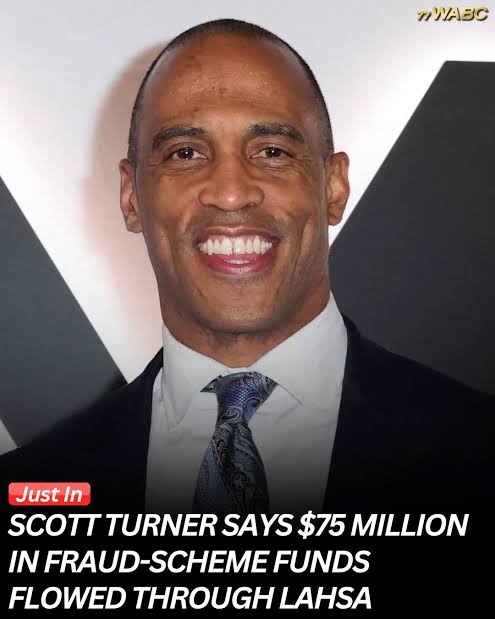
The federal government is intensifying its scrutiny of homelessness funding in California as Housing and Urban Development Secretary Scott Turner steps up criticism of financial oversight in Los Angeles.
The latest developments follow federal criminal charges against people connected to Southern California homelessness nonprofits. Prosecutors allege that millions of dollars intended for homelessness programs were diverted for personal expenses, fraudulent claims and other improper uses.
The developments have also increased pressure on the Los Angeles Homeless Services Authority, or LAHSA, which has been at the center of HUD’s criticism of Los Angeles’ homelessness funding system.
On September 16, federal authorities announced charges involving three people in separate cases connected to alleged misuse of approximately $12 million in public funds. The allegations include wire fraud, bribery, fraudulent grant applications and billing for services that prosecutors say were never provided.
The cases are part of a wider federal investigation into homelessness-related spending in Southern California.
At the same time, Turner has argued that federal money should no longer be distributed without stronger accountability mechanisms. His comments represent a major shift in the federal government’s approach toward Los Angeles’ homelessness funding structure.
Scott Turner Targets Los Angeles Homelessness Funding
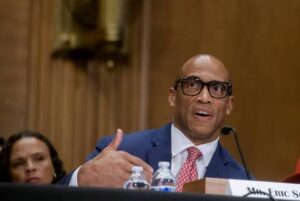
HUD Secretary Scott Turner has made financial accountability a central part of his department’s response to the Los Angeles homelessness crisis.
In June, HUD announced that it had cut off federal funding to LAHSA following findings involving financial controls, documentation and compliance. HUD said its review identified several problems, including false certifications and missing documentation related to housing sites.
HUD also said LAHSA had failed to provide documentation verifying nearly 2,300 housing sites during a 2025 assessment.
Another issue cited by HUD involved conflicts of interest. According to the department, LAHSA’s former CEO and the agency violated federal conflict-of-interest requirements involving more than $2 million in federal funds connected to the CEO’s husband’s employer.
These findings became part of Turner’s argument that the existing system required substantial reform.
The department’s action also placed hundreds of millions of dollars in homelessness-related funding at risk in the Los Angeles area.
What Does the “Blank Checks” Claim Mean?
The phrase “blank checks” has become part of the political debate surrounding federal homelessness funding.
Turner has used the phrase to describe what he considers inadequate federal oversight of money distributed through homelessness programs.
The broader issue is not that federal agencies literally issued unrestricted checks. Instead, the dispute concerns whether funding recipients had adequate controls, documentation, auditing and accountability mechanisms.
That distinction is important.
Federal homelessness programs operate through contracts, grants and intermediary organizations. These organizations then work with nonprofit providers and service agencies.
When oversight systems fail, money can potentially move through multiple layers before reaching the people the programs are designed to serve.
Federal prosecutors’ recent cases have brought that concern into sharper focus.
Federal Prosecutors Announce California Homelessness Fraud Charges
On September 16, federal prosecutors announced cases against Michael Young, Lakiya Malone and Donye Mitchell.
The allegations are separate but involve homelessness-related public funding.
Michael Young, the founder of Home At Last, is accused of using shell companies and fraudulent billing practices to divert millions of dollars.
According to prosecutors, Young allegedly misappropriated more than $7.5 million from publicly funded contracts. Investigators also allege that some of the money was used for personal or unrelated expenses.
Lakiya Malone, an employee of Special Service for Groups, faces allegations involving more than $180,000 in bribes and kickbacks.
Prosecutors say she helped facilitate referrals involving so-called “ghost” participants — people allegedly listed in homelessness programs despite not receiving the services billed to government agencies.
Donye Mitchell, the CEO of Big Blue Umbrella, is accused of fraud involving approximately $1.2 million in public grant funding.
Authorities allege that money was used for personal expenses.
These remain criminal allegations. The defendants are entitled to due process, and charges themselves are not proof of guilt.
The Home At Last Investigation
The case involving Home At Last has attracted particular attention because of the amount of public money prosecutors say was connected to the organization.
According to reporting based on federal allegations, Young’s nonprofit received more than $118 million in public funding for homeless housing since 2019. More than $75 million reportedly came through LAHSA.
Prosecutors allege that Young used shell companies and other arrangements to divert money.
Authorities have specifically described alleged spending on businesses and personal expenses unrelated to providing homelessness services.
The case demonstrates why federal investigators are examining not only individual transactions but also the systems used to approve and monitor contracts.
LAHSA’s Role Under Increasing Scrutiny
LAHSA has played a major role in coordinating homelessness services across Los Angeles.
The agency has also been responsible for administering significant amounts of federal homelessness funding.
That role means the organization has become central to the debate over how homelessness money should be distributed and monitored.
HUD’s June action alleged problems with documentation, certifications and financial controls.
LAHSA has disputed the broader characterization that its current system lacks accountability.
The agency has said it has been improving its financial systems and implementing recommendations designed to strengthen oversight. CBS Los Angeles previously reported that LAHSA said it was working to modernize its financial systems and improve tracking of investments.
LAHSA has also said it cooperated with federal investigators in the criminal cases.
LAHSA Says It Has Taken Corrective Steps
The current controversy does not mean every homelessness provider or every LAHSA-funded program is accused of fraud.
That distinction matters.
The recent criminal cases involve specific individuals and organizations.
LAHSA has said it terminated contracts involving Young’s organization after evidence of wrongdoing emerged. The agency has also said it is working to recover money and cooperate with federal authorities.
The agency has further stated that its current employees were not implicated in the criminal cases announced in September.
Therefore, the federal crackdown should not automatically be interpreted as evidence that all homelessness spending in Los Angeles was fraudulent.
Instead, investigators are examining particular organizations, transactions and oversight failures.
California’s Homelessness Crisis Adds Pressure
The funding dispute is unfolding against the backdrop of California’s longstanding homelessness crisis.
Los Angeles has one of the largest homeless populations in the United States, making the effectiveness of public spending a major policy issue.
The 2026 Greater Los Angeles Homeless Count was released by LAHSA in September. The agency publishes detailed data for Los Angeles County, the City of Los Angeles and individual service-planning areas.
The federal government has argued that significant spending should produce measurable improvements.
Critics of the existing system have questioned whether the level of spending has produced sufficient results.
Supporters of current homelessness programs, however, point to the complexity of the housing crisis, including high housing costs, shortages of affordable units, mental-health needs, substance-use disorders and other barriers.
These competing explanations are part of the broader policy debate.
Why HUD Is Tightening Oversight
The federal government’s position is that taxpayer-funded homelessness programs require stronger controls.
That can include:
- Better financial documentation
- Independent audits
- Verification of service recipients
- Stronger conflict-of-interest rules
- More detailed contract monitoring
- Verification that housing units actually exist
- Tracking of government-funded services
- Stronger consequences for fraudulent claims
HUD’s earlier findings regarding LAHSA included several of these areas.
The objective is to ensure that money approved for homelessness programs reaches eligible people and is spent for authorized purposes.
The “Ghost Participant” Allegations
One of the most significant allegations in the new cases involves so-called ghost participants.
According to prosecutors, Malone allegedly accepted payments in exchange for helping another nonprofit obtain referrals involving people who did not actually receive the claimed services.
If proven, such a system could allow organizations to bill government agencies for services that never occurred.
The allegation illustrates why accurate participant records are important in publicly funded programs.
It also explains why federal investigators are examining the relationship between referrals, service providers, invoices and payments.
However, these allegations concern specific defendants and should not be generalized to every homelessness provider.
The Impact on Future Federal Funding
The dispute could have significant consequences for how federal homelessness money reaches Los Angeles and other California communities.
HUD has already taken steps to restrict funding to LAHSA.
The agency’s action created uncertainty for service providers that depend on federal funding.
CalMatters reported in June that almost $200 million in federal funding for Los Angeles-area homelessness services was at risk following HUD’s decision.
That creates a difficult policy challenge.
Federal officials want stronger accountability before additional funds are distributed.
Local service providers, meanwhile, depend on federal funding to maintain housing and support programs.
A prolonged funding disruption could therefore affect organizations that are not accused of wrongdoing.
Federal Homelessness Policy Is Also Changing
The LAHSA dispute comes as HUD pursues broader changes to federal homelessness policy.
On September 16, a federal appeals court allowed the Trump administration to proceed with changes to the federal Continuum of Care homelessness program.
The program has historically supported permanent housing and services for people experiencing homelessness.
Under the administration’s proposed changes, funding would be shifted toward temporary housing, treatment and supportive services.
Reuters reported that the changes could redirect approximately $1.3 billion of fiscal-year 2026 funding within a program worth more than $4 billion.
Supporters of the changes argue that federal resources should be tied more closely to measurable outcomes.
Housing advocates and several states have challenged the changes, arguing that reduced support for permanent housing could harm vulnerable people.
The court ruling allows the administration to move forward for now, although further legal action remains possible.
What This Means for California
For California, the current federal approach means homelessness agencies could face greater scrutiny over how they receive and spend federal money.
The focus is likely to extend beyond Los Angeles.
Federal officials are signaling that grant recipients may face more extensive documentation requirements and closer reviews.
For nonprofit organizations, that could mean additional administrative work.
For taxpayers, the debate centers on transparency and whether public money is being used for its authorized purpose.
For people experiencing homelessness, however, the consequences could be immediate if funding disruptions affect shelters, housing placements or support services.
That makes the transition particularly important.
Accountability Versus Service Continuity
The central challenge is balancing two objectives.
The first is accountability.
Government agencies need mechanisms to detect fraud, waste and conflicts of interest.
The second is service continuity.
People experiencing homelessness still need shelter, housing assistance, medical support and other services while investigations take place.
The federal crackdown therefore raises a practical question: how can governments stop fraudulent spending without disrupting legitimate programs?
One possible approach is separating problematic providers from programs that are performing properly.
That would allow federal investigators to pursue criminal allegations while continuing support for legitimate service providers.
The precise structure of future funding will depend on HUD’s decisions, court proceedings and negotiations with local agencies.
Why the Latest Charges Matter
The September 2026 cases are significant because they provide concrete examples of the types of misconduct federal officials are investigating.
The allegations include:
- Misappropriation of public funds
- Shell companies
- Fraudulent billing
- Bribery
- Kickbacks
- False grant applications
- Payments involving services allegedly never provided
- Personal use of government-funded money
Federal prosecutors have said additional investigations may follow.
The cases therefore represent more than a dispute over homelessness policy.
They also involve potential violations of federal criminal law.
What Happens Next?
Several developments could shape the next stage of the California homelessness funding controversy.
First, the criminal cases will move through the federal court system.
Second, investigators may announce additional charges.
Third, HUD will continue reviewing funding arrangements and compliance systems.
Fourth, Los Angeles officials and homelessness agencies will have to determine how to maintain services while responding to federal requirements.
Finally, courts will continue to address legal challenges surrounding the administration’s broader homelessness funding changes.
The outcome will determine how federal homelessness dollars are distributed and monitored in the future.
HUD California Homelessness Funding Fraud: Key Takeaways
The latest developments show that the federal government is taking a harder approach toward oversight of homelessness funding in California.
HUD has already cut off funding to LAHSA following findings involving documentation, financial controls and compliance.
Federal prosecutors have now announced additional criminal cases involving alleged misuse of homelessness-related funds.
The cases include allegations against nonprofit executives and employees, but the defendants remain entitled to due process.
At the same time, LAHSA says it has strengthened its compliance procedures and cooperated with investigators.
The larger policy debate concerns how governments can ensure that billions of dollars intended to address homelessness are properly tracked and produce measurable results.
For California, the coming months could bring additional investigations, funding changes and legal challenges.
For taxpayers and service providers, the key issue will be how those changes affect both financial accountability and the delivery of homelessness services.
Frequently Asked Questions
What is the HUD California homelessness funding controversy?
The controversy concerns HUD’s scrutiny of homelessness funding in California, particularly Los Angeles. HUD has cited alleged financial-control and compliance problems at LAHSA, while federal prosecutors have separately brought criminal cases involving alleged misuse of homelessness-related public funds.
Who is Scott Turner?
Scott Turner is the U.S. Secretary of Housing and Urban Development. He has made homelessness funding oversight and accountability major parts of HUD’s current approach.
What happened to LAHSA federal funding?
HUD announced in June 2026 that it was cutting off federal funding to LAHSA after identifying problems involving documentation, certifications and financial controls.
How much money is involved in the recent fraud cases?
Federal prosecutors announced cases involving approximately $12 million in alleged misuse of homelessness-related public funds. The cases involve separate allegations against several defendants.
What are “ghost participants”?
In the current federal case, prosecutors use the term to describe people allegedly listed as participants in homelessness services even though the services were not actually provided to them.
Has LAHSA been accused of committing all the alleged fraud?
No. The criminal charges announced in September concern specific individuals and organizations. LAHSA has said it cooperated with investigators and that its current staff were not implicated in those criminal cases.
Why is HUD increasing oversight?
HUD says stronger oversight is necessary to protect taxpayer funds and ensure that federal grants are used for their intended purposes. Its June findings cited documentation, certification and conflict-of-interest concerns.
Will California lose all federal homelessness funding?
Not necessarily. The current actions involve specific agencies, programs and funding decisions. Future funding will depend on HUD requirements, compliance reviews, court proceedings and decisions by federal and local authorities.
Are the people charged already guilty?
No. Criminal charges are allegations. The defendants are entitled to due process, and guilt must be established in court.
What happens next in the California homelessness funding investigation?
The criminal cases will proceed through the federal justice system, while HUD’s oversight of homelessness funding continues. Additional investigations or policy changes may also occur.
How useful was this post?
Click on a star to rate it!
Average rating 0 / 5. Vote count: 0
No votes so far! Be the first to rate this post.
About the Author

usa5911.com
Administrator
Hi, I’m Gurdeep Singh, a professional content writer from India with over 3 years of experience in the field. I specialize in covering U.S. politics, delivering timely and engaging content tailored specifically for an American audience. Along with my dedicated team, we track and report on all the latest political trends, news, and in-depth analysis shaping the United States today. Our goal is to provide clear, factual, and compelling content that keeps readers informed and engaged with the ever-changing political landscape.