Middle East Crisis: Trump Vows Iran War Nearing End After US Vessel Targeted, Direct Talks Claimed
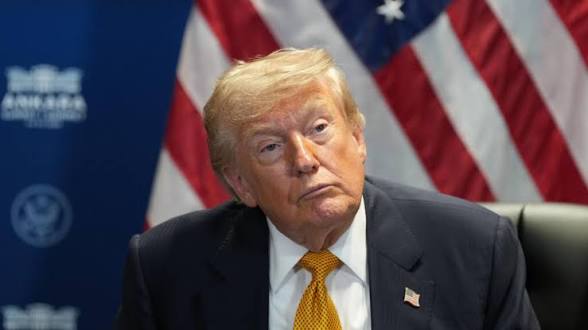
The Middle East crisis has entered another uncertain phase after U.S. President Donald Trump said the war with Iran could be nearing its end, while reports emerged that an American-contracted vessel was targeted near the Strait of Hormuz.
The latest developments combine military escalation with renewed diplomatic claims. Trump has said that Washington is communicating directly with Tehran and has expressed optimism about a possible end to the conflict. Iran, however, has disputed the suggestion that direct negotiations have resumed.
At the same time, the reported attack on a U.S.-contracted ship has added another layer of tension around the strategically important Strait of Hormuz. Reports said the vessel was targeted by Iranian drones and at least one missile, with minor injuries reported among American personnel aboard. The Pentagon and White House referred questions about the incident to U.S. Central Command, which did not publicly comment on the report.
The developments come as oil prices remain elevated and shipping through the Strait of Hormuz remains severely disrupted.
Trump Says Iran War Could Be Nearing an End
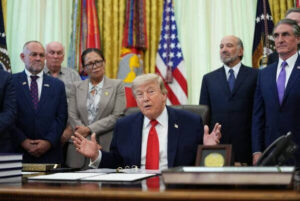
Trump said on September 16 that he hoped the Iran war was approaching its conclusion.
Reuters reported that Trump described the conflict as potentially nearing its end and said discussions with Gulf Cooperation Council leaders were being planned around the next phase of the conflict.
The statement was significant because the conflict has continued for months despite repeated diplomatic efforts.
Trump has also linked his assessment to the weakening of Iran’s nuclear capabilities. According to Reuters, the president has continued to describe Iran’s nuclear program as a central issue in the conflict, while Tehran maintains that its nuclear activities are intended for peaceful purposes.
However, Trump’s statement should not be interpreted as confirmation of a ceasefire.
There is currently no final peace agreement or confirmed end to hostilities.
That distinction is important as military activity continues across the wider region.
Claims of Direct Talks With Iran
One of the most important developments is Trump’s claim that direct communication with Iran is taking place.
Reports on September 17 said Trump claimed that the United States was engaged in direct discussions with Iranian officials. Iran, however, rejected the characterization of the situation as renewed direct negotiations.
This disagreement highlights the uncertainty surrounding the diplomatic track.
For Washington, direct communication could provide a possible route toward de-escalation. For Tehran, acknowledging direct negotiations could carry political implications, particularly while military operations continue.
Earlier diplomatic efforts have also produced mixed results.
In August, a U.S.-Iran memorandum of understanding expired after the sides failed to maintain a durable agreement. Al Jazeera reported that the arrangement deteriorated as military and political tensions continued.
As a result, any new diplomatic channel will face significant obstacles.
US-Contracted Vessel Reportedly Targeted Near Hormuz
The military dimension of the crisis became more prominent following reports that Iran attacked a U.S.-contracted vessel near the Strait of Hormuz.
According to a report cited by the New York Post, the incident involved four Iranian drones and at least one missile. Minor injuries were reportedly suffered by American personnel aboard the vessel. The report did not identify the ship or specify whether the American personnel were government employees or private contractors.
The U.S. military has supported commercial shipping attempting to navigate the strategic waterway.
The reported attack is therefore significant because it involves a vessel connected to the United States at a time when Washington and Tehran remain locked in a military confrontation.
However, important details remain unconfirmed publicly.
The Pentagon and White House reportedly directed inquiries to U.S. Central Command, while CENTCOM did not comment on the incident.
That means the reported circumstances should be treated as developing information rather than a fully independently verified account.
Why the Strait of Hormuz Matters
The Strait of Hormuz is one of the world’s most important energy corridors.
The waterway connects the Persian Gulf with the Gulf of Oman and the wider Arabian Sea. Oil and gas shipments passing through the strait make its security important not only to Middle Eastern countries but also to energy-importing economies around the world.
Current disruption has already affected global energy markets.
Reuters reported that visible vessel passages through Hormuz had fallen to only four on Tuesday, compared with a 10-day average of 18. The reduction demonstrates the scale of the shipping disruption.
The same report said Brent crude settled at $105.83 per barrel on September 16, while U.S. West Texas Intermediate settled at $102.43.
These prices show how quickly geopolitical tensions can affect energy markets.
Even if military fighting decreases, shipping companies and insurers may remain cautious until there is greater confidence that the waterway is safe.
Oil Prices Remain a Major Concern
The Middle East crisis has created significant uncertainty for global oil markets.
Oil prices have responded to concerns about disruptions involving both the Strait of Hormuz and other regional shipping routes.
Saudi Arabia has attempted to compensate for some of its export disruption by moving crude through alternative routes. Reuters reported that Saudi Arabia was offering additional crude cargoes through Oman using ship-to-ship transfers near Sohar.
That development helped ease some immediate concerns about global supply.
Still, the broader energy situation remains fragile.
The Strait of Hormuz is particularly important because alternative export routes cannot fully replace its capacity.
For consumers, prolonged disruption can affect:
- Petrol prices
- Diesel prices
- Airline fuel costs
- Shipping costs
- Manufacturing expenses
- Food transportation
- Inflation
The impact therefore extends far beyond the countries directly involved in the war.
The Wider Middle East Crisis Is Expanding
The Iran conflict is not occurring in isolation.
The wider Middle East remains highly unstable, with developments involving Yemen and Saudi Arabia adding another dimension to the crisis.
Reuters reported on September 17 that Saudi Arabia and Iran-backed Houthi forces had exchanged fresh strikes. Houthi forces reportedly launched attacks while Saudi Arabia responded with air operations and air-defense activity.
The fighting has also affected civilians.
Reuters reported that more than 100,000 people had been displaced in Yemen amid the latest escalation, with some civilians attempting dangerous journeys across the Bab el-Mandeb Strait to Djibouti.
This demonstrates why the Middle East crisis cannot be viewed only through the lens of U.S.-Iran relations.
Multiple conflicts and armed groups are operating across strategically important areas.
Bab el-Mandeb Adds Another Shipping Risk
The Strait of Hormuz is not the only maritime chokepoint facing pressure.
The Bab el-Mandeb Strait, which connects the Red Sea with the Gulf of Aden, is also important to international shipping.
Any prolonged disruption in both waterways could create additional costs for global trade.
Ships may have to take longer routes around Africa, increasing fuel consumption, insurance costs and delivery times.
The consequences could be particularly serious for Europe and Asia because both regions depend heavily on energy and goods transported through Middle Eastern maritime routes.
Gulf States Prepare for the Next Phase
Trump’s reported plan to meet Gulf leaders adds another important diplomatic element.
Reuters reported that Trump was expected to meet leaders from Saudi Arabia, the United Arab Emirates, Qatar, Bahrain, Kuwait and Oman during the upcoming United Nations General Assembly period in New York.
The discussions are expected to focus partly on the postwar situation.
Gulf countries have strong interests in the outcome because the conflict directly affects their territory, energy infrastructure, shipping routes and economic stability.
A sustainable settlement would therefore involve more than Washington and Tehran.
Regional governments would likely need to consider:
- Maritime security
- Oil exports
- Airspace security
- Missile and drone threats
- Regional armed groups
- Reconstruction
- Border security
- Future diplomatic arrangements
Iran Rejects the Idea That a Deal Is Already Close
Despite Trump’s optimistic statements, Iranian officials have disputed the idea that a straightforward agreement is imminent.
Reports said Iran rejected Trump’s renewed claims that Tehran was seeking a quick deal.
That disagreement matters because successful diplomacy generally requires both sides to agree that negotiations are taking place and understand what is being discussed.
At present, the public statements from Washington and Tehran do not fully align.
Trump is emphasizing the possibility of an end to the war.
Iranian officials are continuing to emphasize their own conditions and dispute aspects of the U.S. account.
This leaves the diplomatic situation uncertain.
What Could Happen Next?
Several developments will be important to watch.
1. Confirmation of Direct Negotiations
The first major question is whether the reported U.S.-Iran communication develops into formal negotiations.
If both governments publicly confirm talks, it could provide a clearer diplomatic pathway.
2. Maritime Security
The situation around the Strait of Hormuz will remain critical.
Any additional attacks on commercial or U.S.-linked vessels could increase pressure for military retaliation.
3. Oil Prices
Energy markets will continue responding to developments around Hormuz and other regional shipping routes.
A sustained reduction in military activity could ease some supply concerns, while renewed attacks could push prices higher.
4. Gulf Cooperation
Gulf governments will have an important role in regional diplomacy and security.
Their discussions with Washington could help shape the next stage of the conflict.
5. Iranian Nuclear Policy
The future of Iran’s nuclear program remains one of the central issues.
The United States has made the issue a major part of its justification for pressure on Tehran, while Iran has maintained that its nuclear activities are peaceful.
Any long-term agreement would therefore need to address nuclear restrictions and verification.
Why Trump’s Latest Statement Matters
Trump’s statement is important because it signals that Washington is publicly discussing an endgame rather than only military escalation.
However, statements about an approaching end to a war are different from an actual ceasefire or peace agreement.
At present, fighting and regional instability continue.
The reported attack on a U.S.-contracted vessel also demonstrates the difficulty of moving from military confrontation to diplomacy while armed incidents continue.
The coming days could therefore be crucial.
If diplomatic contacts become formal and military attacks decline, the region could move toward a negotiated settlement.
If attacks continue, the diplomatic claims could prove difficult to sustain.
Humanitarian and Economic Consequences
Beyond military and political developments, the conflict is creating major humanitarian consequences.
Civilian displacement has increased in areas affected by fighting, while damage to infrastructure and interruptions to transportation create additional challenges.
Yemen is particularly vulnerable.
The Guardian reported that the country’s humanitarian crisis has deepened amid renewed fighting, with millions of people requiring assistance and large numbers already displaced by years of conflict.
The economic consequences are also global.
Higher oil prices can increase transportation and manufacturing costs. Higher diesel prices can affect agriculture, logistics and commercial trucking.
For developing economies that import significant quantities of fuel, prolonged energy disruption can put additional pressure on inflation and government finances.
Bottom Line on the Middle East Crisis
The latest Middle East crisis developments show a sharp contrast between diplomatic optimism and continuing military tension.
Donald Trump says the Iran war could be nearing its end and has claimed direct communication with Tehran. Iran has disputed the characterization of renewed direct talks.
At the same time, reports of an Iranian attack on a U.S.-contracted vessel near the Strait of Hormuz demonstrate that the military confrontation remains active.
The Strait itself remains a central concern for global energy markets, with shipping activity sharply reduced and oil prices remaining above $100 per barrel.
The key question now is whether diplomacy can produce a durable agreement while military operations continue.
For now, there is no confirmed final peace agreement or comprehensive ceasefire, so Trump’s comments should be viewed as an indication of his assessment rather than proof that the conflict has ended.
FAQs
What did Trump say about the Iran war?
Trump said he hoped the Iran war was nearing its end and indicated that diplomatic communication with Iran was taking place. However, Iran has disputed the characterization of direct negotiations.
Was a U.S.-contracted vessel attacked by Iran?
A report said an Iran-linked attack targeted a U.S.-contracted vessel near the Strait of Hormuz, involving drones and at least one missile. Minor injuries to American personnel were reported, although key details about the vessel and personnel have not been publicly confirmed by U.S. Central Command.
Is the Iran war over?
No. As of September 17, 2026, there is no confirmed comprehensive peace agreement ending the conflict. Military and diplomatic activity is continuing.
Why is the Strait of Hormuz important?
The Strait of Hormuz is a major global energy shipping route. Disruptions there can reduce oil and gas shipments and contribute to higher energy prices worldwide.
Are the United States and Iran holding direct talks?
Trump has claimed that direct communication is occurring, but Iranian officials have disputed the characterization of renewed direct negotiations.
How has the crisis affected oil prices?
The conflict has contributed to elevated oil prices because of concerns about supply disruptions and reduced shipping through the Strait of Hormuz. Brent crude settled at $105.83 per barrel on September 16, according to Reuters.
What happens next in the Middle East crisis?
The key developments to watch are U.S.-Iran diplomatic contacts, maritime security around Hormuz, regional fighting involving Iran-aligned groups, oil-market conditions and discussions between Washington and Gulf governments.
Could diplomacy end the Iran war?
Diplomatic negotiations could potentially contribute to de-escalation, but there is currently no confirmed final agreement. The positions publicly stated by Washington and Tehran continue to differ.
How useful was this post?
Click on a star to rate it!
Average rating 0 / 5. Vote count: 0
No votes so far! Be the first to rate this post.
About the Author

usa5911.com
Administrator
Hi, I’m Gurdeep Singh, a professional content writer from India with over 3 years of experience in the field. I specialize in covering U.S. politics, delivering timely and engaging content tailored specifically for an American audience. Along with my dedicated team, we track and report on all the latest political trends, news, and in-depth analysis shaping the United States today. Our goal is to provide clear, factual, and compelling content that keeps readers informed and engaged with the ever-changing political landscape.