Geopolitics Update: Putin Pauses Ukraine Strikes After Meeting With Kushner, Witkoff, Peace Proposal
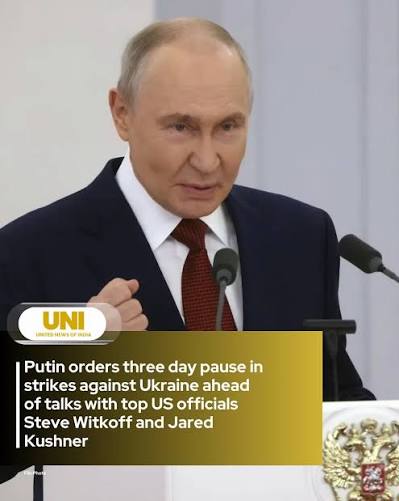
The latest Ukraine peace talks have created a narrow opening for diplomacy, but they have not ended the war. Russian President Vladimir Putin met U.S. envoys Steve Witkoff and Jared Kushner in Moscow on September 5, 2026, while a limited pause in strikes on Kyiv and Moscow was arranged around the diplomatic effort. The meeting was followed by the envoys’ visit to Kyiv on September 6.
The development is important because it brings Washington, Moscow and Kyiv back into direct diplomatic contact. However, the central disputes over territory, security guarantees and the future of Ukraine remain unresolved. The reported pause should therefore be understood as a temporary confidence-building measure, not proof that a final peace deal is close.
What Happened at the Putin, Kushner and Witkoff Meeting?
According to reports, Putin held more than three hours of closed-door discussions with Witkoff and Kushner at the Kremlin. The meeting was part of a renewed U.S. effort to advance negotiations over the war in Ukraine. Kremlin officials described the discussions as useful and constructive, but no concrete breakthrough was announced.
The talks took place against a difficult military backdrop. Russia and Ukraine have continued exchanging attacks, and recent strikes have caused casualties. The diplomatic meeting therefore occurred alongside, rather than after, continuing battlefield pressure.
The U.S. delegation then travelled to Kyiv for discussions with Ukrainian President Volodymyr Zelenskyy. Their visit marked the first reported trip to Ukraine by Witkoff and Kushner as part of this peace effort.
The Reported Pause in Strikes
The most immediate result was a limited pause in attacks involving Kyiv and Moscow. Reports said Putin ordered a 72-hour pause in strikes on Kyiv beginning at midnight on September 6, while Zelenskyy said Ukraine was prepared to halt strikes on Moscow until Monday.
This distinction matters. A pause in attacks on particular cities is not the same as a nationwide ceasefire. Reports also indicated that fighting continued in other parts of Ukraine, showing that the arrangement was narrow in scope.
For negotiators, even a short pause can create space for meetings, reduce immediate risks and test whether both sides can honour limited commitments. But its significance depends on what happens after the agreed period ends.
What Is the Ukraine Peace Proposal?
The United States has been working on proposals intended to move Russia and Ukraine toward an agreement. However, the precise contents of the latest proposal have not been publicly disclosed in full. Reports describe the discussions as an effort to revive negotiations and narrow differences, rather than a completed settlement.
That uncertainty is important for readers. A diplomatic proposal is not automatically an agreement, and a meeting is not the same as a signed peace treaty. The available reporting does not establish that Russia and Ukraine have accepted a final framework.
The Main Issues Blocking a Deal
1. Territory and sovereignty
Territorial control remains one of the hardest questions. Russia has continued to insist on its territorial claims, while Ukraine has maintained that any settlement must respect its sovereignty. Reports from the latest talks indicate that these differences remain central to the negotiations.
2. Security guarantees for Ukraine
Ukraine wants assurances that a future peace agreement will provide meaningful protection against another attack. The question of what guarantees would be offered, by whom and for how long remains a major part of the diplomatic discussion.
3. The future of the war
Even if negotiators agree on a temporary ceasefire, they would still need to address the political and military arrangements that would make a lasting settlement possible. That is why the current pause should not be confused with a permanent end to hostilities.
Why the Limited Pause Matters
A temporary pause can be useful in several ways.
First, it may reduce the risk of attacks during sensitive diplomatic travel. Second, it can give negotiators time to exchange proposals and clarify their positions. Third, it can serve as a test of whether the parties are willing to make and maintain limited commitments.
However, the pause also has limits. It does not resolve territorial disputes, establish security guarantees or create a permanent ceasefire. The continued fighting elsewhere in Ukraine is a reminder that diplomacy and military operations are still unfolding at the same time.
Why Kushner and Witkoff Are Important to the Peace Push
Steve Witkoff and Jared Kushner are serving as U.S. representatives in the current diplomatic effort. Their meetings with Putin and Zelenskyy show that Washington is trying to maintain communication with both sides.
The importance of their role is not simply that they are meeting the leaders. It is that they are helping carry proposals between governments that remain far apart on the terms of a possible settlement.
The next stage will depend on whether those proposals can address the issues that have repeatedly prevented agreement. A successful diplomatic process would need more than statements about peace; it would require detailed arrangements that both sides are prepared to accept.
What the Kyiv Visit Means for Diplomacy
The visit to Kyiv is significant because Ukraine is directly affected by every major decision in the negotiations. Reports said the U.S. envoys discussed peace efforts with Zelenskyy after their meeting with Putin.
Ukraine’s position is especially important on questions of sovereignty, territory and security. A peace proposal cannot become a durable settlement without addressing the concerns of the country where the war is taking place.
The Kyiv visit also provides an opportunity for Washington to hear Ukraine’s response directly, rather than relying only on discussions held in Moscow. That makes the diplomatic sequence—Moscow first, Kyiv next—an important part of the latest peace push.
What Happens After the 72-Hour Pause?
The end of the reported pause will be an important test of the diplomatic effort. Observers will be watching whether attacks resume, whether further pauses are agreed and whether the negotiations produce a more detailed framework.
A short pause can create momentum, but momentum is not the same as resolution. The next meaningful development would be a clear, verifiable agreement on a broader ceasefire or a concrete negotiating framework accepted by the relevant parties.
For now, the most accurate assessment is that diplomacy has reopened a channel of communication while the underlying conflict continues.
What Could a Lasting Peace Deal Require?
A lasting settlement would likely need to address several interconnected questions:
A ceasefire: Clear terms for stopping attacks and monitoring compliance.
Territorial issues: A politically and legally workable approach to disputed areas.
Security guarantees: Arrangements that give Ukraine confidence in its future security.
Implementation: A mechanism for resolving disputes if either side alleges violations.
International support: A framework that can sustain the agreement over time.
These are not details that can be settled simply by announcing a temporary pause. They require negotiations, verification and political decisions.
Geopolitical Significance of the Latest Talks
The meeting also highlights the continuing importance of U.S. diplomacy in the war. Washington is attempting to engage both Russia and Ukraine, while the conflict remains a major issue for European security.
The talks also show how difficult it is to separate diplomacy from military developments. While the envoys were travelling, strikes and casualties continued to shape the political environment. This makes every negotiation more urgent, but it also makes compromise harder.
The central question is whether the latest diplomatic effort can move beyond temporary arrangements and toward a settlement that both sides can accept.
What to Watch Next
The following developments will help determine whether the latest talks produce meaningful progress:
Whether the pause is extended or replaced by a broader ceasefire.
Whether the U.S. proposal is publicly explained in greater detail.
Whether Russia and Ukraine make any movement on territorial questions.
Whether security guarantees become a concrete part of negotiations.
Whether further meetings are announced after the Kyiv visit.
These indicators matter more than any single headline because they show whether diplomacy is producing practical results.
Conclusion: A Pause, Not Yet Peace
The reported Putin pauses Ukraine strikes development is a notable moment in the latest peace effort, but it should not be overstated. The Moscow meeting with Kushner and Witkoff, followed by their Kyiv visit, has created a fresh diplomatic opening. Yet no final peace agreement has been announced, and the major disputes remain unresolved.
The next test will be whether this limited pause leads to a broader and more durable reduction in violence. Until that happens, the situation remains one of active diplomacy alongside continuing war.
Frequently Asked Questions
1. Did Putin agree to a full ceasefire in Ukraine?
No. Reports described a limited pause in strikes involving Kyiv and Moscow, not a comprehensive ceasefire across Ukraine.
2. How long was the reported pause in strikes?
The reported pause on Kyiv was for 72 hours, beginning at midnight on September 6, 2026.
3. Who met Putin in Moscow?
U.S. envoys Steve Witkoff and Jared Kushner met with Russian President Vladimir Putin at the Kremlin.
4. Did the meeting produce a peace deal?
No concrete breakthrough or final peace agreement was publicly announced.
5. What is the main obstacle to peace?
Territory, sovereignty and security guarantees remain among the central issues dividing Russia and Ukraine.
6. Why did the U.S. envoys visit Kyiv?
They travelled to Kyiv to continue the peace discussions with Ukrainian President Volodymyr Zelenskyy after meeting Putin in Moscow.
7. Does the pause mean the war is over?
No. Fighting continued in other parts of Ukraine, and the pause was limited in scope.
8. What should readers watch next?
The key indicators are whether the pause is extended, whether a broader ceasefire is agreed and whether the negotiations produce concrete progress on the major unresolved issues.
How useful was this post?
Click on a star to rate it!
Average rating 0 / 5. Vote count: 0
No votes so far! Be the first to rate this post.
About the Author

usa5911.com
Administrator
Hi, I’m Gurdeep Singh, a professional content writer from India with over 3 years of experience in the field. I specialize in covering U.S. politics, delivering timely and engaging content tailored specifically for an American audience. Along with my dedicated team, we track and report on all the latest political trends, news, and in-depth analysis shaping the United States today. Our goal is to provide clear, factual, and compelling content that keeps readers informed and engaged with the ever-changing political landscape.