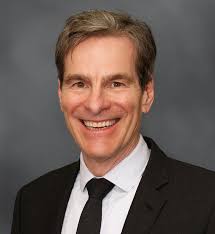
Pathetic Failure:Steve Hilton Blasts Left,Chaos,Fury
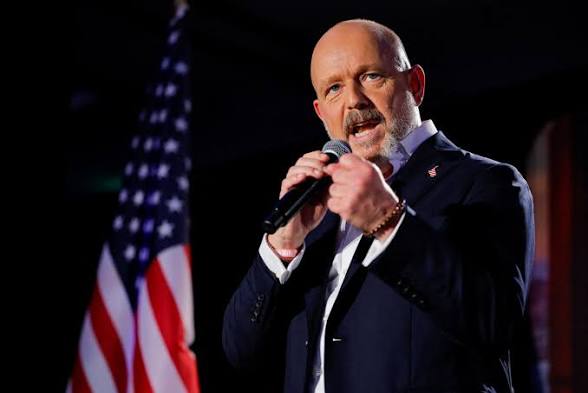
California’s 2026 governor’s race has become increasingly combative, and Republican candidate Steve Hilton is placing Democratic leadership and years of one-party rule at the center of his campaign. Hilton has repeatedly argued that California has enormous potential but is being held back by government policies, high costs, bureaucracy and what he describes as institutional failure.
That message has helped transform Hilton from a former Fox News host and political commentator into one of the most closely watched Republican candidates in the state. Recent reporting shows that Hilton advanced to the November general election, where he will face Democrat Xavier Becerra.
The political battle is therefore no longer simply about Hilton’s conservative ideas. It has become a larger argument about whether California voters are prepared to reject decades of Democratic dominance.
Hilton says they should.
Steve Hilton Blasts the Left Over California’s Direction

At the heart of Hilton’s campaign is a blunt argument: California has extraordinary resources, talent and economic power, but government has failed to translate those advantages into better living conditions for ordinary residents.
The Republican candidate has repeatedly criticized what he describes as excessive taxation, high housing costs, weak public services and ineffective government.
The Washington Post reported that Hilton describes California as being at a “breaking point” and argues that the state’s problems are not caused by a shortage of money or opportunity. Instead, he points to policy decisions and political leadership.
That argument provides the foundation for the Steve Hilton blasts the left narrative.
His criticism is particularly directed at California’s long period of Democratic control. Hilton has emphasized that Democrats have dominated Sacramento for years and argues that voters should consider a fundamental change rather than another adjustment to the existing system.
His opponents strongly disagree, arguing that California’s problems are more complicated than a simple partisan explanation.
That disagreement is likely to dominate the governor’s campaign.
Why Hilton’s Message Is Creating Political Fury
Hilton’s rhetoric is designed to provoke debate.
Rather than presenting himself as a conventional Republican candidate, he has positioned himself as a disruptor who wants to challenge California’s political establishment. His campaign frequently focuses on issues that affect voters in their daily lives: housing affordability, taxes, crime, homelessness, energy costs and government efficiency.
That approach has helped him attract attention beyond the traditional Republican base.
The Guardian reported earlier this year that Hilton had built significant enthusiasm among California Republicans while attempting to reach farmers, suburban voters and Latino small-business owners.
His strategy is especially important because California remains heavily Democratic at the statewide level.
For a Republican to win the governorship, Hilton would need to persuade voters who may not normally support the GOP.
That explains one of the unusual elements of his campaign: Hilton has attempted to separate his California message from a simple loyalty test to national Republican politics.
In July, he launched his general-election campaign with an appeal to left-leaning Californians, arguing that voters could dislike President Donald Trump while still considering Hilton for governor.
That is a significant political calculation.
“One-Party Rule” Becomes Hilton’s Central Target
Hilton’s strongest political argument is that California has been governed by Democrats for too long.
He has described the state as suffering from one-party rule and argues that the lack of serious competition has allowed problems to become entrenched.
This message is simple and politically effective:
If the same party has controlled government for years, Hilton argues, voters should consider giving another party a chance.
The Washington Post reported that Hilton repeatedly emphasizes California’s long period of Democratic dominance when explaining why he entered the race.
But the argument also carries risks.
California Democrats can point to the state’s enormous economy, technology sector, universities, cultural influence and environmental leadership as evidence that Democratic governance has not produced universal failure.
The debate therefore comes down to a basic political question:
Is California fundamentally successful but struggling with serious problems, or is it a state whose government has failed to deliver despite its enormous advantages?
Hilton clearly supports the second interpretation.
Crime and Public Safety Become Major Battlegrounds
Public safety is another major part of Hilton’s campaign.
His campaign has argued that California’s criminal justice system does not provide enough accountability for violent and repeat offenders. His policy proposals include expanding prison capacity and increasing accountability within the justice system.
This is an important issue because crime and public disorder have become highly emotional political topics in California.
Hilton argues that government has a responsibility to enforce laws and protect communities.
Democrats and criminal-justice reform advocates, however, have often emphasized rehabilitation, sentencing reform and alternatives to incarceration.
That creates a sharp ideological divide.
For Hilton, the argument is about restoring order.
For his critics, the question is whether tougher policies would actually solve the underlying causes of crime.
Either way, public safety gives the Republican candidate an opportunity to appeal to voters who believe government has become ineffective.
Housing Costs Put Democrats Under Pressure
California’s housing crisis is another major weakness Hilton believes he can exploit.
The state has some of the highest housing costs in America, and expensive homes and rents have become central concerns for families, younger workers and lower-income residents.
The Washington Post has highlighted California’s extremely high rents and housing costs while discussing the economic challenges Hilton has made central to his campaign.
Hilton’s broader argument is that government regulation, taxes and bureaucratic barriers have made it too difficult to build and live affordably.
Housing is particularly powerful politically because it crosses ideological boundaries.
A voter does not necessarily have to be conservative to be angry about rent.
A young professional struggling to buy a home can become frustrated regardless of party affiliation.
That is why Hilton’s campaign has emphasized economic affordability rather than relying exclusively on cultural issues.
The “California Failure” Argument
Hilton has also developed a broader intellectual case against California’s current direction through his book “Califailure: Reversing the Ruin of America’s Worst-Run State.”
The title itself captures his political message.
He believes California has become a warning about what happens when government becomes too expensive, too bureaucratic and too disconnected from ordinary people.
His critics, however, reject that characterization.
One recent San Francisco Chronicle opinion piece argued that Hilton’s vision overlooks important factors, particularly in his criticism of climate policy.
That criticism demonstrates the larger battle surrounding Hilton.
His opponents say his diagnosis is too ideological.
Hilton says the existing system is the ideological failure.
The election will give California voters an opportunity to decide which argument is more convincing.
Steve Hilton’s Unusual Political Journey
Hilton’s political background makes the current campaign even more unusual.
Before becoming a major conservative media personality in the United States, he was an influential British political strategist who worked with former British Prime Minister David Cameron.
The Los Angeles Times has described Hilton’s political evolution as particularly striking. Earlier in his career, he promoted ideas associated with a more socially liberal and environmentally conscious form of British conservatism. He later moved sharply toward the American conservative movement.
That history has made Hilton difficult to categorize.
He is not a traditional career politician.
He has never previously served as an elected governor or legislator.
Instead, he has built his public profile through political strategy, business, media and commentary.
His campaign is therefore based heavily on persuasion and disruption rather than legislative experience.
Election Controversy Adds Another Layer
California’s election system has also become part of Hilton’s political message.
In June, Hilton criticized aspects of the state’s election process, calling it an “absolute farce” while discussing mailed ballots, verification procedures and the slow counting process.
However, Hilton did not simply embrace every allegation surrounding election integrity.
The Wrap reported that Hilton broke with Trump over claims that California’s election results were “rigged,” saying he had seen nothing that justified federal intervention.
That distinction is politically important.
It suggests Hilton is willing to criticize the election system while stopping short of endorsing unsupported claims of widespread fraud.
For a candidate trying to appeal to both Trump supporters and more moderate Californians, that could prove useful.
Can Hilton Turn Anger Into Votes?
The biggest question now is whether Hilton’s rhetoric can become a winning electoral coalition.
His message is powerful because it is built around frustration.
High housing costs.
Expensive energy.
Crime concerns.
Taxes.
Homelessness.
Government bureaucracy.
Those issues affect millions of Californians.
But political frustration does not automatically produce a Republican victory.
California remains a difficult environment for statewide Republicans.
Hilton therefore needs more than an angry message.
He needs voters who are dissatisfied with Democratic leadership to actually cross party lines and support him.
That is why his appeal to left-leaning voters is so important.
The Becerra Challenge
Hilton’s general-election opponent, Democrat Xavier Becerra, represents a very different political vision for California.
The contest is therefore likely to become a referendum on the state’s direction.
Hilton will argue that California needs a dramatic political reset.
Democrats will argue that the Republican alternative is too extreme and that the state’s problems require investment and policy reform rather than ideological upheaval.
The contrast could not be clearer.
Hilton: change the system.
Democrats: improve the system without abandoning its core direction.
That difference will shape the campaign.
Is “Chaos and Fury” the Real Story?
The language surrounding the race is increasingly dramatic, but the underlying political conflict is straightforward.
California has serious challenges.
The disagreement is over who is responsible and what should be done about them.
Hilton blames Democratic policies and long-term one-party control.
His opponents argue that California’s problems are the result of complicated economic, environmental and demographic forces that cannot be solved through partisan slogans.
The political temperature is likely to remain high because the stakes are enormous.
A Republican victory would represent a major shift in California politics.
A Democratic victory would reinforce the state’s long-standing political direction.
What Hilton Is Really Betting On
Steve Hilton’s campaign is ultimately built on a political gamble.
He is betting that enough Californians are frustrated with the status quo to vote for a dramatic change.
His message is not subtle.
He argues that California is capable of much more than it currently delivers.
He says government is too expensive.
He says bureaucracy is too powerful.
He says public safety needs greater attention.
He says housing must become more affordable.
And he says decades of Democratic dominance deserve a serious electoral challenge.
Whether voters agree will determine the outcome.
But there is no doubt that Hilton has changed the tone of the Republican campaign.
His rise has turned a traditionally difficult Republican contest into a much more closely watched political battle. Earlier reporting described him as a leading Republican candidate, while later reporting confirmed that he advanced to the general election.
Conclusion: Steve Hilton’s Fight Against the Status Quo
The Steve Hilton blasts the left story is ultimately about much more than political insults.
It is about a fundamental disagreement over California’s future.
Hilton believes the state has been badly governed and needs a dramatic reset. His critics believe his diagnosis is exaggerated and that his proposed solutions could create new problems.
That battle is now moving into the heart of the 2026 governor’s race.
For Hilton, the message is clear: California does not need another version of the status quo.
It needs change.
For Democrats, the challenge is equally clear: convince voters that the state’s problems can be addressed without handing power to a Republican candidate promising sweeping reform.
With housing, crime, taxes, energy and government efficiency all competing for voters’ attention, the campaign is likely to remain intense.
The political fury surrounding Steve Hilton may therefore be only the beginning.
FAQs
Who is Steve Hilton?
Steve Hilton is a Republican political candidate, former Fox News host, businessman and former British political strategist. He previously worked as a senior adviser and strategist associated with David Cameron before moving to the United States.
What is Steve Hilton running for?
Steve Hilton is running for governor of California in the 2026 election. He advanced to the general election and is facing Democrat Xavier Becerra.
Why is Steve Hilton criticizing California Democrats?
Hilton argues that long-term Democratic control has contributed to problems involving housing costs, taxation, crime, government bureaucracy and public services.
What does Steve Hilton say about California’s economy?
Hilton argues that California has enormous economic potential but does not convert its wealth and resources into sufficiently good outcomes for ordinary residents.
What are Steve Hilton’s major campaign issues?
His campaign has emphasized affordability, crime and public safety, housing, government efficiency, taxes and reducing bureaucracy.
Has Steve Hilton criticized California’s election system?
Yes. Hilton has criticized California’s ballot and vote-counting procedures, calling the system an “absolute farce.”
Does Steve Hilton claim California’s election was rigged?
Hilton has criticized aspects of the election system, but he also said he had seen nothing supporting claims that the election was rigged or that federal intervention was justified.
Who is Steve Hilton facing in the California governor race?
Hilton advanced to the November general election against Democrat Xavier Becerra.
Why is Hilton’s campaign significant?
A Republican victory in California would represent a major political shift. Hilton is attempting to build support among traditional Republicans while also appealing to voters who may be dissatisfied with Democratic leadership but do not normally vote Republican.
What is the central message of Steve Hilton’s campaign?
His central message is that California needs major political and governmental change after years of Democratic dominance. He presents himself as a candidate willing to challenge the existing political establishment.
How useful was this post?
Click on a star to rate it!
Average rating 0 / 5. Vote count: 0
No votes so far! Be the first to rate this post.
About the Author

usa5911.com
Administrator
Hi, I’m Gurdeep Singh, a professional content writer from India with over 3 years of experience in the field. I specialize in covering U.S. politics, delivering timely and engaging content tailored specifically for an American audience. Along with my dedicated team, we track and report on all the latest political trends, news, and in-depth analysis shaping the United States today. Our goal is to provide clear, factual, and compelling content that keeps readers informed and engaged with the ever-changing political landscape.