British politics has faced another period of intense uncertainty, with the fallout from Anas Sarwar’s challenge to Keir Starmer continuing to shape debate about Labour’s leadership, unity and political direction. At the same time, growing concerns about drones and airspace security have placed a second major issue firmly on the national security agenda.
The two developments are different, but they share one important theme: security and confidence.
Sarwar’s decision to call for Starmer to step down was an extraordinary intervention from a senior Labour figure. It exposed the depth of frustration inside the party and raised questions about whether Labour could maintain a united political message. Months later, Sarwar himself left the leadership of Scottish Labour and accepted a government role, creating another chapter in the political drama.
Meanwhile, drone-related security concerns have become increasingly important across Europe and the wider region. Modern drones can disrupt airports, approach sensitive sites and complicate the work of security authorities. Governments are therefore strengthening restrictions and monitoring systems designed to protect controlled airspace.
This article examines the Anas Sarwar Starmer exit call, the Labour leadership crisis, Sarwar’s subsequent political move and the wider security concerns surrounding drones and restricted airspace.
Anas Sarwar Starmer Exit Call Explained

Anas Sarwar’s call for Keir Starmer to resign became one of the most dramatic moments in Labour politics in 2026.
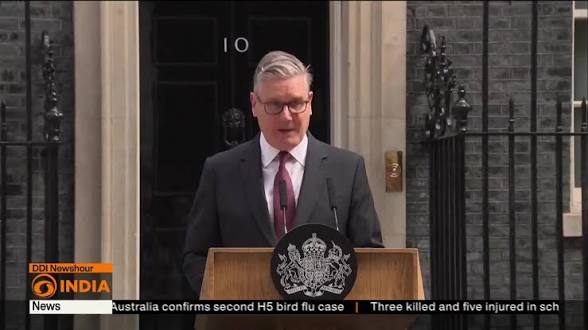
On February 9, Sarwar publicly argued that Starmer should leave office. The intervention came during a difficult period for the Labour government, with controversy surrounding the appointment of Peter Mandelson as ambassador to the United States and wider questions about the government’s political judgment.
Sarwar’s intervention was particularly significant because he was not an opposition politician. He was the leader of Scottish Labour and had played an important role in Labour’s electoral campaign.
Reports at the time described his decision as a direct challenge to Starmer’s leadership. ITV reported that the Mandelson controversy had become the final trigger for Sarwar after a series of frustrations.
The political significance was immediate.
A senior Labour leader was effectively telling the Prime Minister that the party needed a change at the top.
That created a difficult question for Labour: could the party remain united when prominent figures were publicly questioning the Prime Minister’s future?
Why Did Sarwar Want Starmer to Go?
Sarwar argued that Labour needed to regain political focus and credibility.
His intervention followed several controversies and internal tensions. He was particularly concerned about the impact of Westminster politics on Labour’s prospects in Scotland.
The argument was not simply personal. Sarwar presented his position as a political judgment about Labour’s future.
For Scottish Labour, the stakes were especially high.
The party had been attempting to rebuild its position in Scotland after years of difficult electoral results. Any perception that Westminster Labour was damaging the Scottish party could create a serious political problem.
Sarwar therefore placed pressure on Starmer at a highly sensitive moment.
His move also demonstrated that Labour’s internal disagreements were no longer limited to private conversations.
They had become public.
Starmer Refused to Step Aside
Despite the pressure, Starmer did not resign.
The Prime Minister defended his leadership and indicated that he intended to continue. Reports at the time described him as determined to fight through the crisis rather than surrender to internal pressure.
This created a direct political confrontation.
On one side was a Prime Minister determined to remain in Downing Street.
On the other was a senior Labour figure arguing that a leadership change was necessary.
The confrontation became even more significant because other Labour figures took different positions. Some rallied behind Starmer, while others expressed concerns about the direction of the government.
The result was an uncomfortable picture of a governing party struggling to maintain unity.
Labour Meltdown Fears Grow
The phrase “Labour meltdown” became increasingly common in political commentary because the party was facing pressure on several fronts.
Leadership disputes can be especially damaging for governing parties.
Voters expect governments to concentrate on national priorities. When senior politicians publicly fight over leadership, attention can shift away from policy and towards internal politics.
That can create a damaging cycle.
A leadership dispute produces negative headlines.
Negative headlines create pressure on MPs.
MPs become more concerned about electoral performance.
More concern creates additional leadership speculation.
That speculation then produces another round of negative coverage.
Sarwar’s intervention therefore mattered beyond the question of whether Starmer should remain Prime Minister.
It raised broader questions about Labour’s ability to govern effectively while managing internal disagreements.
The Scottish Dimension
The Scottish dimension was crucial.
Sarwar had become one of the most recognisable figures in Scottish Labour. His leadership was closely associated with Labour’s attempt to rebuild its electoral base north of the border.
His challenge to Starmer demonstrated that Scottish Labour’s priorities could sometimes clash with Westminster Labour’s strategy.
That tension is not unique to Labour.
Political parties operating across the United Kingdom often face difficult questions about how national and regional interests should be balanced.
But the Sarwar intervention was unusual because it involved a direct call for the Prime Minister to leave office.
That made the disagreement much more serious.
What Happened to Anas Sarwar Later?
The political story took another unexpected turn.
In July 2026, Sarwar resigned as Scottish Labour leader and moved into a role within Andy Burnham’s government. The Guardian reported that Starmer made Sarwar a peer and that he was given a ministerial position in the Department for Business, Innovation, Science and Trade.
That development created an obvious political contrast.
Earlier in the year, Sarwar had been the senior Labour figure who publicly called for Starmer to resign.
Later, he became part of the government establishment.
Supporters can argue that political circumstances changed and that Sarwar’s new role gives him an opportunity to influence government policy from inside.
Critics, however, have questioned the political consistency of the move.
Some opponents accused Sarwar of abandoning Scottish Labour at a difficult moment. The decision generated criticism from political rivals in Scotland.
This means the Sarwar story is no longer simply about a revolt against Starmer.
It is also about political strategy, ambition and the future direction of Scottish Labour.
Is Labour Really in Meltdown?
The answer depends on how the situation is interpreted.
There is clearly evidence of serious internal disagreement. Sarwar’s February intervention was unprecedented enough to create a major leadership crisis. Later developments also showed that Scottish Labour faced its own challenges.
However, “meltdown” is ultimately a political description rather than an objective measurement.
A governing party can experience intense internal disputes and still remain in power.
The more important question is whether those disputes affect Labour’s ability to win elections and deliver policies.
If voters become convinced that politicians are focused more on internal battles than national issues, the political consequences can be serious.
That is why leadership stability matters.
Drone Security Adds Another Layer
While Labour has been dealing with political tensions, airspace security has become a growing concern.
Drones are now widely available, relatively inexpensive and capable of operating close to sensitive locations.
That creates challenges for governments and aviation authorities.
A drone near an airport can cause disruption even when there is no malicious intent. A drone near a military facility or other protected site can create a much more serious security concern.
European aviation authorities have also continued to issue warnings about high-risk airspace connected with military conflict, missiles and drones. The European Union Aviation Safety Agency maintains conflict-zone advisories for several areas where aviation security risks remain elevated.
Why Are Drones an Airspace Security Problem?
Traditional airspace security was designed largely around aircraft.
Drones have changed the equation.
A small unmanned aircraft can fly at low altitude and may be difficult to detect using conventional aviation systems.
That creates several risks.
Airport Disruption
The most immediate concern is aviation disruption.
Authorities may need to slow or suspend operations if an unidentified drone is detected near an airport.
Even a temporary interruption can cause delays, cancellations and significant financial losses.
Sensitive Locations
Drones can also create security concerns around government buildings, military facilities and critical infrastructure.
For that reason, governments have introduced restricted areas where drone operations are prohibited or tightly controlled.
Criminal and Malicious Use
Another concern is deliberate misuse.
A drone can potentially be used for surveillance, smuggling or other unlawful activity.
Security agencies therefore need to distinguish between harmless recreational flights and genuinely suspicious activity.
Britain Tightens Drone Restrictions
The UK has already expanded its approach to protected airspace.
The Civil Aviation Authority published information on new drone-only restricted airspace connected with Ministry of Defence prohibited places under the National Security Act. The restrictions came into effect on February 19, 2026.
This demonstrates that drone regulation is increasingly being treated as a national-security issue rather than simply an aviation matter.
The challenge for authorities is to maintain security without unnecessarily restricting legitimate drone users.
Drone Warning Does Not Automatically Mean an Attack
One important distinction should be made.
A drone warning does not necessarily mean that an attack has occurred.
Security authorities can issue warnings because of a potential sighting, a temporary security operation, an identified restricted zone or a wider threat assessment.
Similarly, an airspace restriction does not automatically prove hostile activity.
This distinction is important because exaggerated claims can create unnecessary public fear.
The most responsible approach is to rely on confirmed information from aviation authorities, police, governments and other credible sources.
The Wider International Airspace Problem
Drone security cannot be viewed entirely through a domestic lens.
Modern conflicts have demonstrated how drones and missiles can affect civilian aviation.
The situation is particularly serious in regions where military operations are taking place.
Current aviation risk assessments continue to identify areas where civilian aircraft face dangers from military activity, missiles and explosive drones.
Airlines therefore have to make difficult decisions about routes.
A single security warning can lead to longer flight paths, higher costs and schedule changes.
For passengers, the effects can include delays and cancellations.
For governments, the issue becomes one of national resilience.
Political Stability and National Security
The Sarwar crisis and drone-security debate may appear unrelated.
One concerns political leadership.
The other concerns aviation and national security.
Yet both highlight the importance of public confidence.
Governments need citizens to believe that leaders can make difficult decisions.
They also need security institutions to respond quickly when threats emerge.
When political uncertainty and security concerns occur at the same time, public anxiety can increase.
That makes clear communication particularly important.
What Happens Next for Starmer?
Starmer’s future will remain a major subject of political debate as Labour seeks to maintain its position.
The February revolt demonstrated that leadership criticism can come from inside the party itself.
The later appointment of Sarwar to government also illustrates how quickly political relationships can change.
A politician who publicly challenges a leader can later become part of the same administration.
That does not automatically erase the earlier disagreement.
Instead, it creates a complicated political relationship that will be watched closely.
What Happens Next for Sarwar?
Sarwar’s new government role gives him a different platform.
His supporters can argue that he can now influence policy directly.
His critics will continue to question his decision to leave the Scottish Labour leadership.
The bigger issue is whether his move strengthens Labour’s position or creates further controversy.
Scottish Labour now faces the task of rebuilding its leadership structure while maintaining its political momentum.
The party’s opponents will look for opportunities to exploit any divisions.
What Should the Public Watch?
There are several developments worth monitoring.
First, Labour’s internal stability will remain important.
Second, Starmer’s ability to demonstrate political authority will be closely watched.
Third, Scottish Labour’s response to Sarwar’s departure could influence its future strategy.
Fourth, governments across Europe are likely to continue strengthening drone restrictions around sensitive sites.
Finally, aviation authorities will continue monitoring airspace affected by conflict and security risks.
Conclusion
The Anas Sarwar Starmer exit call was a major warning sign for Labour.
It showed that frustration with the Prime Minister had reached a point where a senior party figure was willing to publicly demand a leadership change.
Starmer survived that challenge.
But the episode demonstrated how quickly internal disagreements can become a national political crisis.
Sarwar’s later resignation as Scottish Labour leader and move into government added another unexpected chapter to the story.
At the same time, drone security is becoming a serious part of the modern airspace debate.
From airport disruption to restricted zones and military-security concerns, drones have created challenges that governments cannot ignore.
The key issue in both stories is confidence.
Political leaders must demonstrate stability, while security authorities must demonstrate preparedness.
For Labour, the challenge is maintaining unity and convincing voters that internal disagreements will not prevent effective government.
For aviation and security authorities, the challenge is protecting airspace while avoiding unnecessary disruption.
Both developments show how quickly modern crises can evolve.
And as political pressure and security concerns continue to dominate headlines, the public will be watching closely for the next warning sign.
Frequently Asked Questions
What was Anas Sarwar’s Starmer exit call?
Anas Sarwar publicly called for Keir Starmer to resign as Prime Minister on February 9, 2026, during a period of intense political pressure on the Labour government.
Why did Anas Sarwar want Starmer to resign?
Sarwar argued that Labour needed a change in leadership and expressed concerns about the government’s political direction and its impact on Labour’s prospects, particularly in Scotland. The controversy surrounding Peter Mandelson’s appointment was an important trigger.
Did Keir Starmer resign?
No. Starmer rejected calls to step aside and continued as Prime Minister.
Is Anas Sarwar still Scottish Labour leader?
No. Sarwar resigned as Scottish Labour leader in July 2026 and subsequently joined Andy Burnham’s government as a minister.
Why are drones a security concern?
Drones can enter restricted areas, disrupt airports, approach sensitive facilities and potentially be misused for surveillance or other unlawful activities.
Are all drone sightings a security threat?
No. A drone sighting does not automatically indicate malicious activity. Authorities assess each situation according to location, behaviour and available intelligence.
Has the UK introduced new drone restrictions?
Yes. New drone-only restricted airspace associated with Ministry of Defence prohibited places came into effect under the National Security Act framework on February 19, 2026.
Can drones disrupt airports?
Yes. Drone activity near airports can create safety concerns and may result in temporary restrictions, delays or operational disruption.
Why is airspace security becoming more important?
The widespread availability of drones, combined with missile and drone activity in conflict zones, has increased the complexity of protecting civilian aviation.
What does the Labour crisis mean for UK politics?
The internal disputes demonstrate that Labour faces challenges in maintaining party unity and political authority. The long-term impact will depend on how effectively the government manages disagreements and responds to voter concerns.
About the Author