War On Trigger:Trump Says US Is Locked And Loaded,Panic,Alert
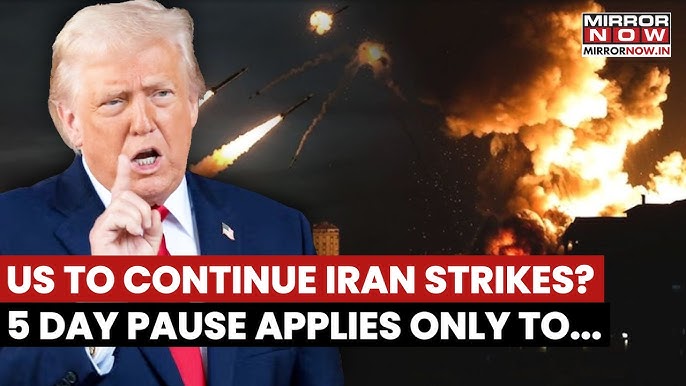
The latest development in the escalating US-Iran confrontation has sent shockwaves across the world as reports indicate a pause in American military strikes against Iran after a prolonged period of intense hostilities. The decision has triggered a wave of speculation, fear, and political debate over whether the pause represents a path toward diplomacy or merely a temporary break before another escalation.
The United States and Iran have been locked in a dangerous cycle of military pressure, retaliatory attacks, and international warnings. Recent reports described a major US air campaign targeting Iranian military infrastructure, while Iran responded with strikes and threats against American interests in the region.
The phrase “13th Night Shock” has gained attention because the pause comes after multiple nights of military action, raising questions about the future of the conflict. Is this the beginning of negotiations, or is it only a strategic pause?
US Military Pauses Iran Strikes: What Happened?
The reported pause follows a period of intense military activity between Washington and Tehran. US forces had carried out strikes against Iranian targets, including military facilities, command structures, and strategic locations. Iran responded with missile and drone attacks targeting US-linked positions in the Middle East.
According to reports, American officials have suggested that military decisions are being carefully evaluated while diplomatic possibilities remain open. The pause does not necessarily indicate the end of the confrontation, but it may reflect a temporary shift in strategy.
Military analysts say pauses during major conflicts can happen for several reasons:
- Assessment of battlefield results
- Protection of military personnel
- Diplomatic negotiations
- International pressure
- Avoiding wider regional war
The current situation remains highly unpredictable as both sides continue issuing strong warnings.
Why Did the US Pause Military Operations?
Several factors may have influenced the decision to pause further strikes.
1. Diplomatic Pressure
Global leaders have urged Washington and Tehran to avoid a larger conflict that could destabilize the Middle East. Countries across Europe, Asia, and the Gulf region have expressed concern over the possibility of a wider war.
Diplomatic channels have reportedly remained active despite the military confrontation. Discussions involving regional partners have focused on reducing tensions and preventing further attacks.
2. Risk of Regional Expansion
A major concern is that continued US-Iran fighting could spread beyond the two countries.
The Middle East contains several strategic locations, including:
- Persian Gulf shipping routes
- Military bases hosting international forces
- Energy infrastructure
- Regional alliances
Any expansion could affect global security and energy markets.
3. Military Strategy
A pause can also be a military decision.
Modern operations require:
- Intelligence evaluation
- Aircraft maintenance
- Target assessment
- Supply management
- Force protection
A temporary halt does not always mean surrender or weakness. It can be part of a broader strategy.
Iran’s Response: Anger, Threats and Defiance
Iran has strongly criticized US military actions and warned that any further attacks could face retaliation.
Iranian officials have repeatedly stated that the country has the ability to respond through its military capabilities and regional influence. Tehran has also accused Washington of increasing instability in the region.
Iran’s possible response options include:
- Missile attacks
- Drone operations
- Pressure through allied groups
- Cyber operations
- Disruption of regional shipping
However, Iranian leaders also face pressure to avoid actions that could trigger a much larger conflict with the United States.
Global Fear Over a Wider War
The biggest concern among international observers is that the US-Iran confrontation could transform into a broader regional conflict.
Countries are watching several potential flashpoints:
Persian Gulf
The Gulf remains one of the world’s most important energy routes. Any disruption could affect oil supplies and international markets.
Middle Eastern Military Bases
The United States maintains military facilities across the region. Any attack on these locations could rapidly increase tensions.
Proxy Conflicts
Iran has historically maintained relationships with regional armed groups. Analysts fear that these networks could become involved if the conflict continues.
Impact on Oil Prices and Global Economy
A prolonged US-Iran crisis could have major economic consequences.
Energy markets closely monitor developments because the Middle East plays a critical role in global oil production and transportation.
Possible economic effects include:
- Higher fuel prices
- Increased transportation costs
- Market uncertainty
- Inflation pressure
Businesses and governments are preparing for possible disruptions if tensions rise again.
US Political Reaction
The pause in military strikes has created debate inside the United States.
Supporters argue that military pressure is necessary to protect American interests and prevent threats from Iran.
Critics argue that continued conflict could lead to:
- More casualties
- Higher financial costs
- Regional instability
- Limited diplomatic progress
The issue has become a major political topic as lawmakers debate America’s role in overseas conflicts.
The Pentagon’s approach following the reported pause in Iran strikes is expected to focus on intelligence gathering, force protection, and assessing the next possible moves from Tehran.
US military planners must consider several factors before launching any additional operations:
- The safety of American troops stationed overseas
- The possibility of Iranian retaliation
- The reaction of regional allies
- The risk of a broader Middle East conflict
Military officials often emphasize that every operation involves strategic calculations. A pause can allow commanders to review battlefield information and determine whether further action is necessary.
The United States has historically maintained a strong military presence in the Middle East because of security interests, alliances, and energy routes. Any confrontation with Iran requires careful planning due to Iran’s missile capabilities, regional influence, and geographic position.
Israel’s Concerns Over Iran Tensions
Israel remains one of the countries most closely watching the US-Iran confrontation.
For years, Israel has considered Iran’s nuclear program, missile development, and regional partnerships as major security concerns. Any increase in US-Iran tensions could directly affect Israel’s security calculations.
Israeli officials have repeatedly stated that they will take necessary measures to defend their country against potential threats.
The possibility of further escalation raises questions about:
- Israeli military involvement
- Iranian responses against Israel
- Regional security cooperation
- Air defense readiness
The situation remains sensitive because any additional military action could create a chain reaction across the Middle East.
Russia and China: Strategic Calculations
The US-Iran confrontation also has international consequences.
Russia and China have maintained diplomatic and economic relationships with Iran. Both countries have criticized certain US policies toward Tehran and have called for diplomatic solutions.
However, their responses are influenced by broader geopolitical interests.
Russia’s Position
Russia has viewed Iran as an important partner in regional affairs. Moscow may use the crisis to strengthen its diplomatic influence and challenge US leadership in the region.
China’s Position
China has significant economic interests in the Middle East, particularly energy supplies. Beijing generally prefers stability because conflict could affect trade and global markets.
Both countries are closely monitoring whether the crisis expands or moves toward negotiations.
Could This Lead to World War 3?
The phrase “WW3” frequently appears during major international crises, but experts caution against predicting a global war without clear evidence.
A direct US-Iran conflict could create serious risks, but a worldwide conflict would depend on many factors, including:
- Involvement of major powers
- Military alliances
- Diplomatic decisions
- Regional escalation
At present, the biggest concern is not necessarily a global war but a prolonged regional conflict that damages security and economic stability.
The Role of Diplomacy After the Military Pause
A pause in military operations may create an opportunity for diplomatic discussions.
Historically, even countries involved in serious conflicts have used communication channels to prevent further escalation.
Possible diplomatic goals could include:
- Reducing military attacks
- Protecting civilian populations
- Establishing security agreements
- Addressing nuclear concerns
- Preventing future confrontations
However, diplomacy remains difficult because both sides have major political disagreements and security concerns.
Humanitarian Concerns Rise
Beyond politics and military strategy, civilians remain the most affected by conflict.
Military confrontations can lead to:
- Loss of civilian lives
- Damage to infrastructure
- Displacement of families
- Economic hardship
- Emergency challenges
International organizations often call on all sides to follow humanitarian principles and protect civilian populations during conflicts.
What Happens Next After the 13th Night Shock?
Several possible scenarios could develop in the coming days and weeks.
Scenario 1: Diplomatic Progress
The pause could become the beginning of negotiations, reducing tensions and preventing further attacks.
This outcome would likely be welcomed by global markets and international leaders.
Scenario 2: Temporary Pause Before More Strikes
The pause may only be a short break while both sides prepare their next moves.
If diplomatic efforts fail, military operations could resume.
Scenario 3: Wider Regional Conflict
The most dangerous possibility would be increased involvement from regional actors, creating a larger crisis.
This could affect:
- Oil supplies
- International trade
- Global security
- Military alliances
Global Markets React to Uncertainty
Financial markets often respond quickly to geopolitical crises.
Investors usually watch:
- Oil prices
- Stock markets
- Currency movements
- Defense companies
- Shipping industries
A prolonged US-Iran conflict could increase uncertainty across global economies.
Energy-dependent countries may face additional challenges if oil transportation routes become threatened.
Public Reaction: Fear, Anger and Debate
The reported pause has created mixed reactions worldwide.
Some people see the development as a chance for peace and negotiations.
Others fear that the pause could only delay another round of military action.
Social media discussions have increased as people debate:
- Whether military action was necessary
- Whether diplomacy should come first
- What the long-term consequences could be
Expert View: A Critical Moment for the Middle East
Analysts describe the current situation as a critical moment.
The decisions made by Washington and Tehran could influence Middle Eastern politics for years.
A successful diplomatic effort could reduce tensions, while continued confrontation could create a prolonged crisis.
The coming days will likely determine whether the pause becomes a turning point or simply a temporary break in a larger struggle.
Frequently Asked Questions (FAQs)
1. Why did the US military pause Iran strikes?
The pause may be linked to military assessments, diplomatic pressure, and efforts to prevent further escalation. A pause does not necessarily mean the conflict has ended.
2. Does the US-Iran conflict mean World War 3 is coming?
A US-Iran conflict creates serious regional risks, but experts say a global war depends on many additional factors, including involvement from other major powers.
3. How could Iran respond to US military action?
Iran could respond through diplomatic pressure, military retaliation, cyber operations, or actions involving regional partners.
4. Will oil prices increase because of US-Iran tensions?
Oil markets often react to Middle East instability. A prolonged conflict could create concerns about supply disruptions and higher energy prices.
5. Is the US-Iran conflict over after the pause?
No. A military pause does not automatically mean a permanent ceasefire or peace agreement.
6. Why is Iran important in global politics?
Iran has strategic importance because of its location, energy resources, military capabilities, and influence in Middle Eastern affairs.
7. What role can diplomacy play?
Diplomacy can help reduce military escalation, create communication channels, and potentially prevent a wider conflict.
Conclusion: A Dangerous Pause or a Path Toward Peace?
The “13th Night Shock” has become a major moment in the ongoing US-Iran confrontation. The reported pause in American strikes has created both hope and uncertainty.
While some see the pause as an opportunity for diplomacy, others fear it may only represent a temporary break before further tensions return.
The future depends on decisions made by leaders in Washington, Tehran, and across the region. The world is watching closely as the next chapter of this high-stakes geopolitical crisis unfolds.
How useful was this post?
Click on a star to rate it!
Average rating 0 / 5. Vote count: 0
No votes so far! Be the first to rate this post.
About the Author

usa5911.com
Administrator
Hi, I’m Gurdeep Singh, a professional content writer from India with over 3 years of experience in the field. I specialize in covering U.S. politics, delivering timely and engaging content tailored specifically for an American audience. Along with my dedicated team, we track and report on all the latest political trends, news, and in-depth analysis shaping the United States today. Our goal is to provide clear, factual, and compelling content that keeps readers informed and engaged with the ever-changing political landscape.