HORMUZ SHOWDOWN: Iran FIRES BACK As US Tightens Grip On Critical Strait
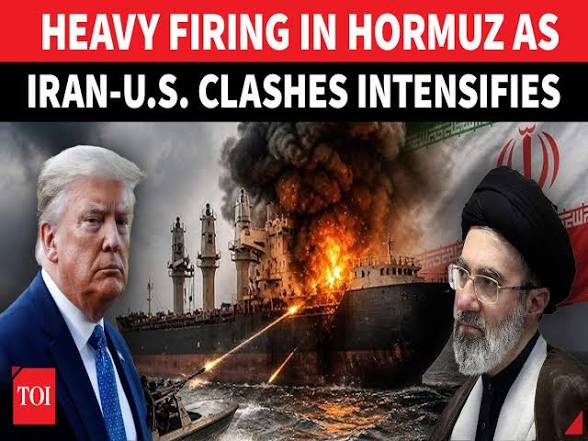
A New Flashpoint Emerges in the Strait of Hormuz
The Strait of Hormuz has once again become the center of one of the world’s most dangerous geopolitical crises. Following renewed U.S. military operations and stricter maritime enforcement measures, Iran has responded with military action, raising fears that the long-running standoff between Washington and Tehran could evolve into a broader regional conflict.
The latest escalation comes as the United States increases pressure on Iran through expanded naval operations and measures aimed at restricting Iranian maritime activity. Tehran has answered by launching retaliatory strikes against U.S.-linked military positions and warning that it will continue to defend what it considers its sovereign interests in and around the Strait of Hormuz.
With nearly one-fifth of the world’s oil trade typically passing through this narrow waterway, every military move in the region immediately attracts global attention. Governments, shipping companies, and financial markets are closely monitoring developments, aware that even a temporary disruption could have worldwide economic consequences.
Why the Strait of Hormuz Matters
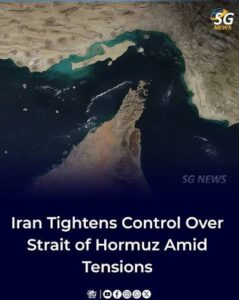
The Strait of Hormuz is one of the most strategically important maritime routes on Earth. Located between Iran and Oman, it connects the Persian Gulf to the Gulf of Oman and the Arabian Sea.
Its importance includes:
- A major route for global crude oil exports.
- A key corridor for liquefied natural gas (LNG) shipments.
- Critical access for Gulf producers including Saudi Arabia, Iraq, Kuwait, the UAE, and Qatar.
- Essential shipping lanes supporting international trade.
Because of its narrow geography, military confrontations in the area can quickly affect commercial shipping, insurance costs, and global energy markets.
Even limited military exchanges often result in higher oil prices as traders anticipate possible supply disruptions.
What Triggered the Latest Escalation?
The newest confrontation follows several weeks of increasing military and diplomatic tensions.
According to recent reports, the United States has expanded enforcement measures targeting Iranian maritime activity while maintaining pressure on Tehran over regional security concerns. Iranian officials argue these actions threaten their national interests and have vowed a firm response.
Iran subsequently launched retaliatory missile attacks against U.S.-associated military facilities in the region after American strikes targeted multiple Iranian military positions. Officials from both sides have confirmed military operations while emphasizing different objectives behind their actions.
Although both governments have stopped short of declaring an all-out war, the exchange represents one of the most serious confrontations seen in recent months.
Iran’s Response
Iranian leaders have maintained that they will not accept foreign military pressure in the Persian Gulf.
Recent developments reportedly include:
- Missile launches toward U.S.-linked military facilities.
- Increased naval patrols near the Strait of Hormuz.
- Public warnings regarding foreign military movements.
- Continued assertions that Iran retains significant influence over security in the waterway.
Iran has also accused Washington of escalating the crisis instead of pursuing diplomatic solutions.
Officials in Tehran argue that continued military pressure only increases instability throughout the Middle East.
The U.S. Position
American officials say their actions are designed to protect international shipping, deter attacks on commercial vessels, and maintain freedom of navigation.
Washington argues that uninterrupted access through the Strait of Hormuz remains essential for global commerce.
Recent U.S. measures reportedly include:
- Expanded naval deployments.
- Additional strikes against Iranian military targets.
- Enhanced maritime enforcement efforts.
- Increased coordination with regional partners.
The United States has stated that it intends to safeguard commercial shipping while responding to attacks against American personnel and allied interests.
Rising Risks for Global Shipping
Commercial shipping companies are among the first to feel the impact of rising tensions.
Whenever military activity intensifies in the Strait of Hormuz, several challenges typically emerge:
- Higher insurance premiums.
- Delays in cargo deliveries.
- Shipping route adjustments.
- Increased security requirements.
- Greater operating costs.
These additional expenses often ripple through global supply chains, ultimately affecting consumers worldwide.
Several international shipping organizations continue to advise vessels operating in the region to exercise heightened caution while monitoring military developments closely.
Oil Markets React Quickly
Energy markets rarely ignore developments involving the Strait of Hormuz.
Following the latest military exchanges, oil prices climbed as investors assessed the possibility of supply disruptions across one of the world’s busiest energy corridors. Analysts noted that concerns over shipping security and potential interruptions to exports contributed to the upward movement in crude prices.
Although production itself has not necessarily been halted, uncertainty alone is often enough to influence market sentiment.
International Concern Grows
Governments across Europe, Asia, and the Middle East continue urging restraint.
Many countries rely heavily on Gulf energy exports and therefore have a strong interest in preventing further escalation.
International observers fear that continued exchanges could:
- Expand into neighboring countries.
- Increase attacks on commercial shipping.
- Trigger additional sanctions.
- Further destabilize regional security.
Diplomatic channels remain active, though progress has been limited as both Washington and Tehran continue to exchange warnings alongside military actions.
Military Balance in the Gulf
The Persian Gulf remains one of the most heavily militarized regions in the world.
The United States maintains a significant naval presence alongside regional allies, while Iran continues to invest in missiles, drones, naval patrol craft, and coastal defense systems.
Military analysts note that the narrow geography of the Strait of Hormuz means even relatively small incidents can escalate rapidly, making communication and de-escalation efforts particularly important.
Economic Impact Beyond the Middle East
The implications of heightened tensions in the Strait of Hormuz extend well beyond the Middle East. As one of the world’s most important energy corridors, any disruption in the region can affect economies across Europe, Asia, and North America.
Countries that rely heavily on imported oil and liquefied natural gas (LNG) may experience increased energy costs if shipping delays persist. Rising transportation expenses can also contribute to higher prices for consumer goods, placing additional pressure on inflation.
Financial markets often react swiftly to geopolitical uncertainty. Investors closely monitor military developments, diplomatic statements, and shipping activity to gauge the potential impact on global trade and energy supplies. Even if no major supply interruption occurs, uncertainty alone can drive volatility in commodity markets.
Regional Allies on High Alert
Several Gulf nations have strengthened security measures as the confrontation between Iran and the United States continues. Governments across the region remain concerned that additional military exchanges could spill over into neighboring countries or threaten critical infrastructure.
Regional partners have reportedly increased surveillance around ports, energy facilities, and shipping routes while coordinating with international allies to ensure commercial vessels can continue operating safely.
Many governments have also renewed calls for restraint, emphasizing that diplomatic engagement remains the best path toward preventing a broader regional conflict.
Could the Strait of Hormuz Be Closed?
One of the most frequently discussed questions is whether Iran could close the Strait of Hormuz.
Military experts generally agree that while Iran possesses the capability to disrupt maritime traffic through missile attacks, naval mines, drones, and fast attack craft, maintaining a complete and prolonged closure would be significantly more difficult due to the presence of U.S. and allied naval forces.
Even a temporary disruption, however, could have major economic consequences by delaying energy shipments and increasing shipping costs.
Analysts note that both Iran and many Gulf states also depend on maritime trade through the Strait, making a prolonged closure economically costly for all parties involved.
Diplomatic Efforts Continue
Despite the military exchanges, diplomatic activity has not stopped.
International organizations and several world powers continue to encourage direct dialogue between Washington and Tehran. Officials have stressed the importance of preventing misunderstandings that could lead to unintended escalation.
Diplomatic efforts are expected to focus on:
- Reducing military tensions.
- Protecting commercial shipping.
- Preventing attacks on civilian infrastructure.
- Maintaining regional stability.
- Avoiding a wider conflict involving additional countries.
Although negotiations remain difficult, diplomats argue that communication channels are essential during periods of heightened military activity.
Impact on Global Energy Security
The Strait of Hormuz remains indispensable to global energy security.
Any prolonged instability could influence:
- Global crude oil prices.
- LNG exports.
- Shipping insurance costs.
- International freight rates.
- Manufacturing and transportation expenses.
Energy-importing nations are also reviewing contingency plans, including strategic petroleum reserves and alternative supply routes, should disruptions continue.
Experts believe diversification of energy sources and shipping routes will remain a long-term priority regardless of how the current crisis develops.
What Happens Next?
Several possible scenarios remain under discussion among security analysts:
1. Controlled Military Exchanges
The United States and Iran could continue limited military operations while avoiding direct large-scale war.
2. Diplomatic Breakthrough
International mediation could reduce tensions and restore stability to maritime operations.
3. Wider Regional Conflict
If additional countries become involved or attacks intensify, the crisis could expand beyond the Gulf region.
4. Increased Economic Pressure
Additional sanctions, shipping restrictions, or energy market disruptions could place greater strain on regional economies.
Most analysts caution that predicting the exact course of events remains difficult, as developments depend on military decisions and diplomatic efforts over the coming days and weeks.
Conclusion
The latest confrontation between Iran and the United States has once again highlighted the strategic importance of the Strait of Hormuz. As military exchanges continue and diplomatic efforts struggle to gain momentum, governments and financial markets remain focused on one of the world’s most critical maritime chokepoints.
While both sides have demonstrated military capabilities and determination, the broader international community continues to urge restraint to prevent further escalation. The coming weeks are likely to be crucial in determining whether the crisis moves toward diplomacy or deeper confrontation.
For now, the Strait of Hormuz remains not only a vital energy corridor but also one of the most closely watched regions in global geopolitics. Continued monitoring of official statements and verified developments will be essential as the situation evolves.
Frequently Asked Questions (FAQs)
1. Why is the Strait of Hormuz so important?
The Strait of Hormuz is one of the world’s most important shipping routes, carrying a significant share of global crude oil and liquefied natural gas exports.
2. Why have tensions increased between Iran and the United States?
Recent U.S. military actions and maritime enforcement measures, followed by Iranian retaliatory strikes, have significantly heightened tensions in the region.
3. Could the Strait of Hormuz be completely closed?
While Iran has the capability to disrupt shipping, experts generally believe maintaining a long-term closure would be difficult because of the strong naval presence of the United States and its allies.
4. How does this crisis affect oil prices?
Military tensions increase concerns about possible supply disruptions, often causing crude oil prices and shipping insurance costs to rise.
5. What are world leaders calling for?
Most governments and international organizations are urging restraint, continued diplomacy, and protection of commercial shipping to avoid a broader regional conflict.
6. Could this situation lead to a larger war?
Although the risk of escalation exists, it remains uncertain. Much will depend on future military actions, diplomatic negotiations, and decisions taken by both Iran and the United States.
How useful was this post?
Click on a star to rate it!
Average rating 0 / 5. Vote count: 0
No votes so far! Be the first to rate this post.
About the Author

usa5911.com
Administrator
Hi, I’m Gurdeep Singh, a professional content writer from India with over 3 years of experience in the field. I specialize in covering U.S. politics, delivering timely and engaging content tailored specifically for an American audience. Along with my dedicated team, we track and report on all the latest political trends, news, and in-depth analysis shaping the United States today. Our goal is to provide clear, factual, and compelling content that keeps readers informed and engaged with the ever-changing political landscape.