Courtroom Twist: Erika Kirk Makes MAJOR Demand In New Legal Filing
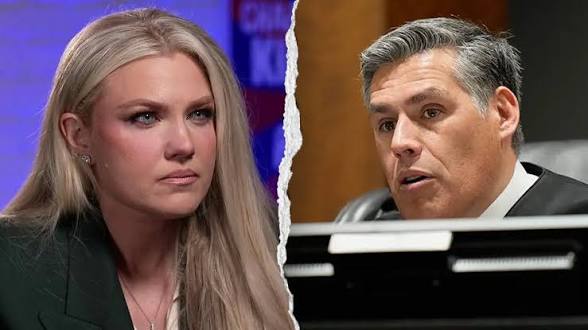
The high-profile criminal case surrounding the killing of conservative activist Charlie Kirk has taken another dramatic turn after his widow, Erika Kirk, filed a significant legal request in a Utah courtroom. The latest filing centers on one issue that has become increasingly important throughout the proceedings—public access to evidence presented during the preliminary hearing.
Erika Kirk’s legal filing argues that victims and members of the public who are legally present in the courtroom should be able to view every exhibit introduced into evidence. According to the motion, simply being physically present is not enough if crucial videos, photographs, documents, and other exhibits remain hidden from those attending the hearing.
The filing has quickly attracted nationwide attention because the Charlie Kirk case has become one of the most closely watched criminal proceedings in the United States. Prosecutors are seeking the death penalty against the defendant, Tyler Robinson, who is accused of fatally shooting Charlie Kirk outside an event at Utah Valley University in September 2025. Robinson has not yet stood trial, and the current preliminary hearing is designed to determine whether prosecutors have enough evidence to move the case forward.
Erika Kirk Calls for Greater Courtroom Transparency
At the heart of Erika Kirk’s legal filing is a request for greater transparency during the ongoing preliminary hearing.
According to court documents, her attorneys asked Judge Tony Graf to require that every exhibit admitted into evidence be displayed in real time for everyone lawfully attending the proceedings. The filing also requests that exhibits introduced during the first several days of the hearing—but not shown publicly—be presented again so courtroom observers can review them.
The legal team argues that crime victims possess meaningful rights under Utah law. They contend those rights include more than merely sitting inside the courtroom. Instead, they argue victims should have the ability to actually observe the evidence that the judge is reviewing.
The filing states that denying visibility of exhibits undermines transparency and could encourage unnecessary speculation regarding the case.
Why the Filing Matters
The new motion extends beyond one family’s concerns.
Legal experts frequently note that courts must balance several competing interests, including:
- A defendant’s constitutional right to receive a fair trial.
- The rights of crime victims.
- Public access to judicial proceedings.
- Protection of sensitive evidence.
Erika Kirk’s filing focuses primarily on the third and fourth issues. Her attorneys argue that evidence should not be hidden from lawful courtroom observers unless there is a compelling legal reason.
Supporters of the request believe greater transparency can strengthen public confidence in the judicial process. However, others caution that courts must carefully manage the release of evidence to avoid influencing future jurors or exposing sensitive material prematurely.
The Background of the Case
Charlie Kirk’s death shocked political supporters across the country.
Prosecutors allege that Tyler Robinson carried out the fatal shooting during a public “Prove Me Wrong” event held at Utah Valley University in Orem, Utah, on September 10, 2025.
Investigators have since collected surveillance footage, witness testimony, forensic evidence, DNA analysis, and numerous electronic records as part of their investigation. Prosecutors have indicated that this evidence forms the foundation of their case seeking aggravated murder charges.
The preliminary hearing has become the first major opportunity for prosecutors to publicly outline much of their evidence before any eventual trial.
What Erika Kirk Wants the Judge to Do
The latest filing asks the court to take several specific actions.
First, Erika Kirk requests that every exhibit introduced into evidence be displayed on courtroom monitors where all lawful attendees—including victims and members of the public—can actually view it.
Second, the filing asks the court to republish exhibits that had already been admitted during earlier hearing sessions but were never shown publicly.
Finally, the filing seeks an order preventing future evidence from being received in a manner that conceals it from courtroom observers.
According to the motion, these steps would help ensure that victims’ statutory rights are fully respected while maintaining confidence in the judicial process.
A Continuing Debate Over Public Access
This is not the first disagreement over public access in the Charlie Kirk case.
For months, attorneys have argued over whether cameras should be permitted inside the courtroom and how much evidence should be available to the public.
Earlier this year, defense attorneys attempted to limit camera coverage, arguing that extensive media attention could make it more difficult to seat an impartial jury. Judge Tony Graf ultimately declined to impose a blanket ban on courtroom cameras, allowing media coverage to continue under Utah’s judicial rules.
Erika Kirk’s latest filing continues that broader debate, although it focuses specifically on courtroom exhibits rather than television coverage.
Defense Raises Concerns About Fair Trial Rights
While Erika Kirk’s legal filing emphasizes transparency, the defense has continued to stress the importance of protecting the defendant’s constitutional right to a fair trial.
Defense attorneys have objected to the public release of certain evidence, arguing that some exhibits and witness statements could influence potential jurors if they are widely circulated before trial. One disputed issue involves statements from Robinson’s roommate, Lance Twiggs, who reportedly received immunity in exchange for cooperating with investigators. Prosecutors allege Robinson confessed his intentions in messages and a handwritten note, while the defense disputes how that evidence should be presented during the preliminary hearing.
The defense has also challenged certain video evidence, claiming that edited versions containing circles, highlights, or blurred sections could unfairly affect perceptions. Prosecutors have responded by preparing unaltered copies of the footage for the court’s consideration.
Judge Faces a Difficult Decision
Judge Tony Graf must now balance several competing legal interests before deciding whether to grant Erika Kirk’s request.
On one hand, Utah law recognizes important rights for crime victims, including the right to attend court proceedings. On the other hand, judges must ensure that criminal defendants receive an impartial trial that is not compromised by excessive pretrial publicity.
Legal observers note that preliminary hearings often involve sensitive evidence that may later become central to a jury trial. For that reason, judges sometimes limit how exhibits are displayed publicly while still allowing attorneys to present them in court.
As of now, Judge Graf has not issued a final ruling on Erika Kirk’s motion requesting that all courtroom exhibits be shown to those attending the hearing.
Why This Filing Has Drawn National Attention
The case has attracted national media coverage because of Charlie Kirk’s public profile and the seriousness of the charges.
The preliminary hearing has featured surveillance footage, testimony from law enforcement officers, forensic evidence, and witness accounts describing the events leading up to the fatal shooting. Family members, political supporters, journalists, and members of the public have closely followed each day of the proceedings.
Erika Kirk argues that transparency can help maintain confidence in the judicial system and reduce speculation about what evidence has actually been presented in court. According to the filing, withholding exhibits from public view risks creating confusion and encouraging misinformation.
Possible Impact on the Case
Although Erika Kirk’s filing does not address the defendant’s guilt or innocence, it could influence how the remainder of the preliminary hearing unfolds.
If the judge grants the request:
- Previously admitted exhibits could be displayed publicly.
- Future evidence may be shown on courtroom monitors for all attendees.
- Victims and the public would have broader access to exhibits presented during the hearing.
If the motion is denied, the court could continue its current practice of limiting public viewing of some evidence while allowing attorneys and the judge to review it.
Regardless of the ruling, prosecutors must still establish probable cause that Tyler Robinson committed the charged offenses before the case can proceed to trial.
Broader Questions About Transparency
The latest filing highlights an issue that extends beyond this single case.
Courts across the United States increasingly face questions about balancing transparency with fairness in high-profile criminal proceedings. Public access promotes confidence in the justice system, while reasonable restrictions can help preserve an unbiased jury pool.
The outcome of Erika Kirk’s request may therefore be watched closely by legal experts and victims’ rights advocates, even beyond Utah.
What Happens Next?
The preliminary hearing is expected to continue with additional witness testimony and further evidence from prosecutors. Judge Graf will first determine whether probable cause exists for the charges before deciding whether the case should move toward a full criminal trial.
Separately, the court is expected to rule on Erika Kirk’s motion seeking broader public access to courtroom exhibits. Until that decision is issued, the dispute over transparency remains unresolved.
Conclusion
Erika Kirk’s latest legal filing has added another significant development to an already closely watched criminal case. By asking the court to make all admitted exhibits visible to courtroom observers, she argues that victims’ rights and public confidence in the judicial process depend on meaningful transparency.
At the same time, the defense maintains that careful limits on public access are necessary to protect the defendant’s right to a fair trial. Judge Tony Graf’s upcoming decision will determine how those competing interests are balanced as the case moves forward.
Whatever the outcome, the filing underscores the broader legal challenges that arise whenever high-profile criminal cases intersect with intense public interest.
Frequently Asked Questions (FAQs)
1. Who is Erika Kirk?
Erika Kirk is the widow of Charlie Kirk and has filed a motion requesting greater public access to courtroom exhibits during the preliminary hearing.
2. What does Erika Kirk’s legal filing request?
She asks the court to display all admitted evidence for courtroom observers and, where applicable, to re-display exhibits that were admitted but not publicly shown.
3. Why is the filing important?
The filing raises questions about victims’ rights, courtroom transparency, and balancing public access with a defendant’s right to a fair trial.
4. Has the judge ruled on the request?
As of the latest reports, Judge Tony Graf has not yet ruled on Erika Kirk’s motion.
5. What is the purpose of the preliminary hearing?
The hearing is intended to determine whether prosecutors have presented enough evidence to establish probable cause for the case to proceed to trial.
6. Does the filing affect the defendant’s guilt or innocence?
No. The motion concerns public access to evidence and does not determine whether the defendant is guilty or innocent. That question would be decided later in court if the case proceeds to trial.
How useful was this post?
Click on a star to rate it!
Average rating 0 / 5. Vote count: 0
No votes so far! Be the first to rate this post.
About the Author

usa5911.com
Administrator
Hi, I’m Gurdeep Singh, a professional content writer from India with over 3 years of experience in the field. I specialize in covering U.S. politics, delivering timely and engaging content tailored specifically for an American audience. Along with my dedicated team, we track and report on all the latest political trends, news, and in-depth analysis shaping the United States today. Our goal is to provide clear, factual, and compelling content that keeps readers informed and engaged with the ever-changing political landscape.