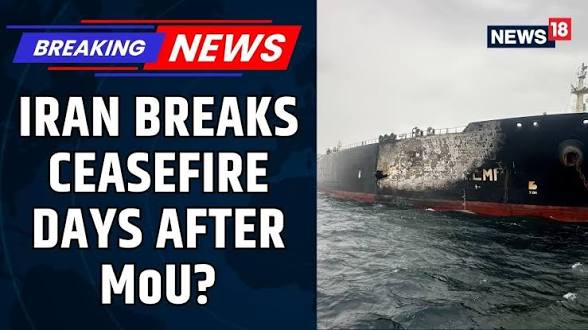
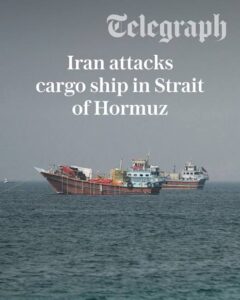
A fresh security incident in the waters near the Strait of Hormuz has intensified concerns about stability in one of the world’s most strategically important shipping corridors. Reports that a cargo ship was attacked as regional tensions involving Iran continued to rise have renewed fears that the fragile ceasefire could quickly unravel.
The attack comes at a time when global markets, shipping companies, and governments are closely monitoring developments across the Middle East. Even isolated incidents in the region can disrupt international trade, increase shipping insurance costs, and influence global energy prices.
Officials and maritime security organizations are continuing to investigate the incident while urging commercial vessels to exercise extreme caution. Although the full circumstances remain under investigation, the event highlights the ongoing risks facing civilian shipping operating near the Strait of Hormuz.
Why the Strait of Hormuz Matters
The Strait of Hormuz is one of the world’s most important maritime chokepoints. Connecting the Persian Gulf with the Gulf of Oman and the Arabian Sea, it serves as a primary route for transporting crude oil, liquefied natural gas, and commercial cargo.
A significant portion of globally traded oil passes through this narrow waterway every day. As a result, any disruption can have immediate consequences for international energy markets and supply chains.
Because of its strategic importance, the Strait has frequently been at the center of geopolitical tensions involving Iran, neighboring Gulf states, the United States, and other international powers.
Details of the Cargo Ship Attack
According to the latest reports, the vessel sustained damage while operating near Oman during a period of heightened regional tensions. Maritime authorities responded quickly, while security agencies began assessing the circumstances surrounding the attack.
Officials have not immediately released complete information regarding responsibility, and investigations remain ongoing. Shipping companies have been advised to review security procedures before entering high-risk areas.
The incident has prompted renewed discussions among maritime insurers, logistics firms, and international governments regarding the safety of commercial shipping routes through the region.
Iran Tensions Continue to Rise
The attack occurred against the backdrop of escalating tensions involving Iran and ongoing diplomatic efforts aimed at preventing wider regional conflict.
Although ceasefire discussions have reduced immediate military activity in some areas, security analysts warn that isolated incidents at sea could undermine confidence in those agreements.
Several governments have urged restraint while emphasizing the importance of protecting civilian shipping and maintaining freedom of navigation under international law.
Impact on Global Shipping
Commercial shipping companies continuously evaluate security risks when operating through the Strait of Hormuz.
Following the latest incident, some operators reportedly increased security measures, reviewed sailing schedules, and monitored official maritime advisories more closely.
Insurance premiums for vessels transiting high-risk waters can rise rapidly after attacks or military incidents, increasing transportation costs that may ultimately affect global consumers.
Energy Markets Respond
Oil markets often react quickly to geopolitical developments in the Middle East.
Immediately following reports of the attack, traders closely watched crude oil prices amid concerns that prolonged instability could affect supplies moving through the Strait.
However, analysts also note that market reactions depend on whether disruptions remain isolated or evolve into broader regional conflict.
International Response
Governments around the world have called for calm while supporting efforts to ensure safe navigation.
International maritime organizations continue sharing security information with commercial vessels operating throughout the Gulf region.
Military forces already deployed in nearby waters remain focused on protecting international shipping lanes and monitoring developments.
Why Businesses Are Watching Closely
Beyond geopolitical implications, multinational businesses rely heavily on uninterrupted maritime transportation.
Manufacturers, retailers, and energy companies all depend on predictable shipping schedules.
Any sustained disruption in the Strait of Hormuz could affect delivery timelines, freight costs, fuel prices, and broader global supply chains.
For investors and financial markets, developments in the region remain a key indicator of future economic stability.
About the Author