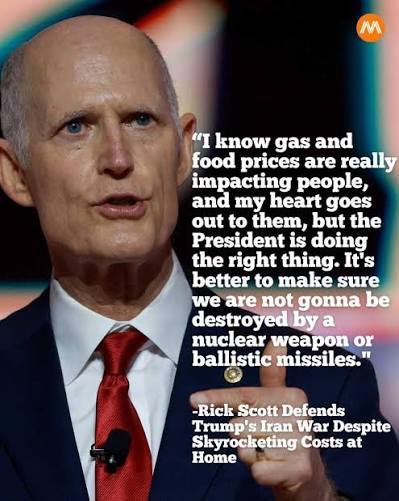
The Middle East remains one of the world’s most closely watched regions, and tensions involving Iran continue to shape U.S. foreign policy. In recent interviews, Florida Senator Rick Scott argued that Iran is “scared” because of President Donald Trump’s leadership and willingness to use both military and economic pressure against the Iranian regime. Scott contends that Trump’s approach has forced Tehran to reconsider its strategy and demonstrated that the United States is prepared to act when its national security interests are threatened.
The debate over Iran has intensified following recent military developments, renewed diplomatic efforts, and ongoing discussions about regional stability. Supporters of Trump’s policies believe his administration has restored American deterrence, while critics argue that continued pressure risks escalating conflict rather than producing lasting peace. Regardless of political perspective, the comments from Rick Scott have added another prominent voice to the national conversation.
This article examines why Rick Scott believes Iran is “scared” because of Trump, the broader geopolitical context, and what these developments could mean for U.S. foreign policy moving forward.
Rick Scott Says Iran Is Feeling the Pressure
Speaking during recent television appearances, Senator Rick Scott praised President Trump’s handling of Iran, arguing that decisive leadership has significantly changed the strategic calculations of the Iranian government. Scott maintained that strength, rather than hesitation, is the best way to discourage hostile actions from Tehran.
According to Scott, the Iranian leadership understands that President Trump is willing to respond forcefully if American interests, allies, or military personnel are threatened. He suggested that this credibility is a key reason Iran has become more cautious in its public statements and military posture.
Scott also emphasized that economic sanctions and military readiness work together to create pressure. In his view, these policies reduce Iran’s ability to finance regional proxy groups while increasing the cost of confrontation.
Why Supporters Believe Trump’s Strategy Is Working
Supporters of President Trump point to several reasons they believe Iran has become more cautious.
Strong Military Deterrence
The Trump administration has repeatedly stressed that it will respond quickly to attacks on American personnel and strategic interests. Officials argue that maintaining a credible military presence discourages aggressive behavior by adversaries.
Rick Scott believes this approach sends a clear message that hostile actions will have significant consequences. According to him, uncertainty about America’s response has been replaced by a predictable policy of strength.
Maximum Economic Pressure
Economic sanctions remain another central pillar of U.S. policy toward Iran. Supporters argue that restricting Iran’s financial resources limits its ability to fund military programs and regional allies.
Scott has consistently argued that maintaining financial pressure is essential because it weakens Iran’s ability to expand its influence throughout the Middle East. He believes economic leverage complements military deterrence and increases the likelihood that Iran will return to negotiations under more favorable conditions for the United States.
A Divisive Political Debate
Not everyone agrees with Rick Scott’s assessment. Critics argue that while pressure can influence Iran’s decisions, excessive military escalation carries significant risks. Some lawmakers have called for greater congressional oversight regarding military operations involving Iran and have questioned whether diplomatic opportunities should receive greater emphasis.
Recent debates within Congress illustrate that even members of the same political party have expressed differing views on how aggressively the United States should approach Iran. Those disagreements reflect broader questions about balancing national security, diplomacy, and long-term regional stability.
Although opinions differ, Rick Scott continues to argue that projecting strength is the most effective way to discourage further aggression from Tehran.
About the Author