Iran Retaliation Escalates: US Hits 20 Targets After Apache Helicopter Downing
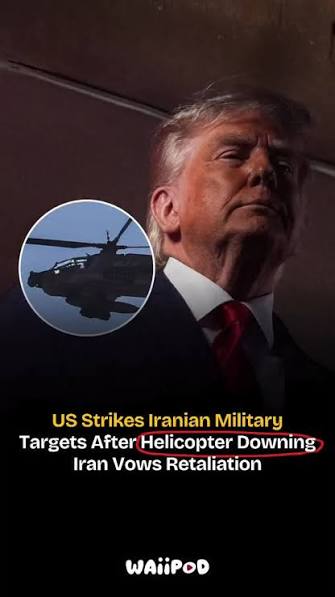
The Middle East is once again at the center of global attention as tensions between the United States and Iran surge to dangerous new levels. In a dramatic escalation, the U.S. launched strikes against approximately 20 Iranian military and strategic targets following the downing of a U.S. Army Apache helicopter near the Strait of Hormuz. The incident has intensified fears of a broader regional conflict, with both nations exchanging threats and military actions.
The latest confrontation comes amid already fragile diplomatic efforts aimed at reducing tensions in the region. While Washington describes its military response as a proportional act of self-defense, Tehran has condemned the strikes and vowed retaliation. The developments have raised concerns among world leaders, energy markets, and military analysts who fear the situation could spiral into a larger war.
What Happened to the Apache Helicopter?
The crisis began when a U.S. Army AH-64 Apache helicopter was reportedly brought down during operations near the Strait of Hormuz, one of the world’s most strategically important waterways. According to U.S. officials, the aircraft was conducting patrol activities when it was struck. Initial reports indicate that both crew members survived and were rescued during a complex recovery operation.
President Donald Trump stated that Iran was responsible for the attack and emphasized that the United States had a responsibility to respond. He described the helicopter incident as an unacceptable act of aggression against American forces operating in the region.
Iranian officials, meanwhile, have disputed aspects of the U.S. narrative. Some Iranian leaders suggested the incident was not a deliberate attack while simultaneously criticizing the presence of foreign military forces near Iranian territory.
Why the Strait of Hormuz Matters
The Strait of Hormuz remains one of the most critical maritime chokepoints in the world. A significant percentage of global oil exports pass through the narrow waterway connecting the Persian Gulf to international markets.
Any military confrontation in this region immediately affects:
Global oil prices
International shipping routes
Energy security
Regional military stability
The location of the Apache helicopter incident added to the seriousness of the event. Any disruption around Hormuz can have worldwide economic consequences, making the latest escalation a matter of international concern.
US Launches Strikes on 20 Iranian Targets
Following the helicopter downing, U.S. Central Command initiated what officials described as a “proportional response to unjustified Iranian aggression.” American forces reportedly targeted approximately 20 sites associated with Iranian military infrastructure.
Reports indicate the strikes focused on:
Radar installations
Air defense systems
Military communications facilities
Strategic infrastructure locations
Command and control assets
Among the areas reportedly affected were locations in Jask, Sirik, Qeshm, and parts of Hormozgan Province. Several facilities sustained significant damage during the operation.
U.S. officials insisted that the operation was carefully calibrated to avoid unnecessary civilian casualties while sending a strong message regarding attacks on American personnel and equipment.
Iran’s Immediate Response
Iranian authorities quickly condemned the U.S. strikes, accusing Washington of violating international norms and escalating regional tensions.
The Islamic Revolutionary Guard Corps (IRGC) announced retaliatory actions targeting American interests in the Gulf region. Reports indicate missile and drone attacks were directed toward U.S. military installations in several countries, including Bahrain, Jordan, and Kuwait.
While several incoming threats were reportedly intercepted, the attacks underscored Tehran’s willingness to respond militarily rather than limit itself to diplomatic protests.
Iranian Foreign Minister Abbas Araghchi warned that foreign forces operating near Iranian territory remain vulnerable and emphasized that Tehran possesses multiple options for retaliation.
Trump’s Position on the Escalation
President Trump has taken an increasingly firm stance following the helicopter incident. While initially downplaying the significance of the downing itself, he later argued that a military response was necessary to maintain deterrence and demonstrate American resolve.
Trump stated that the United States “must respond” when its military assets are attacked. He also suggested additional actions could remain on the table if Iran continues hostile activities.
His comments have sparked debate among policymakers and analysts. Supporters argue that a measured military response is necessary to prevent future attacks, while critics fear the strategy could lead to a wider conflict involving multiple regional actors.
International Reactions
The international community has reacted with concern.
Several governments have called for restraint, urging both Washington and Tehran to avoid further escalation. Diplomatic efforts have intensified as regional and global powers seek to prevent a larger war.
Among the major concerns are:
Risk to Global Energy Supplies
The Strait of Hormuz remains critical to global energy markets. Any prolonged military confrontation could disrupt oil shipments and increase fuel prices worldwide.
Regional Stability
Neighboring countries hosting U.S. military bases face the possibility of becoming targets in any prolonged exchange of attacks. Missile alerts and heightened military readiness have already been reported in several Gulf states.
Diplomatic Setbacks
Negotiations aimed at reducing tensions between the U.S. and Iran may become increasingly difficult if military actions continue. Both sides have expressed skepticism about the other’s intentions despite occasional references to diplomacy.
Military Analysis: What Happens Next?
Defense experts believe the current situation could evolve in several ways.
Scenario 1: Controlled Escalation
Both sides may continue limited military actions while avoiding attacks likely to trigger full-scale war. This approach allows leaders to project strength without crossing major red lines.
Scenario 2: Diplomatic Intervention
International mediators could successfully facilitate talks aimed at reducing tensions. Several countries have already urged both governments to return to diplomatic channels.
Scenario 3: Regional Conflict
If either side launches a larger attack or if casualties increase significantly, the crisis could expand beyond bilateral tensions and draw additional regional actors into the conflict.
Military analysts generally view this scenario as the most dangerous due to the concentration of military forces throughout the Gulf region.
Impact on Global Markets
Financial markets have responded cautiously to the latest developments.
Investors are closely monitoring:
Oil prices
Shipping insurance rates
Defense sector stocks
Regional currencies
Global energy supply forecasts
Historically, tensions in the Strait of Hormuz have produced rapid increases in energy prices. Although markets have not yet experienced severe disruption, traders remain concerned about potential supply interruptions.
Humanitarian Concerns
Beyond military and political consequences, humanitarian organizations have expressed concern regarding civilian infrastructure affected during the strikes.
Reports suggest that some facilities supporting local communities suffered damage during the exchange of attacks. Concerns have also been raised regarding access to water and essential services in affected areas.
Aid organizations are urging all parties to prioritize civilian protection and comply with international humanitarian law.
Strategic Significance of the 20 Targets
The selection of approximately 20 targets appears designed to achieve several objectives:
Demonstrate military capability.
Degrade Iranian operational assets.
Re-establish deterrence.
Avoid direct attacks on leadership.
Signal readiness for further action if necessary.
Military planners often use such calibrated responses to balance strength with restraint. Whether this approach succeeds in reducing tensions remains uncertain.
Could This Trigger a Larger War?
Many experts believe the possibility of a broader conflict cannot be dismissed.
Several factors increase the risk:
Existing regional instability
Presence of multiple armed groups
Strategic importance of the Gulf
High levels of military activity
Political pressure on leaders in both countries
However, there are also strong incentives for both sides to avoid a full-scale war. Economic considerations, diplomatic pressures, and concerns about long-term regional stability may encourage restraint despite the heated rhetoric.
Conclusion
The downing of the U.S. Apache helicopter near the Strait of Hormuz has become one of the most significant flashpoints in recent U.S.-Iran relations. The American response, involving strikes on approximately 20 Iranian targets, and Tehran’s subsequent retaliation have heightened fears of a wider regional conflict.
While both governments continue to defend their actions, the international community is pushing for de-escalation and renewed diplomacy. The coming days will likely determine whether this confrontation remains a limited exchange or develops into a more dangerous crisis with global implications.
Frequently Asked Questions (FAQs)
What caused the latest US-Iran escalation?
The crisis began after a U.S. Apache helicopter was downed near the Strait of Hormuz, prompting American retaliatory strikes against Iranian targets.
How many targets did the US strike?
Reports indicate the United States targeted approximately 20 Iranian military and strategic sites in response to the helicopter incident.
Were the Apache helicopter crew members rescued?
Yes. Both crew members were rescued and reported to be in stable condition.
How did Iran respond?
Iran launched retaliatory missile and drone attacks against U.S. military installations in the Gulf region.
Why is the Strait of Hormuz important?
The waterway is one of the world’s most important oil transit routes and plays a vital role in global energy supplies.
Could this lead to a wider war?
Analysts warn that the risk exists, although diplomatic efforts continue to prevent a broader regional conflict.
How useful was this post?
Click on a star to rate it!
Average rating 0 / 5. Vote count: 0
No votes so far! Be the first to rate this post.
About the Author

usa5911.com
Administrator
Hi, I’m Gurdeep Singh, a professional content writer from India with over 3 years of experience in the field. I specialize in covering U.S. politics, delivering timely and engaging content tailored specifically for an American audience. Along with my dedicated team, we track and report on all the latest political trends, news, and in-depth analysis shaping the United States today. Our goal is to provide clear, factual, and compelling content that keeps readers informed and engaged with the ever-changing political landscape.