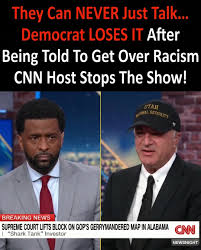
television personality Kevin O’Leary has once again found himself at the center of a heated public discussion after delivering strong criticism of North Korea’s propaganda system. Known for his blunt opinions on politics, economics, and global affairs, O’Leary’s latest remarks have sparked widespread debate across media platforms, political circles, and social media.
The controversy emerged after O’Leary compared state-controlled economic policies and information systems to examples seen in authoritarian regimes, including North Korea. His comments quickly attracted attention, with supporters praising his defense of free markets and free expression, while critics argued that such comparisons oversimplify complex political realities. Reports indicate that O’Leary referenced North Korea while discussing government intervention in markets and restrictions on information flow.
As discussions continue, the incident has evolved into a broader conversation about propaganda, censorship, freedom of information, and the role public figures play in shaping global political discourse.
Who Is Kevin O’Leary?

Kevin O’Leary is a Canadian businessman, investor, author, and television personality best known for appearing on the TV shows Shark Tank and Dragon’s Den.
Nicknamed “Mr. Wonderful,” O’Leary has built a reputation for direct and often controversial commentary. Over the years, he has weighed in on a wide range of topics including taxation, inflation, international trade, government spending, and global economic competition.
His outspoken style frequently generates headlines, making him a prominent voice in public policy discussions beyond the business world.
Understanding North Korea’s Propaganda System
To understand why O’Leary’s comments generated such strong reactions, it is important to examine the role propaganda plays within North Korea.
The country operates under one of the world’s most tightly controlled information environments. The government exercises extensive control over television, radio, newspapers, and internet access. Information is carefully curated to promote loyalty to the ruling leadership and reinforce state ideology.
International human rights organizations and researchers have long documented restrictions on free speech and independent journalism in North Korea. Citizens have limited access to foreign media, and information originating outside the country is heavily restricted.
Because North Korea is often cited as an example of centralized information control, references to the country frequently arise in discussions about censorship, propaganda, and government influence over public narratives.
What Kevin O’Leary Said
O’Leary’s criticism reportedly came during a broader discussion about economic policy and government intervention. In his remarks, he suggested that excessive government control over markets and information can lead to outcomes associated with authoritarian systems.
He pointed to North Korea as an example of what can happen when governments exert overwhelming influence over economic activity and public messaging. Similar comments have appeared in O’Leary’s previous critiques of government economic controls and state-managed systems.
While supporters viewed the comparison as a defense of market freedom and open information, critics argued that drawing parallels between democratic policy debates and North Korea can be politically inflammatory.
Regardless of where one stands, the comments succeeded in capturing global attention.
Why the Remarks Went Viral
Several factors contributed to the rapid spread of O’Leary’s comments.
1. His Public Profile
As a well-known investor and television personality, O’Leary commands a substantial audience. Statements from influential figures often receive amplified media coverage, especially when they involve controversial geopolitical topics.
2. North Korea’s Global Reputation
North Korea remains one of the most discussed and scrutinized countries in international politics. Any public figure referencing the nation in a political or economic argument is likely to attract significant attention.
3. Social Media Amplification
Platforms such as X, Facebook, YouTube, and other social media networks rapidly circulate provocative clips and soundbites. Discussions surrounding O’Leary’s comments spread quickly among both supporters and critics.
4. Ongoing Debates About Free Speech
Many countries are currently grappling with questions about misinformation, online moderation, censorship, and government influence over information. O’Leary’s remarks touched directly on these sensitive issues.
Supporters Applaud the Criticism
Supporters argue that O’Leary highlighted important concerns regarding government overreach and information control.
Many free-market advocates believe comparisons to authoritarian systems serve as warnings against excessive regulation. They contend that open markets, independent media, and unrestricted access to information are essential pillars of democratic societies.
Some commentators praised O’Leary for speaking candidly about issues that they believe deserve greater public scrutiny.
Others argued that strong language is sometimes necessary to draw attention to potential risks associated with concentrated governmental power.
Critics Push Back
Not everyone agreed with O’Leary’s assessment.
Critics argued that invoking North Korea during domestic policy discussions can distort public understanding of vastly different political systems.
Some analysts noted that democratic governments and authoritarian regimes operate under fundamentally different structures, making direct comparisons problematic.
Others suggested that political debates benefit from nuance rather than dramatic analogies.
Several commentators also expressed concern that repeated use of extreme comparisons may contribute to political polarization.
The Broader Debate About Propaganda
Beyond O’Leary himself, the controversy has reignited discussion about propaganda in the modern world.
Traditionally, propaganda referred to government-sponsored messaging designed to influence public opinion. However, experts increasingly recognize that propaganda can emerge through various channels, including:
- State-controlled media
- Political campaigns
- Social media networks
- Foreign influence operations
- Algorithm-driven content systems
- Coordinated misinformation campaigns
The digital age has transformed how information spreads, creating new challenges for governments, journalists, and citizens alike.
As a result, debates about propaganda are no longer limited to authoritarian states.
Information Warfare in the Digital Era
One reason O’Leary’s comments resonated with many observers is the growing concern about information warfare.
Countries around the world are investing heavily in digital influence campaigns designed to shape narratives, influence elections, and affect public opinion.
Governments, researchers, and technology companies increasingly focus on combating:
- Disinformation
- Deepfakes
- Coordinated online manipulation
- Foreign propaganda networks
- Cyber influence operations
These developments have elevated public awareness regarding the importance of media literacy and independent journalism.
North Korea’s Place in Global Politics
North Korea remains one of the most isolated countries in the world.
Its nuclear weapons program, military posture, and human rights record continue to attract international attention. The nation frequently appears in diplomatic discussions involving the United States, South Korea, China, Japan, and international organizations.
Because of its distinctive political structure and tightly controlled information environment, North Korea often becomes a reference point in broader discussions about authoritarian governance.
This context helps explain why O’Leary’s remarks generated such intense reactions.
Public Figures and Political Commentary
The controversy also raises questions about the role of public figures in political discourse.
Business leaders increasingly participate in discussions that extend beyond economics and finance. Through social media, television appearances, podcasts, and public events, influential personalities can shape conversations on global issues.
Supporters argue that entrepreneurs bring valuable perspectives based on real-world experience.
Critics contend that business success does not necessarily translate into expertise on geopolitical matters.
Nevertheless, public engagement by prominent figures continues to influence public opinion worldwide.
Media Coverage and Public Reaction
News outlets across multiple countries highlighted O’Leary’s comments, framing them as part of ongoing debates about freedom, censorship, and government power.
Online reactions were sharply divided.
Supporters emphasized:
- Free speech
- Market freedom
- Government accountability
- Open access to information
Critics emphasized:
- Historical context
- Political nuance
- Responsible rhetoric
- Accurate comparisons
The split response illustrates the increasingly polarized nature of modern political conversations.
What This Means Going Forward
While the controversy may eventually fade from headlines, the underlying issues remain highly relevant.
Questions surrounding propaganda, censorship, free expression, and information control are likely to remain central topics in global politics for years to come.
The rapid evolution of digital communication technologies ensures that debates about truth, misinformation, and public influence will continue shaping international discussions.
O’Leary’s remarks serve as a reminder that comments from influential figures can quickly evolve into broader conversations about governance, democracy, and freedom.
Conclusion
Kevin O’Leary’s fiery criticism of North Korean-style propaganda has sparked a worldwide conversation that extends far beyond a single comment. By invoking one of the world’s most isolated political systems, O’Leary reignited debate over censorship, government control, free markets, and the power of information.
Supporters see his remarks as a defense of liberty and transparency. Critics view them as overly simplistic comparisons that risk inflaming political divisions. Regardless of perspective, the controversy highlights the growing importance of information freedom in an increasingly interconnected world.
As global societies continue navigating challenges related to propaganda, misinformation, and digital influence, discussions like these are likely to remain at the forefront of public debate.
Frequently Asked Questions (FAQs)
Who is Kevin O’Leary?
Kevin O’Leary is a Canadian entrepreneur, investor, author, and television personality best known for appearing on Shark Tank and Dragon’s Den.
Why did Kevin O’Leary criticize North Korea?
O’Leary referenced North Korea while discussing government control, economic policy, and information systems, arguing that excessive control can lead to authoritarian outcomes.
Why are O’Leary’s comments controversial?
Critics argue that comparisons involving North Korea can oversimplify complex political issues, while supporters believe such comparisons highlight important concerns about freedom and government power.
What is North Korea’s propaganda system?
North Korea maintains strict control over media and information, limiting citizens’ access to outside news and promoting state-approved narratives.
Why does propaganda remain a global issue?
The rise of digital platforms, misinformation campaigns, and information warfare has made propaganda and media influence major concerns worldwide.
What broader issues does this debate raise?
The controversy touches on freedom of expression, censorship, media literacy, government influence, and the role of public figures in political discussions.
About the Author