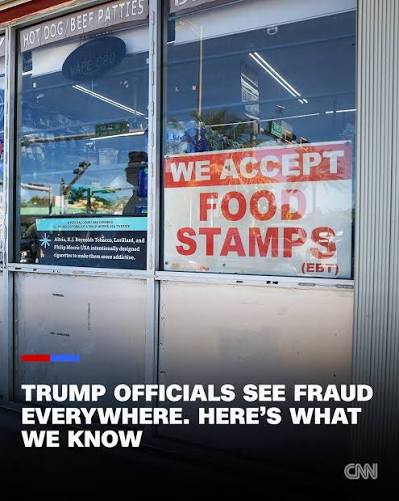
The debate surrounding government assistance programs has once again moved to the center of national politics as the Trump administration launches an aggressive campaign against alleged abuse of the Supplemental Nutrition Assistance Program (SNAP), commonly known as food stamps.
Federal officials say the initiative is designed to eliminate fraud, improve accountability, and ensure benefits reach Americans who genuinely need help purchasing food. Critics, however, warn that some reforms could make it harder for vulnerable families to access assistance.
As pressure mounts nationwide, the food stamp fraud crackdown has become one of the most closely watched policy battles in America. Supporters view the effort as a necessary response to waste and abuse, while opponents fear it could reduce access to essential benefits for millions of households.
What Is SNAP?
SNAP is the largest federal nutrition assistance program in the United States. Administered by the U.S. Department of Agriculture (USDA), the program helps low-income individuals and families purchase groceries through Electronic Benefit Transfer (EBT) cards.
Millions of Americans rely on SNAP benefits every month. The program was originally designed to combat hunger while supporting economic stability for households facing financial hardship.
Over the years, SNAP has expanded and evolved, becoming one of the most significant social safety-net programs in the country.
Why Is the Trump Administration Cracking Down?
According to USDA officials, the administration believes significant fraud, abuse, and loopholes exist within the current system. Federal authorities argue that taxpayer-funded benefits should only go to eligible recipients and that stronger oversight is necessary.
Recent statements from USDA leadership highlighted concerns about alleged misuse of SNAP benefits, including claims that some recipients with substantial assets were still qualifying for assistance under existing eligibility rules. Officials also pointed to hundreds of fraud investigations and arrests conducted during nationwide enforcement efforts.
The administration says its goal is straightforward:
- Prevent fraud and waste
- Strengthen eligibility verification
- Increase accountability
- Protect taxpayer dollars
- Preserve resources for genuinely needy families
Supporters argue that these measures help restore public confidence in federal assistance programs.
The Alleged Loopholes Under Scrutiny
One of the primary targets of the crackdown is what federal officials describe as eligibility loopholes.
Administration officials have argued that certain state-level policies and categorical eligibility rules allow individuals with significant financial resources to qualify for benefits that were originally intended for low-income households.
The USDA has specifically focused on reviewing eligibility standards and identifying areas where financial assets may not be adequately considered during benefit determinations.
While supporters view these changes as common-sense reforms, critics question whether isolated examples are representative of the broader SNAP population.
Arrests and Enforcement Actions
Federal authorities report a significant increase in enforcement activities connected to SNAP fraud investigations.
According to USDA officials, more than 1,000 arrests have been made as part of a nationwide crackdown on food assistance fraud. Investigations reportedly involve benefit trafficking, identity fraud, retailer violations, and other forms of misuse.
Common fraud schemes targeted by investigators include:
Benefit Trafficking
This occurs when SNAP benefits are exchanged for cash rather than being used for approved food purchases.
Identity Fraud
Some cases involve individuals allegedly using stolen identities or false information to obtain benefits.
Retailer Fraud
Certain retailers have faced accusations of illegally exchanging benefits for cash or participating in fraudulent transactions.
Organized Criminal Activity
Officials say organized fraud rings have increasingly targeted EBT systems, prompting additional federal investigations.
New Rules for SNAP Retailers
The administration’s efforts extend beyond recipients.
The USDA has announced changes affecting retailers authorized to accept SNAP benefits. These measures are intended to increase access to nutritious foods while strengthening program integrity.
Under the updated approach, participating stores may be required to stock a broader variety of staple food products.
Officials argue that these requirements support healthier food choices and align SNAP more closely with its nutritional objectives.
Food Restrictions and State Waivers
Another controversial aspect of the broader SNAP reform movement involves restrictions on what benefits can purchase.
Several states have sought and received federal waivers allowing limits on purchases of items such as soda, candy, and certain highly processed foods.
Supporters believe taxpayers should not subsidize products considered unhealthy.
Critics argue that such restrictions:
- Increase administrative complexity
- Limit consumer choice
- Stigmatize SNAP recipients
- Create enforcement challenges
The issue remains highly divisive among policymakers, nutrition experts, and anti-hunger advocates.
The Role of Technology in Fighting Fraud
Technology has become a central component of the administration’s anti-fraud strategy.
Federal agencies are increasingly using:
- Data analytics
- Cross-agency verification systems
- Digital identity checks
- Transaction monitoring tools
- Fraud detection algorithms
Officials believe these tools can identify suspicious activity faster and improve program oversight.
At the same time, cybersecurity concerns have emerged as criminals continue targeting EBT systems through card-skimming and electronic theft operations.
Critics Raise Concerns
Despite support from many fiscal conservatives, the crackdown has generated significant criticism.
Opponents argue that fraud rates within SNAP are often lower than public perception suggests and that aggressive reforms may unintentionally affect eligible recipients.
Advocacy organizations have warned that stricter requirements could create barriers for:
- Elderly individuals
- People with disabilities
- Low-income workers
- Rural residents
- Families experiencing temporary hardship
Some analysts also argue that administrative errors are frequently mistaken for intentional fraud.
The debate highlights the challenge of balancing program integrity with accessibility.
SNAP Enrollment Changes
Recent data show that SNAP participation has declined in several states amid policy changes and eligibility reviews. Reports indicate millions fewer Americans are receiving benefits compared with previous years.
Supporters of the administration’s policies cite these declines as evidence that reforms are reducing dependency and eliminating ineligible participation.
Critics contend that enrollment reductions may reflect barriers to access rather than successful fraud prevention.
The true long-term impact remains a subject of ongoing analysis.
Legal Challenges Emerging
The administration’s SNAP policies have also faced legal scrutiny.
Several states challenged federal efforts to impose new conditions tied to program administration. Recently, a federal judge issued an injunction blocking certain requirements while litigation continues.
These court battles could ultimately determine how much authority federal officials have to reshape SNAP through executive action.
Legal experts expect additional challenges as reforms continue moving forward.
Public Opinion Divided
Americans remain sharply divided on the issue.
Supporters argue:
- Fraud should never be tolerated
- Taxpayer funds require oversight
- Eligibility standards should be stricter
- Program integrity strengthens public trust
Opponents counter:
- Most recipients follow the rules
- Fraud narratives can be exaggerated
- Hunger remains a serious national issue
- Administrative burdens may harm vulnerable populations
This divide reflects broader disagreements about welfare policy, government spending, and social safety nets.
Economic Implications
The crackdown carries important economic consequences.
Reducing improper payments could save taxpayer money and redirect resources toward eligible households.
However, economists note that SNAP benefits also support local businesses, grocery stores, and regional economies.
Changes in participation rates can affect:
- Consumer spending
- Food retailers
- Rural communities
- Agricultural markets
- State assistance programs
As a result, policymakers are carefully monitoring both fiscal savings and economic ripple effects.
What Happens Next?
The future of SNAP reform remains uncertain.
Federal officials continue expanding investigations, reviewing eligibility rules, and promoting state-level reforms. Additional proposals could further tighten oversight and alter how benefits are distributed.
Meanwhile, advocacy groups, state governments, and legal organizations are expected to continue challenging certain aspects of the administration’s approach.
The coming months may determine whether the current crackdown becomes a lasting transformation of America’s food assistance system or faces significant legal and political obstacles.
Conclusion
The food stamp fraud crackdown has become a defining issue in the national debate over government assistance programs.
The Trump administration argues that stronger enforcement is necessary to eliminate waste, fraud, and abuse while protecting taxpayer dollars. Supporters see the effort as a long-overdue reform designed to strengthen public trust in SNAP.
Critics, however, worry that aggressive policies could reduce access for vulnerable Americans and create unintended hardships for families already struggling to afford food.
As investigations continue and legal battles unfold, the future of SNAP will likely remain at the center of American political and economic discussions. The outcome could shape food assistance policy for years to come.
FAQs
What is the food stamp fraud crackdown?
The food stamp fraud crackdown refers to increased federal efforts to investigate and prevent alleged abuse within the SNAP program, including fraud investigations, arrests, and eligibility reviews.
Why is the Trump administration targeting SNAP abuse?
Administration officials say the goal is to eliminate fraud, protect taxpayer dollars, and ensure benefits go only to eligible recipients.
How many arrests have been made in SNAP fraud investigations?
USDA officials have reported more than 1,000 arrests as part of nationwide enforcement efforts targeting alleged SNAP abuse.
Will SNAP benefits be reduced?
Not necessarily. However, some reforms may affect eligibility requirements and participation levels in certain states.
Are states restricting what SNAP benefits can buy?
Several states have received approval for restrictions on specific products such as soda and candy, though policies vary by state.
Is SNAP fraud common?
Fraud exists within the program, but experts and policymakers continue debating its overall scale and impact relative to total SNAP spending.
About the Author