Trump Banking Order: Immigration Status Crackdown, Financial Access Battle
The latest executive action from Donald Trump has ignited a fierce political and financial debate across America. The newly announced Trump banking order aims to tighten scrutiny on banking activity tied to immigration status, creating concerns among immigrant communities, financial institutions, civil rights advocates, and political leaders.
The order, signed on May 19, 2026, directs federal regulators and the Treasury Department to strengthen oversight of financial activities connected to undocumented immigrants and individuals lacking work authorization. While the administration argues the move is designed to protect the American financial system from fraud, money laundering, and financial abuse, critics warn it could limit access to banking services for millions of people.
The Trump banking order has quickly become one of the most discussed immigration and economic policy developments in the United States.
What Is the Trump Banking Order?
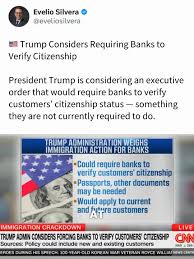
The executive order focuses on enhancing “Know Your Customer” (KYC) and anti-money-laundering regulations within the American banking system. Under the new directive, financial regulators are instructed to examine whether immigration status should play a larger role in determining financial risk.
The order does not directly require banks to collect citizenship documents from every customer. However, it encourages regulators to create stronger rules that could allow banks to seek additional immigration-related information when necessary.
The White House argues the action is necessary to stop financial crimes tied to illegal immigration, including:
- Payroll tax evasion
- Labor trafficking
- Hidden account ownership
- Shell company abuse
- Off-the-books wage payments
- Fraudulent loan applications
Administration officials also linked the policy to concerns involving cartel money laundering and international criminal networks.
Why Immigration Status Is Becoming a Banking Issue
The Trump administration believes undocumented immigrants create additional financial risks for lenders and institutions. Officials argue that individuals facing deportation or employment loss may struggle to repay mortgages, auto loans, credit cards, or other forms of debt.
Treasury Secretary Scott Bessent defended the move by saying financial institutions should better understand who is participating in the banking system.
Supporters of the order claim the policy strengthens national security and improves transparency. Conservative lawmakers argue banks already collect significant personal data and that immigration-related verification is a logical extension of existing financial oversight.
Critics, however, say the policy risks turning banks into immigration enforcement tools.
Banks Push Back Against Trump’s Proposal
One of the biggest developments surrounding the Trump banking order is the strong resistance from the banking industry itself.
According to multiple reports, earlier versions of the proposal would have forced banks to collect citizenship documents from all customers, including existing account holders. Financial institutions warned that such requirements would be expensive, legally risky, and nearly impossible to implement.
Industry groups reportedly told administration officials that millions of Americans do not possess passports or formal citizenship documentation. Banks worried the rules could unintentionally block lawful customers from accessing financial services.
Community banks also raised concerns about digital banking operations. Many institutions feared customers would ignore requests for new documentation, creating compliance confusion and potential legal liabilities.
Due to mounting pressure, the White House softened parts of the order before its release.
How the New Rules Could Affect Immigrants
Immigrant advocacy organizations say the order may increase fear among both documented and undocumented communities.
Many immigrants rely heavily on traditional banking services for:
- Receiving paychecks
- Paying rent
- Sending money abroad
- Building credit
- Applying for loans
- Saving money safely
If financial institutions begin requesting more immigration-related information, some individuals may avoid banks entirely.
Experts warn this could increase the number of “unbanked” individuals in the United States, pushing more people toward cash-only transactions or alternative financial systems with higher fees and lower consumer protections.
Civil rights groups also fear the order could create racial profiling concerns if banks begin scrutinizing certain customers more aggressively based on language, documentation, or nationality.
ITIN Users Face New Scrutiny
The executive order specifically mentions concerns related to Individual Taxpayer Identification Numbers (ITINs). These numbers are commonly used by immigrants who do not qualify for Social Security numbers but still pay taxes and participate in the U.S. economy.
Millions of workers use ITINs legally for tax filing and financial purposes.
Under the new banking scrutiny, regulators may look more closely at accounts or loans connected to ITIN usage without verified legal presence documentation.
Housing advocates worry this could impact immigrant families seeking mortgages or credit access.
Political Reactions Across America
The Trump banking order has sharply divided political leaders.
Republicans largely praised the action as a necessary step toward stronger immigration enforcement and financial accountability. Conservative commentators argued the government has a responsibility to prevent illegal financial activity and close loopholes that may benefit undocumented individuals.
Democrats and immigrant rights advocates condemned the move, describing it as an aggressive expansion of federal surveillance and immigration enforcement.
Some lawmakers warned the order could damage trust between immigrant communities and financial institutions. Others questioned whether the executive branch has the authority to indirectly pressure banks into conducting immigration-related checks.
The political battle surrounding the order is expected to intensify in the coming months.
Could the Order Face Legal Challenges?
Legal experts believe court challenges are likely.
Critics argue the executive order may conflict with existing financial privacy laws and anti-discrimination protections. Banks themselves may also challenge future regulatory requirements if compliance costs become too high.
One major question involves whether regulators can legally require immigration-related data collection without congressional approval.
Several legal analysts have pointed out that existing Bank Secrecy Act and customer identification rules were originally designed to combat terrorism financing and money laundering — not immigration enforcement.
If regulators attempt to impose broader citizenship verification requirements later, lawsuits could emerge from civil liberties groups, banking associations, and state governments.
Social Media and Public Reaction
The Trump banking order immediately exploded across social media platforms, with Americans expressing both support and outrage.
Conservative users praised the administration for prioritizing financial transparency and immigration control. Many argued that banks should know more about their customers’ legal status.
Opponents accused the administration of targeting vulnerable immigrant communities and expanding financial surveillance. Discussions on Reddit and political forums highlighted concerns about privacy, discrimination, and government overreach.
Some users also questioned whether wealthy international clients and corporations would face the same level of scrutiny as everyday immigrants.
What Happens Next?
The executive order now directs federal agencies and regulators to develop formal recommendations and potential rule changes within the next several months.
Possible next steps include:
- New Treasury advisories for banks
- Expanded customer due diligence requirements
- Revised anti-money-laundering guidance
- Stronger reporting standards
- Enhanced monitoring of suspicious financial activity
However, the final shape of these regulations remains uncertain.
Banks continue lobbying against aggressive documentation rules, while immigration advocates prepare for possible legal action.
The future impact of the Trump banking order will likely depend on how aggressively regulators attempt to implement the administration’s goals.
Broader Impact on the U.S. Financial System
The debate surrounding the Trump banking order goes far beyond immigration politics.
At its core, the controversy raises fundamental questions about:
- Financial privacy
- Government oversight
- Banking accessibility
- Immigration enforcement
- Consumer rights
- National security
Supporters say stronger customer verification protects the integrity of the U.S. financial system.
Critics argue the order risks excluding vulnerable communities from mainstream banking while expanding government surveillance into private financial activity.
The tension between security and accessibility is now becoming one of the defining political and economic battles of 2026.
Financial Institutions Caught in the Middle
Banks are now facing pressure from both sides.
On one hand, federal regulators may soon demand stricter customer monitoring and reporting standards. On the other hand, financial institutions risk backlash from customers and advocacy groups if they appear overly aggressive in enforcing immigration-related checks.
Some experts believe large national banks may adapt more easily because of their extensive compliance departments. Smaller community banks and credit unions, however, could struggle with rising operational costs.
Financial executives also worry about reputational risks.
If banks begin denying services or freezing accounts tied to immigration documentation concerns, public outrage and lawsuits could follow quickly.
Immigration Policy and Economic Anxiety
The Trump banking order arrives during a period of growing economic uncertainty and heightened immigration tensions in the United States.
The administration continues pushing tougher border enforcement policies while emphasizing economic nationalism and stricter oversight of federal systems.
By targeting financial access, the White House is expanding immigration enforcement into another major sector of American life.
For supporters, the move represents accountability and stronger financial security.
For opponents, it reflects a dangerous merging of immigration control and everyday banking access.
The national debate is far from over.
Conclusion
The Trump banking order has rapidly become one of the most controversial financial and immigration policies of 2026.
While the administration says the policy is focused on combating fraud, money laundering, and financial abuse, critics warn it could restrict banking access for millions of immigrants and increase financial surveillance across the country.
Banks, regulators, lawmakers, and advocacy groups are now preparing for what could become a prolonged legal and political battle.
As federal agencies begin drafting new rules, Americans across the political spectrum are closely watching how far the government will go in linking immigration status with financial access.
The coming months could reshape not only immigration enforcement but also the future relationship between privacy, banking, and federal power in the United States.
FAQs
What is the Trump banking order?
The Trump banking order is a 2026 executive action directing regulators and banks to increase scrutiny of financial activity connected to immigration status and undocumented individuals.
Will banks require proof of citizenship?
Currently, the order does not require banks to collect citizenship documents from all customers. However, regulators may propose stronger verification rules in the future.
Why are banks concerned about the order?
Banks worry the policy could create major compliance costs, legal risks, and operational challenges while potentially excluding lawful customers from financial services.
How could immigrants be affected?
Immigrants may face increased scrutiny when opening accounts, applying for loans, or using ITIN-based financial services.
What are ITINs?
ITINs are Individual Taxpayer Identification Numbers used by people who are not eligible for Social Security numbers but still pay taxes in the United States.
Could the order face lawsuits?
Yes. Legal experts expect challenges related to privacy rights, discrimination concerns, and federal regulatory authority.
Why is the issue politically controversial?
Supporters view the order as financial security reform, while critics see it as an expansion of immigration enforcement into private banking systems.
How useful was this post?
Click on a star to rate it!
Average rating 0 / 5. Vote count: 0
No votes so far! Be the first to rate this post.
About the Author

usa5911.com
Administrator
Hi, I’m Gurdeep Singh, a professional content writer from India with over 3 years of experience in the field. I specialize in covering U.S. politics, delivering timely and engaging content tailored specifically for an American audience. Along with my dedicated team, we track and report on all the latest political trends, news, and in-depth analysis shaping the United States today. Our goal is to provide clear, factual, and compelling content that keeps readers informed and engaged with the ever-changing political landscape.