US-Iran Escalation: Washington Finds New Way Around Tehran Blockades
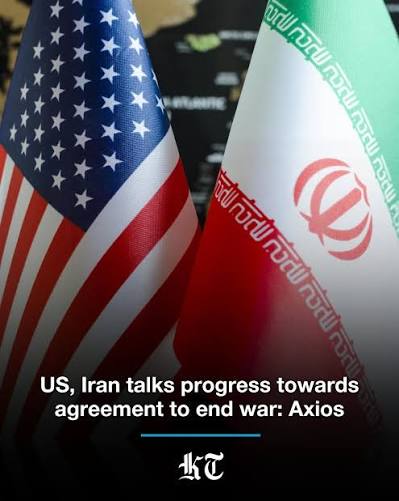
US-Iran escalation has entered a more dangerous phase, with the Strait of Hormuz becoming the central battleground for military pressure, oil exports, and diplomatic leverage. Recent reporting describes a U.S. naval blockade, Iranian attempts to challenge shipping, and a new cycle of retaliatory strikes. But the claim that Washington has found a completely new way around Tehran’s blockades needs careful qualification: the emerging approach combines maritime pressure, economic sanctions, and efforts to restore shipping access rather than relying on a single breakthrough.
Washington’s new approach to Tehran’s blockades
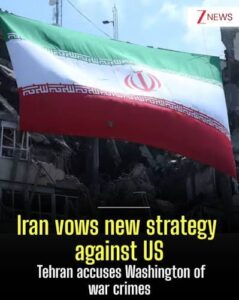
The latest US-Iran escalation is not simply another exchange of missiles. It is also a contest over who can control the economic consequences of the conflict. Washington is seeking to reduce Iran’s ability to use the Strait of Hormuz as leverage, while Tehran continues to treat control of the waterway as a central strategic asset.
According to Reuters reporting published on September 6, the United States has intensified its economic and naval campaign, weakening Iran’s ability to disrupt global energy markets. The report says discussions are underway around a possible compromise involving shipping fees in Hormuz. Such an arrangement could give both sides a face-saving way to reduce tensions without requiring Tehran to appear to surrender control of the waterway.
The significance of this development lies in its combination of pressure and negotiation. Rather than treating the blockade as only a military problem, Washington appears to be linking maritime security to sanctions relief, shipping access, and broader diplomatic demands. The approach remains uncertain, but it shows why the conflict is increasingly being fought through economic and political channels as well as military force.
Why the Strait of Hormuz matters
The Strait of Hormuz is one of the world’s most important energy chokepoints. Its security affects oil exporters, shipping companies, insurers, and consumers far beyond the Gulf. Any sustained disruption can increase transportation costs, delay deliveries, and create uncertainty in global energy markets.
For Iran, the strait offers strategic leverage because it sits beside major oil-export infrastructure. For Washington, keeping the waterway open is a way to limit Tehran’s ability to impose economic costs on other countries. This makes Hormuz more than a shipping route: it is a bargaining instrument in the wider conflict.
The current dispute also illustrates the difficulty of distinguishing between military control and commercial confidence. Even when officials claim that shipping routes are open, insurers and ship operators may remain cautious if they fear missiles, drones, mines, or further attacks. Reuters reported that shipping activity remained well below pre-war levels despite U.S. claims of control over the strait.
The maritime pressure campaign
One of the clearest elements of Washington’s strategy is the use of naval power to restrict Iran’s oil exports. Reuters reported that a U.S. naval blockade had sharply reduced Iranian crude shipments, with industry analysts estimating that exports fell from around 2 million barrels per day in March to approximately 220,000–255,000 barrels per day in August.
That decline matters because oil revenue is a major source of foreign currency for Iran. A prolonged reduction in exports can make it harder for Tehran to finance imports, stabilize its currency, and maintain economic activity. The same report said Iran was increasingly relying on floating storage in Asia as blocked tankers remained unable to return to Iranian ports.
However, the blockade is not a complete shutdown of every Iranian port or every possible oil route. Reuters described it as a strategic effort to limit vessel movement in the Gulf of Oman and Arabian Sea. That distinction is important: the policy seeks to constrain Iran’s economic options, not necessarily to eliminate every shipment.
Why sanctions are still central
The maritime campaign is being reinforced by sanctions and financial pressure. Recent reporting says Washington is trying to restrict Iran’s remaining trade relationships and reduce its access to international financial networks. The objective is to make continued confrontation more expensive while encouraging Tehran to negotiate.
Yet sanctions alone have not produced a political breakthrough. Iran has continued to resist U.S. demands, and its leadership has shown a willingness to absorb economic pain rather than concede on strategic issues. The result is a pressure campaign that may weaken the economy without automatically changing Tehran’s security calculations.
This is why the phrase “new way around Tehran blockades” should not be interpreted as a guaranteed solution. Washington may be finding ways to reduce the effectiveness of Iran’s leverage, but the underlying dispute over shipping, sanctions, and nuclear policy remains unresolved.
The latest military escalation
The economic pressure has unfolded alongside renewed military confrontation. Reuters reported that the United States and Iran exchanged their biggest barrage since July on September 2, with Washington striking Iran’s southern coast and Tehran firing at U.S. bases across the region.
The confrontation has also involved attacks on maritime assets. The Associated Press reported that Iran claimed to have struck an unmanned U.S. vessel attempting to enter the Strait of Hormuz, while the U.S. military denied the claim. The report said the alleged incident followed U.S. strikes on Iranian oil tankers in response to missile threats against American naval forces.
These competing claims show how difficult it is to assess events in real time. A military statement, a government claim, and independent confirmation are not the same thing. For readers following the US-Iran escalation, the distinction between confirmed events and disputed allegations is essential.
The risk of a wider conflict
The danger is that a dispute over shipping could expand into a broader regional war. Iran has threatened stronger retaliation, while U.S. officials have warned that further attacks could provoke additional strikes. The conflict has already involved military activity beyond Iran’s immediate coastline, increasing the possibility of miscalculation.
A successful attack on a U.S. warship, a major oil facility, or a commercial tanker could create pressure for a much larger response. Analysts quoted in recent reporting have warned that the conflict could move rapidly from limited retaliation to a more dangerous confrontation if casualties increase or critical infrastructure is damaged.
The economic consequences could also spread quickly. Higher shipping insurance, rising fuel costs, and reduced oil flows would affect countries that are not directly involved in the fighting. Gulf markets have already shown signs of caution as investors assess the possibility of a prolonged standoff.
Diplomacy remains the missing piece
The military and economic pressure campaigns have not yet produced a lasting settlement. Recent reporting says diplomatic negotiations have stalled, while both sides continue to disagree over the terms of any new agreement.
The central challenge is that Washington wants a broader arrangement covering both the Strait of Hormuz and Iran’s nuclear program. Tehran, meanwhile, has resisted giving up strategic control of the waterway without meaningful sanctions relief. This makes the negotiations difficult because each side views the other’s demands as a threat to its security and political standing.
A possible compromise over shipping fees could therefore be more than a technical maritime arrangement. It could serve as a limited confidence-building measure, allowing both sides to reduce immediate tensions while continuing to negotiate on larger issues. But there is no guarantee that such a compromise would hold.
What happens next?
The next phase of the US-Iran escalation will likely depend on whether Washington can maintain pressure without triggering a wider war, and whether Tehran sees enough benefit in negotiation to reduce its use of maritime leverage.
Three developments will be especially important to watch:
Shipping access: Whether commercial vessels begin returning to Hormuz in larger numbers.
Oil exports: Whether Iran’s reduced shipments remain under pressure or begin to recover.
Diplomatic talks: Whether a limited shipping arrangement can create space for broader negotiations.
Reuters+2
The immediate question is not whether Washington has completely defeated Tehran’s blockade strategy. It is whether the United States can reduce Iran’s leverage enough to make a negotiated settlement more attractive than continued confrontation. That remains an open question.
Conclusion
The latest US-Iran escalation shows that the conflict is increasingly about control of economic pressure, maritime access, and diplomatic leverage. Washington’s response combines naval operations, sanctions, and possible negotiations over shipping fees. Tehran, however, continues to resist concessions while using the threat of disruption to maintain strategic influence.
For now, the most important development is not a confirmed breakthrough but a shift in strategy: the United States is trying to make Iran’s blockade leverage less effective while keeping open the possibility of a negotiated arrangement. Whether that approach leads to de-escalation or another cycle of retaliation will depend on the decisions made by both governments in the coming days.
FAQs
1. What is the latest US-Iran escalation about?
The latest escalation centers on renewed military exchanges, pressure on Iran’s oil exports, and the struggle over the Strait of Hormuz. Washington is combining naval and economic pressure with efforts to limit Tehran’s ability to disrupt shipping.
2. Has Washington found a new way around Tehran’s blockades?
Recent reporting suggests that Washington is using a combination of naval pressure, sanctions, and possible negotiations over shipping fees. However, there is no confirmed single breakthrough that has completely ended Iran’s ability to use maritime leverage.
3. Why is the Strait of Hormuz so important?
The Strait of Hormuz is a major route for global oil shipments. Disruption there can affect energy prices, shipping costs, and regional security.
4. Are Iran’s oil exports being affected?
Yes. Reuters reported a sharp decline in Iranian crude shipments, with exports estimated at roughly 220,000–255,000 barrels per day in August, down from around 2 million barrels per day in March.
5. Is the U.S. blockade a complete shutdown of Iran’s coastline?
No. Reporting describes the blockade as a strategic effort to restrict vessel movement and oil exports rather than a complete closure of every Iranian port.
6. Could the conflict spread across the Middle East?
Yes. Recent fighting has involved attacks on U.S. forces in the region, and officials on both sides have warned of stronger retaliation. A major incident involving a warship or commercial vessel could increase the risk of wider escalation.
7. Are the U.S. and Iran still negotiating?
Diplomatic efforts remain uncertain. Recent reporting says talks have stalled, although discussions around shipping fees may offer a possible route toward de-escalation.
8. What should readers watch next?
The key indicators are shipping activity in Hormuz, Iranian oil exports, military incidents involving naval forces, and any progress toward a new agreement.
How useful was this post?
Click on a star to rate it!
Average rating 0 / 5. Vote count: 0
No votes so far! Be the first to rate this post.
About the Author

usa5911.com
Administrator
Hi, I’m Gurdeep Singh, a professional content writer from India with over 3 years of experience in the field. I specialize in covering U.S. politics, delivering timely and engaging content tailored specifically for an American audience. Along with my dedicated team, we track and report on all the latest political trends, news, and in-depth analysis shaping the United States today. Our goal is to provide clear, factual, and compelling content that keeps readers informed and engaged with the ever-changing political landscape.