Major Breakthrough: Trump Claims Oil Tankers Are Moving Through Strait Of Hormuz Again
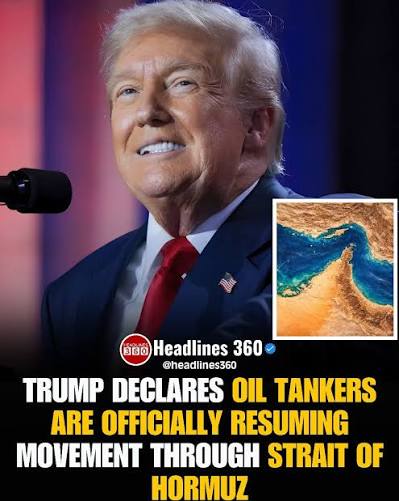
The global energy market received a major boost after U.S. President Donald Trump announced that oil tankers had started moving through the Strait of Hormuz once again. The development comes after months of heightened tensions, shipping disruptions, and concerns over global energy supplies.
Trump shared the announcement on Truth Social, stating that commercial vessels carrying oil were successfully traveling through what he described as the “Southern Highway.” His message was accompanied by the phrase, “Let the oil flow,” signaling optimism that one of the world’s most critical maritime trade routes could be returning to normal.
The announcement immediately caught the attention of governments, investors, shipping companies, and energy traders worldwide because the Strait of Hormuz plays a vital role in transporting global oil supplies.
Why The Strait Of Hormuz Matters
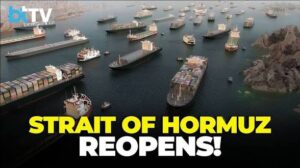
The Strait of Hormuz is among the world’s most strategically important waterways.
Located between Iran and Oman, the narrow passage connects the Persian Gulf with the Gulf of Oman and the Arabian Sea. Nearly one-fifth of the world’s oil trade normally passes through this shipping lane, making it essential for global energy security.
Major oil-exporting countries rely heavily on this route, including:
Saudi Arabia
United Arab Emirates
Kuwait
Iraq
Qatar
Any disruption in the Strait immediately affects oil prices, insurance costs, shipping schedules, and worldwide financial markets.
Months Of Disruption
For months, commercial shipping through the Strait faced serious challenges because of escalating military tensions involving the United States and Iran.
Shipping companies delayed voyages, insurance premiums surged, and hundreds of vessels either waited offshore or sought alternative routes where possible. The uncertainty led to higher oil prices and fears of supply shortages.
The situation became one of the biggest geopolitical risks affecting global markets during 2026.
Trump’s Latest Announcement
President Trump announced Monday that commercial oil tankers have begun leaving the Strait again.
According to his statement, ships are now using a secure maritime corridor that he referred to as the “Southern Highway.”
He described the route as:
Safe
Secure
Operational
His message suggested confidence that shipping activity is gradually returning despite months of instability.
Peace Agreement Raises Optimism
Trump’s announcement follows news of a tentative peace agreement between the United States and Iran.
The proposed agreement reportedly includes measures aimed at reopening maritime traffic while reducing military tensions throughout the region.
Although many details remain under negotiation, financial markets interpreted the announcement as a positive step toward restoring global oil supplies.
Markets React Quickly
Oil markets reacted almost immediately.
Brent crude prices declined as investors anticipated increased oil supplies and fewer disruptions.
Stock markets also responded positively, particularly companies involved in:
Transportation
Airlines
Manufacturing
Logistics
Lower oil prices generally reduce operating costs for businesses while easing inflation pressures on consumers.
Shipping Industry Remains Careful
Despite Trump’s optimistic statement, the shipping industry continues to exercise caution.
Many insurers and shipping companies say they are monitoring the situation closely before returning to normal operations.
Several maritime organizations believe additional security guarantees will be necessary before commercial traffic fully resumes.
Why Shipping Companies Are Hesitant
Moving an oil tanker through a conflict zone involves enormous financial risk.
Ship operators must consider:
Crew safety
Missile threats
Naval activity
Insurance costs
Cargo security
Even with political agreements in place, companies often wait until military risks decline significantly.
Insurance Costs Could Decline
During the crisis, war-risk insurance premiums increased dramatically.
If shipping continues safely over the coming weeks, insurers may gradually reduce those premiums.
Lower insurance costs would make transporting oil less expensive, helping stabilize global fuel prices.
Impact On Global Oil Prices
Oil prices respond rapidly to geopolitical developments.
When the Strait experiences disruptions:
Oil prices usually rise.
Shipping costs increase.
Supply chains tighten.
When shipping resumes:
Supply expectations improve.
Prices often fall.
Market volatility decreases.
Analysts believe continued safe passage through the Strait could further stabilize crude oil markets, though recovery may take time.
Impact On India
India imports most of its crude oil.
Any improvement in shipping through the Strait of Hormuz could benefit India in several ways:
Lower Fuel Prices
Cheaper crude oil may eventually reduce petrol and diesel costs.
Reduced Inflation
Lower transportation costs can help ease inflation across multiple industries.
Stronger Economy
Reduced import bills can improve India’s trade balance and strengthen economic growth prospects.
What Experts Are Saying
Energy analysts describe the latest developments as encouraging but remain cautious.
They note that:
Political agreements must be implemented.
Maritime security remains essential.
Insurance companies require confidence.
Shipping companies need operational certainty.
Most experts agree that restoring confidence will take weeks rather than days.
Challenges Still Ahead
Several issues remain unresolved:
Long-term security arrangements
Future sanctions discussions
Maritime monitoring
Regional military tensions
Commercial insurance policies
These factors will determine whether shipping fully returns to pre-crisis levels.
Global Economic Importance
The Strait of Hormuz affects far more than oil.
The route also carries:
Liquefied natural gas (LNG)
Petroleum products
Industrial supplies
Consumer goods
Any disruption impacts economies across Asia, Europe, and North America.
What Happens Next?
Investors will closely monitor:
Daily tanker movements
Official confirmation from maritime authorities
Progress on the U.S.-Iran agreement
Oil price movements
Shipping insurance updates
If commercial traffic continues without major incidents, confidence may steadily improve across international markets.
Conclusion
Donald Trump’s announcement that oil tankers are moving through the Strait of Hormuz again represents a significant development for global energy markets. While shipping companies remain cautious and many operational challenges remain, the news has already improved investor sentiment and contributed to lower oil prices. The coming weeks will be critical in determining whether the Strait can fully return to normal operations and provide lasting stability for global energy supplies.
Frequently Asked Questions (FAQs)
Is the Strait of Hormuz fully open again?
Not completely. While President Trump says oil tankers have resumed movement, many shipping companies remain cautious and are monitoring security conditions.
Why is the Strait of Hormuz important?
It is one of the world’s busiest oil shipping routes, carrying around 20% of global oil trade under normal conditions.
Why did oil prices fall after Trump’s announcement?
Markets anticipated improved oil supplies and reduced shipping disruptions, leading to lower crude prices.
How could this affect India?
India could benefit from lower crude oil import costs, reduced inflation, and improved economic stability if shipping remains uninterrupted.
Are shipping companies back to normal operations?
Not yet. Many operators continue to assess security risks before fully resuming regular transit through the Strait.
How useful was this post?
Click on a star to rate it!
Average rating 0 / 5. Vote count: 0
No votes so far! Be the first to rate this post.
About the Author

usa5911.com
Administrator
Hi, I’m Gurdeep Singh, a professional content writer from India with over 3 years of experience in the field. I specialize in covering U.S. politics, delivering timely and engaging content tailored specifically for an American audience. Along with my dedicated team, we track and report on all the latest political trends, news, and in-depth analysis shaping the United States today. Our goal is to provide clear, factual, and compelling content that keeps readers informed and engaged with the ever-changing political landscape.