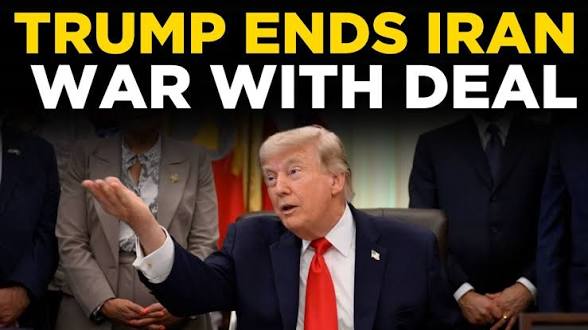
The possibility of a breakthrough in one of the world’s longest-running geopolitical rivalries has captured global attention after U.S. President Donald Trump announced that a peace agreement with Iran could be finalized soon. Speaking to reporters during a series of high-profile engagements, Trump expressed confidence that negotiations were progressing rapidly, fueling hopes that decades of hostility between Washington and Tehran may finally be entering a new chapter.
While the announcement has generated optimism in some diplomatic circles, Iranian officials have offered a more cautious assessment. Tehran has acknowledged ongoing diplomatic discussions but has stopped short of confirming that a final agreement has been reached. This difference in messaging has left analysts, investors, and world leaders closely monitoring every new development.
If successful, the proposed Trump Iran peace deal could reshape security dynamics across the Middle East, influence global energy markets, and redefine U.S. foreign policy for years to come. However, numerous political, military, and diplomatic challenges remain before any agreement becomes official.
Trump Signals Optimism Over Peace Talks
President Donald Trump described the ongoing negotiations as a historic opportunity to reduce tensions between the United States and Iran. According to the president, discussions have made significant progress, and he suggested that an agreement could be announced in the near future if remaining issues are resolved.
Although Trump did not disclose specific terms of the negotiations, he indicated that both sides were exploring ways to reduce regional tensions while addressing long-standing concerns over Iran’s nuclear program, sanctions, and broader security issues.
The president emphasized that diplomacy remains the preferred path, arguing that a negotiated settlement would benefit not only the United States and Iran but also America’s allies throughout the Middle East.
His comments quickly became headline news across international media, with financial markets reacting positively amid hopes that reduced geopolitical tensions could stabilize global oil prices.
Iran Responds With Cautious Optimism
Despite Trump’s confident remarks, Iranian officials have taken a far more measured approach.
Government representatives confirmed that diplomatic channels remain active but stressed that several complex issues still require negotiation before any comprehensive agreement can be finalized.
Officials also reiterated that Iran expects any future agreement to include guarantees regarding sanctions relief, economic cooperation, and respect for its national sovereignty.
This cautious response reflects years of difficult negotiations between Washington and Tehran, where previous agreements have often faced political opposition or implementation challenges.
Diplomatic experts note that such differences in public messaging are common during sensitive negotiations, as both governments seek to manage domestic political expectations while protecting their negotiating positions.
Why the Trump Iran Peace Deal Matters
A successful peace agreement would represent one of the most significant diplomatic achievements in recent Middle East history.
Relations between the United States and Iran have remained strained for more than four decades, marked by economic sanctions, proxy conflicts, military confrontations, and disputes surrounding Iran’s nuclear ambitions.
A comprehensive agreement could potentially deliver several major benefits:
- Reduced military tensions across the Middle East.
- Greater stability in global energy markets.
- Expanded diplomatic engagement between regional powers.
- Improved economic opportunities if sanctions are eased.
- Lower risks of direct military confrontation involving U.S. forces.
However, experts caution that reaching a lasting settlement will require difficult compromises from both sides.
Long History of U.S.–Iran Tensions
Understanding the significance of the current negotiations requires examining the decades-long relationship between the two countries.
Diplomatic relations deteriorated dramatically following the 1979 Iranian Revolution, which led to the overthrow of the U.S.-backed Shah and the establishment of the Islamic Republic.
The subsequent hostage crisis at the U.S. Embassy in Tehran became a defining moment in bilateral relations, leading Washington to sever formal diplomatic ties.
Over the following decades, tensions expanded beyond diplomacy to include:
- Economic sanctions targeting Iran’s financial and energy sectors.
- Disputes over Iran’s nuclear activities.
- Regional proxy conflicts involving allied armed groups.
- Maritime security incidents in the Persian Gulf.
- Periodic military confrontations and cyber operations.
Despite these challenges, multiple administrations in both countries have periodically attempted diplomatic engagement, with varying degrees of success.
The latest negotiations are therefore viewed by many analysts as another potentially historic opportunity—but one that remains uncertain until both governments formally endorse any final agreement.
About the Author