Trump Approval Rating: Poll Shift, Voter Mood, 2026 Race Impact
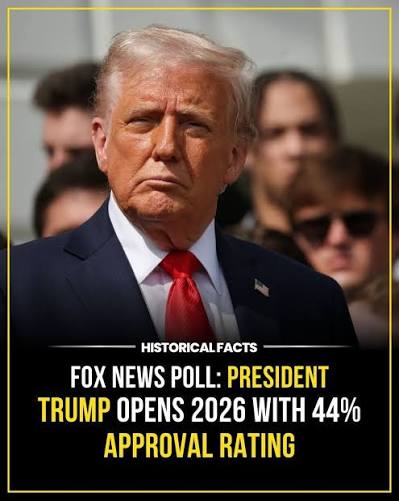
The approval rating of Donald Trump has once again become a central talking point in American politics. As 2026 unfolds, fresh polling data reveals a noticeable shift in public sentiment, raising questions about voter priorities, political momentum, and the upcoming midterm elections.
From economic concerns to foreign policy controversies, multiple factors are shaping how Americans perceive the president. This article breaks down the latest poll trends, explores the changing voter mood, and analyzes what it all means for the 2026 race.
Trump Approval Rating in 2026: Latest Poll Numbers
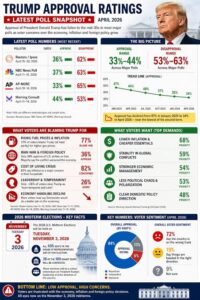
Recent polling data paints a challenging picture for the president. A Reuters/Ipsos survey released in early May 2026 shows Trump’s approval rating at 34%, a significant drop from 47% at the start of his second term in January 2025.
Other polls conducted in late April show similar trends, placing his approval between 33% and 36%, indicating consistency across different survey organizations.
This decline is not sudden but part of a broader downward trajectory. Earlier in 2026, Trump’s approval hovered around the low-40s, suggesting a steady erosion of support over time.
Key Takeaways:
- Approval rating: ~34% (May 2026)
- Decline from early 2025: ~13 percentage points
- Disapproval levels exceeding 60% in some polls
Why Are Trump’s Approval Ratings Falling?
1. Economic Pressure and Cost of Living
The economy remains the top concern for voters—and a major weakness for Trump in 2026. Rising inflation and increased living costs have significantly impacted public perception.
Polls show:
- Only 22% approve of Trump’s handling of cost of living
- Economic dissatisfaction is growing even among Republicans
Gas prices surged sharply following geopolitical tensions, adding pressure on everyday Americans. As a result, voters are increasingly focused on “kitchen table issues,” such as food, fuel, and housing costs.
2. Foreign Policy Backlash
The ongoing conflict involving Iran has had a direct impact on Trump’s approval ratings. Public support for the military action has been low, with only about one-third of Americans backing it.
The war has also contributed to:
- Higher fuel prices
- Increased federal spending
- Broader economic uncertainty
These factors combined have intensified criticism of the administration’s foreign policy decisions.
3. Polarization and Partisan Divide
Trump’s approval ratings continue to reflect deep political polarization:
- Around 75–80% of Republicans approve
- Overwhelming disapproval among Democrats
- Independents increasingly turning negative
This divide highlights a key dynamic: while Trump maintains a strong base, he struggles to expand support beyond it.
4. Policy Controversies and Public Perception
Several controversial proposals and actions have influenced public opinion, including:
- Immigration crackdowns
- Executive orders early in the term
- High-profile domestic projects facing public opposition
These issues have contributed to a perception among some voters that the administration is not focused enough on everyday concerns.
Historical Context: How Trump Compares
Trump’s approval ratings have historically been lower than most modern presidents. Even at his peak, he rarely crossed the 50% mark.
- Started second term at ~47% approval
- Fell to ~37% by mid-2025
- Now hovering in the mid-30s
This pattern reflects a unique characteristic of Trump’s presidency: stable but highly polarized support.
Voter Mood in 2026: What Americans Are Thinking
A Nation Divided
Polling suggests that over 70% of Americans believe the country is heading in the wrong direction.
This sentiment cuts across party lines but is especially strong among independents—a critical voting bloc.
Key Voter Priorities
The top issues influencing voter mood include:
- Inflation and cost of living
- Economic stability and jobs
- Foreign policy and global conflicts
- Immigration policies
Among these, economic concerns dominate, shaping both approval ratings and voting intentions.
Shift Among Independents
Independent voters are increasingly dissatisfied:
- Approval among independents has dropped significantly
- Democrats now lead among independents in some polls
This shift could prove निर्णायक (decisive) in the 2026 elections.
Impact on the 2026 Midterm Elections
Trump’s approval rating is more than just a number—it’s a key indicator of electoral outcomes.
1. Republican Challenges
Lower approval ratings historically hurt the president’s party in midterms. Current trends suggest:
- Republicans could lose key congressional seats
- Battleground states becoming more competitive
2. Democratic Opportunities
Democrats are gaining momentum, particularly in:
- Swing states
- Suburban districts
- Independent voter segments
However, analysts note that Democrats still need a strong, unified message to fully capitalize on the situation.
3. Redistricting and Structural Factors
Despite declining approval ratings, structural advantages such as redistricting could help Republicans maintain influence in Congress.
What Could Change Trump’s Approval Ratings?
Approval ratings are dynamic and can shift quickly. Key factors to watch include:
Economic Recovery
A drop in inflation or improvement in wages could boost approval.
Foreign Policy Developments
De-escalation of global conflicts may improve public perception.
Policy Adjustments
Refocusing on domestic issues could resonate with voters.
Campaign Strategy
Messaging and outreach ahead of midterms will play a crucial role.
Expert Insights: What Analysts Are Saying
Political analysts suggest that Trump’s approval ratings reflect a broader disconnect between policy priorities and voter expectations.
Key observations:
- Voters want economic stability over ideological battles
- Independent voters are the “swing factor” in 2026
- Approval ratings below 40% are historically risky for midterms
The Bigger Picture: What Approval Ratings Really Mean
Approval ratings are not just about popularity—they are a snapshot of national mood.
They influence:
- Media narratives
- Party strategies
- Donor confidence
- Voter turnout
While not perfect predictors, they remain one of the most important indicators in American politics.
Conclusion
The Trump approval rating in 2026 tells a clear story: a divided nation, economic anxiety, and growing political uncertainty.
With approval hovering in the mid-30s and key voter groups shifting, the political landscape is becoming increasingly competitive. The coming months will be crucial in determining whether these trends continue—or reverse.
As the 2026 midterms approach, one thing is certain: voter mood will play a निर्णायक role in shaping the future of American politics.
FAQs
1. What is Trump’s current approval rating in 2026?
Recent polls place it around 34%, marking a significant decline from early 2025.
2. Why has Trump’s approval rating dropped?
Key reasons include economic concerns, inflation, foreign policy decisions, and rising cost of living.
3. How does Trump’s approval compare historically?
Trump has consistently had lower approval ratings than most modern presidents, often below 50%.
4. How do approval ratings affect elections?
Lower approval ratings typically hurt the president’s party in midterm elections, impacting congressional control.
5. What issues matter most to voters in 2026?
The top issues are inflation, economy, jobs, and foreign policy.
6. Can Trump’s approval rating recover?
Yes, factors like economic improvement or policy shifts could lead to a rebound.
I
How useful was this post?
Click on a star to rate it!
Average rating 0 / 5. Vote count: 0
No votes so far! Be the first to rate this post.
About the Author

usa5911.com
Administrator
Hi, I’m Gurdeep Singh, a professional content writer from India with over 3 years of experience in the field. I specialize in covering U.S. politics, delivering timely and engaging content tailored specifically for an American audience. Along with my dedicated team, we track and report on all the latest political trends, news, and in-depth analysis shaping the United States today. Our goal is to provide clear, factual, and compelling content that keeps readers informed and engaged with the ever-changing political landscape.