Robert Kennedy Jr Rising: Independent Surge or Media Storm
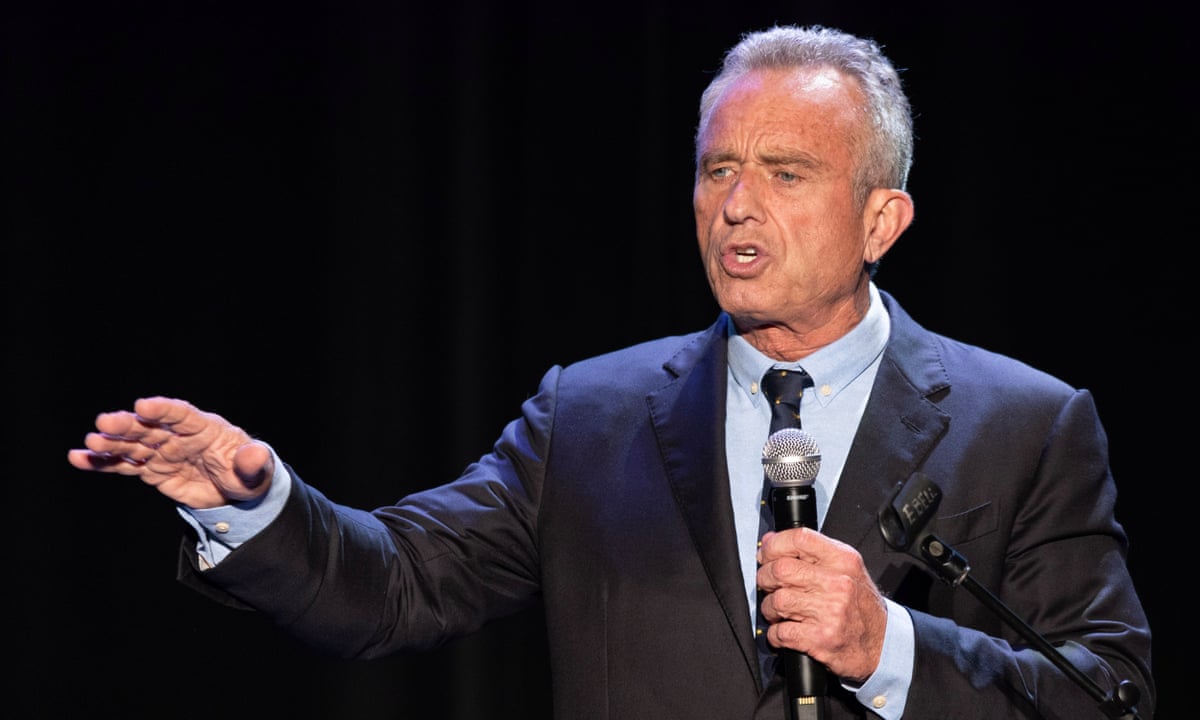
Part of a famous Democratic dynasty, he won’t win the White House but he could influence who wins. Today we will discuss about Robert Kennedy Jr Rising: Independent Surge or Media Storm
Robert Kennedy Jr Rising: Independent Surge or Media Storm
Robert F. Kennedy Jr. — a member of one of America’s most famous political families — has emerged as one of the most debated and polarizing figures in modern U.S. politics. Once known primarily as an environmental lawyer and activist, Kennedy’s transformation into an independent political force has triggered intense discussion across ideological lines. His rise raises a crucial question: Is Robert Kennedy Jr.’s growing visibility driven by a genuine independent political surge, or is it largely the result of a media-fueled storm built on controversy and division?
To answer this, one must look beyond headlines and examine his background, political evolution, media strategy, controversies, and the broader political climate that has enabled his rise.
A Kennedy Legacy and Public Expectations

Robert Francis Kennedy Jr. carries one of the most recognizable names in American history. As the son of Senator Robert F. Kennedy and the nephew of President John F. Kennedy, his life has always been shaped by legacy. The Kennedy family is historically associated with Democratic politics, civil rights advocacy, and progressive reform.
However, Robert Kennedy Jr.’s political path diverges sharply from traditional expectations. Rather than following a conventional Democratic trajectory, he has positioned himself as a challenger to both major parties, questioning institutions that earlier generations of Kennedys helped build.
This contrast between legacy and rebellion has become a defining feature of his public identity — one that attracts curiosity, loyalty, and criticism in equal measure.
Environmental Advocacy and Early Career
Before becoming a national political figure, Kennedy built his reputation as an environmental attorney. He was deeply involved in legal battles aimed at protecting waterways and holding corporations accountable for pollution. For years, his work placed him firmly within progressive environmental circles, earning praise from activists and advocacy groups.
At this stage, Kennedy was largely seen as an extension of traditional liberal values — environmental protection, regulatory oversight, and public accountability. Few would have predicted that this same figure would later become a lightning rod for controversy in public health and national politics.
Shift Toward Controversy and Public Health Skepticism
Kennedy’s public image began to change when he became an outspoken critic of vaccines and public health authorities. He questioned the safety of vaccines, the integrity of pharmaceutical companies, and the transparency of health agencies.
These positions placed him at odds with mainstream scientific consensus and led many medical professionals and policymakers to accuse him of spreading misinformation. His rhetoric resonated with a growing segment of the public that mistrusted government institutions and corporate influence, particularly in the aftermath of the COVID-19 pandemic.
This period marked Kennedy’s transition from respected environmental advocate to deeply controversial public figure — expanding his audience while simultaneously narrowing his acceptance among traditional political elites.
Entering the Presidential Race
Kennedy’s decision to run for president in 2024 elevated his profile dramatically. Initially, he sought the Democratic nomination, framing his campaign as a challenge to party leadership and entrenched interests. His message emphasized government overreach, corporate influence, and the erosion of individual freedoms.
However, resistance within the Democratic Party was swift. His views on public health, science, and conspiracy-leaning narratives made it difficult for him to gain institutional support. Facing mounting opposition, Kennedy pivoted and announced an independent presidential run.
This move transformed his campaign from an internal party challenge into a broader referendum on the two-party system itself.
Independent Politics and Voter Discontent
Kennedy’s independent candidacy tapped into a powerful undercurrent in American politics: widespread dissatisfaction with both major parties. Many voters feel alienated by partisan gridlock, political elites, and a sense that neither party truly represents ordinary citizens.
By branding himself as an independent outsider, Kennedy positioned his campaign as a rebellion against political orthodoxy. His messaging appealed to voters across ideological lines — from libertarian-leaning conservatives to disaffected liberals and politically disengaged independents.
However, history suggests that independent campaigns face enormous structural challenges. Ballot access laws, fundraising limitations, and media exclusion have consistently undermined third-party and independent candidates. Kennedy’s campaign attempted to navigate these barriers through alternative political structures and grassroots mobilization, but the obstacles remained formidable.
Media Strategy in a Fragmented Landscape
One of the most significant factors in Kennedy’s rise has been his media strategy. Rather than relying heavily on traditional news outlets, his campaign embraced podcasts, long-form interviews, social media platforms, and alternative media ecosystems.
This approach allowed him to bypass editorial filters and speak directly to audiences that distrust mainstream media. Appearances on popular podcasts and online shows helped Kennedy reach millions of viewers who might otherwise ignore conventional political coverage.
At the same time, mainstream media outlets treated Kennedy with caution. Coverage often emphasized his controversial statements and questioned the credibility of his claims. Some critics argued that limiting his exposure amounted to censorship, while others maintained that responsible journalism required careful scrutiny of his assertions.
This tension reflects a larger dilemma facing modern media: how to balance open political discourse with the responsibility to counter misinformation.
Controversies That Shaped His Image
Kennedy’s rise has been fueled — and constrained — by controversy. His statements on vaccines, public health policy, and government institutions have drawn sharp criticism from scientists, public officials, and advocacy groups.
Later developments in his career, including his role in shaping health policy decisions, intensified scrutiny. Critics accused him of undermining scientific expertise and politicizing healthcare. Supporters, however, viewed his actions as courageous resistance against what they see as corrupt and unaccountable institutions.
These controversies have made Kennedy one of the most polarizing figures in American public life — admired by some as a truth-teller and dismissed by others as reckless or dangerous.
Why His Message Resonates
Despite criticism, Kennedy’s message resonates with a substantial audience. Several factors help explain this appeal:
1. Institutional Distrust
Public trust in government, media, and corporations has declined significantly. Kennedy’s critiques echo frustrations felt by many Americans who believe powerful institutions prioritize profit and control over public welfare.
2. Anti-Establishment Identity
Kennedy frames himself as a political outsider, despite his famous surname. This paradox — an insider by birth, outsider by ideology — makes his narrative compelling to voters who want disruption without total chaos.
3. Digital Amplification
Modern media ecosystems reward strong emotions, controversy, and authenticity. Kennedy’s unfiltered style and willingness to challenge consensus ideas make him highly shareable in online spaces.
Media Storm or Meaningful Movement?
The debate over Kennedy’s rise often centers on whether it represents a serious political movement or a moment inflated by media dynamics.
Arguments for a Genuine Independent Surge
He has attracted supporters from across the political spectrum.
His campaign reflects real frustration with the two-party system.
His long-form media appearances allow deeper engagement than traditional sound-bite politics.
Arguments for a Media-Driven Phenomenon
Much of his visibility stems from controversy rather than policy substance.
Independent campaigns historically fail to translate attention into electoral success.
Media polarization amplifies extreme voices more than consensus-builders.
The truth likely lies somewhere in between. Kennedy’s rise is both a reflection of genuine voter discontent and a product of modern media ecosystems that reward divisive figures.
Implications for American Democracy
Robert Kennedy Jr.’s political ascent highlights broader changes in American democracy. It underscores the erosion of trust in institutions, the weakening grip of traditional parties, and the growing influence of alternative media.
His campaign demonstrates how political legitimacy is no longer defined solely by party backing or mainstream media approval. Instead, it is shaped by visibility, narrative control, and emotional resonance.
Whether Kennedy’s movement fades or reshapes future political strategies, its impact on political discourse is undeniable.
Conclusion: A Symbol of a Divided Era
Robert F. Kennedy Jr.’s rise is neither purely an independent surge nor merely a media storm — it is a combination of both. His prominence reflects deep dissatisfaction with the political status quo, amplified by a fragmented media environment that rewards controversy and outsider narratives.
While his long-term political success remains uncertain, Kennedy’s story offers a powerful insight into the evolving nature of American politics. It reveals a nation grappling with trust, truth, and representation — and a media landscape that no longer simply reports politics but actively shapes it.
In that sense, Robert Kennedy Jr. is less a political anomaly and more a mirror of the era itself.
How useful was this post?
Click on a star to rate it!
Average rating 0 / 5. Vote count: 0
No votes so far! Be the first to rate this post.
About the Author

usa5911.com
Administrator
Hi, I’m Gurdeep Singh, a professional content writer from India with over 3 years of experience in the field. I specialize in covering U.S. politics, delivering timely and engaging content tailored specifically for an American audience. Along with my dedicated team, we track and report on all the latest political trends, news, and in-depth analysis shaping the United States today. Our goal is to provide clear, factual, and compelling content that keeps readers informed and engaged with the ever-changing political landscape.