Nick Fuentes : extremist backlash, platform bans, political firestorm
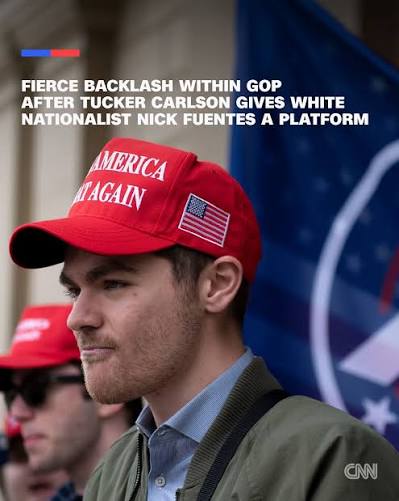
Nick Fuentes is a 27-year-old American far-right, white nationalist visionary and influencer who has become a major, divisive flashpoint in American conservative politics. Today we will discuss about Nick Fuentes : extremist backlash, platform bans, political firestorm
Nick Fuentes : extremist backlash, platform bans, political firestorm
Nick Fuentes is among the most controversial figures in contemporary American political media. A far-right commentator and internet personality, Fuentes has become a lightning rod for debate over extremism, free speech, and the limits of digital platforms. His rise from an obscure online activist to an internationally discussed political figure reflects how social media ecosystems can amplify radical ideologies while simultaneously triggering intense public and institutional backlash.
This article explores Fuentes’s ideological roots, the backlash he has faced, the wave of platform bans that reshaped his digital presence, and the broader political firestorm surrounding his influence.
1. Early Life and Rise to Notoriety
Nick Fuentes was born in 1998 in the United States and became politically active as a teenager during the rise of online right-wing movements in the mid-2010s. He initially gained attention through video commentary and livestreams in which he criticized mainstream conservatism, arguing that traditional Republican leaders had failed to defend what he described as “Western Christian civilization.”
His national visibility increased after his participation in the 2017 Charlottesville rally, a gathering that later became synonymous with white supremacist violence and extremist ideology. Although Fuentes attempted to distance himself from some of the rally’s most explicit symbols, his subsequent rhetoric and alliances placed him firmly within the far-right nationalist ecosystem.
Fuentes later founded the “America First” movement, branding it as a youth-driven nationalist alternative to mainstream conservatism. The movement’s online supporters, commonly called “Groypers,” use humor, memes, and coordinated online activism to challenge political figures they view as insufficiently nationalist.
2. Ideological Positions and Extremist Label
Civil rights organizations and academic researchers widely categorize Fuentes as a white nationalist and extremist ideologue. His public statements have included:
Claims that immigration threatens the cultural and demographic future of the United States
Repeated use of antisemitic stereotypes and conspiracy narratives
Open hostility toward LGBTQ+ rights
Advocacy for a form of Christian nationalism
Opposition to feminism and modern secular culture
These views place him far outside the American political mainstream and have led watchdog groups to describe his ideology as incompatible with pluralistic democracy.
3. Growing Backlash from Society and Media
As Fuentes’s audience expanded, so did public condemnation. Jewish organizations, civil rights groups, and mainstream political leaders warned that his rhetoric normalized hatred and historical revisionism. Media analysts highlighted how his polished speaking style and ironic humor allowed extremist themes to be repackaged for younger digital audiences.
Even within conservative circles, Fuentes has generated significant backlash. Many Republican officials and conservative commentators argue that his ideology damages the credibility of the broader right-wing movement. When prominent media figures have interacted with or referenced him, it has often triggered internal party disputes and public outrage.
Universities, event organizers, and local governments have also faced protests when Fuentes attempted to appear in public forums, citing concerns about hate speech and public safety.
4. Platform Bans and Deplatforming
One of the defining aspects of Fuentes’s career has been his repeated removal from major digital platforms. Over the years, he has been banned or suspended from:
YouTube
Twitter / X (multiple times)
Facebook and Instagram
TikTok
Twitch
Discord
Reddit
Major payment and fundraising services
These bans were generally justified under policies against hate speech, harassment, and extremist content.
The impact of deplatforming significantly reduced his reach on mainstream networks but did not eliminate his presence. Fuentes and his supporters migrated to alternative platforms and self-hosted streaming services. This shift illustrates a broader pattern in online extremism: while deplatforming limits algorithmic amplification, it can also push communities into more insular digital spaces.
5. Free Speech Debate and Political Tensions
Fuentes’s bans have become a symbol in the wider debate over digital censorship and free expression. Some political figures argue that removing controversial voices sets a dangerous precedent, even when those voices express extremist ideas. Others counter that private platforms have a responsibility to prevent the spread of hate and incitement.
This tension has turned Fuentes into more than just an individual personality — he has become a case study in how democratic societies manage radical speech in the age of social media.
6. Role in Political Polarization
Fuentes’s movement has clashed repeatedly with establishment conservatives, accusing them of betraying nationalist principles. His supporters have disrupted political events, challenged public officials online, and mobilized digital campaigns against figures they label as “globalist” or “neoconservative.”
These conflicts have intensified ideological fragmentation within the American right and contributed to a broader atmosphere of political radicalization.
7. Influence Beyond His Core Audience
Although Fuentes’s direct following is smaller than major political influencers, his impact often extends far beyond his subscriber numbers. Viral clips, controversy-driven coverage, and algorithmic amplification allow his statements to reach millions indirectly.
Researchers warn that such figures can shape discourse by:
Introducing extremist talking points into mainstream debates
Normalizing previously fringe narratives
Radicalizing online subcultures
Testing the boundaries of platform moderation policies
8. International Attention and Security Concerns
Fuentes has also attracted attention outside the United States, particularly in discussions about transnational far-right networks. Analysts note that digital extremism increasingly operates across borders, with ideas circulating globally even when legal jurisdictions differ.
Security agencies monitor such movements due to concerns that online radicalization can translate into real-world violence, even when leaders themselves avoid direct calls for action.
9. The Ongoing Political Firestorm
Every reappearance, interview, or reinstatement of Fuentes on a mainstream platform tends to ignite renewed controversy. For supporters, these moments are framed as victories for free speech. For critics, they represent failures of corporate responsibility and warnings about the fragility of democratic norms.
The recurring cycle of ban, return, backlash, and renewed scrutiny demonstrates how unresolved the broader issue remains.
Conclusion
Nick Fuentes stands at the intersection of digital media, extremist ideology, and modern political polarization. His career illustrates how a single online figure can provoke national debates about:
The limits of free speech
The responsibilities of technology companies
The resilience of democratic values
The power of online radicalization
Whether viewed as a dangerous extremist or as a symbol of controversial speech rights, Fuentes continues to generate a political firestorm that extends far beyond his personal platform. His story serves as a case study for the challenges societies face when confronting hate, misinformation, and ideological extremism in the digital age.
How useful was this post?
Click on a star to rate it!
Average rating 0 / 5. Vote count: 0
No votes so far! Be the first to rate this post.
About the Author

usa5911.com
Administrator
Hi, I’m Gurdeep Singh, a professional content writer from India with over 3 years of experience in the field. I specialize in covering U.S. politics, delivering timely and engaging content tailored specifically for an American audience. Along with my dedicated team, we track and report on all the latest political trends, news, and in-depth analysis shaping the United States today. Our goal is to provide clear, factual, and compelling content that keeps readers informed and engaged with the ever-changing political landscape.