Middle East Shock: Netanyahu Alleges Turkey Has Terror Ties In Explosive New Claim
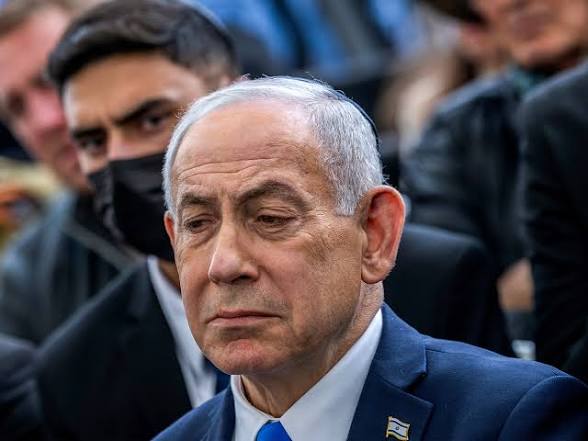
Tensions between Israel and Turkey have entered another volatile phase after Israeli Prime Minister Benjamin Netanyahu publicly accused Turkey of maintaining links with terrorist organizations. The remarks have sparked renewed diplomatic friction and raised fresh concerns about stability across the Middle East.
Netanyahu made the allegations while discussing regional security threats and Turkey’s growing geopolitical influence. His comments also included strong opposition to any future transfer of advanced American military technology, particularly F-35 fighter jets, to Turkey.
The claims come at a time when relations between Israel and Turkey are already strained due to disagreements over Gaza, Hamas, and broader regional policies. While Israeli officials argue that Turkey’s actions pose security risks, Turkish leaders have repeatedly rejected such accusations and maintain that their policies are based on supporting Palestinian rights rather than terrorism.
This latest exchange highlights the widening political divide between two of the region’s most influential countries.
Netanyahu’s Latest Allegation Against Turkey
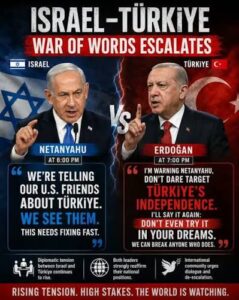
Prime Minister Benjamin Netanyahu has once again placed Turkey at the center of Israel’s security concerns.
Speaking during discussions about regional stability, Netanyahu alleged that Turkey maintains close connections with organizations that Israel considers terrorist groups. His remarks were primarily directed toward Hamas, which Israel, the United States, the European Union, and several other countries classify as a terrorist organization.
Netanyahu argued that these alleged connections should concern Israel’s allies, particularly the United States.
As a result, he urged Washington to reconsider military cooperation with Ankara, including any potential approval of advanced F-35 fighter jet sales.
His comments quickly attracted international attention because they came during a period of heightened diplomatic activity in the region.
Importantly, Netanyahu’s remarks are allegations. Turkey has consistently denied supporting terrorism and rejects Israel’s characterization of its relationship with Hamas.
What Did Netanyahu Say?
According to multiple media reports, Netanyahu expressed concern that Turkey’s regional ambitions could threaten Israeli security.
He reportedly warned that providing advanced American fighter aircraft to Turkey would strengthen a government that Israel believes maintains close relations with Hamas.
Netanyahu emphasized that Israel cannot ignore developments that it views as increasing security risks.
His comments reflect Israel’s broader strategy of seeking international support against groups it considers terrorist organizations.
Although Netanyahu did not announce new sanctions or military measures against Turkey, his statements signaled growing frustration with Ankara’s foreign policy.
Political analysts note that such public accusations also serve a diplomatic purpose by encouraging Israel’s allies to adopt a tougher position toward Turkey.
Why Are Israel and Turkey at Odds?
Relations between Israel and Turkey have experienced repeated ups and downs over the past two decades.
Although the two countries once maintained close military and economic cooperation, political disagreements gradually damaged bilateral ties.
Several key issues continue to fuel tensions.
The Gaza Conflict
Turkey has been one of the strongest international critics of Israel’s military operations in Gaza.
Turkish President Recep Tayyip Erdoğan has repeatedly accused Israel of using excessive force and has called for stronger international action to protect Palestinian civilians.
Israel, however, argues that its military operations are directed against Hamas following attacks launched from Gaza.
These fundamentally different perspectives have widened the diplomatic divide.
Hamas
Perhaps the biggest disagreement involves Hamas.
Israel views Hamas as a terrorist organization responsible for attacks against Israeli civilians.
Turkey, however, maintains political contacts with Hamas officials and argues that the group also represents a political movement supported by many Palestinians.
Israeli officials frequently criticize these contacts, claiming they provide legitimacy to Hamas.
Turkey insists its engagement is intended to encourage dialogue and support efforts toward a broader political solution.
Turkey’s Relationship With Hamas Explained
Turkey’s relationship with Hamas has long been a source of controversy.
Several Hamas political figures have reportedly visited Turkey over the years.
Israeli officials argue that these meetings demonstrate political support for Hamas.
Turkish authorities reject that interpretation.
Instead, Ankara says it maintains communication with various Palestinian factions as part of its diplomatic efforts.
Turkey also argues that isolating Palestinian political actors would make future peace negotiations even more difficult.
This disagreement has become one of the central obstacles preventing a significant improvement in Israeli-Turkish relations.
The F-35 Fighter Jet Dispute
One of Netanyahu’s strongest messages involved the possible transfer of F-35 fighter aircraft to Turkey.
The fifth-generation stealth fighter is regarded as one of the world’s most advanced combat aircraft.
Turkey was originally a partner in the F-35 development program.
However, the United States removed Turkey from the program after Ankara purchased the Russian-made S-400 air defense system.
Washington argued that operating both systems together could expose sensitive military technology.
Despite its removal, Turkey has continued expressing interest in rebuilding defense ties with the United States.
Netanyahu’s latest comments suggest Israel remains opposed to restoring Turkey’s access to such advanced military capabilities.
Israeli officials argue that maintaining Israel’s qualitative military edge remains essential for national security.
Why the Allegations Matter
Netanyahu’s accusations carry significance beyond the immediate diplomatic dispute.
First, they could influence future U.S. foreign policy discussions involving Turkey.
Washington maintains strategic relationships with both Israel and Turkey, making the issue particularly sensitive.
Second, the remarks could further complicate NATO dynamics.
Turkey remains one of NATO’s largest military powers, while Israel continues to enjoy close security cooperation with the United States and several European partners.
Third, the allegations may affect broader Middle East diplomacy.
Countries attempting to balance relationships with both Israel and Turkey could face increased diplomatic pressure if tensions continue escalating.
Finally, investors and international markets often monitor geopolitical developments in the Middle East closely.
Although political statements do not always translate into immediate policy changes, heightened regional uncertainty can influence energy prices, defense markets, and investor confidence.
Netanyahu’s allegations have drawn attention from governments, diplomats, and security analysts around the world. While Israel has continued to express concern about Turkey’s regional policies, many international observers have called for restraint and dialogue rather than further escalation.
The United States has not publicly endorsed Netanyahu’s allegations. Instead, Washington has emphasized the importance of maintaining strong relationships with both Israel and Turkey, two key partners in the Middle East despite their differences.
European governments have also closely monitored the situation. Several countries continue to encourage diplomatic engagement between regional powers, particularly at a time when conflicts in Gaza, Syria, and the wider Middle East remain unresolved.
Meanwhile, regional analysts believe that public exchanges between Israeli and Turkish leaders could make future diplomatic negotiations more challenging.
The United States’ Position
The United States finds itself in a delicate position.
Israel remains one of Washington’s closest allies, while Turkey is a longstanding NATO member with strategic importance due to its geographic location.
American policymakers have consistently stated that regional stability depends on cooperation among allies. At the same time, Washington has raised concerns in recent years about some aspects of Turkey’s defense and foreign policies, including its purchase of the Russian S-400 missile defense system.
The debate over advanced military equipment, including the F-35 fighter jet program, reflects these broader security concerns.
Although Netanyahu has urged stronger restrictions on military cooperation with Turkey, any future decisions will ultimately depend on U.S. policy considerations, congressional approval, and evolving regional security priorities.
Impact on NATO and Regional Security
The latest exchange between Israel and Turkey extends beyond bilateral relations.
Turkey plays a significant role within NATO because of its military capabilities and strategic location connecting Europe, Asia, and the Middle East.
Although Israel is not a NATO member, it cooperates closely with the alliance on intelligence sharing, defense technology, and regional security initiatives.
If diplomatic tensions continue to rise, analysts believe cooperation on certain security issues could become more complicated.
However, experts also note that NATO’s collective defense commitments are separate from disagreements involving non-member states such as Israel.
Could This Affect the Gaza Situation?
The timing of Netanyahu’s remarks is important.
The humanitarian crisis in Gaza continues to dominate international attention. Turkey has been among the strongest critics of Israel’s military operations and has repeatedly called for a permanent ceasefire and increased humanitarian assistance.
Israel, meanwhile, argues that its military actions are aimed at preventing future attacks by Hamas and ensuring national security.
These sharply contrasting positions make meaningful diplomatic progress increasingly difficult.
As long as both governments maintain opposing views on Hamas and the conflict in Gaza, political tensions are likely to remain high.
Expert Analysis
Foreign policy experts believe Netanyahu’s latest allegations should be viewed within the broader context of regional power politics.
Israel has consistently argued that any government maintaining close ties with Hamas raises legitimate security concerns. From Israel’s perspective, international pressure on Hamas and its supporters is essential to limiting the group’s influence.
Turkey, however, maintains that diplomatic engagement with Palestinian political actors can contribute to long-term peace efforts. Turkish officials reject accusations that their policies amount to support for terrorism.
Analysts suggest that these competing narratives explain why disagreements between the two countries continue despite occasional attempts to restore diplomatic relations.
Many experts also caution that public political statements often serve domestic audiences as well as international ones. As a result, rhetoric can sometimes become more confrontational than behind-the-scenes diplomacy.
What Happens Next?
Several developments could shape the next phase of Israel-Turkey relations.
First, diplomatic discussions between the United States and Turkey regarding defense cooperation will continue to attract attention.
Second, any changes in the Gaza conflict could influence political rhetoric from both governments.
Third, future regional summits may provide opportunities for dialogue aimed at reducing tensions.
However, meaningful progress appears difficult unless both sides address their long-standing disagreements over Hamas, regional security, and Middle East policy.
For now, observers expect relations to remain tense, even though both countries continue to share important economic interests.
Why This Story Matters
The dispute between Israel and Turkey is about more than political statements.
It reflects deeper disagreements over regional influence, security policy, counterterrorism, and the future of the Middle East.
Israel views Hamas as an immediate national security threat and believes governments should avoid legitimizing the group.
Turkey argues that maintaining diplomatic communication with Palestinian representatives is necessary for any future peace process.
These fundamentally different approaches continue to shape their foreign policies.
As a result, statements like Netanyahu’s latest allegations are likely to remain significant topics in international diplomacy.
Conclusion
Prime Minister Benjamin Netanyahu’s allegations against Turkey represent another chapter in the increasingly strained relationship between the two regional powers.
His claims, which focus on Turkey’s alleged ties to organizations Israel considers terrorist groups, have intensified an already complex diplomatic dispute. Turkey has firmly denied supporting terrorism and continues to defend its engagement with Palestinian political actors as part of its foreign policy.
Whether these latest remarks lead to concrete policy changes remains uncertain. Nevertheless, they have renewed debate over regional security, military cooperation, and the future of Middle East diplomacy.
As geopolitical tensions continue to evolve, the international community will closely watch how Israel, Turkey, the United States, and other regional stakeholders respond in the coming months.
Frequently Asked Questions (FAQs)
1. What did Benjamin Netanyahu allege about Turkey?
Netanyahu alleged that Turkey maintains ties with organizations that Israel classifies as terrorist groups, particularly Hamas. Turkey denies these allegations.
2. Has Turkey responded to Netanyahu’s claims?
Turkey has consistently rejected accusations of supporting terrorism and says its contacts with Palestinian groups are part of diplomatic engagement.
3. Why is Hamas central to the dispute?
Israel designates Hamas as a terrorist organization, while Turkey maintains political contacts with Hamas officials, creating a major point of disagreement.
4. Why did Netanyahu mention F-35 fighter jets?
He argued that advanced U.S. military aircraft should not be supplied to Turkey because of Israel’s security concerns.
5. Is Turkey currently part of the F-35 program?
No. Turkey was removed from the program after acquiring the Russian S-400 missile defense system.
6. How could these allegations affect U.S. policy?
They may influence political debate in Washington, but any changes to defense cooperation would depend on U.S. government decisions.
7. Are Israel and Turkey allies?
They maintain diplomatic and economic ties, but their relationship has been strained for years by disagreements over regional issues.
8. Could the dispute affect NATO?
Turkey remains an important NATO member. While tensions may complicate regional diplomacy, NATO’s core commitments remain unchanged.
9. Why is this issue important internationally?
The dispute involves regional security, defense cooperation, counterterrorism policy, and broader Middle East stability.
10. What should readers remember about these allegations?
These are allegations made by Israeli Prime Minister Benjamin Netanyahu. Turkey disputes the claims, and readers should distinguish between political accusations and independently verified facts.
How useful was this post?
Click on a star to rate it!
Average rating 0 / 5. Vote count: 0
No votes so far! Be the first to rate this post.
About the Author

usa5911.com
Administrator
Hi, I’m Gurdeep Singh, a professional content writer from India with over 3 years of experience in the field. I specialize in covering U.S. politics, delivering timely and engaging content tailored specifically for an American audience. Along with my dedicated team, we track and report on all the latest political trends, news, and in-depth analysis shaping the United States today. Our goal is to provide clear, factual, and compelling content that keeps readers informed and engaged with the ever-changing political landscape.