Levin SOUNDS THE ALARM: Iran’s Leaders Aren’t Even Hiding What They Want Anymore
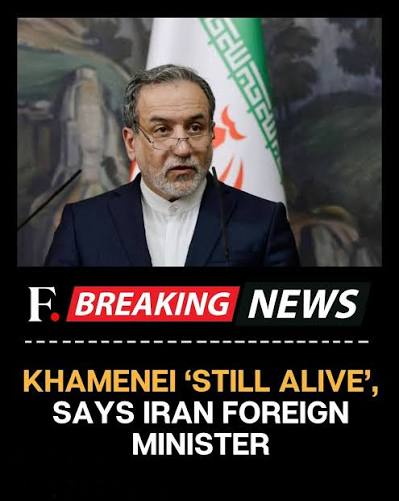
The debate surrounding Iran’s leadership and its long-term ambitions has intensified once again after conservative commentator Mark Levin issued a stark warning. Speaking during recent broadcasts, Levin argued that the Iranian regime has never hidden its ideological objectives and that recent diplomatic developments should not distract policymakers from what he considers Tehran’s enduring goals.
Levin’s comments come at a time of heightened geopolitical uncertainty. The United States, Iran, Israel, and regional allies remain engaged in delicate negotiations following months of military confrontation and diplomatic maneuvering. While supporters of diplomacy believe negotiations could reduce immediate tensions, critics—including Levin—argue that Iran’s leadership continues to pursue objectives fundamentally at odds with Western security interests.
His warning has reignited discussions across political circles, foreign policy think tanks, and national security communities about whether Iran’s public rhetoric should be taken as an indication of future actions.
Why Mark Levin Is Raising Alarm
According to Levin, the central issue isn’t simply Iran’s nuclear program.
Instead, he argues that the regime’s ideology has remained remarkably consistent for decades.
During multiple broadcasts, Levin questioned whether any agreement could fundamentally change Tehran’s worldview. He emphasized that Iran’s leaders continue to define America and Israel as principal adversaries and suggested that no diplomatic memorandum alone can alter those ideological commitments.
His concerns focus on several themes:
- Iran’s revolutionary ideology
- Continued support for regional proxy groups
- Questions surrounding enforcement of future agreements
- The durability of any negotiated settlement after political leadership changes in Washington
For Levin, these issues are interconnected and deserve as much attention as technical discussions surrounding uranium enrichment or sanctions relief.
The Context Behind Levin’s Comments
Levin’s latest remarks arrive amid ongoing scrutiny of a proposed U.S.-Iran memorandum of understanding.
Although administration officials have described the framework as a pathway toward reducing hostilities, critics argue that many important details remain unavailable to lawmakers and the public.
That lack of transparency has fueled skepticism.
Levin has repeatedly questioned why the complete agreement has not been released for broader examination, arguing that meaningful public debate requires access to the document itself.
Supporters of negotiations counter that sensitive diplomatic agreements often remain confidential during final negotiations.
Nevertheless, transparency has become one of the central political issues surrounding the evolving U.S.-Iran relationship.
“They’re Not Even Hiding It Anymore”
Perhaps Levin’s strongest claim is that Iran’s leadership openly communicates its long-term objectives.
From his perspective, critics do not need classified intelligence to understand Tehran’s intentions.
Instead, he argues policymakers should carefully examine:
- Official speeches
- Statements by senior Iranian officials
- Military doctrine
- Public messaging from institutions aligned with Iran’s government
Levin contends these sources consistently reinforce ideological positions that have remained largely unchanged over several decades.
Whether one agrees with his assessment or not, his remarks have amplified renewed debate over how governments should interpret official rhetoric versus diplomatic engagement.
Supporters Say Diplomacy Still Matters
Not everyone shares Levin’s conclusions.
Supporters of ongoing negotiations argue that diplomacy aims to reduce immediate security risks rather than transform ideological beliefs overnight.
Recent agreements reportedly include temporary ceasefire provisions, nuclear monitoring measures, and efforts to reopen strategic shipping lanes. Advocates say even limited agreements can reduce the chances of broader regional conflict while providing additional time for future negotiations.
They also note that international verification mechanisms could provide greater oversight than periods without any formal framework.
However, critics remain unconvinced that monitoring alone can prevent future crises.
Why This Debate Matters Beyond Washington
Levin’s warning resonates because the implications extend well beyond American politics.
Iran occupies a strategically significant position in the Middle East, influencing regional security, global energy markets, and international shipping routes.
Any deterioration in relations could affect:
- Global oil prices
- Maritime trade
- Military deployments
- Counterterrorism operations
- International diplomatic alliances
Recent tensions involving the Strait of Hormuz illustrate how developments involving Iran can rapidly influence markets and foreign policy decisions worldwide.
How useful was this post?
Click on a star to rate it!
Average rating 0 / 5. Vote count: 0
No votes so far! Be the first to rate this post.
About the Author

usa5911.com
Administrator
Hi, I’m Gurdeep Singh, a professional content writer from India with over 3 years of experience in the field. I specialize in covering U.S. politics, delivering timely and engaging content tailored specifically for an American audience. Along with my dedicated team, we track and report on all the latest political trends, news, and in-depth analysis shaping the United States today. Our goal is to provide clear, factual, and compelling content that keeps readers informed and engaged with the ever-changing political landscape.