Alabama Redistricting Clash: Map Battle, Voting Rights Fight, Court Drama
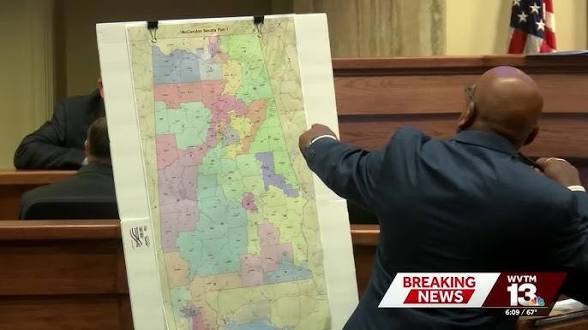
The Alabama redistricting clash has become one of the most significant political and legal battles in the United States ahead of the 2026 elections. What began as a dispute over congressional maps has escalated into a nationwide debate about voting rights, racial representation, and the balance of power in Congress.
At the center of this conflict are three powerful forces: state lawmakers seeking political advantage, federal courts enforcing voting protections, and a shifting legal landscape shaped by the U.S. Supreme Court. The result is a high-stakes showdown that could redefine electoral politics not only in Alabama but across the country.
Understanding Redistricting in Alabama
Redistricting is the process of redrawing electoral district boundaries, typically after a census. In Alabama, this process has long been controversial, with accusations of gerrymandering—drawing maps to favor a political party.
Historically, Alabama has faced repeated legal challenges over its maps, especially regarding minority representation. Courts have intervened multiple times, particularly under the Voting Rights Act (VRA), to ensure fair representation for Black voters, who make up about 27% of the state’s population.
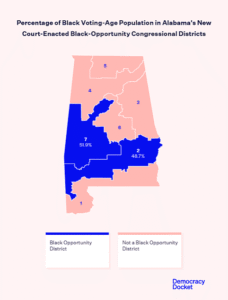
A major turning point came in 2023 when a federal court ruled that Alabama’s congressional map likely violated the VRA by diluting Black voting power. The court ordered the creation of a second majority-Black district, significantly altering the political landscape.
The Supreme Court Shockwave
The current clash intensified after a landmark 2026 U.S. Supreme Court ruling that weakened Section 2 of the Voting Rights Act, a key provision used to challenge racial discrimination in district maps.
This decision changed the rules of the game:
- It limited the ability to require majority-minority districts
- It emphasized “race-neutral” map drawing
- It emboldened states to revisit previously court-ordered maps
Republican leaders praised the ruling as a victory for constitutional principles, while civil rights groups warned it could roll back decades of progress in minority representation.
Alabama’s Immediate Response
Following the Supreme Court decision, Alabama officials moved quickly to challenge existing court orders.
- State leaders filed emergency motions to lift injunctions on redistricting cases
- Officials argued that federal courts should no longer dictate map designs
- There were calls to restore earlier maps that favored Republicans
At the same time, political divisions became clear. While some leaders pushed for aggressive redrawing, others urged caution, noting ongoing legal constraints.
The Map Battle: Competing Visions
1. Court-Ordered Map
- Includes two majority-Black districts
- Designed to comply with the Voting Rights Act
- Seen as fairer representation by civil rights advocates
2. State-Preferred Map
- Emphasizes race-neutral criteria
- Likely reduces minority-majority districts
- Could favor Republican electoral outcomes
This clash reflects a deeper philosophical divide:
Should maps prioritize racial fairness or strict neutrality?
Voting Rights at the Center
The Alabama redistricting fight is fundamentally about voting rights.
Supporters of the current court-ordered map argue:
- Minority voters need protection against dilution
- Historical discrimination still affects representation
- The VRA remains essential for democracy
Opponents counter:
- Race should not be a factor in drawing districts
- Courts have overstepped their authority
- Political fairness should not be based on demographics
This debate has intensified after the Supreme Court’s ruling, which critics say has weakened protections for minority voters across the South.
National Ripple Effects
Alabama is not alone. The redistricting clash is part of a broader national trend.
Several states—including Tennessee, Florida, and Louisiana—are exploring new maps that could reshape congressional representation.
Experts suggest these changes could:
- Add multiple Republican seats in Congress
- Reduce minority representation
- Trigger widespread legal challenges
In fact, analysts estimate that redistricting efforts across Southern states could shift 3–5 congressional seats, potentially influencing control of the U.S. House.
Courtroom Drama: Legal Battles Ahead
The Alabama redistricting clash is far from over. Multiple legal battles are ongoing:
- Appeals to the U.S. Supreme Court
- Challenges from civil rights groups
- Disputes over compliance with prior rulings
Federal courts have already ordered Alabama to use specific maps until 2030, creating a legal barrier to immediate changes.
This sets up a dramatic scenario:
- State vs Federal authority
- Political strategy vs legal constraints
- Short-term gains vs long-term precedent
Impact on the 2026 Elections
The outcome of this clash could significantly influence the 2026 elections.
Key Impacts:
- Congressional Balance
Alabama has 7 House seats, currently split 5–2 in favor of Republicans.
Redistricting could alter this balance. - Voter Turnout
Confusion over maps and legal battles may affect voter participation. - Minority Representation
The number of Black-majority districts could determine representation in Congress. - State Politics
Redistricting also impacts state legislative races, where Republicans currently hold strong majorities.
Political Reactions
Republicans
- View redistricting as a strategic opportunity
- Argue for race-neutral policies
- Push for legislative control over maps
Democrats
- Warn of voter suppression
- Support court intervention
- Advocate for stronger federal protections
Civil Rights Groups
- Call the Supreme Court ruling a setback
- Prepare new legal strategies
- Mobilize voters and advocacy efforts
Historical Context: Why This Matters
Alabama’s redistricting battles are deeply rooted in history.
From the civil rights movement to modern court cases, the state has been a focal point for voting rights संघर्ष:
- Past discrimination led to federal oversight
- Landmark cases shaped national law
- Ongoing disputes reflect unresolved tensions
The current clash is not just about maps—it’s about who gets a voice in democracy.
Future Outlook
The Alabama redistricting clash is likely to continue shaping politics for years.
Possible Scenarios:
- Supreme Court Intervention Again
Could redefine redistricting standards nationwide - Legislative Action
Congress may attempt to restore Voting Rights Act protections - Prolonged Legal Battles
Courts may remain the निर्णायक factor - Electoral Shifts
Changes in maps could influence future elections beyond 2026
Conclusion
The Alabama redistricting clash represents a pivotal moment in American democracy. It brings together legal battles, political strategy, and fundamental questions about fairness and representation.
As courts, lawmakers, and voters navigate this संघर्ष, the outcome will shape not only Alabama’s future but also the broader trajectory of voting rights in the United States.
FAQs
1. What is the Alabama redistricting clash?
It is a legal and political battle over how electoral district maps are drawn, particularly regarding minority representation and voting rights.
2. Why is it important?
It affects congressional representation, voting rights, and the balance of political power in the U.S.
3. What did the Supreme Court decide?
The Court weakened parts of the Voting Rights Act, limiting the use of race in redistricting decisions.
4. How does it impact the 2026 elections?
New or revised maps could change election outcomes, voter turnout, and representation.
5. Are other states involved?
Yes, several states are considering redistricting changes following the Supreme Court ruling.
6. Will the maps change before 2026?
It depends on ongoing court decisions and legal challenges, making the situation uncertain.
How useful was this post?
Click on a star to rate it!
Average rating 0 / 5. Vote count: 0
No votes so far! Be the first to rate this post.
About the Author

usa5911.com
Administrator
Hi, I’m Gurdeep Singh, a professional content writer from India with over 3 years of experience in the field. I specialize in covering U.S. politics, delivering timely and engaging content tailored specifically for an American audience. Along with my dedicated team, we track and report on all the latest political trends, news, and in-depth analysis shaping the United States today. Our goal is to provide clear, factual, and compelling content that keeps readers informed and engaged with the ever-changing political landscape.