UK Travel Warning Alert: 76 Countries Risk, Middle East Crisis, Leave Now, Global Danger Surge
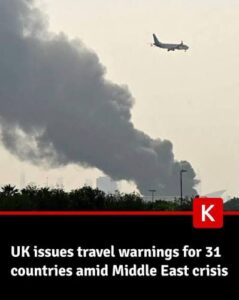
A sweeping UK travel warning covering 76 countries has triggered global concern, as escalating tensions in the Middle East spill over into international travel disruption. The UK Foreign, Commonwealth & Development Office (FCDO) has issued urgent advisories ranging from “avoid all travel” to “essential travel only,” reflecting a rapidly deteriorating security landscape.
The warning comes amid an intensifying geopolitical crisis involving Iran, Israel, and allied nations, with missile strikes, airspace closures, and economic fallout creating a volatile environment for international travelers.
This article explores the full scope of the alert, the countries affected, what it means for travelers, and how to stay safe.
Why the UK Issued a Travel Warning for 76 Countries
The UK government’s decision is rooted in a combination of escalating risks:
- Armed conflict in the Middle East
- Terror threats and regional instability
- Airspace closures and disrupted flights
- Economic shocks affecting global travel
According to reports, 76 destinations now fall under various levels of UK travel advisory, with at least 20 countries facing the strictest warnings.
The crisis has intensified following military escalation between Iran and Western allies, affecting key global transit routes such as the Strait of Hormuz, a vital oil shipping lane.
Middle East Crisis: The Epicenter of the Warning
The heart of the crisis lies in the Middle East, where conflict has rapidly escalated.
Key developments:
- Missile and drone attacks reported across multiple countries
- Airspace closures affecting thousands of flights
- Increased military deployments by global powers
- Rising oil prices and economic instability
Countries such as Iran, Israel, Lebanon, Iraq, and Syria are among the most affected, with severe travel restrictions in place.
The UK government has explicitly warned that the situation is “volatile and subject to rapid change.”
Full Breakdown: Countries Under Strict Travel Warnings
🔴 “Do Not Travel” (Highest Risk)
The UK advises against all travel to several high-risk nations, including:
- Afghanistan
- Iran
- Iraq
- Israel
- Lebanon
- Syria
- Yemen
- Palestine
These destinations face ongoing armed conflict, terrorism threats, or political instability.
🟠 “Essential Travel Only”
Countries under partial restrictions include:
- Bahrain
- Kuwait
- Qatar
- United Arab Emirates
Even in these regions, missile threats and disruptions remain a concern.
⚠️ Partial Risk / Regional Warnings
Some countries are considered safe in parts but risky in others:
- Turkey
- Egypt
- Pakistan
- Saudi Arabia
- Jordan
Travelers are urged to check specific regional guidance before visiting.
“Leave Now” Advisory: What It Means
In some cases, British nationals already abroad are being urged to leave immediately.
This advisory is typically issued when:
- Conflict risk escalates rapidly
- Evacuation routes may soon close
- Government assistance could become limited
Recent updates indicate that tens of thousands of British nationals are already stranded or seeking evacuation due to flight disruptions and airspace closures.
Air Travel Chaos: Flights Disrupted Worldwide
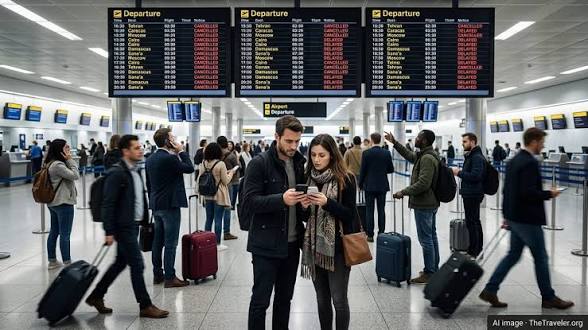
The crisis has caused unprecedented disruption to global aviation:
- Thousands of flights cancelled or rerouted
- Major airports temporarily shut
- Airlines suspending operations
Airspace closures across the Middle East have affected major global travel hubs like Dubai, Doha, and Abu Dhabi.
Passengers are advised to:
- Check flight status regularly
- Stay in contact with airlines
- Prepare for delays or cancellations
Impact on Travel Insurance and Refunds
One of the most critical implications of the UK travel warning is its effect on travel insurance.
Key points:
- Insurance may be invalid if you travel against official advice
- Package holidays may be refundable under UK law
- Independent bookings may not be covered
Experts warn travelers to carefully review their policies before proceeding.
Are Popular Tourist Destinations Still Safe?
Not all destinations are equally affected.
Relatively safer areas:
- Cyprus
- Morocco
- Maldives
- Parts of Egypt
However, even these locations may experience:
- Flight disruptions
- Increased security checks
- Indirect impact from regional tensions
What Travelers Should Do Right Now
The UK government recommends the following actions:
1. Monitor Official Advice
Regularly check updates from the FCDO, as situations can change rapidly.
2. Register Your Presence
Travelers in affected countries should register with authorities for updates and assistance.
3. Follow Local Authorities
Always comply with safety instructions and emergency guidance.
4. Have an Exit Plan
Prepare contingency plans for leaving quickly if needed.
Global Economic Impact of the Travel Crisis
The travel warning is not just about safety—it also reflects broader economic consequences.
- Oil prices have surged due to supply concerns
- Stock markets have reacted negatively
- Travel and tourism industries face major losses
The Strait of Hormuz crisis alone threatens a significant portion of global oil supply, amplifying economic uncertainty.
Why This Travel Warning Is Different
Unlike routine advisories, this alert stands out for its scale and urgency:
- Covers 76 countries worldwide
- Linked to active military conflict
- Includes “leave immediately” guidance
- Disrupts global transport systems
This marks one of the most extensive travel alerts issued in recent years.
Future Outlook: Will the Situation Improve?
The future remains uncertain.
Possible scenarios:
- Diplomatic resolution leading to easing restrictions
- Prolonged conflict causing further travel bans
- Expansion of risk zones beyond the Middle East
Current reports suggest ongoing negotiations, but tensions remain high with no immediate resolution in sight.
Conclusion
The UK travel warning affecting 76 countries highlights a rapidly evolving global crisis with serious implications for safety, travel, and the economy.
While not all destinations are equally dangerous, the widespread nature of the alert underscores the need for caution, awareness, and preparation.
For travelers, the message is clear:
👉 Stay informed
👉 Follow official advice
👉 Be ready to adapt plans quickly
In a world of increasing geopolitical uncertainty, travel decisions must now be made with greater vigilance than ever before.
❓ FAQs
1. Why has the UK issued a travel warning for 76 countries?
The warning is due to escalating global risks, particularly the Middle East conflict, which has caused instability, security threats, and travel disruptions.
2. Which countries are most dangerous right now?
Countries like Iran, Israel, Syria, Iraq, and Yemen are under the strictest “do not travel” warnings due to active conflict.
3. Can I still travel if there is a warning?
Yes, but it is strongly discouraged. Traveling against advice may invalidate your insurance and increase safety risks.
4. What should I do if I am already abroad?
Register with the UK government, follow local advice, and prepare to leave if the situation worsens.
5. Will flights continue during the crisis?
Flights are heavily disrupted, with cancellations and rerouting common due to airspace closures.
6. Are holidays outside the Middle East safe?
Many destinations remain open, but indirect disruptions and security concerns may still affect travel plans.
How useful was this post?
Click on a star to rate it!
Average rating 0 / 5. Vote count: 0
No votes so far! Be the first to rate this post.
About the Author

usa5911.com
Administrator
Hi, I’m Gurdeep Singh, a professional content writer from India with over 3 years of experience in the field. I specialize in covering U.S. politics, delivering timely and engaging content tailored specifically for an American audience. Along with my dedicated team, we track and report on all the latest political trends, news, and in-depth analysis shaping the United States today. Our goal is to provide clear, factual, and compelling content that keeps readers informed and engaged with the ever-changing political landscape.