Stephen McCullagh Case : lawyer scandal, court shock, crime outrage surge

The Stephen McCullagh case has become one of the most shocking criminal trials in recent years, capturing global attention due to its disturbing details, digital deception, and dramatic courtroom revelations. What initially appeared to be a tragic murder quickly evolved into a complex legal battle involving a fake online alibi, circumstantial evidence, and intense courtroom arguments.
At the center of the case is Stephen McCullagh, a Northern Irish man who was ultimately found guilty of murdering his pregnant partner, Natalie McNally. The case has sparked widespread outrage, raising questions about technology, justice, and the limits of criminal deception.
Background of the Case
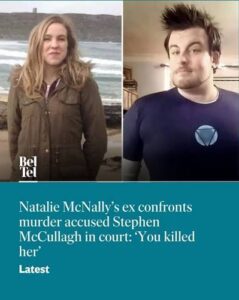
The case dates back to December 18, 2022, when Natalie McNally, aged 32 and 15 weeks pregnant, was brutally murdered in her home in Lurgan, Northern Ireland. She suffered multiple stab wounds, strangulation, and severe physical assault, indicating a prolonged and violent attack.
Initially, suspicion did not fall heavily on McCullagh. He claimed that at the time of the murder, he was hosting a six-hour livestream on YouTube, playing a video game. This appeared to provide him with a solid alibi.
However, the case took a dramatic turn when investigators discovered something deeply unsettling.
The Fake Livestream Alibi
One of the most shocking elements of the Stephen McCullagh case was the fabricated livestream alibi.
Investigators later proved that the supposed “live” video was actually pre-recorded days earlier and broadcast as if it were happening in real time.
This revelation became a turning point in the investigation:
- McCullagh repeatedly referenced the “current time” during the stream to make it appear authentic
- He claimed technical issues prevented him from interacting with viewers
- Digital forensic analysis exposed the truth
Prosecutors argued this was not a coincidence but a carefully planned deception, suggesting premeditation.
Timeline of Events
🔹 December 18, 2022
- Murder of Natalie McNally in her home
- Estimated time of death: between 8:50 PM and 9:30 PM
🔹 December 19, 2022
- Emergency call made
- McCullagh found at the scene attempting CPR
🔹 Early Investigation
- McCullagh initially cleared due to apparent alibi
- Later re-arrested after digital evidence surfaced
🔹 February–March 2026
- Trial begins at Belfast Crown Court
- Prosecution presents circumstantial but detailed case
🔹 March 23, 2026
- Jury delivers unanimous guilty verdict after just two hours
The Courtroom Drama
The trial was marked by intense legal arguments, emotional testimony, and a heavy reliance on circumstantial evidence.
Prosecution’s Argument
The prosecution painted a picture of a planned and calculated murder:
- McCullagh allegedly traveled to the victim’s home in disguise
- Changed clothing to avoid detection
- Created a fake alibi using technology
- Attempted to mislead investigators after the crime
They argued that the killing was premeditated and that the livestream hoax demonstrated intent.
Defense Strategy
The defense, led by experienced barristers, attempted to dismantle the prosecution’s claims by highlighting:
- Lack of direct forensic evidence
- No eyewitnesses
- Gaps in CCTV coverage
- Possibility of another killer
They insisted the case relied heavily on circumstantial evidence, urging the jury to consider “reasonable doubt.”
Why the Case Shocked the Public
The Stephen McCullagh case triggered widespread outrage for several reasons:
1. Brutality of the Crime
The victim was not only murdered but was also pregnant, intensifying public grief and anger.
2. Use of Technology
The use of a fake livestream as an alibi stunned both investigators and the public.
3. Betrayal Factor
The crime involved a trusted partner, adding emotional weight.
4. Rapid Verdict
The jury took only two hours to convict, suggesting strong confidence in the prosecution’s case.
The Verdict and Sentencing
On March 23, 2026, the jury found Stephen McCullagh guilty of murder.
- Verdict: Unanimous
- Sentence: Mandatory life imprisonment
- Minimum term: To be decided later by the court
The swift decision indicated that jurors were convinced beyond reasonable doubt despite the lack of direct evidence.
Legal Significance of the Case
This case is likely to have long-term implications in criminal law:
🔸 Digital Evidence in Court
The case highlights how digital forensics can expose deception.
🔸 Circumstantial Evidence Power
Even without direct proof, a strong chain of evidence can secure conviction.
🔸 Alibi Verification
Courts may now scrutinize online alibis more closely.
Crime Outrage Surge and Public Reaction
The case triggered massive reactions across media and the public:
- Calls for stricter domestic violence awareness
- Discussions about online deception in crime
- Increased focus on protecting vulnerable individuals
Many described the case as deeply disturbing and emotionally devastating, especially given the victim’s pregnancy.
Media Coverage and Viral Attention
The story gained traction globally due to its unique elements:
- “YouTuber killer” headlines
- Viral discussions about fake livestreams
- Intense courtroom coverage
The blend of technology, crime, and betrayal made it highly shareable and widely discussed.
Key Evidence That Led to Conviction
Several critical elements influenced the jury:
- Fake livestream (proven pre-recorded)
- Travel patterns and timeline inconsistencies
- Behavior after the crime
- Digital forensic analysis
Even though the evidence was circumstantial, it formed a coherent narrative that convinced jurors.
Lessons from the Stephen McCullagh Case
This case serves as a warning and learning point:
✔ Technology Can Be Manipulated
But it can also be used to uncover truth.
✔ Crime Planning Leaves Traces
Even sophisticated plans can fail under scrutiny.
✔ Justice System Adapts
Courts are increasingly equipped to handle digital evidence.
FAQs
❓ Who is Stephen McCullagh?
Stephen McCullagh is a Northern Irish man convicted of murdering his pregnant partner in 2022.
❓ What made the case unique?
The use of a fake YouTube livestream as an alibi made this case highly unusual.
❓ What was the verdict?
He was found guilty on March 23, 2026, and sentenced to life imprisonment.
❓ Was there direct evidence?
No, the case relied largely on circumstantial and digital evidence.
❓ Why did the case go viral?
Its mix of technology, deception, and brutal crime captured global attention.
Conclusion
The Stephen McCullagh case stands as a chilling example of how modern technology can be used both to commit and solve crimes. From a carefully staged alibi to a swift and decisive conviction, the case highlights the evolving nature of criminal investigations in the digital age.
It also underscores a deeper truth: no matter how complex the deception, evidence and persistence can uncover reality.
As public outrage continues and discussions evolve, this case will likely remain a landmark in criminal law, digital evidence, and courtroom justice for years to come.
How useful was this post?
Click on a star to rate it!
Average rating 0 / 5. Vote count: 0
No votes so far! Be the first to rate this post.
About the Author

usa5911.com
Administrator
Hi, I’m Gurdeep Singh, a professional content writer from India with over 3 years of experience in the field. I specialize in covering U.S. politics, delivering timely and engaging content tailored specifically for an American audience. Along with my dedicated team, we track and report on all the latest political trends, news, and in-depth analysis shaping the United States today. Our goal is to provide clear, factual, and compelling content that keeps readers informed and engaged with the ever-changing political landscape.