Georgia Special Election : key vote today, seat battle, political spotlight
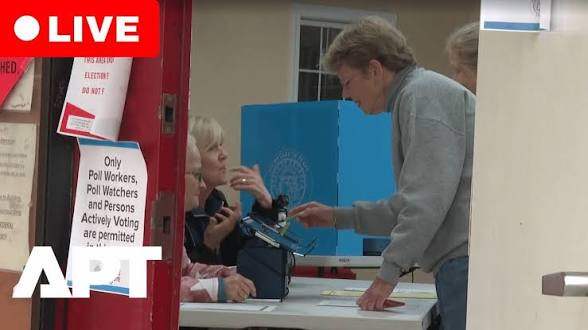
The Georgia special election has captured national political attention as voters head to the polls to decide who will represent the state’s 14th Congressional District. The election comes after the resignation of controversial Republican lawmaker Marjorie Taylor Greene, leaving a powerful congressional seat open and triggering a high-stakes race among multiple candidates.
Political observers say the vote is more than just a local contest. It has become a symbolic battle over party momentum, voter priorities, and the broader direction of American politics ahead of the 2026 midterms.
The race has drawn interest from national media, political strategists, and voters across the United States, making the Georgia special election one of the most closely watched contests of the year.
Why the Georgia Special Election Matters

Special elections in the United States often act as political barometers, revealing voter sentiment between major election cycles. The Georgia special election is particularly significant for several reasons.
First, the race determines who will serve in the United States House of Representatives for the remainder of the current congressional term.
Second, the district involved—Georgia’s 14th Congressional District—has historically been a strong Republican stronghold. Political analysts consider it a test of both Republican unity and Democratic competitiveness in traditionally conservative areas.
Finally, the election arrives during a politically volatile period in American politics, where voter attitudes toward economic issues, leadership style, and party direction are rapidly evolving.
Why the Seat Became Vacant
The special election was triggered after Marjorie Taylor Greene resigned from Congress in early 2026, leaving the seat vacant. Her departure sparked widespread political debate and opened the door for a crowded field of candidates seeking to represent the district.
Following her resignation, Brian Kemp, the governor of Georgia, scheduled a special election to fill the remainder of the congressional term. The election’s first round was held on March 10, 2026, with a runoff scheduled if no candidate received more than 50 percent of the vote.
This runoff system is standard in Georgia elections and often results in intense final showdowns between the top two candidates.
The Candidates: Key Figures in the Race
The Georgia special election featured a large and diverse field of candidates. More than a dozen individuals initially entered the race, creating a competitive and unpredictable political landscape.
However, two candidates quickly emerged as the leading contenders.
Shawn Harris
Shawn Harris, a Democrat and retired Army brigadier general, positioned himself as a moderate candidate focused on economic stability, national security, and bipartisan cooperation.
Harris emphasized issues such as:
Rising living costs
Support for veterans
Infrastructure investment
Local economic development
Despite running in a historically conservative district, Harris gained attention for attracting both Democratic voters and moderate independents.
In the first round of the election, Harris led the field with roughly 37 percent of the vote, placing him in a strong position heading into the runoff.
Clay Fuller
The Republican front-runner in the race is Clayton Fuller, commonly known as Clay Fuller.
Fuller is a former district attorney and Air National Guard officer. He entered the race with strong support from conservative voters and received backing from former president Donald Trump.
Fuller’s campaign focused on:
Law and order policies
Economic growth and job creation
Border security
Conservative values
He finished second in the initial vote with approximately 35 percent, securing a place in the runoff election.
Other Candidates
The race initially included numerous candidates from different political backgrounds.
Among them was Colton Moore, a controversial Republican state senator who ran on a more hard-line conservative platform. Moore ultimately finished third with about 11 percent of the vote, eliminating him from the runoff.
The crowded field of candidates contributed to the fragmented vote that forced the race into a second round.
Runoff Election: What Happens Next
Because no candidate received more than 50 percent of the vote in the initial election, Georgia’s election law requires a runoff between the top two candidates.
The runoff between Shawn Harris and Clay Fuller is scheduled for April 7, 2026.
This head-to-head contest will determine who ultimately wins the seat and serves in Congress until the end of the current term in January 2027.
Runoff elections in Georgia often see:
Lower voter turnout
Intensified campaign messaging
Greater national political involvement
Both campaigns are expected to spend heavily and mobilize supporters ahead of the decisive vote.
A District with Strong Political Identity
Georgia’s 14th Congressional District covers northwest Georgia, including rural and blue-collar communities.
The region has historically leaned strongly Republican. In recent presidential elections, Republican candidates have won the district by large margins.
Political analysts say this history makes Harris’s strong first-round showing particularly notable.
Some experts believe that:
Democratic fundraising advantages
Voter frustration with national politics
Local economic concerns
could make the runoff more competitive than expected.
National Political Implications
The Georgia special election is not just a local contest. It carries significant national implications.
The seat could influence the balance of power in the House of Representatives, where margins are often narrow.
Additionally, the race is widely seen as an early test of:
The political influence of Donald Trump
Republican unity in conservative districts
Democratic efforts to expand into red-leaning regions
According to political analysts, the election’s outcome could shape campaign strategies for both parties ahead of the 2026 midterm elections.
Campaign Issues Driving the Election
Several key issues have shaped the debate in the Georgia special election.
Cost of Living
Economic concerns remain one of the most important issues for voters.
Candidates have focused heavily on:
Inflation
Housing affordability
Energy costs
Job opportunities
Many voters say economic stability is their top priority.
Political Leadership
Another major theme in the election is leadership style.
Some voters want strong ideological representation, while others prefer pragmatic leaders who focus on bipartisan solutions.
This divide has shaped campaign messaging across the district.
National Politics
National political conflicts have also influenced the race.
Disagreements within the Republican Party and shifting alliances among conservative leaders have added extra drama to the contest.
These dynamics have turned the Georgia special election into a broader political story beyond state borders.
Voter Turnout and Election Dynamics
Special elections often see lower turnout than general elections.
However, the intense media coverage and national political stakes may drive higher participation than usual.
Political campaigns are focusing heavily on:
Grassroots outreach
Digital campaigning
Early voting efforts
Both parties are also investing in voter mobilization strategies to ensure their supporters show up on election day.
The Road to the 2026 Midterms
The Georgia special election is widely viewed as an early preview of the 2026 midterm elections.
Political strategists from both major parties are watching closely to understand:
Shifts in voter behavior
Regional political trends
The effectiveness of campaign messaging
The outcome could influence future campaign strategies nationwide.
For example, if Democrats perform strongly in a historically Republican district, it may encourage them to invest more heavily in similar areas.
Conversely, a Republican victory would reinforce the party’s strength in conservative regions.
Media and Public Attention
The race has attracted extensive media coverage across the United States.
Major national outlets are following the election closely due to its unusual political circumstances and potential implications for Congress.
Social media discussions have also surged, with political commentators debating whether the results reflect broader national trends.
The combination of high-profile candidates, party tensions, and strategic importance has turned the Georgia special election into one of the most talked-about political events of the year.
What the Outcome Could Mean
Regardless of who wins, the Georgia special election will have lasting political consequences.
Possible outcomes include:
If Shawn Harris wins:
Democrats could gain momentum in southern states
The district may become more competitive in future elections
Party strategists may rethink campaign strategies
If Clay Fuller wins:
Republicans maintain control of the district
Trump’s endorsement power remains significant
Conservative voters reaffirm their dominance in the region
Either way, the election will shape political narratives heading into the midterm cycle.
Conclusion
The Georgia special election represents far more than a routine political contest.
It reflects the evolving dynamics of American politics, including shifting voter priorities, internal party debates, and the influence of national political figures.
With a runoff election approaching, voters in Georgia’s 14th Congressional District hold the power to determine not only their local representation but also the political narrative leading into the 2026 midterms.
As the race between Shawn Harris and Clay Fuller intensifies, the nation will continue watching closely to see how this high-profile seat battle unfolds.
FAQs
What is the Georgia special election?
The Georgia special election is a vote held to fill a vacant congressional seat in Georgia’s 14th Congressional District after Marjorie Taylor Greene resigned from Congress.
Why was the seat vacant?
The seat became vacant when Marjorie Taylor Greene stepped down from her position in early 2026, prompting state officials to schedule a special election.
Who are the main candidates?
The two leading candidates are Democrat Shawn Harris and Republican Clay Fuller.
Why is there a runoff election?
Georgia law requires a runoff if no candidate receives more than 50 percent of the vote in the initial election.
When will the runoff take place?
The runoff election is scheduled for April 7, 2026, where the top two candidates will compete for the congressional seat.
How useful was this post?
Click on a star to rate it!
Average rating 0 / 5. Vote count: 0
No votes so far! Be the first to rate this post.
About the Author

usa5911.com
Administrator
Hi, I’m Gurdeep Singh, a professional content writer from India with over 3 years of experience in the field. I specialize in covering U.S. politics, delivering timely and engaging content tailored specifically for an American audience. Along with my dedicated team, we track and report on all the latest political trends, news, and in-depth analysis shaping the United States today. Our goal is to provide clear, factual, and compelling content that keeps readers informed and engaged with the ever-changing political landscape.