Yak-130 Jet : Russian Military Move, Air Power Signal, Global Tension Spike
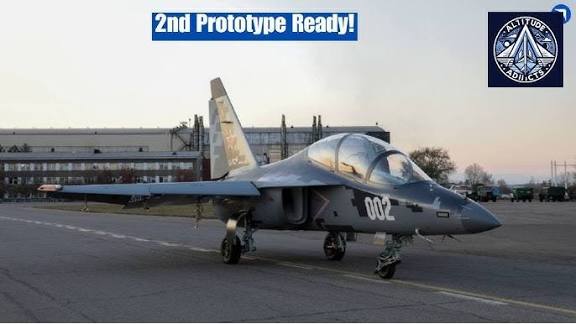
In an era marked by accelerating geopolitical rivalries and rapid defence modernization, the Russian-made Yak-130 jet has emerged as a noteworthy aircraft whose evolving role is reverberating across the global defence landscape. Originally designed as an advanced trainer, the Yak-130’s increasing deployment in operational missions reflects changing military doctrines and underscores broader strategic shifts among global powers. This article delves into the jet’s development, modernization, operational use, and its symbolic — and practical — impact on global tensions.
Introduction: A Dual-Use Jet with Strategic Significance
The Yakovlev Yak-130 is a twin-engine, tandem-seat jet aircraft developed mainly as a lead-in fighter trainer capable of replicating the flight characteristics of modern combat aircraft. Entering service with the Russian Aerospace Forces in 2010, the Yak-130 quickly gained traction internationally due to its adaptability, performance, and relatively low cost compared with front-line fighters.
While it remains a trainer at its core, mounting evidence suggests its capabilities are increasingly exploited in light combat roles — including interception, air defence, and ground attack tasks — which has attracted considerable attention from defence analysts and military planners.
Section 1: Origins and Development
Design Goals and Concept
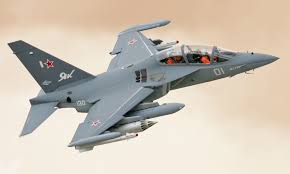
The Yak-130 was conceived to meet Russia’s need for an advanced jet trainer that could prepare pilots for fourth- and fifth-generation fighters. Its flight control system and aerodynamic configuration allow it to emulate characteristics of modern combat aircraft, making it an ideal transitional platform for trainee pilots.
Built by the Yakovlev design bureau and later refined under Russia’s United Aircraft Corporation (UAC), the Yak-130 boasts modern avionics, a digital fly-by-wire control system, and nine external hardpoints capable of carrying weapons and auxiliary equipment.
Section 2: From Training to Light Combat
Originally a Lead-In Fighter Trainer (LIFT), the Yak-130’s role has expanded in recent years. With a payload capacity of up to 3,000 kg and multiple mounting points, the aircraft is increasingly marketed and utilized in light-attack and reconnaissance missions alongside its primary training function.
Modernization: The Yak-130M
Recent developments underscore a deliberate pivot toward expanded combat capability. The upgraded Yak-130M variant integrates advanced avionics, radar systems, electro-optical targeting pods, and guided weapons support — significantly enhancing its operational utility.
Unveiled in 2025 at international aerospace forums, the Yak-130M’s expanded weapon suite allows precision engagement with ground targets and integration of modern self-protection systems, illustrating Russia’s intent to market the aircraft as a multirole platform and not just a trainer.
Section 3: Operational Deployments and Strategic Implications
Iran: Mixed Training and Air Defence Role
Iran’s acquisition and subsequent deployment of Yak-130 jets showcase a shift from training to active air defence missions. During military exercises, Iranian Air Force Yak-130s have been observed flying in patrol roles and intercepting drones in coordination with other combat aircraft, demonstrating an operational application that transcends traditional training tasks.
This dual-role deployment signals an important development: exporting nations like Russia are positioning the Yak-130 as a cost-effective solution for air forces that lack full-sized fighter fleets but require credible defence capability. Such usage also raises questions about how multi-role trainers affect regional military balances.
Global Footprint
Beyond Iran, several countries operate Yak-130 jets — including Algeria, Bangladesh, Belarus, Laos, and Ethiopia — reflecting its appeal among air forces with constrained defence budgets seeking to modernize pilot training and light-attack capacities.
The growing global footprint amplifies Russia’s influence in export markets, especially among non-Western aligned nations. This trend has implications for defence relationships and technological co-dependency, particularly as bilateral military cooperation expands.
Section 4: Strategic Air Power Signaling
Training vs Combat: A Blurred Line
The Yak-130’s adaptability represents a broader evolution in air power philosophy. As advanced combat aircraft become more expensive and complex to procure, nations increasingly value platforms that provide flexible value — enabling both pilot development and actual operational missions.
This trend has strategic importance:
It allows smaller air forces to maintain credible deterrent postures.
It enhances pilot proficiency toward operating more advanced jets.
It introduces potential combat capability at a fraction of the cost of a traditional fighter fleet.
Even as a trainer, the aircraft’s ability to simulate various fighter profiles contributes to a nation’s readiness in higher-intensity scenarios.
Section 5: The Global Tension Angle
The Yak-130’s increasing operational use coincides with rising geopolitical tensions across multiple fronts — including the Middle East, Eastern Europe, and Africa.
Regional Deterrence and Counter-Drone Roles
Iran’s use of Yak-130 jets in airspace defence and counter-drone patrols is emblematic of a shift where lower-tier combat aircraft assume frontline air sovereignty duties. In contexts where drone and asymmetric threats proliferate, such deployment signals a recalibration of air defence strategy.
Symbolism in Great Power Competition
The export of Yak-130 jets to diverse partners bolsters Russia’s defence ties and reinforces its presence in critical regions. Each delivery and deployment becomes part of a larger narrative — one where aircraft like the Yak-130 serve not only as tools of national defence but also as symbols of strategic alignment and influence.
Section 6: Future Prospects and Implications
Looking ahead, the role of the Yak-130 will likely continue to evolve. Its modernization path, especially with the Yak-130M variant, suggests deeper integration into light-attack and multirole missions. The aircraft’s appeal in export markets could shape procurement decisions, particularly for countries seeking to bolster air capabilities without significant financial burdens.
Additionally, the Russian military’s willingness to deploy the Yak-130 beyond training could influence other nations to reassess similar aircraft’s roles in their fleets. This may prompt further innovation in dual-role platforms, influencing global air power dynamics and shaping future conflict and deterrence strategies.
FAQs
1. What is the primary role of the Yak-130 jet?
The Yak-130 is primarily an advanced jet trainer designed to prepare pilots for fourth- and fifth-generation fighter aircraft. It features a digital fly-by-wire system, realistic flight characteristics, and a modern avionics suite.
2. Can the Yak-130 be used in combat roles?
Yes — while training is its core mission, the Yak-130 can carry up to 3,000 kg of weapons, enabling light attack, air defence, and reconnaissance missions. Its modernized variants expand these capabilities further.
3. What is the Yak-130M?
The Yak-130M is an upgraded version with enhanced avionics, radar, targeting systems, and support for precision-guided munitions, positioning it as a more capable multirole platform.
4. Which countries operate the Yak-130?
Operators include Russia, Algeria, Bangladesh, Belarus, Laos, Iran, Ethiopia, and others — highlighting its wide adoption as both a trainer and light combat aircraft.
5. Why does the Yak-130 matter in global tensions?
The Yak-130 matters because its evolving role reflects broader strategic shifts: it serves as a training platform, a low-cost combat asset, and a tool of military diplomacy, signalling changes in how air power and influence are projected globally.
Conclusion
The Yak-130 jet’s transformation from a purely training platform to a versatile, multi-role aircraft mirrors the complexities of modern military needs. Its deployment in operational roles, export appeal, and symbolic value in great power competition make it far more than just another jet trainer — it’s a nuanced indicator of evolving strategies in air warfare and geopolitical signalling. Whether as a training bridge to fifth-generation fighters or as a low-cost combat asset for emerging air forces, the Yak-130’s expanded profile underscores how innovation and ambition are reshaping air power in a tense world.
How useful was this post?
Click on a star to rate it!
Average rating 0 / 5. Vote count: 0
No votes so far! Be the first to rate this post.
About the Author

usa5911.com
Administrator
Hi, I’m Gurdeep Singh, a professional content writer from India with over 3 years of experience in the field. I specialize in covering U.S. politics, delivering timely and engaging content tailored specifically for an American audience. Along with my dedicated team, we track and report on all the latest political trends, news, and in-depth analysis shaping the United States today. Our goal is to provide clear, factual, and compelling content that keeps readers informed and engaged with the ever-changing political landscape.