Mark Carney : China Trade Surge, US Pivot Fallout, Global Shock
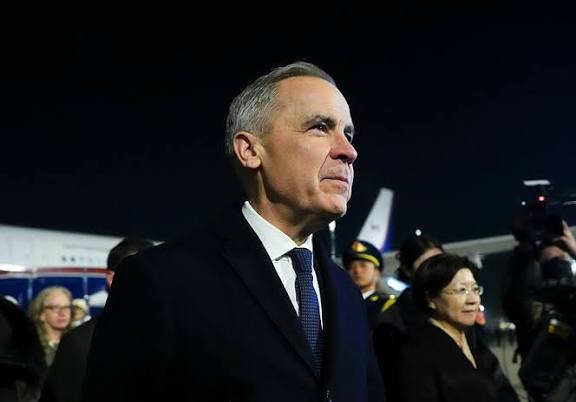
Canada signals strategic stance toward China as uncertainty grows over US trade ties Carney’s tariff deal underlines Ottawa’s desire. Today we will discuss about Mark Carney : China Trade Surge, US Pivot Fallout, Global Shock
Mark Carney : China Trade Surge, US Pivot Fallout, Global Shock
Mark Carney is reshaping Canada’s economic strategy by reducing dependence on the United States and pushing for a more diversified global trade network. With rising U.S. protectionism and tariff uncertainty, his government is seeking stronger commercial ties across Asia, Europe, and emerging markets.
Nearly 70% of Canada’s exports still go to the U.S., making Canada highly vulnerable to shifts in Washington’s trade policy. Carney has openly stated that the world is entering a new era of fragmented trade blocs, and countries must adapt or fall behind.
2. China Trade Surge and Strategic Reset
A major pillar of this strategy is renewed engagement with China. Carney’s outreach to Beijing has resulted in early-stage agreements focused on:
Lower trade barriers for Canadian agriculture and seafood
Expanded cooperation in clean energy, finance, and technology
Rebalancing tariffs on electric vehicles and industrial goods
This reflects a pragmatic approach: while political tensions remain, China’s role as the world’s largest manufacturing hub and a dominant export engine makes disengagement economically unrealistic.
3. U.S. Pivot Fallout
Canada’s pivot toward China comes at a delicate time in U.S.–Canada relations. Washington’s renewed tariff threats and “America First” industrial policies have created uncertainty for Canadian exporters, especially in:
Automotive manufacturing
Energy and critical minerals
Steel, aluminum, and clean-tech supply chains
Carney’s diversification push is partly a hedge against future U.S. trade shocks and sudden policy reversals.
4. The Global “China Shock” Effect
Economists describe today’s environment as a second “China shock” — a surge of Chinese exports in electric vehicles, batteries, solar panels, and advanced manufacturing. This wave is:
Reshaping global supply chains
Pressuring Western industries
Forcing middle powers like Canada to choose between strategic alignment and economic reality
Carney’s policy aims to position Canada as a bridge economy rather than a satellite of any single superpower.
5. Political and Economic Risks
While the strategy promises growth, it carries risks:
Over-reliance on China could expose Canada to geopolitical leverage
The U.S. may view deeper China ties as a strategic drift
Domestic critics warn of security and human-rights concerns
Still, supporters argue that in a multipolar world, trade flexibility is survival.
On “Fake Death Kayaker”
There is no verified connection between this phrase and Mark Carney or current global trade developments. It appears unrelated or based on online misinformation.
Conclusion
Mark Carney’s China trade push, combined with a reduced reliance on the U.S., marks one of the most significant shifts in Canadian foreign economic policy in decades. In an era defined by trade wars, geopolitical rivalry, and global supply-chain shocks, his strategy reflects a broader global realignment — one where middle powers must navigate carefully between economic opportunity and political risk.
How useful was this post?
Click on a star to rate it!
Average rating 0 / 5. Vote count: 0
No votes so far! Be the first to rate this post.
About the Author

usa5911.com
Administrator
Hi, I’m Gurdeep Singh, a professional content writer from India with over 3 years of experience in the field. I specialize in covering U.S. politics, delivering timely and engaging content tailored specifically for an American audience. Along with my dedicated team, we track and report on all the latest political trends, news, and in-depth analysis shaping the United States today. Our goal is to provide clear, factual, and compelling content that keeps readers informed and engaged with the ever-changing political landscape.