Trump-Linked Epstein Photos Drop: White House Calls It Fraud, Political Storm Erupts
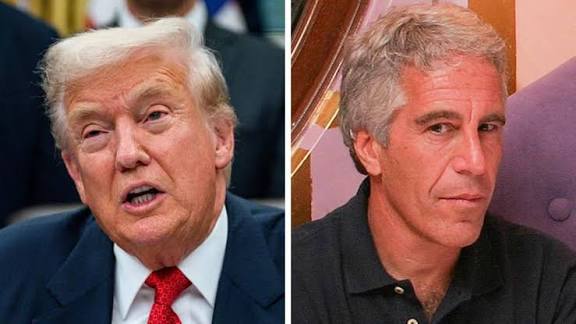
Newly released congressional documents reveal a 2015 email exchange in which Jeffrey Epstein allegedly teased a reporter. Today we will discuss about Trump-Linked Epstein Photos Drop: White House Calls It Fraud, Political Storm Erupts
Trump-Linked Epstein Photos Drop: White House Calls It Fraud, Political Storm Erupts
The American political arena was shaken in December 2025 after the release of a new batch of photographs connected to the late financier and convicted sex offender Jeffrey Epstein. Several of these images show former associations between Epstein and some of the most powerful individuals in the world, including former and current U.S. President Donald Trump. The disclosure triggered an immediate and intense political backlash, with the White House forcefully rejecting the release as a politically motivated fraud while Democrats framed it as a necessary step toward transparency and accountability.
What began as a release of historical material quickly escalated into a nationwide political controversy, reopening unresolved questions surrounding Epstein’s influence, elite access, and the lingering secrecy that has clouded his case since his death.
The Photo Release That Ignited the Firestorm

The controversy erupted when Democratic members of the House Oversight Committee released a limited selection of photographs drawn from Epstein’s vast personal archive. According to lawmakers, the archive contains tens of thousands of images collected over decades. From this enormous cache, approximately 19 photographs were made public.
These images show Epstein socializing with well-known political leaders, business figures, and celebrities. Among the most scrutinized are photographs depicting Donald Trump in social settings alongside Epstein. Other figures visible in the broader archive reportedly include former presidents, technology executives, and prominent public personalities.
Democrats behind the release argued that these photographs represent only a small fraction of the material still being withheld and insisted the move was intended to pressure federal authorities to disclose all Epstein-related records. They emphasized that transparency is essential to restoring public trust and understanding the full extent of Epstein’s social and political reach.
White House Pushback: ‘A Manufactured Hoax’
The White House reacted swiftly and aggressively. Senior administration officials dismissed the photo release as a “false narrative” and accused Democrats of manipulating incomplete material to create political damage. According to White House statements, the photographs were selectively chosen, stripped of context, and presented in a way designed to mislead the public.
President Trump himself minimized the significance of the images, stating that Epstein took photos with countless people over the years and that appearing in a photograph does not imply wrongdoing. Trump also suggested that Epstein actively sought out prominent individuals to enhance his own social standing, a claim echoed by several Republican lawmakers and conservative commentators.
Administration officials framed the episode as a partisan attack rather than a genuine effort to uncover the truth, accusing Democrats of weaponizing sensitive material during a politically charged period.
Understanding the Epstein Background
Jeffrey Epstein’s case remains one of the most disturbing scandals in modern American history. A wealthy financier with no clearly defined source of income, Epstein cultivated relationships with politicians, billionaires, royalty, and academics across multiple continents.
In 2019, Epstein was arrested on federal sex trafficking charges involving minors. Before he could stand trial, he died in a New York jail in what was officially ruled a suicide. His death fueled widespread suspicion, conspiracy theories, and public outrage, particularly due to the belief that many individuals connected to his crimes were never held accountable.
Since then, Epstein’s estate, records, and personal communications have become the focus of lawsuits, congressional inquiries, and investigative journalism. Despite years of scrutiny, large portions of his documents remain sealed or partially redacted, intensifying calls for full disclosure.
What the Photos Show — and What They Do Not
Crucially, none of the released photographs depict illegal activity. The images show social interactions, public gatherings, and casual encounters, mostly involving adults. No evidence has emerged from these photos alone indicating criminal conduct by Trump or others pictured.
Many of the images lack key details such as dates, locations, or identities of all individuals present. Without this context, legal experts caution against drawing definitive conclusions. Association, they emphasize, does not equal guilt.
Democrats involved in the release acknowledged these limitations but argued that the photos still raise important questions about Epstein’s access to powerful circles and why so much material remains hidden from public view.
A Deepening Partisan Divide
Democratic Position: Transparency Above All
Democratic lawmakers argue that secrecy surrounding Epstein’s network undermines public confidence in institutions. They contend that releasing materials — even those that may be uncomfortable — is essential to uncovering the truth and ensuring accountability.
Some Democrats claim that past communications and records suggest certain powerful individuals may have known more about Epstein’s activities than they have admitted. They insist that all documents, emails, photographs, and related evidence should be released without political interference.
Calls have intensified for the Department of Justice to meet disclosure deadlines and comply with congressional oversight requests.
Republican Response: Political Exploitation
Republicans counter that the photo release represents political opportunism rather than responsible governance. They argue that many of the images date back decades, long before Epstein’s crimes were widely known, and that selectively releasing them serves no purpose other than damaging political opponents.
Several Republican lawmakers stressed that justice for victims should remain the priority, warning that sensationalized disclosures risk turning a serious matter into a partisan spectacle.
Media Coverage and Public Reaction
Media responses to the controversy have been sharply divided. Conservative outlets largely echoed the White House’s position, emphasizing the lack of evidence of wrongdoing and criticizing the timing of the release. Liberal and independent media focused on the broader implications of Epstein’s elite connections and the ongoing secrecy surrounding his records.
Public reaction mirrors this divide. Polling data suggests widespread skepticism about the handling of Epstein-related materials, but opinions largely split along party lines. While many Americans believe more transparency is needed, others view the controversy as another example of political theater.
Legal and Ethical Questions
From a legal standpoint, photographs alone rarely constitute proof of criminal behavior. Attorneys representing individuals featured in Epstein-related materials have repeatedly emphasized this principle, arguing that social contact does not imply complicity.
However, legal analysts note that photographs can become relevant when combined with other evidence such as emails, financial records, witness testimony, or travel logs. For victims pursuing civil cases, even circumstantial evidence can play a role in establishing patterns of behavior.
Ethically, the debate centers on balancing transparency with fairness. Critics of the release argue that publicizing images without context risks damaging reputations without due process. Supporters argue that shielding powerful individuals from scrutiny perpetuates inequality before the law.
Trump and Epstein: A Complicated History
Donald Trump has long acknowledged that he knew Epstein socially in the past. Their association dates back to the 1990s and early 2000s, when both were prominent figures in New York and Palm Beach social circles.
Trump has repeatedly stated that he severed ties with Epstein well before Epstein’s arrest and has claimed he banned Epstein from his properties after becoming aware of troubling behavior. Despite these assertions, historical photographs and media reports confirm that the two appeared together at events during their social overlap.
This history, while not evidence of wrongdoing, has remained a recurring point of scrutiny, particularly whenever new Epstein-related material emerges.
Social Media, Misinformation, and Conspiracy Theories
The release of the photos reignited widespread speculation across social media platforms. Unverified claims, exaggerated interpretations, and conspiracy theories spread rapidly, often overshadowing verified facts.
Some users portrayed the images as definitive proof of hidden crimes, while others dismissed them entirely as fabricated or irrelevant. Fact-checking efforts struggled to keep pace with the viral spread of misleading narratives.
This environment has further complicated public understanding of the issue, blurring the line between legitimate questions and unfounded accusations.
Global Attention and Broader Significance
Although the controversy is centered in the United States, it has attracted international attention. Observers abroad view the episode as emblematic of broader challenges facing democracies — including elite accountability, institutional transparency, and the politicization of justice.
In many countries, the Epstein case is cited as an example of how wealth and power can shield individuals from scrutiny, reinforcing calls for stronger safeguards against abuse.
What Comes Next
Several developments could shape the next phase of the controversy:
Further Document Releases
Pressure continues on federal authorities to release additional Epstein-related materials, including emails and investigative records.Legal Proceedings
Ongoing civil cases may incorporate newly disclosed evidence, potentially reviving legal debates tied to Epstein’s network.Political Impact
The controversy could influence public opinion, campaign narratives, and congressional priorities as polarization deepens.Public Trust
How institutions handle transparency demands may significantly affect confidence in government and the justice system.
Conclusion: More Than Just Photographs
The release of Trump-linked Epstein photographs has evolved into far more than a discussion about images. It has become a symbol of unresolved questions surrounding power, privilege, and accountability in modern politics.
Whether viewed as a legitimate transparency effort or a partisan maneuver, the controversy underscores how deeply the Epstein case continues to resonate. As political leaders, legal institutions, and the public grapple with its implications, one reality remains clear: the shadow of Epstein’s legacy still looms large over American public life.
In an era of extreme polarization, even decades-old photographs can ignite political storms — and the struggle over truth, narrative, and accountability shows no sign of ending.
How useful was this post?
Click on a star to rate it!
Average rating 0 / 5. Vote count: 0
No votes so far! Be the first to rate this post.
About the Author

usa5911.com
Administrator
Hi, I’m Gurdeep Singh, a professional content writer from India with over 3 years of experience in the field. I specialize in covering U.S. politics, delivering timely and engaging content tailored specifically for an American audience. Along with my dedicated team, we track and report on all the latest political trends, news, and in-depth analysis shaping the United States today. Our goal is to provide clear, factual, and compelling content that keeps readers informed and engaged with the ever-changing political landscape.