Trump Warns: Economy Sliding, Democrats Silent
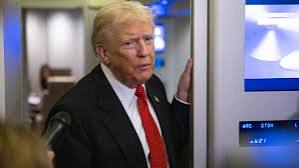
Democrats criticized Trump’s rollback of fuel economy rules. A section of Republicans expressed support for the President’s move. Today we will discuss about Trump Warns: Economy Sliding, Democrats Silent
Trump Warns: Economy Sliding, Democrats Silent
President Donald Trump has recently intensified his warnings about what he calls a rapidly “sliding” U.S. economy. In speeches, interviews, and public statements, Trump has urged Americans to prepare for tougher economic times, pointing to weakening indicators he attributes to external forces, inherited problems, and political obstruction from his opponents.
He frames himself as the lone figure sounding the alarm while, in his words, “Democrats stay silent.”
But the reality is far more complex. Economic data suggests a slowing economy, consumers are feeling the squeeze, and critics — far from being silent — say Trump’s policies are directly contributing to the downturn.
This article explores Trump’s warnings, the economic backdrop behind them, reactions from Democrats and experts, and what this escalating narrative means for the future.
Trump’s Message: The Economy Is Sliding
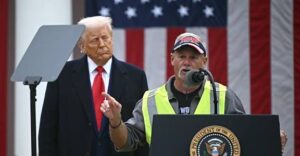
Trump’s message revolves around a consistent theme: the economy is under threat, and he is sounding the alarm before it worsens. He portrays himself as a truth-teller willing to deliver tough news.
Highlighting Weak Economic Indicators
In early 2025, the United States posted its first quarterly economic contraction in three years. Trump responded by urging Americans to “be patient,” arguing that unusual import patterns and temporary factors distorted the numbers. His administration attempted to soften the blow, describing the downturn as a “technical negative” rather than the start of a recession.
Nevertheless, Trump began publicly warning that the economy could face more hurdles if his policies continued to be challenged or “misrepresented.”
Blaming Democrats for Inaction
A central part of Trump’s message is assigning blame. He frequently argues that Democrats are ignoring the seriousness of economic challenges, calling them “silent,” “uninterested,” or “more focused on politics than on American families.”
He accuses them of obstructing policy proposals, creating unnecessary legislative conflict, and spreading what he describes as “false narratives” about economic hardship.
Criticism of Federal Institutions
Trump has also taken aim at the Federal Reserve, claiming interest-rate decisions threaten to slow the economy even further. He has suggested that without a more aggressive rate-cutting strategy, the country could face deeper economic trouble.
This tension has created an unusual environment where the administration partners with — yet regularly criticizes — the very institutions responsible for stabilizing the economy.
What the Economic Data Shows
While Trump insists that a mixture of technicalities and political opposition are dragging the economy down, economists and analysts point to deeper issues.
Contraction and Slowed Growth
The early-year contraction was not merely a statistical fluke. Many economists argue that the slowdown reflects genuine underlying weakness:
Manufacturing activity has contracted for multiple months.
Business investment is cooling.
Trade disruptions, fueled in part by tariffs, have strained supply chains.
Forecasts for economic growth in 2025 and 2026 have been revised downward, suggesting this is not a one-quarter anomaly but part of a longer trend.
Tariff-Driven Distortions
A significant factor in the GDP decline was the flood of imports ahead of tariff deadlines. Businesses rushed to stock up before new tariffs took effect, inflating import data temporarily. After the surge passed, the economy experienced a sharp pullback.
This pattern highlights the unpredictable nature of tariff-driven trade policy. While tariffs are designed to protect domestic industries, they also raise costs for businesses and consumers — and can have destabilizing effects on economic data.
Rising Consumer Pressure
Perhaps the most significant issue is what ordinary Americans feel. Despite some improvements in gas prices and certain commodities, many households continue to struggle with:
Persistent inflation on groceries and essentials
High housing costs
Rising utilities and healthcare bills
Increasing reliance on credit
Consumer sentiment remains weak, reflecting widespread anxiety about affordability and long-term stability.
Falling Approval and Public Concern
Surveys show that the public is growing increasingly skeptical of the administration’s handling of the economy. Concern about inflation and living costs has surged, while approval ratings for the president’s economic leadership have slipped.
Many Americans believe the economic agenda is inconsistent or erratic — and this perception alone can weaken confidence.
Democrats Respond — Far From “Silent”
Despite Trump’s accusations, Democratic leaders have been far from silent. Their critiques have been vocal and targeted, often pointing directly at Trump’s policies as the cause of economic trouble.
Rejecting Trump’s Framing
Democratic leaders argue that Trump is attempting to dodge responsibility by blaming opponents. They contend that:
Tariffs have raised costs for consumers and businesses.
Cuts to social programs have left families vulnerable.
Federal workforce reductions have disrupted essential services.
Mixed messages on economic policy have unsettled markets.
Their argument is simple: the economic problems Americans face today are the direct result of Trump’s decisions.
Using Affordability as a Political Weapon
Democrats have seized on affordability as their central political message. Across local, state, and national races, Democratic candidates emphasize:
Rising cost of living
Declining savings
Unstable household budgets
Cuts to public programs
This message has resonated strongly with voters, helping Democrats win key races in several states.
Mobilizing Public Anger
Democrats argue that Trump’s “billionaire-first” policy agenda prioritizes the wealthy while leaving working families to struggle. They frame the administration as out of touch — a message gaining traction as economic pressures intensify.
Political strategists believe the affordability issue may define the next election cycle more than immigration, foreign policy, or cultural issues combined.
Expert Perspectives — Warnings of Structural Risk
Economists, analysts, and even some former Trump advisers have raised red flags about the country’s direction.
Tariffs and Trade Policy Under Scrutiny
Many experts describe Trump’s heavy reliance on tariffs as short-sighted. While protective in theory, the implementation has:
Increased costs for domestic manufacturers
Reduced export competitiveness
Caused supply-chain instability
Triggered retaliatory measures abroad
Some argue the economy is becoming “wobbly” precisely because of these policies.
Concerns About Consumer Weakness
Economists warn that consumer spending — the backbone of the U.S. economy — is weakening. Families are cutting back on non-essentials and increasingly relying on debt to manage monthly costs.
If consumer demand continues to fall, a full recession becomes more likely.
Impact of Government Workforce Cuts
The mass layoffs in the federal workforce have also raised alarms. Cutting hundreds of thousands of civil-service positions:
Reduces government capacity
Limits available public services
Slows processing for benefits
Increases economic insecurity
Some fear the long-term damage may be more severe than the administration predicts.
Why Trump’s Narrative and Public Experience Diverge
The gap between Trump’s optimistic claims and the public’s economic reality stems from several key factors.
Lagging Indicators vs. Lived Experience
Trump points to select data — like stock performance or favorable job numbers — to claim the economy is strong. But these do not reflect everyday struggles. Americans care most about:
Rent
Groceries
Healthcare
Gas
Childcare
Education
When these costs rise, economic confidence collapses regardless of macro-indicators.
Short-Term Distortions Mask Long-Term Challenges
The unusual import surge made the data appear worse in some ways — but also concealed structural weaknesses. Once those distortions normalize, the underlying challenges remain just as severe.
Political Messaging Incentives
Trump’s warnings serve both economic and political goals:
They justify aggressive tariff and deregulation strategies.
They help deflect blame for negative outcomes.
They rally his base by positioning him as a truth-teller.
Democrats, meanwhile, have every incentive to amplify economic pain. The result: two competing narratives with entirely different incentives.
Cuts That Impact Real Lives
Government shutdowns and workforce reductions have created real impacts in people’s lives:
Delayed services
Reduced support programs
Weak consumer confidence
Fear of deeper cuts
This fuels public frustration — and erodes trust.
The Political Stakes — A Country at a Crossroads
With the economy under pressure and political messaging intensifying, America stands at a pivotal moment.
Democrats See an Opportunity
The affordability crisis has become a powerful political weapon. Democrats are using it to:
Rebuild coalitions
Win suburban voters
Energize working-class families
Frame Republicans as disconnected from everyday struggles
If the economic slowdown deepens, Democrats could benefit significantly in upcoming elections.
Republican Challenges and Internal Pressure
Republicans face growing pressure as public frustration rises. If the economy continues to weaken:
More Republicans may distance themselves from Trump’s economic message
Internal tensions could grow
Voter confidence in the party’s stewardship could erode
How the party responds may shape the next national election.
Is Trump’s Warning Justified?
Arguments Supporting Trump’s Warning
Economic contraction is real.
Manufacturing is weak.
Consumer confidence is falling.
Tariffs and global instability create genuine risk.
Many Americans already feel financial pain.
From this perspective, Trump’s warnings reflect legitimate concerns.
Arguments Suggesting It’s Political Strategy
Many problems stem from Trump’s own policies.
Warnings often shift blame rather than address root causes.
Economic messaging fluctuates between optimism and alarm.
Critics argue the administration is using fear to rally support.
The truth lies between both sides: the economy is under strain — but political motivations shape how each side presents the facts.
What Comes Next
The economic and political outlook will depend heavily on:
Next quarter’s economic data
Federal Reserve decisions
Potential changes to tariff policy
Congressional cooperation or conflict
Public sentiment around affordability
If the economy stabilizes, Trump may reclaim the narrative.
If it worsens, Democrats may gain a powerful advantage.
Conclusion — A Warning Worth Noting, A Blame Game Worth Scrutinizing
Trump’s warnings about a sliding economy tap into real concerns. Millions of Americans are struggling with costs, and economic indicators show signs of strain. But the broader reality is complicated — shaped by policy decisions, global forces, political strategy, and public perception.
While Trump paints Democrats as “silent,” they are loudly blaming him for the downturn.
While Trump claims temporary distortions, experts see long-term risks.
While Trump urges patience, voters grow more anxious.
Ultimately, the country must confront the economic challenges ahead — regardless of which party frames the narrative more effectively.
The warning is real.
The politics behind it are equally real.
And the months ahead will determine which side’s message resonates most with the American people.
How useful was this post?
Click on a star to rate it!
Average rating 0 / 5. Vote count: 0
No votes so far! Be the first to rate this post.
About the Author

usa5911.com
Administrator
Hi, I’m Gurdeep Singh, a professional content writer from India with over 3 years of experience in the field. I specialize in covering U.S. politics, delivering timely and engaging content tailored specifically for an American audience. Along with my dedicated team, we track and report on all the latest political trends, news, and in-depth analysis shaping the United States today. Our goal is to provide clear, factual, and compelling content that keeps readers informed and engaged with the ever-changing political landscape.