The war in Ukraine continues to raise serious questions about Russia’s military strength, battlefield strategy, and the human cost of the conflict. Since launching its full-scale invasion in February 2022, Russia has experienced significant military losses. These casualties have affected its ability to sustain offensive operations and maintain pressure on Ukrainian forces.
The issue of Putin casualties in Ukraine has also attracted attention from intelligence experts and former American officials. A former CIA station chief has weighed in on the situation, offering an intelligence-focused perspective on Russia’s losses and the broader consequences for President Vladimir Putin.
Russian casualties are more than a battlefield statistic. They influence military planning, recruitment, public confidence, and the Kremlin’s political calculations. However, determining the exact number of Russian soldiers killed or wounded remains difficult because independent verification is limited and competing sources publish different estimates.
Understanding these losses requires examining the available evidence, the challenges of modern warfare, and the potential impact on Russia’s long-term objectives.
Former CIA Station Chief’s Perspective on Russian Military Losses
The assessment of Russian casualties has become an important part of discussions about the future of the war. Intelligence professionals examine more than the number of soldiers reported killed or wounded. They also consider recruitment, battlefield performance, equipment losses, command decisions, and the Kremlin’s ability to replace experienced personnel.
A former CIA station chief brings a particularly relevant perspective to this discussion because intelligence assessments often focus on the relationship between military losses and political decision-making.
However, the specific former station chief and the original interview or statement behind the headline could not be independently verified in the available reporting. Therefore, it is important not to attribute an unconfirmed quotation or assessment to a particular intelligence official.
One relevant intelligence assessment came from CIA Director John Ratcliffe in August 2026. According to reporting by The Irish Times, Ratcliffe described Russia’s battlefield and economic position as increasingly difficult. He also highlighted the limited territorial progress made by Russian forces and the significant role of Ukrainian drone technology.
The Irish Times
The broader message is that Russia’s military strength cannot be measured simply by the number of troops it can send into battle. Its ability to achieve strategic objectives while absorbing substantial losses is equally important.
How Many Russian Soldiers Have Been Lost in Ukraine?
The scale of Russian military casualties is one of the most debated aspects of the conflict.
According to Ukraine’s General Staff, Russia had suffered approximately 1,648,161 personnel losses by November 27, 2026. The Ukrainian military reported 2,262 additional personnel losses over the preceding 24 hours.
These figures include killed and wounded personnel and should not be interpreted as confirmed deaths. They represent Ukraine’s official battlefield estimates, which Russia does not independently verify.
united24media.com+1
The distinction between casualties and fatalities is essential.
Killed: Soldiers who have died during combat or from injuries.
Wounded: Personnel injured during military operations.
Missing: Soldiers whose whereabouts or status have not been confirmed.
Total casualties: A broader figure that can include several categories of personnel losses.
Independent research provides another perspective.
A November 2026 investigation by Mediazona and Meduza examined leaked Russian mortality records. The researchers identified at least 490,000 officially registered Russian military deaths in records covering registrations through September 29, 2026. They also cautioned that the available data does not capture every death and remains incomplete for recent months.
Mediazona
Meanwhile, a November 25 report by the Center for Strategic and International Studies (CSIS) placed Russian battlefield fatalities between 400,000 and 450,000 through June 2026, with total casualties estimated at approximately 1.4 million.
These different estimates demonstrate why readers should distinguish between official Ukrainian battlefield claims, documented deaths, and independent analytical estimates.
CSIS+1
Why Russian Casualties Continue to Attract Attention
Russia entered the full-scale invasion expecting to achieve its military objectives much faster than the conflict has allowed.
Instead, Ukrainian resistance, Western military assistance, battlefield innovation, and logistical challenges have contributed to a prolonged war.
The resulting casualties have become a major measure of the conflict’s cost.
Several factors help explain the continued attention.
1. Heavy Fighting Along the Front Lines
The eastern and southern regions of Ukraine have experienced prolonged fighting. Russian forces have repeatedly attempted to capture strategically important settlements and expand their control over contested territory.
These operations can require large numbers of personnel, artillery support, armored vehicles, and logistical resources.
When an offensive encounters well-prepared Ukrainian defenses, advancing forces can suffer substantial losses.
2. Ukraine’s Growing Drone Capabilities
Drones have transformed the battlefield.
Both sides use unmanned systems for reconnaissance, targeting, surveillance, and direct attacks. Ukraine has increasingly developed tactics designed to identify Russian positions and disrupt military movements.
According to CSIS, Ukrainian drone operations have contributed to Russia’s growing battlefield costs. The organization also highlighted the importance of AI-enabled systems and long-range Ukrainian strikes.
CSIS
3. Difficult Offensive Operations
Capturing defended territory is expensive.
Russian forces must overcome minefields, trenches, artillery positions, surveillance systems, and drone attacks. Even when troops make progress, the cost can be significant.
This creates a difficult calculation for Russian military commanders: whether the territory gained justifies the personnel and equipment lost.
4. Pressure on Experienced Military Personnel
Casualties affect more than the total number of available soldiers.
Experienced officers, specialists, technicians, and trained infantry personnel are particularly difficult to replace. Losing these individuals can weaken military coordination and reduce the effectiveness of future operations.
New recruits may replace some numerical losses, but they do not automatically replace years of battlefield experience.
Putin’s Military Strategy Faces Difficult Questions
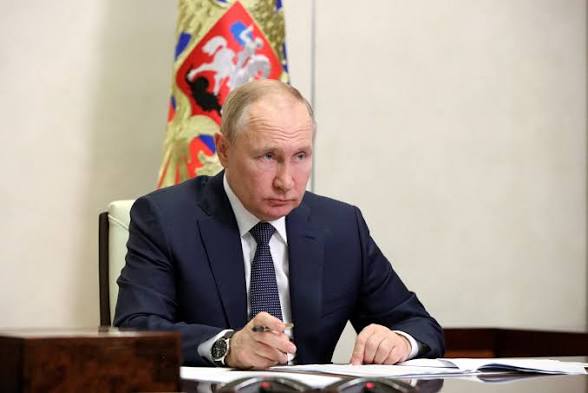
President Vladimir Putin continues to face a complicated military and political challenge.
The Kremlin must maintain military pressure on Ukraine while managing the financial, social, and economic consequences of a prolonged conflict.
Russia has considerable population and industrial resources. It also maintains a large defense sector and continues to recruit personnel.
However, these advantages do not eliminate the costs of war.
The central question is whether Russia can continue replacing personnel and equipment at a rate that allows it to maintain offensive operations.
A high casualty rate can create several difficulties:
Increased recruitment requirements.
Greater spending on military compensation.
Pressure on regional governments.
Loss of experienced military personnel.
Additional demands on military training facilities.
Greater dependence on defense production.
The consequences may become more significant if monthly losses remain higher than the number of personnel Russia can effectively recruit and train.
CSIS reported in July 2026 that Russian monthly battlefield casualties were estimated at approximately 30,000 to 34,000, compared with an estimated 27,000 monthly recruits. These figures suggest a potential sustainability problem, although recruitment and casualty estimates are subject to uncertainty.
CSIS
The Human Cost of Putin’s War
Behind every casualty estimate is a human story.
Russian military deaths have affected families, communities, and regional economies. Many soldiers come from economically disadvantaged regions, where military recruitment payments can provide an important source of income.
For some families, military service represents an opportunity for financial stability. However, the risks have become increasingly difficult to ignore as the war continues.
The consequences include:
Families losing primary income earners.
Communities facing repeated military funerals.
Increased demand for compensation and benefits.
Long-term physical and psychological consequences for wounded veterans.
Financial pressure on regional authorities.
The Russian government has continued presenting military service as an act of national duty. However, the scale of reported losses creates difficult questions about how the Kremlin communicates the human cost of its military campaign.
Independent reporting has also highlighted differences in casualty levels across Russian regions and military units.
Why Russia’s Official Casualty Figures Are Difficult to Establish
One major challenge in understanding Putin casualties in Ukraine is the lack of a complete, independently verified public record.
Russia does not regularly publish comprehensive figures covering all military deaths and injuries.
Ukraine, meanwhile, releases daily estimates of Russian personnel and equipment losses. These reports provide insight into battlefield developments, but they represent the Ukrainian military’s assessment.
Independent researchers use different methods to estimate fatalities.
For example, Mediazona and Meduza have examined publicly available records, leaked government information, obituaries, and other documentation.
Their November 2026 investigation identified at least 490,000 officially registered military deaths in the examined mortality records. However, the researchers warned that the real number could be higher because not every death is immediately recorded or independently identified.
Mediazona
CSIS uses military assessments and other available evidence to estimate both fatalities and total casualties.
These approaches explain why different reports can produce different numbers.
Readers should therefore avoid treating every published estimate as an established fact.
Could Heavy Russian Losses Force Putin to Change Strategy?
One of the biggest questions surrounding the war is whether mounting casualties could eventually force Putin to reconsider his military objectives.
There are several possible outcomes.
A Shift Toward Negotiations
Heavy military losses can increase the incentives for negotiations.
If Russian commanders conclude that further advances would require unacceptable sacrifices, Moscow could become more interested in diplomatic options.
However, negotiations depend on more than military casualties. Territorial demands, security guarantees, sanctions, and political considerations all influence the Kremlin’s decisions.
In August 2026, CIA Director John Ratcliffe reportedly delivered a warning to Russian intelligence leadership about the country’s worsening military and economic position.
The message reportedly encouraged Moscow to consider serious negotiations before the situation deteriorated further.
The Irish Times
Continued Military Mobilization
Another possibility is that Russia continues recruiting and training additional personnel.
The country has relied on financial incentives, recruitment campaigns, and other mechanisms to maintain military numbers.
However, replacing personnel is not the same as restoring military effectiveness.
New soldiers require training, equipment, experienced leadership, and logistical support. If these requirements cannot be met, increasing recruitment alone may not solve Russia’s battlefield challenges.
Greater Reliance on Drones and Long-Range Weapons
Russia may also continue investing in technologies that reduce its dependence on traditional ground operations.
Drones, missiles, electronic warfare systems, and other weapons can support military operations without requiring the same level of direct infantry engagement.
Nevertheless, technology cannot completely replace trained personnel or guarantee territorial gains.
Ukraine’s Strategy and Its Impact on Russian Forces
Ukraine’s defensive strategy has played an important role in increasing the costs of Russia’s invasion.
Rather than relying exclusively on traditional battlefield engagements, Ukrainian forces have increasingly combined defensive positions with drone surveillance, precision attacks, electronic warfare, and strikes against military infrastructure.
This approach can make Russian advances more difficult.
Ukrainian forces have also targeted military logistics, ammunition storage facilities, command locations, and infrastructure supporting Russian operations.
CSIS identified Ukrainian long-range strike capabilities and drone warfare as important factors contributing to Russia’s military difficulties in 2026.
CSIS
However, Ukraine has also suffered substantial military and civilian losses.
The conflict remains extremely destructive, and neither side can be considered free from the consequences of prolonged fighting.
For Ukraine, maintaining defensive capabilities requires continued access to ammunition, air defense systems, training, intelligence, and financial assistance.
November 2026: New Reports Highlight the Scale of Russian Losses
Recent reporting has brought renewed attention to the number of Russian soldiers lost since February 2022.
On November 25, Defense News reported on an updated estimate suggesting that more than 700,000 Russian soldiers had been killed during the war. This estimate highlights the enormous human cost of the invasion, although it differs from other independent assessments.
Defense News
On November 27, Ukraine’s General Staff reported another 2,262 Russian personnel losses over the previous 24 hours.
The same daily update included reported equipment losses, including:
2 tanks.
11 armored fighting vehicles.
33 artillery systems.
2 multiple-launch rocket systems.
1 air defense system.
Ukraine also reported substantial losses of drones and military vehicles. These figures remain Ukrainian estimates rather than independently verified totals.
united24media.com+1
The latest figures reinforce the importance of understanding the difference between individual daily battlefield reports and independently documented cumulative deaths.
For international observers, the broader trend matters more than any single daily number.
What the Casualty Figures Mean for Russia’s Future
Russia’s long-term military position will depend on several interconnected factors.
First, the country must maintain sufficient manpower to support its military operations.
Second, it must continue producing or acquiring weapons, ammunition, armored vehicles, and other equipment.
Third, it must manage the financial consequences of maintaining a large military campaign.
Finally, it must maintain political support for a war that has continued far longer than the Kremlin initially anticipated.
These challenges are connected.
For example, increasing recruitment bonuses can help attract soldiers, but they also increase military spending. Expanding defense production can replace equipment, but it requires resources, workers, and industrial capacity.
Similarly, replacing experienced soldiers with new recruits may maintain troop numbers without immediately restoring combat effectiveness.
This is why intelligence assessments of Russian casualties often examine the sustainability of the country’s military strategy rather than focusing exclusively on deaths.
A large military can continue fighting despite enormous losses. However, the ability to sustain operations does not necessarily mean that its strategy is succeeding.
International Implications of Russia’s Military Losses
The scale of Russian casualties also matters beyond the battlefield.
European governments continue monitoring Russia’s military capabilities because the outcome of the war has implications for European security.
NATO members have increased attention to defense spending, ammunition production, military readiness, and support for Ukraine.
The United States also faces difficult decisions about its involvement in the conflict.
If Russia continues suffering significant losses without achieving its objectives, Western policymakers may interpret this as evidence that continued support for Ukraine can limit Moscow’s military ambitions.
On the other hand, Russia’s ability to sustain its military campaign despite heavy losses demonstrates that the conflict cannot be evaluated through casualty numbers alone.
The future balance will depend on military production, international support, diplomatic negotiations, and developments on the front lines.
Conclusion: Putin Casualties in Ukraine Remain a Major Intelligence Concern
The growing number of reported Russian military casualties has become one of the defining features of the Ukraine war.
Assessments from intelligence officials, military researchers, and independent investigators highlight the enormous human and material costs Russia has experienced since February 2022.
The latest Ukrainian figures, independent death-record investigations, and CSIS estimates provide different perspectives on the scale of these losses.
For Putin, the challenge is not simply replacing soldiers. It is maintaining an effective military campaign while managing recruitment, equipment shortages, economic pressures, and political consequences.
A former CIA station chief’s specific assessment cannot be confirmed without the original statement or interview. Nevertheless, the wider intelligence debate makes one issue clear: Russian casualty levels are central to understanding the sustainability of the Kremlin’s military strategy.
Whether these losses eventually encourage negotiations or lead to continued escalation remains uncertain. What is clear is that the human cost of the war continues to shape the future of Russia, Ukraine, and European security.
Frequently Asked Questions (FAQs)
1. How many Russian soldiers have been lost in Ukraine?
Ukraine’s General Staff reported approximately 1,648,161 Russian personnel losses as of November 27, 2026. This figure includes killed and wounded personnel and is not a confirmed death toll.
2. How many Russian soldiers have died in Ukraine?
Independent estimates vary. A November 2026 Mediazona and Meduza investigation identified at least 490,000 officially registered Russian military deaths in the mortality records it examined through September 29, 2026.
3. What did the former CIA station chief say about Putin casualties?
The specific former CIA station chief and original statement associated with this headline could not be independently verified. However, intelligence assessments have highlighted the significant military costs Russia faces in Ukraine.
4. Why are Russian military casualties so high?
Several factors contribute, including prolonged ground offensives, Ukrainian drone operations, artillery attacks, defensive positions, and difficult battlefield conditions.
5. Is Russia running out of soldiers?
There is no confirmed evidence that Russia has completely run out of available soldiers. However, high casualty rates create recruitment, training, and military sustainability challenges.
6. How are Ukrainian forces increasing Russian losses?
Ukraine uses drones, artillery, precision weapons, electronic warfare, and long-range strikes to target Russian personnel, equipment, and military infrastructure.
7. Could Russian casualties force Putin to negotiate?
Heavy losses could increase pressure for negotiations. However, political objectives, territorial demands, and security considerations will also influence Putin’s decisions.
8. Are Ukrainian casualty figures independently verified?
Not all reported figures are independently verified. Ukraine publishes estimates of Russian military losses, while independent researchers use documented deaths, leaked records, and other evidence.
9. What role does drone warfare play in Russian casualties?
Drones help Ukrainian forces identify enemy positions, monitor troop movements, and attack military targets. They have become an important feature of modern battlefield operations.
10. Will Russian casualties affect the outcome of the Ukraine war?
They could influence Russia’s military capabilities, recruitment, economic resources, and political calculations. However, casualties alone cannot determine the final outcome of the conflict.
About the Author