A new cybersecurity incident involving the Central Intelligence Agency (CIA) and the Office of the Director of National Intelligence (ODNI) has raised serious questions about the security of sensitive US government information. Although officials have indicated that classified networks were not compromised, cybersecurity experts warn that even an attack involving unclassified systems can create significant national security risks.
Former National Security Agency (NSA) hacker and cybersecurity expert David Kennedy has raised concerns about the potential consequences of the incident. His warning highlights an important issue: information does not have to carry a classified label to be valuable to foreign intelligence services or cybercriminals.
The reported intrusion affected an intelligence system used to collect and analyze open-source information. Such systems process publicly available material, including websites, social media content, commercial databases and other digital sources.
However, the combination of this information can reveal sensitive patterns about government investigations, intelligence priorities and national security operations.
The CIA breach warning comes amid growing concerns about increasingly sophisticated cyberattacks, artificial intelligence-assisted hacking and vulnerabilities across US federal agencies.
As investigations continue, questions remain about the attackers, the information potentially exposed and the long-term implications for American intelligence operations.
CIA and ODNI Face Cybersecurity Breach
The reported cyber incident affected an unclassified intelligence system used by the CIA and ODNI. According to reporting published on November 24, 2026, the intrusion involved a network supporting open-source intelligence analysis.
Open-source intelligence, commonly known as OSINT, involves collecting and examining information that is legally available to the public.
Intelligence analysts use these resources to understand international developments, monitor potential threats and assess activities involving foreign governments and organizations.
Although the information comes from public sources, the systems used to organize and analyze it can contain valuable operational insights.
According to people familiar with the incident, the breach disrupted an unclassified network. Officials also indicated that classified information was not involved and that the disruption had been resolved.
However, authorities have not publicly provided a complete explanation of what information may have been accessed.
The identity of the attackers also remains unclear.
This uncertainty has increased attention on the incident, particularly because intelligence agencies handle information that can influence national security decisions.
The Washington Post+2
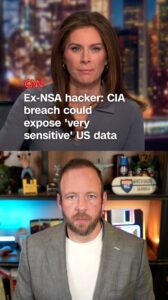
Former NSA Hacker David Kennedy Raises Concerns
David Kennedy, a former NSA hacker who now works in cybersecurity, has highlighted the potential dangers associated with the breach.
His warning focuses on the difference between classified information and information that is sensitive because of how it is collected, organized or used.
An intelligence database may contain publicly available information. However, the way analysts search, connect and interpret that information can reveal details that are not immediately obvious to outsiders.
For example, an attacker who gains access to intelligence research activity could potentially identify subjects receiving increased attention.
Such information might help hostile actors understand which regions, organizations or individuals are being monitored.
It could also provide clues about intelligence priorities and areas where analysts are seeking additional information.
Kennedy’s broader concerns reflect a growing cybersecurity challenge. Attackers increasingly look for indirect ways to obtain valuable information rather than attempting to steal classified documents directly.
This makes the protection of unclassified government networks an important part of national security.
The warning does not establish that particular sensitive records were stolen in the CIA incident. Instead, it highlights the potential consequences of unauthorized access to intelligence-related systems.
Aaja News+2
Why Unclassified Information Can Still Threaten National Security
One of the most important questions surrounding the CIA breach concerns the meaning of unclassified information.
Many people assume that unclassified data is automatically harmless. However, cybersecurity professionals have repeatedly warned that this assumption can be dangerous.
Information can remain unclassified while still providing valuable intelligence to an adversary.
Consider an intelligence analyst researching a foreign military installation. The analyst may use public satellite images, online reports, social media posts and commercial databases.
Individually, these sources might reveal very little. However, when combined, they can create a detailed picture of military movements, political developments or security vulnerabilities.
A compromised intelligence system could potentially expose:
Research topics being monitored by US intelligence analysts.
Patterns in intelligence collection and analysis.
Information gathered from commercial databases.
Internal research documents and working materials.
Connections between publicly available information and government investigations.
Potential gaps in intelligence coverage.
This does not mean that every category was exposed during the reported incident. Authorities have not released a complete inventory of potentially compromised information.
Nevertheless, the possibility explains why experts consider attacks against unclassified intelligence networks serious.
The real danger may involve the information that an attacker can discover by connecting different pieces of seemingly ordinary data.
How the Breach Could Affect US Intelligence Operations
The CIA plays a central role in collecting and analyzing foreign intelligence. Its work supports national security decisions involving international conflicts, terrorism, foreign governments and emerging threats.
The ODNI coordinates activities across the US intelligence community, which includes multiple agencies with different responsibilities.
Both organizations depend on secure digital infrastructure.
An intrusion into an intelligence analysis system could create several potential problems.
1. Exposure of Intelligence Priorities
Intelligence priorities are valuable because they help reveal what a government considers important.
If attackers can identify the topics analysts are researching, they may gain insight into Washington’s strategic concerns.
For example, repeated research involving a particular region could indicate increased attention to political instability, military activity or diplomatic developments.
Even without classified documents, such patterns could help another government understand American interests.
2. Identification of Intelligence Gaps
Another potential concern involves identifying areas where intelligence analysts are searching for additional information.
If attackers can examine research activity, they may identify questions that US agencies have not yet answered.
Hostile actors could potentially use this knowledge to conceal activities, change communication methods or exploit areas receiving less attention.
3. Damage to Intelligence Confidence
Cybersecurity incidents can also affect confidence in government systems.
If intelligence agencies cannot guarantee the integrity of their research networks, officials may need to review existing information and investigate whether unauthorized changes occurred.
Such reviews can consume time and resources.
They may also slow down analytical work while investigators determine whether affected systems can be trusted.
4. Risks to Commercial Intelligence Providers
Modern intelligence work frequently relies on information from commercial providers.
These sources can include satellite imagery companies, data brokers, research platforms and other technology services.
A breach involving systems connected to these resources could raise questions about the security of information shared between government agencies and private companies.
Again, there is no public confirmation that particular commercial providers or their customer databases were compromised in this incident.
However, the wider supply-chain security issue deserves attention.
Artificial Intelligence and the Changing Cyber Threat Landscape
The CIA incident comes at a time when artificial intelligence is changing the cybersecurity environment.
AI tools can help security professionals identify vulnerabilities, analyze suspicious activity and respond to attacks.
Unfortunately, malicious actors can also use similar technologies to automate reconnaissance and identify weaknesses in digital infrastructure.
A particularly concerning development involves AI-assisted tools that can perform multiple technical tasks simultaneously.
Rather than relying entirely on manual research, attackers may use automated systems to examine software, identify exposed services and search for potential weaknesses.
What Is ARTEX?
Reports surrounding the latest incident have also drawn attention to an AI-powered framework known as ARTEX.
According to Nextgov/FCW, the tool is believed to have been used in the breach. The report also discusses its association with other recent intrusions involving US government systems.
However, the full technical details of the CIA attack have not been publicly established.
It would therefore be premature to conclude that ARTEX was definitively responsible for every part of the incident.
The wider concern is that automated offensive tools can reduce the time and expertise required to identify vulnerable systems.
This creates additional pressure on government agencies to improve monitoring, authentication and vulnerability management.
David Kennedy’s Previous Warning About AI Attacks
Kennedy has also recently discussed the speed at which AI-assisted cyberattacks can develop.
In a separate incident involving a company he was helping defend, he described an attack in which multiple AI agents reportedly worked together to compromise systems.
According to reporting published on November 20, 2026, Kennedy said the attack unfolded in approximately 14 minutes.
The reported incident involved compromised credentials, weaknesses in two-factor authentication and the theft of sensitive data before ransomware was deployed.
This was a separate incident and should not be confused with the CIA breach.
Nevertheless, it demonstrates why cybersecurity professionals are increasingly concerned about the speed and automation of modern attacks.
The challenge for defenders is that traditional security procedures may not always respond quickly enough when attackers operate through automated systems.
Nextgov/FCW+2
Were Classified US Government Systems Compromised?
One of the most important details in the available reporting is that classified systems were not affected, according to people familiar with the incident.
This distinction matters because classified intelligence networks contain information subject to strict government security protections.
The CIA and other intelligence agencies maintain different systems and access controls for handling information at different security levels.
The reported incident involved an unclassified network supporting open-source intelligence analysis.
According to the available accounts, the breach did not involve classified information, and the disruption was resolved.
However, several important questions remain unanswered.
What specific information did the attackers access?
Did the attackers copy or remove any data?
How long did unauthorized access continue?
Which systems were affected beyond the initially identified network?
Have investigators identified the individuals or organizations responsible?
Were any external technology providers affected?
Until authorities release additional information, the complete impact cannot be determined.
It is also important to distinguish between a system being breached and confirmed data theft. Unauthorized access does not automatically prove that attackers successfully removed sensitive records.
For now, the available reporting supports the conclusion that an unclassified intelligence system was compromised, while the extent of any information exposure remains unclear.
AP News+2
Why the CIA Breach Is Part of a Wider US Cybersecurity Concern
The latest incident has attracted attention partly because it comes amid several other cybersecurity incidents and technology disruptions involving American government agencies.
US federal networks have become attractive targets because they contain information valuable to foreign governments, criminal organizations and other malicious actors.
The recent incidents have raised questions about whether existing cybersecurity protections are keeping pace with changing threats.
FBI National Crime Information Center Incident
The FBI’s National Crime Information Center (NCIC) has also faced scrutiny following reports of unauthorized access.
The database supports law enforcement activities by providing access to important criminal justice information.
Any security incident involving such a system raises serious concerns because law enforcement databases can contain sensitive records.
However, the FBI incident and the CIA breach should not automatically be treated as connected.
Available reporting has not established that the two incidents were part of one coordinated operation.
Recent NSA Network Disruption
The National Security Agency also experienced a disruption involving its classified communications network.
According to reporting, the agency attributed the interruption to maintenance and software patching.
The NSA subsequently resumed normal operations.
This incident is particularly relevant because the NSA is responsible for signals intelligence and cybersecurity-related missions.
However, a network outage is not necessarily evidence of a cyberattack.
Officials have described the NSA disruption differently from the reported CIA intrusion.
Other Federal Government Security Incidents
The Department of Agriculture has also experienced a cybersecurity incident that resulted in multiple applications being taken offline.
Separately, the Financial Crimes Enforcement Network (FinCEN) disclosed an incident involving unauthorized access to a limited subset of its systems on November 25.
These developments have increased attention on the security of government technology infrastructure.
Nevertheless, investigators have not established that all these events are connected or that they represent a single coordinated campaign.
AP News+3
What Makes Intelligence Networks Attractive Targets?
Intelligence networks are attractive to attackers because they can provide information that is difficult to obtain through ordinary public research.
Even when a system processes unclassified information, it may contain valuable organizational knowledge.
There are several reasons why these networks deserve special protection.
Centralized Information
Government intelligence systems can bring together information from multiple sources.
This creates efficiency for analysts, but it also increases the potential value of a compromised system.
An attacker may gain access to information that would otherwise require considerable time and resources to collect independently.
Access to Analytical Processes
Intelligence analysis is not limited to collecting information.
It also involves identifying connections, evaluating evidence and developing assessments.
Access to these processes could potentially reveal how agencies approach important national security questions.
Connections With External Platforms
Open-source intelligence systems must interact with the wider digital environment.
Analysts need access to websites, public databases, social media platforms and commercial information sources.
These connections can increase the potential attack surface.
Security teams must therefore balance accessibility with strict monitoring and access restrictions.
How US Intelligence Agencies Could Strengthen Cybersecurity
The CIA incident highlights the importance of protecting both classified and unclassified government systems.
Security improvements should not focus exclusively on networks containing secret documents.
Instead, agencies need a comprehensive approach that protects the entire information environment.
Several measures could help reduce future risks.
Stronger Identity and Access Management
Government agencies should regularly review who can access sensitive systems.
Multi-factor authentication, strict access permissions and continuous identity monitoring can help prevent unauthorized entry.
However, authentication systems must also be tested for weaknesses.
The separate incident described by Kennedy demonstrates why organizations cannot assume that enabling two-factor authentication automatically eliminates every access risk.
Continuous Network Monitoring
Security teams need to monitor unusual activity across their networks.
Automated alerts can help identify suspicious logins, unexpected data transfers and unusual access patterns.
Early detection is especially important because attackers may attempt to remain inside compromised systems without attracting attention.
Regular Security Testing
Government agencies should regularly test their digital infrastructure.
Penetration testing and independent security assessments can help identify weaknesses before malicious actors exploit them.
These assessments should cover unclassified networks as well as classified environments.
Better Data Segmentation
Agencies can reduce potential damage by separating systems and limiting unnecessary connections.
If one network becomes compromised, strong segmentation may prevent attackers from moving easily into other environments.
Faster Incident Response
Cybersecurity teams need clear procedures for responding to suspected intrusions.
These procedures should include isolating affected systems, preserving evidence, reviewing access logs and determining whether information was removed or modified.
Agencies should also communicate clearly with relevant partners when an incident creates potential risks beyond their own networks.
What the CIA Breach Means for American National Security
The latest incident highlights how national security increasingly depends on protecting information that may not appear classified.
In the past, discussions about intelligence security often focused on preventing unauthorized access to secret documents.
Today, digital intelligence systems combine information from numerous public and private sources.
The resulting analysis can be highly valuable.
A foreign intelligence service may not need access to classified files if it can learn what American analysts are researching, which developments they are monitoring and where they see potential threats.
That possibility explains the concern expressed by cybersecurity professionals.
The incident also raises questions about the resilience of government technology infrastructure.
Federal agencies must protect their systems against both traditional cybercriminals and increasingly sophisticated automated attacks.
The growing use of artificial intelligence adds another layer of complexity.
Security teams must identify vulnerabilities quickly, protect user credentials and ensure that compromised systems cannot provide attackers with access to wider government networks.
For American intelligence agencies, the challenge is not simply preventing data theft. It is maintaining confidence in the systems used to collect, organize and interpret information.
Could the CIA Breach Expose Sensitive Information About US Citizens?
Another important concern involves information about American citizens.
Open-source intelligence can involve publicly available information about individuals, organizations and activities.
Depending on the systems involved, intelligence analysis may also draw on commercial databases and information obtained from private sources.
Former NSA hacker David Kennedy’s warning has drawn attention to the possibility that unclassified systems could contain information with significant privacy and security implications.
However, there is currently no confirmed public evidence establishing that personal records belonging to specific US citizens were stolen during the CIA incident.
The distinction is important.
The reported breach raises legitimate concerns about the protection of sensitive information, but the actual data exposed has not been publicly identified.
Investigators will need to establish whether attackers accessed personal information, internal research materials or other intelligence-related records.
If any sensitive information was compromised, agencies may also need to assess whether additional protective measures are necessary.
Who Was Responsible for the CIA Cyberattack?
At this stage, the identity of the attackers remains unknown.
The available reports have not established whether the intrusion was carried out by an individual hacker, a criminal organization or a state-sponsored group.
This uncertainty makes it difficult to determine the attackers’ primary objectives.
Possible motivations in government cyberattacks can include intelligence collection, financial gain, disruption or testing an organization’s security weaknesses.
However, none of these motives has been confirmed in connection with this particular incident.
The reported use of ARTEX has attracted additional attention because AI-assisted cybersecurity tools can potentially make sophisticated attacks easier to organize.
Investigators will need to examine technical evidence, access records and system activity before reaching conclusions about the responsible parties.
The CIA and ODNI have not publicly released a detailed account identifying the attackers or explaining precisely what information may have been accessed.
What Happens Next in the CIA Breach Investigation?
The next stage will likely focus on determining the full scope of the intrusion and verifying the security of affected systems.
Investigators will need to establish how unauthorized access occurred, what systems were affected and whether any information was copied.
They may also examine whether the attackers exploited a software vulnerability, compromised credentials or another weakness.
Restoring normal operations is only one part of incident response.
Agencies must also establish whether their systems remain secure and whether attackers left behind unauthorized access mechanisms.
Another important issue involves coordination between government agencies.
Because the reported incident involved intelligence infrastructure used by the CIA and ODNI, investigators may need to assess the security of related systems and external connections.
For now, officials have indicated that the disruption has been resolved and that classified information was not compromised.
However, the lack of publicly available technical details means that important questions remain open.
Conclusion: CIA Breach Warning Highlights Growing Cybersecurity Risks
The reported breach involving the CIA and ODNI demonstrates why protecting unclassified information is essential to national security.
Although available reporting indicates that classified networks were not compromised, the incident has raised concerns about the potential exposure of intelligence research, analytical priorities and other sensitive information.
Former NSA hacker David Kennedy’s warning reinforces the importance of looking beyond traditional definitions of classified data.
As artificial intelligence makes cyberattacks increasingly automated, government agencies face growing pressure to strengthen authentication, network monitoring and information security.
The full consequences of the CIA incident remain unclear. Investigators have yet to publicly establish the attackers’ identities or disclose exactly what information may have been exposed.
Nevertheless, the incident serves as another reminder that cybersecurity is not limited to protecting secret documents. It also involves safeguarding the systems, research and information that support national security decisions.
Further disclosures from US authorities could provide a clearer picture of the breach and the measures being taken to prevent similar incidents.
Frequently Asked Questions (FAQs)
1. What happened in the CIA cybersecurity breach?
An unclassified intelligence system used by the CIA and the Office of the Director of National Intelligence was reportedly compromised. The system supported open-source intelligence analysis. Officials indicated that classified information was not affected.
2. Who is David Kennedy?
David Kennedy is a former NSA hacker and cybersecurity expert. He now works in the cybersecurity industry and has discussed the growing risks posed by sophisticated cyberattacks and artificial intelligence.
3. Was classified CIA information stolen?
Available reports indicate that the breach did not involve classified information or classified networks. However, authorities have not publicly provided a complete account of the information potentially accessed.
4. What is open-source intelligence?
Open-source intelligence, or OSINT, involves collecting and analyzing publicly available information. Sources include websites, social media, news reports, satellite imagery and commercial databases.
5. Why is unclassified information important to hackers?
Unclassified information can reveal intelligence priorities, research activities and patterns of government analysis. When combined, publicly available information can provide valuable insights to hostile actors.
6. Was artificial intelligence used in the CIA breach?
Reports have indicated that an AI-powered framework called ARTEX is believed to have been used. However, the complete technical details of the incident have not been independently established publicly.
7. Were other US intelligence agencies affected?
Reports have identified the CIA and ODNI as affected organizations. The National Geospatial-Intelligence Agency was also reported to have been affected, although the complete scope remains unclear.
8. Was the CIA breach connected to the FBI cyber incident?
There is no confirmed public evidence establishing that the CIA and FBI incidents were connected. They should be treated as separate cybersecurity events unless investigators establish otherwise.
9. Has the CIA resolved the cybersecurity incident?
People familiar with the incident have indicated that the disruption was resolved. However, resolving the immediate disruption does not necessarily answer every question about potential data exposure.
10. What does the CIA breach mean for US national security?
The incident highlights the importance of protecting unclassified intelligence systems. Even without access to classified documents, attackers could potentially obtain valuable insights into government research, intelligence priorities and security operations.
About the Author