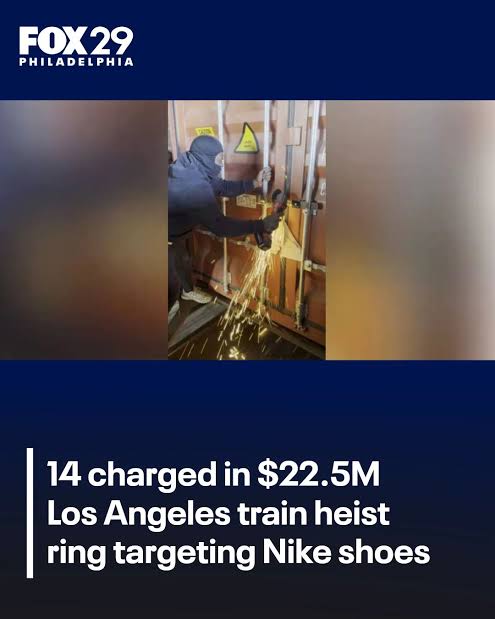
A resulted in federal charges against 14 suspects accused of orchestrating an alleged $22.5 million train heist operation across Southern California. Federal prosecutors say the group targeted freight trains carrying valuable consumer products, including Nike sneakers, Milwaukee power tools and other merchandise.
The alleged operation involved a coordinated network of individuals who reportedly stopped moving freight trains, broke into shipping containers and transported stolen products to storage locations. Investigators also say the suspects used social media to coordinate their activities and arrange the resale of stolen merchandise.
The case has attracted significant attention because of the alleged scale of the operation and the methods used to access valuable cargo. Authorities believe the group targeted at least three dozen freight trains and burglarized more than 70 shipping containers.
According to the U.S. Department of Justice, 13 defendants were arrested following the unsealing of a 17-count federal indictment on November 19, 2026. A total of 14 individuals were charged in connection with the alleged conspiracy.
United States Department of Justice+1
The investigation highlights growing concerns about organized cargo theft, transportation security and the resale of stolen consumer products.
What Happened In The California Train Heist?
Federal prosecutors allege that the suspects operated an organized cargo theft network targeting high-value freight shipments traveling through Southern California.
The investigation focuses on incidents dating from February 2024 through August 2026. During this period, the alleged group targeted trains carrying merchandise arriving through major shipping ports.
The Ports of Los Angeles and Long Beach play an important role in international trade. Goods arriving at these facilities are transported by rail and truck to distribution centers across the United States.
According to investigators, the suspects allegedly identified valuable shipments and selected locations where freight trains could be forced to stop.
Once a train stopped, members of the group allegedly entered shipping containers and removed merchandise. Other participants reportedly waited nearby with trucks and vans to collect the stolen products.
Authorities estimate that the stolen merchandise had a total value exceeding $22.5 million.
The stolen goods allegedly included:
Nike sneakers and other branded footwear.
Milwaukee power tools.
Electronics and consumer products.
Other valuable retail merchandise.
Prosecutors say the operation was not limited to stealing goods. The alleged network also included people responsible for storing, transporting, advertising and selling the stolen merchandise.
This structure is one reason investigators describe the case as an organized criminal enterprise rather than a series of unrelated thefts.
United States Department of Justice+2
How The Suspects Allegedly Stopped Moving Freight Trains
One of the most concerning aspects of the California train heist involves the alleged method used to stop freight trains.
According to the federal indictment, members of the group allegedly interfered with railroad equipment by cutting air hoses connected to train braking systems.
Freight trains rely on compressed air to operate their braking systems. When the air pressure drops unexpectedly, emergency brakes can activate.
Prosecutors allege that the suspects used this method to force trains to stop at predetermined locations.
Once the trains stopped, other members allegedly boarded the railcars and broke into shipping containers.
The group reportedly used rented or borrowed vehicles to transport stolen merchandise away from railroad tracks.
The alleged operation required coordination between several participants. Some individuals reportedly identified valuable shipments, while others acted as lookouts or helped load merchandise into vehicles.
The indictment also describes incidents in which the suspects allegedly communicated about where and when trains should be stopped.
These allegations raise serious safety concerns. Interfering with railroad braking systems can create dangerous conditions for train crews, nearby communities and other transportation operations.
Authorities have therefore included charges involving violence against railroad carriers in addition to cargo theft allegations.
The investigation involved the Union Pacific Railroad Police Department, Homeland Security Investigations, the Los Angeles Police Department and the California Highway Patrol.
United States Department of Justice+1
More Than 70 Shipping Containers Allegedly Targeted
The investigation suggests that the alleged theft operation was extensive and continued for more than two years.
According to reporting by the Los Angeles Times, investigators believe the suspects burglarized more than 70 cargo containers carried by freight trains. The containers reportedly held products intended for distribution centers in several states.
Los Angeles Times
The alleged thefts took place in multiple Southern California locations, including:
Pico Rivera.
Fullerton.
Los Angeles.
Other railroad locations throughout the region.
These locations provided opportunities for the suspects to access trains transporting valuable merchandise.
The alleged group reportedly selected shipments based on the products they contained. Nike footwear was among the major targets because branded sneakers can command significant resale prices.
Some stolen products were allegedly removed in large quantities. This made it possible for the suspects to generate substantial proceeds through resale transactions.
Investigators also examined individual theft incidents to establish how the operation worked.
One example involved the alleged theft of thousands of pairs of Nike Jordan 3 Retro Family Affair sneakers in August 2025. According to the Los Angeles Times, the merchandise had an estimated retail value exceeding $588,000.
The investigation also identified other incidents involving Nike footwear and electronics.
These details illustrate how a single freight train burglary could result in hundreds of thousands of dollars in alleged losses.
Nike Sneakers And Milwaukee Tools Among The Stolen Products
Nike sneakers reportedly represented one of the most valuable categories of merchandise targeted by the alleged criminal network.
Popular footwear brands often have strong resale markets. Certain limited-edition sneakers can attract buyers willing to pay prices above their original retail value.
Prosecutors allege that the suspects understood the potential resale value of the merchandise they stole.
Nike products were reportedly photographed and shared with potential buyers before being sold.
Milwaukee tools and other consumer products were also among the merchandise identified in the investigation.
These products have established retail markets and can be attractive targets for organized theft groups because they are relatively easy to transport and resell.
The alleged operation therefore targeted a range of merchandise rather than concentrating on one particular retailer or product category.
The investigation also examined how stolen products moved from railroad containers into storage locations and eventually reached buyers.
This part of the case is particularly important because cargo theft does not necessarily end when merchandise disappears from a train.
Stolen goods can move through several different individuals and businesses before reaching the final customer.
Federal prosecutors allege that the suspects created a distribution network that allowed them to convert stolen merchandise into money.
Instagram Allegedly Helped Coordinate The Train Heists
Another striking element of the California train heist investigation involves the alleged use of social media.
According to federal prosecutors, members of the group used Instagram to communicate about their activities.
Investigators identified a group chat reportedly called “Los Trenes,” which translates to “The Trains” in English.
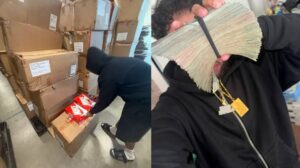
The indictment alleges that participants shared photographs and videos showing stolen products, railroad activity and other details connected to the operation.
Some images allegedly showed individuals aboard moving freight trains or near shipping containers.
Other photographs reportedly displayed stolen merchandise and large amounts of cash.
Prosecutors also described images that appeared to celebrate the group’s activities.
The alleged use of social media could provide investigators with important evidence about communication between participants.
Photographs, messages and videos can help establish timelines, identify individuals and connect specific suspects to particular incidents.
However, investigators must still demonstrate how each piece of evidence relates to the charges against individual defendants.
Social media evidence is especially important in organized theft investigations because it can help authorities understand relationships between people who may have different responsibilities.
In this case, prosecutors allege that the communications helped connect the people involved in stealing merchandise with those responsible for arranging its resale.
United States Department of Justice+2
More Than $1 Million In Stolen Nike Products Allegedly Sold To A Resale Business
One of the most significant developments in the investigation involves an unnamed Los Angeles-based sneaker and streetwear resale business.
Federal prosecutors refer to the business as “Company 1” in the indictment.
According to the allegations, two defendants, Fredy Marquina and Carlos Luis Fernando Martinez, arranged sales of stolen Nike sneakers and other merchandise to the company.
Between May 2025 and October 2025, the alleged transactions involved thousands of pairs of Nike sneakers and other stolen products.
Prosecutors estimate that the defendants received approximately $1,081,493 from the business.
The indictment reportedly states that many of the sneakers were delivered in their original Nike factory cartons.
This detail is important because it demonstrates how stolen merchandise could allegedly enter commercial resale channels while retaining much of its original packaging.
The company was described in the indictment as a sneaker and streetwear resale brand that was not an authorized Nike reseller.
However, prosecutors have not publicly identified the company by name in the indictment.
The allegations against the defendants do not automatically establish criminal responsibility on the part of every person associated with a resale business.
Investigators must establish the knowledge and conduct of each individual involved.
The case nevertheless highlights the importance of checking product origins and maintaining reliable purchasing records in the resale industry.
United States Department of Justice+2
Who Are The 14 Defendants Charged In The Case?
The federal indictment names 14 individuals accused of participating in different parts of the alleged cargo theft operation.
The defendants identified by the Department of Justice include:
Nathan Daniel Angel, 21, of East Los Angeles.
Daniel Angel, 38, of East Los Angeles.
Rodolfo Angel, 23, of East Los Angeles.
Jose Luis Angel, 23, of East Los Angeles.
Donta Hedgeman, 27, of East Los Angeles.
Fernando Alexis Alvarado Villegas, 27, of Los Angeles.
Daniel Garcia, 36, of East Los Angeles.
Carlos Robert Estrada, 28, of Whittier.
Angel Sanchez, 24, of Commerce.
Ruben Mario Banuelos, 26, of East Los Angeles.
Fredy Marquina, 25, of Los Angeles.
Carlos Luis Fernando Martinez, 23, of Los Angeles.
Jorge Angel Aguilar Espinoza, 36, of East Los Angeles.
Ricardo Mares, 32, of the Florence-Firestone area.
According to prosecutors, Nathan Daniel Angel allegedly served as the leader of the operation.
His father, Daniel Angel, and other alleged associates reportedly helped coordinate transportation, identify locations and move stolen merchandise.
Other defendants allegedly participated in stopping trains, acting as lookouts, loading products and arranging sales.
These are allegations contained in the federal indictment. Each defendant is presumed innocent unless proven guilty in court.
United States Department of Justice+1
Federal Charges And Potential Prison Sentences
The 14 defendants face serious federal charges connected to the alleged train theft operation.
The 17-count indictment includes one conspiracy count against all 14 defendants.
It also includes 14 counts involving theft of interstate railroad cargo and possession or receipt of stolen interstate railroad cargo.
Additionally, two counts involve violence against railroad carriers.
The charges reflect the different alleged activities associated with the operation.
Cargo theft involving interstate transportation can carry significant federal penalties. The alleged interference with railroad equipment adds another serious dimension to the investigation.
According to the Department of Justice, the potential statutory maximum penalties include:
| Federal charge | Maximum potential sentence |
|---|---|
| Conspiracy | 5 years |
| Each railroad cargo theft count | 10 years |
| Each violence against railroad carriers count | 20 years |
These are statutory maximum penalties, not predicted sentences.
Actual sentences, if defendants are convicted, would depend on the specific counts of conviction, applicable sentencing rules and other legal considerations.
The defendants are entitled to contest the government’s evidence and defend themselves in court.
The federal prosecution is being handled by Assistant U.S. Attorney Diane Roldán of the Major Crimes Section, with assistance from the Los Angeles County District Attorney’s Office.
United States Department of Justice+1
14-Month Investigation Leads To Major Arrests
The arrests followed a 14-month investigation involving several federal, state and local law enforcement agencies.
The investigation brought together organizations responsible for investigating cargo theft, protecting railroad operations and identifying financial activity connected to criminal networks.
The agencies involved included:
Homeland Security Investigations (HSI).
Los Angeles Police Department Commercial Crimes Bureau.
Union Pacific Railroad Police Department.
California Highway Patrol Cargo Theft Interdiction Program.
IRS Criminal Investigation.
Each agency contributed to investigating different aspects of the alleged operation.
Railroad police helped investigate incidents involving freight trains and railroad property. Local investigators examined commercial theft activity, while federal authorities pursued evidence involving interstate cargo and alleged resale networks.
Financial investigations were also important because authorities needed to understand how stolen merchandise was allegedly converted into money.
The involvement of IRS Criminal Investigation highlights the financial dimension of the case.
According to the Department of Justice, investigators also examined the movement of stolen products between locations and the alleged relationships between individuals involved in the operation.
The investigation eventually resulted in a federal grand jury indictment containing 17 counts.
United States Department of Justice+1
Why The California Train Heist Matters For US Supply Chains
The California train heist investigation raises broader questions about the security of America’s freight transportation system.
Railroads are essential to the movement of consumer products, industrial equipment and other goods throughout the United States.
Major ports depend on rail networks to transport imported merchandise to warehouses, retailers and distribution centers.
When cargo disappears during transportation, the consequences can extend beyond the immediate financial losses.
Retailers may face inventory shortages, higher insurance costs and delays in fulfilling customer orders.
Transportation companies may also need to increase spending on security measures, surveillance and cargo monitoring.
The alleged California operation demonstrates how organized theft groups can exploit weaknesses in transportation systems.
It also highlights the importance of cooperation between rail companies, retailers, law enforcement agencies and logistics providers.
Businesses that purchase large quantities of merchandise from third-party suppliers may need stronger verification procedures.
Checking invoices, supplier identities, product documentation and transaction records can help identify suspicious merchandise.
The resale industry also faces questions about how businesses should respond when offered unusually large quantities of popular products at prices significantly below normal market rates.
Although the indictment does not establish guilt, the allegations provide an important example of the challenges facing modern cargo security.
What Happens Next In The Federal Case?
The next stage of the California train heist case will focus on the federal court process.
The defendants will have opportunities to review the evidence, enter pleas and challenge the government’s allegations.
Prosecutors must establish the charges against each individual beyond a reasonable doubt.
The case could involve evidence from social media communications, financial records, photographs, videos and information gathered during the investigation.
The alleged resale transactions may also become an important part of the prosecution’s case.
Investigators will likely need to establish how individual defendants participated in the alleged conspiracy and whether they knowingly handled stolen merchandise.
The legal proceedings will also determine whether the prosecution can prove the allegations involving interference with railroad operations.
At this stage, the indictment represents formal criminal accusations rather than a final finding of guilt.
The case remains an important development in the fight against organized cargo theft in the United States.
Frequently Asked Questions (FAQs)
1. What happened in the California train heist?
Fourteen individuals were charged in an alleged organized cargo theft operation involving more than $22.5 million in stolen merchandise from freight trains in Southern California.
2. How much cargo was allegedly stolen?
Federal prosecutors estimate that the stolen merchandise was worth more than $22.5 million. The products included Nike sneakers, Milwaukee tools and other consumer goods.
3. How many people were charged in the train theft case?
Fourteen individuals were charged in a 17-count federal indictment. The Justice Department announced that 13 defendants were arrested when the indictment was unsealed.
4. Where did the alleged train robberies happen?
The alleged burglaries occurred at railroad locations across Southern California, including Pico Rivera, Fullerton and Los Angeles.
5. How did the suspects allegedly stop the trains?
According to prosecutors, members of the group allegedly cut train air hoses, causing a loss of air pressure and activating emergency braking systems.
6. Which products were targeted?
The alleged theft operation targeted Nike sneakers, Milwaukee power tools, electronics and other valuable consumer products.
7. Did the suspects use social media?
Yes. Prosecutors allege that participants used Instagram to coordinate activities and share photographs and videos connected to the thefts and resale of merchandise.
8. Was a resale business involved?
The indictment describes an unnamed Los Angeles-based sneaker and streetwear resale business as Company 1. Prosecutors allege that two defendants sold approximately $1.08 million worth of stolen Nike products and other merchandise to the business.
9. What prison sentences could the defendants face?
The statutory maximum penalties include five years for conspiracy, up to 10 years for each railroad cargo theft count and up to 20 years for each violence against railroad carriers count. Actual sentences would depend on the court proceedings and applicable law.
10. Have all the defendants been found guilty?
No. The charges are allegations in a federal indictment. All defendants are presumed innocent unless and until proven guilty in court.
Conclusion: A Major Warning About Organized Cargo Theft
The California train heist investigation represents a significant federal case involving alleged organized theft, transportation security violations and the resale of stolen merchandise.
Prosecutors say the operation targeted freight trains across Southern California, stealing more than $22.5 million in consumer goods over an extended period.
The alleged use of social media, coordinated transportation and commercial resale channels demonstrates the complexity of modern cargo theft investigations.
With 14 defendants facing federal charges, the case could become an important test of how authorities pursue organized theft networks and the people accused of profiting from stolen goods.
For retailers, railroad companies and consumers, the investigation is another reminder that cargo security remains an important part of protecting America’s supply chains.
The legal process will now determine whether prosecutors can prove the allegations against the defendants.
About the Author