The world is waking up to another eventful day as political tensions, international diplomacy, economic uncertainty and technological disruptions dominate the global news agenda. From Washington and Tehran to Kyiv, Beijing and the United Nations climate conference, major developments are shaping conversations across continents.
Friday, November 13, 2026 brings several important stories that could influence international relations, financial markets and public policy. US President Donald Trump has issued fresh warnings concerning Iran, diplomatic efforts surrounding the Russia-Ukraine war have gained renewed attention, and Microsoft is working to restore services following a widespread technology outage.
Meanwhile, China’s military activities around Taiwan have raised security concerns, while world leaders attending COP31 are facing difficult discussions about climate change, energy security and financial commitments.
These developments highlight how closely connected global politics, technology, business and security have become.
Here is a closer look at the top global news headlines today and why they matter.
1. Trump Issues Fresh Warning to Iran as Regional Tensions Continue
Tensions between Washington and Tehran remain a major international concern following fresh comments from President Donald Trump.
Trump indicated that the United States could use military force immediately if Iran threatened American allies or US naval vessels. His remarks underline the administration’s willingness to maintain a hard-line approach toward Tehran.
The comments come amid continuing concerns about maritime security, regional military activity and the broader confrontation involving Iran and its neighbours.
The Strait of Hormuz remains particularly important because it is one of the world’s most significant energy transportation routes. Any disruption could affect international oil supplies, shipping costs and global economic confidence.
For Washington, protecting American forces and regional partners remains a central security priority. However, military escalation could create wider consequences.
Iran has repeatedly rejected foreign pressure and maintained its opposition to US military involvement in the region.
Diplomatic channels therefore remain important, even as military warnings become more prominent.
The situation deserves close attention because a confrontation could affect energy markets, international trade and regional stability.
2. Ukraine Peace Talks Show New Signs of Diplomatic Movement
The Russia-Ukraine conflict remains one of the biggest challenges facing European security.
Fresh diplomatic developments have raised hopes that negotiations could move forward. US representatives have been engaging with Russian and Ukrainian officials as efforts continue to identify possible steps toward ending the conflict.
One important development involves a proposed prisoner exchange between Russia and Ukraine.
Ukrainian President Volodymyr Zelenskyy has described the planned exchange as potentially the largest of its kind since the conflict began.
The announcement offers a rare positive development amid years of fighting, destruction and humanitarian suffering.
Another significant issue is Europe’s participation in future negotiations.
European governments have repeatedly argued that they must have a meaningful role in discussions about Ukraine’s future security. Their geographical proximity and existing support for Kyiv make their involvement particularly important.
However, major disagreements remain.
Russia and Ukraine continue to hold different positions on territorial questions, security arrangements and the future relationship between Kyiv and NATO.
A prisoner exchange could help build confidence, but it would not automatically produce a ceasefire.
The coming diplomatic discussions will therefore be closely watched by governments across Europe and beyond.
3. Microsoft Outage Continues to Disrupt Global Services
Technology users and businesses are facing another reminder of the risks associated with digital dependence.
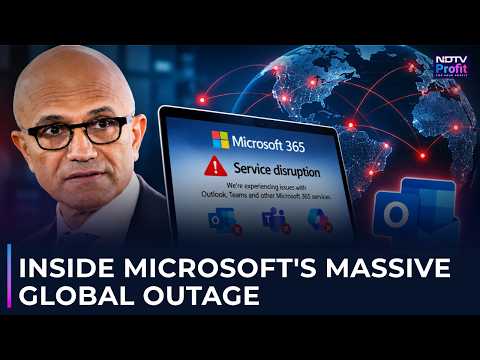
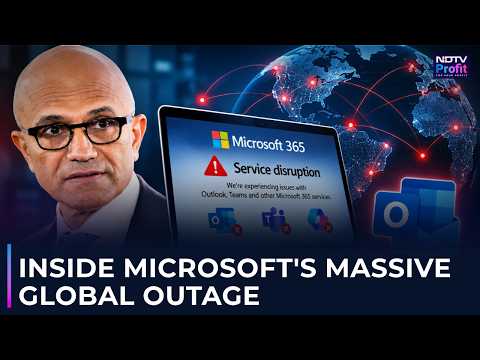
Microsoft is working to restore services following a widespread outage affecting Microsoft 365 products.
The disruption has affected services including Outlook, Microsoft Teams and Copilot, creating problems for organisations that depend on these platforms for everyday operations.
Reports indicate that recovery is progressing, although some users continue to experience intermittent access problems and delayed messages.
The outage has affected businesses and public services across several regions, including North America, Europe and Asia-Pacific.
Government departments, companies and other organisations have faced communication difficulties.
The incident is particularly significant because Microsoft products are deeply integrated into modern workplaces.
Employees use Outlook for communication, Teams for meetings and collaboration, and Microsoft 365 applications for documents and business operations.
When these services become unavailable, even temporarily, the consequences can spread quickly.
Microsoft has indicated that there is no evidence pointing to a cyberattack. The company is investigating a technical issue and working to stabilise affected services.
The outage also raises questions about digital resilience.
Businesses may need to reconsider whether they rely too heavily on a single technology provider. Backup communication systems, alternative platforms and stronger continuity plans could help reduce future disruption.
For organisations worldwide, the incident is a warning that even major technology providers can experience serious service interruptions.
4. Trump Threatens Higher Tariffs on Mexico Over Migrant Caravan
Immigration and trade relations between the United States and Mexico have returned to the international spotlight.
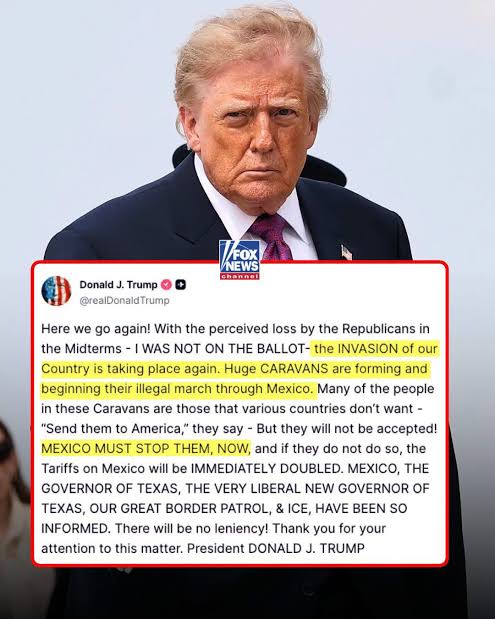
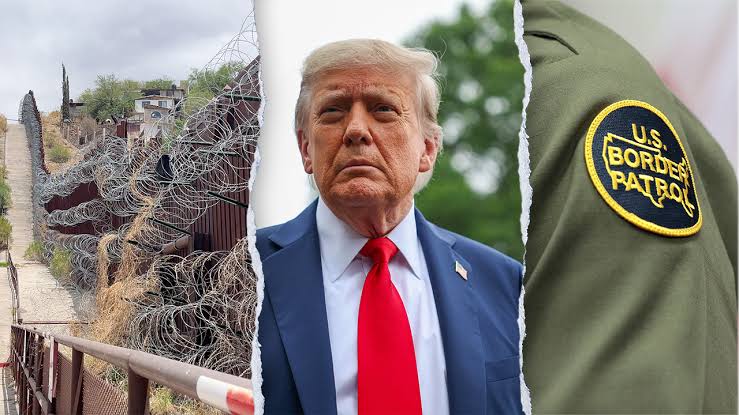
President Donald Trump has threatened to immediately double tariffs on Mexico unless Mexican authorities take action over what he described as large migrant caravans heading toward the US border.
The warning adds another layer of pressure to an already complicated relationship.
The United States and Mexico share extensive economic ties. Their industries are connected through manufacturing, agriculture, transportation and cross-border supply chains.
Consequently, tariff increases could affect companies and consumers in both countries.
Businesses that depend on cross-border production may face higher costs. Importers could also experience uncertainty as companies assess the potential financial impact.
Mexico faces the challenge of managing migration while maintaining stable economic relations with its largest trading partner.
The issue also has domestic political significance in the United States, where border security and immigration policy remain major topics of debate.
Whether the threat leads to an actual tariff increase will depend on negotiations and decisions by both governments.
For now, the development highlights the connection between immigration policy and international economic relations.
5. China’s Military Drills Raise Concerns Around Taiwan
Security developments involving China and Taiwan are attracting international attention.
Taiwanese officials have raised concerns about large-scale Chinese military exercises across the western Pacific and surrounding Taiwan earlier this month.
According to a Reuters report published November 13, more than 100 Chinese naval and coast guard vessels were involved at one point.
The exercises reportedly included simulated attacks on military targets and cities.
Taiwan has described the activities as a form of pressure designed to increase military and political intimidation without triggering the diplomatic consequences of a formally announced operation.
Beijing considers Taiwan part of its territory and has repeatedly opposed moves toward formal independence.
Taiwan, meanwhile, maintains its own democratic government and security arrangements.
The disagreement has become one of the most sensitive issues in international relations.
The United States also has an important role because it supports Taiwan’s defensive capabilities and has repeatedly called for stability across the Taiwan Strait.
Military activity in the region could affect international shipping, semiconductor supply chains and diplomatic relations.
The timing is particularly important as major international meetings involving US and Chinese leaders approach.
Governments across the Indo-Pacific will be watching closely for signs of further military activity or diplomatic progress.
6. COP31 Climate Summit Faces Difficult Negotiations
Climate change remains another major issue dominating the international agenda.
World leaders, negotiators and environmental organisations are gathering at COP31 in Turkey to discuss emissions reductions, climate finance and the future of global energy systems.
UN Secretary-General António Guterres has urged countries to make drastic emissions cuts to protect the Paris Agreement’s 1.5-degree Celsius warming target.
However, reaching an agreement remains difficult.
European countries are supporting greater electrification and cleaner energy systems. Developing nations are demanding stronger financial support to manage climate-related challenges.
Meanwhile, major fossil-fuel-producing countries remain cautious about proposals that could require a rapid transition away from oil, gas and coal.
These disagreements reflect different economic priorities.
Developing countries argue that they need affordable energy and financial resources to support economic growth.
Wealthier countries face pressure to provide funding and technology that can help vulnerable nations adapt to climate change.
The effects of global warming are already visible through extreme weather, flooding, heatwaves and environmental damage.
Climate negotiations therefore carry significant consequences for future generations.
The challenge is to develop policies that balance economic development, energy security and environmental protection.
7. Gaza Situation Remains a Major Humanitarian Concern
The humanitarian situation in Gaza continues to attract international attention as regional tensions remain high.
Reports of Israeli strikes causing additional casualties have renewed concerns about civilian safety and the protection of essential infrastructure.
Humanitarian organisations continue to highlight the importance of reliable access to food, medical supplies, clean water and emergency assistance.
The conflict has created enormous challenges for civilians, particularly families living in damaged or overcrowded areas.
Hospitals and aid organisations face difficult operating conditions when access routes, infrastructure and essential supplies are disrupted.
International governments remain divided over the best approach to achieving a lasting resolution.
Some countries are calling for stronger diplomatic pressure, while others are focusing on security concerns and the future political arrangements in Gaza.
Any sustainable solution will require attention to civilian protection, humanitarian access and long-term political stability.
The international community continues to face the difficult task of supporting humanitarian relief while pursuing a broader diplomatic settlement.
8. Global Markets Monitor Oil Prices and Economic Uncertainty
Financial markets are also responding to international developments.
Oil prices, currency movements and investor confidence remain sensitive to geopolitical tensions.
Concerns about Iran, shipping security and international trade have the potential to influence energy prices.
At the same time, investors are watching central bank decisions and inflation trends for signs of how major economies may perform in the coming months.
Indian markets have also faced pressure amid concerns about rising oil prices and inflation.
India imports a significant share of its crude oil requirements. Therefore, a sustained increase in international energy prices could affect transportation costs, manufacturing expenses and household budgets.
Currency movements also matter.
A stronger US dollar can increase the cost of imported commodities for countries whose currencies weaken against it.
For businesses, the combination of geopolitical uncertainty and changing financial conditions makes planning more difficult.
Investors are consequently paying close attention to economic data and government policy announcements.
9. Europe Pushes for Stronger Security Cooperation
European security remains high on the political agenda as governments respond to the continuing Russia-Ukraine conflict.
Several Nordic countries have agreed to begin developing a joint defence cooperation arrangement.
The proposed agreement aims to strengthen military coordination and make it easier for armed forces to operate across the region.
This reflects growing concern about security challenges in northern Europe.
Governments are increasingly focusing on defence readiness, military mobility and cooperation between neighbouring countries.
The European Union is also preparing another sanctions package against Russia while considering Ukraine’s financial requirements for 2027.
These measures underline Europe’s continued involvement in the conflict and its long-term security consequences.
However, European governments must also manage economic pressures and domestic political disagreements.
Defence spending, energy costs and financial assistance remain important subjects of debate.
Stronger cooperation could improve regional preparedness, although it cannot independently resolve the wider conflict.
10. Technology Security Becomes a Bigger International Priority
Beyond the Microsoft outage, cybersecurity is emerging as another important global concern.
Reports of malware being placed on an internal update server at German drone manufacturer Quantum Systems have raised questions about technology supply-chain security.
The company supplies equipment to Germany’s armed forces, making the reported incident particularly sensitive.
Modern defence systems increasingly depend on software, connected devices and digital communication networks.
This creates new opportunities for technological innovation but also introduces additional security risks.
A compromised update system could potentially expose organisations to serious operational threats.
Governments and defence contractors are therefore under pressure to improve cybersecurity standards.
The issue extends beyond military equipment.
Banks, hospitals, government departments and private businesses all depend on digital infrastructure.
The Microsoft outage demonstrates how service interruptions can disrupt everyday operations, while cybersecurity incidents highlight the risks of malicious activity.
Together, these developments show why digital resilience has become a major international priority.
11. Humanitarian Challenges Continue in the Democratic Republic of Congo
Humanitarian conditions in the Democratic Republic of Congo remain deeply concerning.
The World Food Programme has reported that approximately 28.8 million people are experiencing acute food insecurity.
The situation reflects the combined impact of conflict, displacement, economic difficulties and limited access to essential resources.
Food insecurity is particularly dangerous for children and vulnerable families.
When households cannot access sufficient food, the consequences extend beyond immediate hunger. Malnutrition, interrupted education and long-term health problems can affect entire communities.
International humanitarian organisations continue to call for support and improved access to affected populations.
The crisis also highlights the importance of addressing the underlying causes of instability.
Emergency food assistance is essential, but lasting improvements require stronger infrastructure, economic opportunities and political stability.
The international community faces continuing pressure to prevent humanitarian conditions from deteriorating further.
12. Why Today’s Global Headlines Matter
The major developments of November 13 demonstrate how events in one part of the world can influence decisions elsewhere.
Military tensions can affect energy prices. Trade disputes can disrupt supply chains. Technology outages can interrupt government services and international business operations.
Climate negotiations can shape energy investment, while diplomatic developments can influence security and economic confidence.
These connections make international news increasingly important for ordinary people.
For consumers, higher energy prices may increase household expenses.
For businesses, geopolitical uncertainty can affect investment decisions and supply-chain planning.
For governments, international developments create difficult choices involving diplomacy, national security and economic policy.
For investors, the global situation can influence currencies, commodities and financial markets.
Understanding the wider context behind individual headlines is therefore essential.
A single announcement may appear limited to one country, but its consequences can extend across multiple regions.
What to Watch Next
Several developments deserve continued attention over the coming days.
First, the international community will be watching for further statements from Washington and Tehran. Any escalation involving military forces or commercial shipping could have wider consequences.
Second, diplomatic efforts surrounding Ukraine could provide further information about prisoner exchanges, ceasefire discussions and Europe’s participation in negotiations.
Third, Microsoft users will be looking for confirmation that all affected services have returned to normal.
Fourth, China-Taiwan relations will remain an important security issue as governments monitor military activity and upcoming diplomatic engagements.
Finally, COP31 negotiations could produce important announcements about climate finance, emissions targets and the future of energy policy.
Each development could influence the international news agenda.
Conclusion: A World Facing Multiple Challenges
Today’s global news headlines reveal a world dealing with several interconnected challenges.
From rising geopolitical tensions and uncertain peace negotiations to technology disruptions and climate negotiations, governments are facing difficult decisions.
The latest developments involving the United States, Iran, Ukraine, China, Mexico and Europe show that international relations remain highly complex.
Meanwhile, the Microsoft outage highlights the importance of reliable digital infrastructure, and COP31 demonstrates the continuing need for international cooperation on environmental issues.
For readers, staying informed means looking beyond individual headlines and understanding the larger forces shaping global events.
As the day unfolds, political decisions, diplomatic meetings and economic developments will continue influencing the international landscape.
About the Author