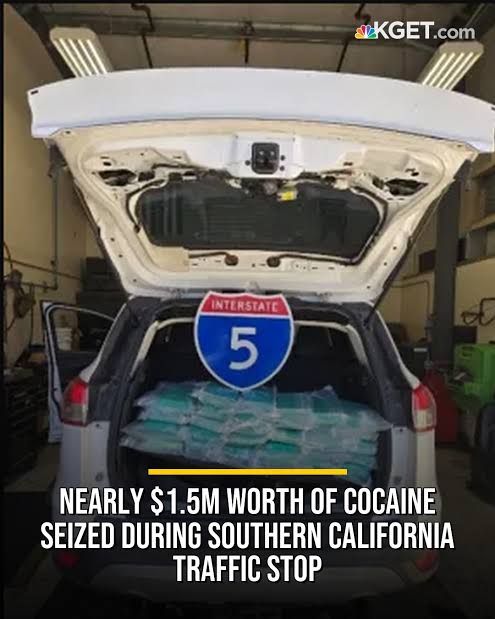
A major drug interception in Southern California has put the spotlight on ongoing efforts to stop cocaine trafficking across the United States. U.S. Border Patrol agents seized more than 1,435 pounds of suspected cocaine, valued at approximately $9.8 million, during two vehicle inspections at the San Clemente checkpoint.
The discovery happened on October 25, 2026, when agents assigned to the San Diego Sector stopped two vehicles for additional inspection. The incidents occurred just three minutes apart, and suspicious behavior by the drivers reportedly prompted agents to take a closer look.
A Border Patrol canine subsequently alerted agents to both vehicles. Further inspections uncovered hundreds of vacuum-sealed packages concealed inside black garbage bags.
According to U.S. Customs and Border Protection (CBP), agents discovered a total of 550 packages containing suspected cocaine. Both drivers were arrested, while the Drug Enforcement Administration (DEA) took custody of the suspects and the suspected narcotics pending federal prosecution.
The seizure, announced publicly on November 6, represents a significant interception at a checkpoint along Interstate 5. It also highlights the importance of vehicle inspections, canine units and coordinated law enforcement operations in disrupting suspected drug transportation networks.
Border Patrol Seizes Nearly $10 Million Worth of Cocaine
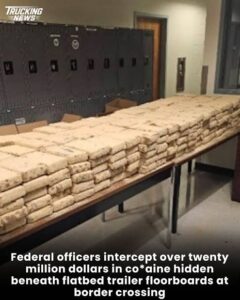
The latest Border Patrol cocaine seizure involved more than 1,435 pounds of suspected cocaine with an estimated value of $9.8 million.
According to CBP, the drugs were discovered during two separate vehicle inspections at the San Clemente Border Patrol checkpoint in Southern California.
The discovery was particularly notable because the two vehicles were flagged within a very short period. Agents noticed suspicious behavior and referred both vehicles for secondary inspection.
One driver reportedly attempted to reverse out of the checkpoint, raising additional concerns among officers.
Rather than allowing the vehicles to continue, agents conducted further examinations. A Border Patrol canine alerted to both vehicles, providing an important indication that concealed contraband might be present.
The subsequent searches revealed hundreds of packages hidden in black garbage bags.
Officials reported that field testing produced presumptive positive results for cocaine. The substances were therefore treated as suspected cocaine during the initial investigation.
The estimated $9.8 million value demonstrates the potential financial significance of the intercepted shipment.
However, the seizure’s importance extends beyond its monetary value. Removing such a large quantity of suspected cocaine from circulation prevents the shipment from potentially reaching distribution networks while investigators examine its origin and intended destination.
EBS PublicNow+2
Two Vehicles Trigger Back-to-Back Border Inspections
One of the most striking details of the operation was how quickly the two discoveries unfolded.
On October 25, Border Patrol agents at the San Clemente checkpoint encountered two vehicles that attracted their attention. Both vehicles were referred for additional inspection after agents observed suspicious behavior.
The incidents happened approximately three minutes apart.
The timing made the operation particularly significant. Instead of uncovering one isolated shipment, agents discovered suspected cocaine in two separate vehicles during consecutive inspections.
According to the initial CBP announcement, one driver attempted to reverse out of the checkpoint. Such behavior attracted attention and contributed to the decision to conduct further checks.
Checkpoint inspections are an important part of Border Patrol’s enforcement responsibilities. Agents monitor vehicles traveling along major transportation routes and look for indicators that may suggest illegal activity.
These indicators do not automatically establish criminal wrongdoing. However, when officers observe behavior that raises concerns, they can refer vehicles for additional inspection under applicable procedures.
In this case, the additional inspections led to the discovery of a substantial suspected cocaine shipment.
The operation also demonstrates how seemingly routine checkpoint activity can result in major narcotics interceptions.
Canine Unit Helps Uncover Hidden Cocaine Packages
A key element of the operation was the involvement of a Border Patrol canine unit.
After agents referred both vehicles for additional inspection, a trained canine alerted officers to possible contraband.
Canine units are frequently used by law enforcement agencies to help detect concealed narcotics. Their ability to identify specific odors can assist officers when drugs are hidden inside vehicles, luggage, containers or other materials.
In the San Clemente operation, the canine alerts prompted agents to conduct closer examinations of both vehicles.
The searches eventually revealed 550 vacuum-sealed packages concealed inside black garbage bags.
The packaging and concealment methods illustrate the challenges officers face when attempting to identify suspected drug shipments.
Traffickers may use ordinary-looking materials to disguise illegal cargo. Garbage bags, storage containers and other everyday items can make concealed packages less immediately noticeable during a basic visual inspection.
However, canine detection and additional physical examinations can help investigators uncover suspicious materials.
The successful discovery also highlights the importance of combining different inspection methods rather than relying on a single security measure.
Although the canine alerts were important, the final discovery came through further searches conducted by agents.
Officials have not publicly disclosed additional details about the packaging, the vehicles or the suspected transportation arrangements.
Both Drivers Arrested as DEA Takes Over Investigation
Following the discovery, authorities arrested both drivers.
The Drug Enforcement Administration subsequently took custody of the individuals and the suspected narcotics pending federal prosecution.
This step is significant because major narcotics cases often require coordination between multiple federal law enforcement agencies.
Border Patrol agents conduct inspections and identify suspected illegal shipments. The DEA investigates drug trafficking activity and works with prosecutors on cases involving controlled substances.
The investigation may examine several important questions:
Where did the suspected cocaine originate?
Who arranged the transportation?
Were the drivers acting independently or under instructions?
Where was the shipment supposed to be delivered?
Were additional individuals involved in the suspected operation?
At this stage, authorities have not publicly identified either driver.
They have also not released detailed information about the suspected source or intended destination of the cocaine.
It is therefore important to distinguish between the confirmed enforcement actions and unanswered investigative questions.
The arrests do not, by themselves, establish guilt. Any criminal charges and allegations must be addressed through the federal judicial process.
The DEA’s involvement indicates that the case has moved beyond the initial checkpoint discovery and into a broader federal investigation.
EBS PublicNow+1
Why the San Clemente Checkpoint Matters
The San Clemente Border Patrol checkpoint is located along Interstate 5 in Southern California.
Interstate 5 is a major transportation corridor connecting communities along the West Coast. It carries substantial passenger and commercial traffic and provides an important route for travel between Southern California and destinations farther north.
The checkpoint allows Border Patrol agents to conduct inspections away from the immediate international border.
This distinction is important.
Border security does not end at the physical boundary between two countries. Law enforcement agencies also monitor transportation routes and conduct enforcement operations at designated checkpoints.
Drug trafficking organizations may attempt to move narcotics beyond border areas before distributing them through domestic transportation networks.
Interior checkpoints can therefore provide another opportunity to detect suspected illegal shipments.
The San Clemente operation illustrates this role. Agents did not discover the cocaine during an international port-of-entry inspection. Instead, they found it during vehicle inspections at an inland Border Patrol checkpoint.
That makes the case an example of how enforcement activity along major highways can contribute to broader narcotics interdiction efforts.
The location also explains why maintaining a consistent checkpoint presence can be important for law enforcement.
When agents are available to inspect vehicles, they can respond to suspicious circumstances and investigate potential violations.
Border Patrol Officials Predict a Strong Year for Drug Interceptions
The $9.8 million cocaine seizure has also drawn attention because of comments from Border Patrol leadership about narcotics enforcement at the San Clemente checkpoint.
San Clemente Station Patrol Agent in Charge J.D. Scott said the latest seizure puts the checkpoint on track for a record year in narcotics interdictions.
Scott highlighted how the agency’s operational priorities have evolved.
He explained that agents previously spent considerable time processing large numbers of people entering the country illegally. According to his comments, lower levels of illegal border entries in the San Diego Sector have allowed agents to maintain a stronger presence at checkpoints along the I-5 corridor.
The statement offers insight into how enforcement agencies allocate personnel.
Border Patrol responsibilities include monitoring illegal crossings, detecting contraband, responding to suspected smuggling activity and maintaining security along transportation routes.
When operational demands change, agencies may adjust staffing and deployment decisions.
Scott’s comments suggest that maintaining checkpoints for longer periods has become an important part of the station’s narcotics enforcement strategy.
However, one large seizure alone does not establish an annual record. That assessment will depend on the total amount and number of narcotics interceptions recorded over the relevant reporting period.
The latest operation nevertheless provides a significant example of the results agents can achieve through sustained checkpoint activity.
EBS PublicNow+1
More Than 1,435 Pounds of Cocaine Removed From Potential Distribution
The quantity involved in the operation makes the seizure especially noteworthy.
Agents recovered more than 1,435 pounds of suspected cocaine, representing a substantial amount of illegal narcotics.
CBP estimated the shipment’s value at approximately $9.8 million.
Drug seizure valuations can vary depending on the market, location, purity and method used to calculate wholesale or retail prices. Therefore, the estimated value should be understood as an official assessment rather than a confirmed amount that traffickers would necessarily have received.
Nevertheless, the figure illustrates the potential economic significance of the intercepted shipment.
Large cocaine shipments can represent substantial investments for criminal organizations. Transporting them involves logistical arrangements, vehicles, drivers and potential distribution connections.
When authorities intercept a shipment, they can disrupt at least one stage of the suspected trafficking process.
The seizure may also provide investigators with evidence that can help identify other individuals or organizations involved in the operation.
For law enforcement, the objective is not simply to confiscate drugs. Investigators also seek to understand how suspected trafficking networks operate and identify those responsible.
Whether the current investigation leads to additional arrests or charges remains to be seen.
How Drug Trafficking Networks Use Transportation Routes
The San Clemente seizure highlights a broader challenge facing American law enforcement: the transportation of illegal drugs through established road networks.
Interstate highways connect border communities with major population centers and commercial destinations.
While the overwhelming majority of people using these roads are engaged in lawful travel and business, authorities remain alert to attempts to exploit transportation infrastructure for illegal purposes.
Drug trafficking investigations frequently involve examining vehicles, cargo, travel patterns and suspected connections between individuals.
A checkpoint provides an opportunity for officers to identify circumstances that require closer examination.
In the latest operation, the suspicious behavior of the drivers helped prompt secondary inspections. The canine alerts then led to the discovery of the concealed packages.
The case demonstrates why effective enforcement requires more than visible security infrastructure.
It also depends on trained personnel, investigative judgment, appropriate inspection procedures and cooperation between agencies.
However, officials have not established publicly whether the two vehicles were connected to the same trafficking organization or whether the shipments were intended for a shared destination.
Those questions will depend on the evidence gathered during the continuing investigation.
Cocaine Trafficking Remains a Major Law Enforcement Concern
Cocaine trafficking remains an important concern for federal agencies because of the serious consequences associated with illegal drug distribution.
Cocaine is a powerful stimulant that can cause severe health complications, including cardiovascular problems, seizures and potentially fatal overdoses.
Its illegal distribution also creates significant challenges for communities and public safety agencies.
Drug trafficking networks can involve multiple stages, including production, transportation, wholesale distribution and local sales.
Consequently, intercepting large shipments is one part of a much broader enforcement strategy.
Federal agencies investigate suspected trafficking organizations, pursue individuals accused of coordinating illegal shipments and work with state and local authorities to address drug-related criminal activity.
The San Clemente seizure fits into this wider enforcement effort.
By intercepting more than 1,435 pounds of suspected cocaine, agents prevented that particular shipment from continuing along its intended route.
The investigation may also help authorities identify additional evidence about the transportation operation.
Still, officials have not provided enough information to establish the identities of any wider network members or the precise route taken by the vehicles before reaching the checkpoint.
A Significant Example of Federal and Localized Enforcement
The operation also demonstrates the importance of specialized law enforcement resources.
Border Patrol agents handled the checkpoint inspections and initial discovery. A canine unit helped identify possible contraband, while the DEA assumed custody of the suspects and suspected drugs.
Each agency has a different role in the wider enforcement process.
This type of cooperation can be particularly important in large narcotics investigations because the evidence may involve transportation arrangements, financial transactions and suspected criminal connections extending beyond one location.
The federal prosecution process also requires investigators to document evidence and establish the facts surrounding an alleged offense.
Authorities must follow applicable legal procedures throughout the investigation.
For the public, the operation provides an example of how checkpoint enforcement can contribute to the detection of major suspected drug shipments.
It also shows why agencies continue to invest in trained personnel and detection capabilities.
The Difference Between Border Patrol and Customs Inspections
The latest incident also highlights the distinction between different federal agencies responsible for border enforcement.
U.S. Border Patrol operates under Customs and Border Protection and focuses on preventing unlawful entry and detecting smuggling activity between official ports of entry.
CBP officers, meanwhile, conduct inspections at designated ports of entry, including international airports, seaports and land crossings.
Although their responsibilities can overlap in broader border security operations, their enforcement roles are not identical.
The San Clemente incident involved Border Patrol agents working at a checkpoint along Interstate 5.
This matters because the cocaine was discovered during an inland inspection rather than during a direct inspection at the international border.
Such checkpoints can help authorities detect suspected contraband that may already have moved away from the immediate border area.
The operation demonstrates that drug enforcement requires attention to multiple locations, not just international crossing points.
What Happens After a Major Cocaine Seizure?
Following a significant narcotics interception, investigators generally have several responsibilities.
First, they must secure the suspected drugs and document the circumstances surrounding their discovery.
Laboratory testing may also be necessary to establish the identity and characteristics of the seized substance.
Second, investigators examine the circumstances of the arrests. This can include reviewing vehicle information, collecting relevant evidence and interviewing individuals when legally appropriate.
Third, federal authorities determine whether sufficient evidence supports criminal charges.
The DEA’s involvement in the San Clemente case is particularly important because the agency investigates violations involving controlled substances and works with federal prosecutors.
The suspects will have legal rights throughout the process, including the right to challenge allegations and evidence.
Authorities have not yet publicly provided a complete account of the investigation’s progress or announced the final outcome of the prosecution.
For now, the central confirmed facts remain the seizure of more than 1,435 pounds of suspected cocaine, the arrest of two drivers and the transfer of the case to the DEA.
What the $9.8 Million Seizure Means for Border Security
The interception sends an important message about the continuing challenges facing American border and drug enforcement agencies.
Even when illegal border crossings decline, the threat of narcotics smuggling does not automatically disappear.
Drug trafficking remains a separate enforcement challenge that requires specialized resources and investigative attention.
The San Clemente checkpoint operation shows how officers can identify suspicious activity and use additional inspection methods to investigate potential smuggling attempts.
It also demonstrates the value of maintaining enforcement capabilities along major transportation corridors.
For Border Patrol, the objective is to prevent illegal activity while protecting lawful travel and commerce.
For the DEA, the priority extends to investigating the people and organizations potentially responsible for illegal drug distribution.
The two agencies’ involvement in this case illustrates the importance of cooperation throughout the enforcement process.
Although the full circumstances surrounding the suspected shipment remain under investigation, the quantity of cocaine recovered makes this an important development in Southern California’s drug enforcement efforts.
Could This Seizure Lead to More Arrests?
One question surrounding the case is whether the investigation will uncover additional individuals connected to the suspected shipment.
Large narcotics operations can involve more than the people physically transporting the drugs.
However, the identities of the two drivers have not been publicly released in the available official announcement.
Authorities have also not confirmed whether the drivers were connected to a larger organization or whether additional suspects are being investigated.
The DEA may examine evidence gathered during the checkpoint inspections to determine whether further investigative action is warranted.
That process could involve identifying the suspected source of the cocaine, examining transportation arrangements and investigating potential distribution connections.
Any additional arrests would depend on evidence and the findings of investigators.
It would be premature to conclude that a larger criminal network has already been identified.
Conclusion: Major Cocaine Haul Highlights Continued Border Patrol Enforcement
The seizure of nearly $10 million worth of suspected cocaine at the San Clemente checkpoint represents a significant law enforcement operation in Southern California.
Border Patrol agents discovered more than 1,435 pounds of suspected cocaine during two vehicle inspections conducted just three minutes apart.
Suspicious driver behavior prompted additional inspections, while a trained canine helped agents identify possible contraband. The searches ultimately uncovered 550 vacuum-sealed packages concealed inside black garbage bags.
Both drivers were arrested, and the DEA took custody of the suspects and suspected narcotics pending federal prosecution.
Beyond the financial value of the shipment, the operation highlights the importance of inland checkpoints, canine detection and cooperation between federal agencies.
Border security remains a complex responsibility that extends beyond international crossing points. Major transportation corridors also play an important role in efforts to detect and disrupt suspected drug trafficking.
As the investigation continues, authorities may uncover further information about the shipment’s origin, intended destination and possible connections to wider trafficking activity.
For now, the $9.8 million interception stands as a notable example of Border Patrol agents’ ongoing efforts to prevent illegal narcotics from reaching American communities.
EBS PublicNow+2
Frequently Asked Questions (FAQs)
1. How much cocaine did Border Patrol seize in California?
Border Patrol agents seized more than 1,435 pounds of suspected cocaine during two vehicle inspections at the San Clemente checkpoint.
2. What was the estimated value of the cocaine seizure?
U.S. Customs and Border Protection estimated the value of the suspected cocaine at approximately $9.8 million.
3. Where did the drug seizure take place?
The operation took place at the San Clemente Border Patrol checkpoint along Interstate 5 in Southern California.
4. When did the cocaine interception happen?
The two vehicle inspections occurred on October 25, 2026. CBP publicly announced the seizure on November 6, 2026.
5. How did Border Patrol agents discover the cocaine?
Agents noticed suspicious behavior and referred both vehicles for additional inspection. A Border Patrol canine alerted officers to both vehicles, leading to the discovery of concealed packages.
6. How many packages of suspected cocaine were recovered?
Agents discovered 550 vacuum-sealed packages concealed inside black garbage bags.
7. Were the drivers arrested?
Yes. Both drivers were arrested following the discovery. The DEA took custody of the suspects and suspected narcotics pending federal prosecution.
8. Which agency is investigating the case?
The Drug Enforcement Administration took custody of the suspects and suspected narcotics for further investigation and potential federal prosecution.
9. Why is the San Clemente checkpoint important?
The checkpoint provides Border Patrol agents with an opportunity to inspect vehicles traveling along Interstate 5 and identify potential smuggling activity away from the immediate international border.
10. Does the seizure indicate a record year for Border Patrol?
San Clemente Station Patrol Agent in Charge J.D. Scott said the operation puts the checkpoint on track for a record year in narcotics interdictions. Final annual figures will determine whether a record is actually achieved.
About the Author