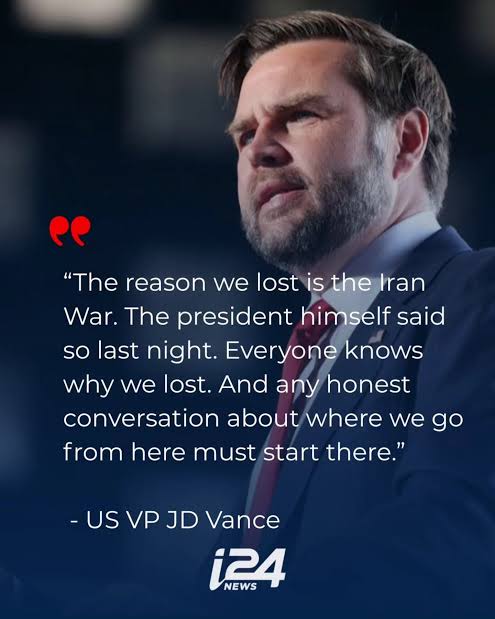
In the wake of sweeping Democratic gains across both chambers of Congress during the November 2026 midterm elections, US Vice President JD Vance issued a candid post-election autopsy. Addressing the Republican defeat directly, Vance pointed to foreign conflict as the primary catalyst for voter defections, stating clearly: “The reason we lost is the war”.
Characterizing the election outcome as an explicit rejection of foreign interventionism, Vance’s public assessment highlighted how the military conflict with Iran—which began in early 2026—transformed into a severe political liability for the governing administration. The statement underscores a growing debate within the GOP as lawmakers weigh the domestic political costs of high-altitude foreign operations against core “America First” campaign commitments.
┌────────────────────────────────────────────────────────────────────────┐
│                   VANCE'S MIDTERM ELECTION AUTOPSY                     │
├───────────────────────────────────┬────────────────────────────────────┤
│ Electoral Result                  │ Democratic Control of House/Senate │
├───────────────────────────────────┼────────────────────────────────────┤
│ Primary Factor Cited              │ Ongoing Military Conflict in Iran │
├───────────────────────────────────┼────────────────────────────────────┤
│ Core Voter Behavior               │ 2024 GOP Voters Flipping to Dems   │
├───────────────────────────────────┼────────────────────────────────────┤
│ Key Economic Drivers              │ Energy Price Hikes & Inflation     │
└───────────────────────────────────┴────────────────────────────────────┘
Anatomy of the Defeat: Turnout vs. Voter Defection

Initial post-election analysis centered on traditional turnout metrics; however, polling data and internal analytics cited by the Vice President revealed a structural shift among core demographics. Vance noted that turnout among traditional Republican voters remained solid in critical states like Florida. The decisive issue was not voter apathy or staying home on election day, but rather active partisan defection.
                     VOTER DEFECTION DYNAMICS
                                │
     ┌──────────────────────────┼──────────────────────────┐
     ▼                          ▼                          ▼
[ Core Base Turnout ]  [ Foreign Policy Drag ]  [ Economic Fallout ]
  High Base Presence     Erosion of Populist      Fuel Cost Surges &
  Across Key Districts     Non-Interventionist      Domestic Inflation
                             Support
Vance highlighted that standard base mobilization was not the root cause. Instead, key voter segments that supported the Republican executive ticket in 2024 actively shifted their votes to Democratic candidates due to frustration over international military entanglements, rising fuel prices, and broader inflationary pressures tied to the conflict.
The Four Pillars of Voter Dissatisfaction
According to internal polling metrics outlined by Vance following the election, voters who defecteddefected away from the governing party pointed to four primary policy drivers:
Termination of the War: An immediate demand to end prolonged military operations in Iran and avoid open-ended overseas defense commitments.
Cost of Living and Inflation: Domestic economic fatigue worsened by energy spikes, high gas prices, and fuel cost inflation linked to Middle Eastern supply disruptions.
Re-centering “America First”: A call to refocus federal resources, tax revenue, and legislative attention on domestic priorities rather than overseas military deployments.
Re-evaluating Foreign Alliances: Growing voter scrutiny surrounding traditional defense arrangements and diplomatic positions in West Asia, including Washington’s relationship with Israel.
Strategic Shift: Foreign Policy vs. Domestic Reality
Internal Debate and the Future of the GOP Agenda
Vance’s statements have accelerated an intense debate within the Republican caucus regarding the party’s platform heading into the next legislative session. While foreign policy hawks maintain that military operations are necessary for long-term strategic deterrence, non-interventionist and populist factions contend that prolonged overseas commitments directly conflict with domestic economic stability.
┌────────────────────────────────────────────────────────────────────────┐
│                   GOP IDEOLOGICAL DILEMMA                              │
├───────────────────────────────────┬────────────────────────────────────┤
│ Non-Interventionist Wing          │ Traditional Foreign Policy Wing   │
├───────────────────────────────────┼────────────────────────────────────┤
│ • Focus on domestic economy       │ • Active projection of strength    │
│ • End foreign conflict            │ • Deterrence via military posture  │
│ • Reduce foreign security spending│ • Alliance continuity              │
└───────────────────────────────────┴────────────────────────────────────┘
The division over national priorities is expected to shape future congressional debates on military authorizations, defense spending caps, foreign assistance packages, and legislative oversight over executive foreign policy decisions.
Foreign Policy Implications and Congressional Governance
With control of Congress shifting to Democrats, the legislative branch is expected to exercise increased oversight over executive foreign policy decisions. Incoming Democratic leadership has already signaled plans to review ongoing military engagements, scrutinize defense appropriations, and push for diplomatic resolutions to reduce global market instability.
As Washington prepares for a divided government, Vance’s diagnostic assessment underscores how closely intertwined foreign military actions have become with domestic economic outcomes and voter sentiment at the ballot box.
Frequently Asked Questions (FAQs)
Why did Vice President Vance attribute the midterm losses to the war?
Vice President Vance cited internal polling data showing that a significant number of voters who supported the administration in 2024 switched their support to Democratic candidates in 2026, driven by frustration over prolonged military operations in Iran and the resulting domestic economic pressures.
How did the conflict impact voter behavior during the 2026 midterms?
Beyond opposition to foreign intervention, the military conflict contributed to higher global energy prices and domestic inflation, making the cost of living a central concern for voters at the polls.
Did low voter turnout contribute to the Republican midterm losses?
According to data shared by Vance, voter turnout among the Republican base remained strong; the primary issue was voter defection—voters switching sides over policy concerns—rather than lack of participation.
What are the main policy areas voters want prioritized moving forward?
Voters who changed their support highlighted four key priority areas: ending the war, lowering the cost of living, recommitting to an “America First” domestic focus, and reassessing foreign alliance strategies.
About the Author