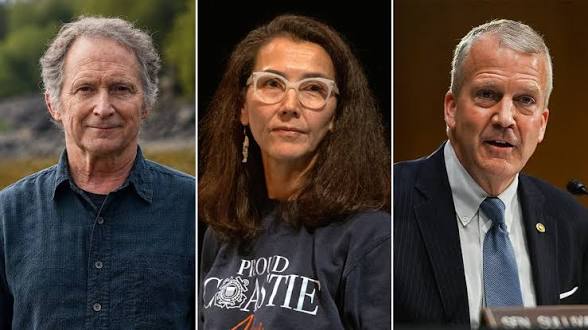
The 2026 Alaska Senate race has become the center of a heated national election controversy. Stephen Miller, a senior White House adviser, has sharply criticized an alleged ballot scheme involving two candidates named Dan Sullivan.
The controversy has raised questions about voter confusion, election integrity, and the proper role of federal authorities in state elections.
The dispute centers on allegations that Democratic campaign operatives helped recruit a candidate with a name similar to that of Republican Senator Dan Sullivan. Critics say the move could confuse voters and divert support from the incumbent.
However, the allegations remain under investigation. Democratic Senate candidate Mary Peltola has denied knowing about the alleged effort, and the second Sullivan says his candidacy is legitimate.
The controversy has also prompted legal action by the Justice Department and renewed debate over Alaska’s ranked-choice voting system.
Stephen Miller condemns the alleged Alaska ballot scheme

Stephen Miller has emerged as one of the most outspoken critics of the alleged effort to recruit a second candidate named Dan Sullivan.
In a post on X, Miller described the alleged operation as a major election scandal. He argued that placing a candidate with a similar name on the ballot could mislead voters and undermine confidence in the election process.
Miller’s criticism reflects broader concerns within the Trump administration about the integrity of the Alaska Senate race. Republican officials have questioned whether the second candidate entered the contest to represent voters or to influence the outcome of a closely contested election.
According to a report from Reason, Miller accused Democrats of installing a fake candidate to deceive Alaska voters. The report also noted that the Justice Department has challenged the state’s election procedures in response to the controversy.
Reason Magazine+1
However, the allegations must be distinguished from established facts. The presence of two candidates with similar names does not, by itself, prove that an election law was violated.
Investigators must determine whether anyone deliberately misled voters, whether campaign officials coordinated the alleged effort, and whether any conduct violated federal or state law.
What happened in Alaska’s Senate race?
The controversy involves the competitive 2026 U.S. Senate election in Alaska.
Republican Senator Dan Sullivan is seeking reelection against Democratic challenger Mary Peltola. Two additional candidates are also on the ballot, including Daniel J. Sullivan Jr.
The similarity between the two Sullivan names has become a major source of political tension.
The incumbent appears on the ballot as Dan S. Sullivan, while the other candidate is listed as Daniel J. Sullivan Jr. Their ballot descriptions also distinguish their party affiliations and other identifying information.
Republicans have argued that voters could mistakenly select the wrong candidate because of the similar names.
The controversy intensified after reports alleged that people connected to Peltola’s campaign and Democratic political organizations had explored recruiting candidates with names similar to the Republican incumbent.
Peltola has denied knowing about or encouraging the alleged effort. Daniel J. Sullivan has also defended his candidacy, saying he wants to offer voters another choice.
The allegations have not yet established that the second candidate committed a crime or that the election result has been manipulated.
The Washington Post+2
Why the controversy has raised voter disenfranchisement concerns
Voter disenfranchisement generally refers to preventing eligible voters from exercising their right to vote or having their votes counted fairly.
The Alaska controversy raises a related concern: whether voters could be misled about which candidate they are supporting.
Critics of the alleged scheme argue that deliberately creating confusion on a ballot could weaken the democratic process.
They contend that voters should be able to identify candidates accurately and make informed decisions without interference.
However, the term voter disenfranchisement has a specific meaning. A confusing ballot does not automatically establish that voters have been deprived of their voting rights.
To determine whether disenfranchisement occurred, investigators and courts would need to examine the facts, applicable election laws, and any evidence of actual interference with voting.
The distinction matters because allegations of election misconduct can have serious consequences for public confidence.
It is possible to investigate suspicious political activity while also protecting the voting rights of every eligible voter.
Alaska’s ranked-choice voting system explained
Alaska uses a ranked-choice voting system for its general elections.
The system allows voters to rank candidates in order of preference rather than selecting only one candidate.
In the Senate race, voters can rank the candidates according to their preferences. If no candidate receives the required majority of first-choice votes, the candidate with the fewest votes is eliminated.
Votes for the eliminated candidate are then transferred to the next-ranked candidate on each ballot, provided that candidate remains in the race.
This process continues until a candidate reaches the required majority.
Supporters of ranked-choice voting argue that it gives voters greater flexibility and reduces the likelihood that a candidate wins with only a small share of the vote.
Critics, however, argue that the system can be difficult to understand and may create opportunities for confusion.
In the current Alaska controversy, the Justice Department has argued that the presence of two similarly named candidates could mislead voters.
Alaska election officials have countered that the ballot already distinguishes the candidates and that the ranked-choice system provides safeguards against confusion.
AP News+1
The Justice Department’s investigation
The Justice Department has launched a criminal investigation into allegations surrounding the second Sullivan candidacy.
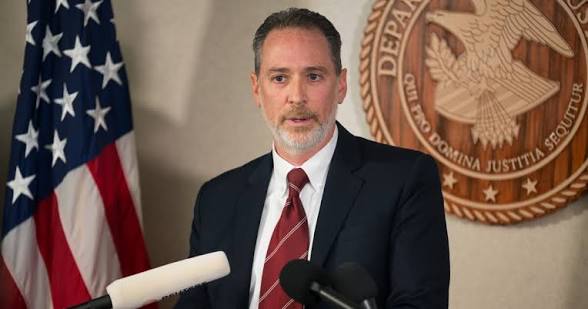
Alaska’s top federal prosecutor, Michael J. Heyman, confirmed the investigation on October 30.
Heyman declined to identify potential targets or specify which criminal statutes investigators are examining.
He said authorities would pursue credible information about attempts to deceive voters or interfere with the election.
The investigation followed reports that campaign personnel may have been involved in recruiting a candidate with a similar name to the Republican incumbent.
The Justice Department has also asked a court to preserve and segregate ballots ranking Daniel J. Sullivan.
The department says the request would allow investigators to examine whether voters were confused by the candidates’ similar names.
Alaska election officials have opposed the request, arguing that existing ballot safeguards address the concerns.
The legal dispute has raised questions about the balance between federal election enforcement and state authority over elections.
The Washington Post+1
Why the federal lawsuit has become controversial
The Justice Department’s actions have generated criticism beyond the Democratic Party.
The department has sought to prevent Alaska from certifying the Senate election results if the incumbent loses by fewer votes than the second Sullivan receives.
Supporters of the lawsuit argue that federal authorities have a responsibility to investigate potential election interference.
They say that allowing an election to proceed without examining credible allegations could undermine public confidence.
Opponents argue that the lawsuit risks interfering with the state’s election process before investigators have established that any crime occurred.
They also warn that delaying certification could create uncertainty about the outcome of a closely contested Senate race.
Alaska officials maintain that their election procedures are designed to identify candidates clearly and count votes according to state law.
The dispute illustrates a broader national debate about the limits of federal authority in state elections.
The outcome could influence how future disputes involving alleged ballot confusion are handled.
Reuters+2
What Mary Peltola has said about the allegations
Mary Peltola, the Democratic candidate challenging Senator Sullivan, has rejected claims that she knowingly participated in a scheme to confuse voters.
Peltola has described the allegations as a distraction from the issues facing Alaska voters.
The controversy has placed her campaign under increased scrutiny during a closely watched Senate race.
Republican officials have demanded answers about whether campaign personnel or outside political organizations were involved in recruiting Daniel J. Sullivan.
However, allegations involving campaign staff do not automatically establish that a candidate personally approved or directed the conduct.
Investigators will need to examine communications, campaign records, and other evidence to determine whether any coordination occurred.
The distinction between individual actions and campaign responsibility is important to the investigation.
Until the evidence is fully examined, claims about Peltola’s personal involvement should remain attributed allegations rather than established facts.
The Washington Post+1
What Daniel J. Sullivan says about his candidacy
Daniel J. Sullivan Jr. has defended his decision to run for the Senate.
He has said that his candidacy is legitimate and that he wants to provide voters with another option.
His name has become central to the controversy because it closely resembles that of the incumbent senator.
The political dispute has raised questions about whether the second candidate’s campaign was independently organized or connected to efforts by other political organizations.
However, the existence of a similar name does not establish that the candidate intended to deceive voters.
The investigation must determine whether there was deliberate coordination or misleading conduct.
It must also consider whether the candidate complied with Alaska’s requirements for appearing on the ballot.
These questions will be central to any legal determination about the controversy.
Could the controversy affect the Senate election?
The Alaska Senate race is politically significant because the outcome could influence control of the U.S. Senate.
A close result could increase the importance of every ballot and intensify scrutiny of the election process.
The controversy could also influence voter behavior.
Some voters may become more cautious when selecting candidates with similar names. Others may view the allegations as politically motivated and dismiss them.
The dispute could also affect turnout if voters become uncertain about the ballot or the legitimacy of the election.
However, it is too early to determine whether the controversy will change the result.
The final outcome will depend on the votes cast, the operation of Alaska’s election system, and any legal decisions affecting certification.
Election officials must ensure that every eligible vote is counted according to the law.
Election integrity and the protection of voting rights
The Alaska controversy highlights the importance of maintaining public confidence in elections.
Election integrity requires accurate voter information, transparent procedures, and fair treatment of candidates.
It also requires that allegations of misconduct be investigated carefully.
Authorities should not assume that a political dispute proves criminal activity. At the same time, credible evidence of deliberate voter deception should not be ignored.
The challenge is to protect the voting process without undermining the rights of voters or interfering unnecessarily with lawful elections.
The controversy also demonstrates why clear ballot design matters.
Election officials can reduce confusion by providing accurate candidate names, party affiliations, and other identifying information.
Voters should have access to reliable information about how to complete their ballots.
These measures help ensure that election results reflect voters’ actual preferences.
What happens next?
The investigation into the alleged Alaska ballot scheme remains ongoing.
Federal prosecutors must determine whether the available evidence supports criminal charges or other legal action.
The Justice Department’s lawsuit also raises questions about whether the state can certify the election results under the circumstances described in the case.
The courts will have to consider the legal arguments and the evidence presented by both sides.
Meanwhile, Alaska election officials must continue administering the election under applicable state law.
The controversy may also influence future debates about ranked-choice voting and election administration.
However, any changes to election procedures should be based on evidence and careful consideration of their impact on voters.
For now, the central questions remain unresolved: whether anyone deliberately sought to confuse voters, whether campaign officials coordinated the alleged effort, and whether any election laws were violated.
Those questions should be answered through the investigation and legal process rather than political accusations alone.
Conclusion
Stephen Miller’s criticism of the alleged Alaska ballot scheme has brought renewed attention to voter confusion and election integrity.
The controversy centers on claims that a candidate with a name similar to Republican Senator Dan Sullivan was recruited to influence the Senate race.
The Justice Department is investigating the allegations, while Alaska officials have defended their election procedures.
Mary Peltola has denied knowing about the alleged effort, and Daniel J. Sullivan Jr. has defended his candidacy.
The case highlights the importance of protecting voters from deception while ensuring that election disputes are handled fairly.
Ultimately, the investigation must establish whether any laws were broken and whether the election process was affected.
Until then, the allegations should not be treated as proven misconduct.
Frequently asked questions
1. What is the Alaska ballot scheme controversy?
The controversy involves allegations that a candidate named Daniel J. Sullivan Jr. was recruited to run against Republican Senator Dan Sullivan to confuse voters and divert support. The allegations remain under investigation.
2. Why did Stephen Miller criticize the Alaska ballot scheme?
Stephen Miller criticized the alleged effort as an attack on election integrity. He argued that placing a candidate with a similar name on the ballot could mislead voters.
3. Who is Daniel J. Sullivan Jr.?
Daniel J. Sullivan Jr. is a candidate in Alaska’s 2026 Senate election. His name resembles that of Republican incumbent Senator Dan S. Sullivan, prompting allegations of possible voter confusion.
4. Has Mary Peltola been charged with a crime?
There has been no reported criminal charge against Mary Peltola in connection with the alleged scheme as of October 31, 2026. She has denied knowing about or encouraging the alleged effort.
5. What is the Justice Department investigating?
The Justice Department is investigating allegations that political operatives recruited a candidate with a similar name to the incumbent senator to confuse voters or influence the election.
6. What is ranked-choice voting in Alaska?
Ranked-choice voting allows voters to rank candidates in order of preference. If no candidate receives a majority of first-choice votes, the lowest-ranked candidate is eliminated and votes are transferred according to voters’ next preferences.
7. Could the controversy affect the election results?
The controversy could affect public confidence and lead to legal disputes over certification. However, its actual impact on the election result remains uncertain.
8. Does the presence of two candidates with similar names prove voter disenfranchisement?
No. Similar names alone do not establish disenfranchisement or criminal conduct. Investigators must examine whether voters were deliberately misled or whether their voting rights were affected.
9. What happens if the investigation finds evidence of election misconduct?
Depending on the evidence and applicable law, authorities could pursue criminal charges or other legal remedies. Any action would need to follow the relevant legal procedures.
10. Where can voters find reliable information about the Alaska election?
Voters should consult official Alaska Division of Elections information for ballot instructions, candidate details, and election procedures.
About the Author