TOM HOMAN ICE NYC: Border Czar Fires Back At Mayor, Argues Federal Enforcement Operations Are Making New York Safer
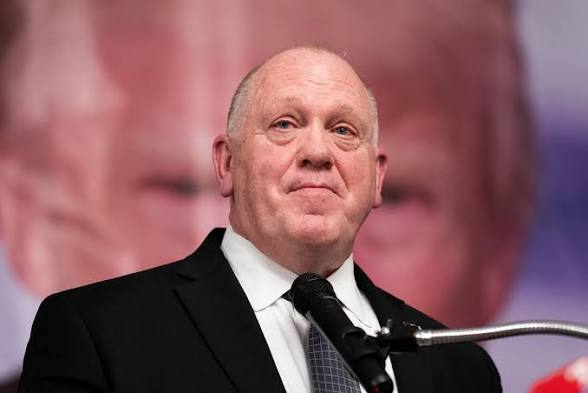
The debate over federal immigration enforcement in New York City has intensified as Border Czar Tom Homan defends the Trump administration’s approach and Mayor Zohran Mamdani questions whether Immigration and Customs Enforcement (ICE) operations are making communities safer.
The disagreement has gained urgency following an October 8 shooting in Marble Hill, Manhattan, involving federal immigration agents and a Dominican man identified by city officials as Oscar Belgal. The incident prompted sharp criticism from the mayor, renewed scrutiny of federal enforcement tactics, and calls for greater accountability.
At the same time, federal officials have defended their enforcement operations and criticized policies that limit cooperation between local authorities and immigration agencies. The Trump administration has argued that stronger immigration enforcement can improve public safety by targeting people it considers threats.
However, the claim that increased ICE activity is making New York safer remains a matter of political and public debate, rather than a conclusion established by the enforcement announcements alone.
Recent developments have also created a significant legal challenge for the administration. On October 15, 2026, a federal judge dismissed the Trump administration’s lawsuit seeking to block New York City’s sanctuary policies.
The dispute raises a central question: How can federal immigration authorities enforce national laws while respecting local policies, individual rights, and the safety of New York’s diverse communities?
1. Tom Homan and the Trump administration’s immigration strategy
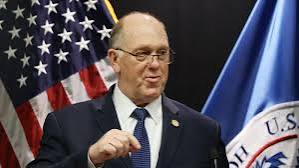
Homan’s approach emphasizes arrests, deportations, and cooperation between federal immigration authorities and local law enforcement agencies. Supporters argue that these measures help authorities locate individuals with criminal convictions and enforce immigration laws more effectively.
New York City has become a major focus of this debate because its sanctuary policies limit certain forms of cooperation with federal immigration authorities.
In November 2025, Homan announced an increased ICE enforcement presence in New York City, citing the city’s sanctuary status and what he described as public safety concerns.
The administration’s position is that federal enforcement should not be unnecessarily restricted by local policies. Officials argue that immigration authorities need sufficient freedom to conduct targeted operations and take people into custody when legal grounds exist.
However, the precise impact of these operations on crime rates and neighborhood safety requires careful examination. Arrest totals alone do not establish whether a city has become safer. A meaningful assessment must also consider violent crime trends, repeat offending, community cooperation, and the consequences of enforcement practices.
2. Why the dispute with Mayor Zohran Mamdani matters
Mayor Zohran Mamdani has taken a sharply different position from the Trump administration on federal immigration enforcement.
Following the October 8 shooting in Marble Hill, Mamdani called on President Trump and Homeland Security Secretary Markwayne Mullin to halt ICE enforcement operations in the city. He argued that the incident demonstrated how aggressive federal tactics could undermine public confidence and place residents at risk.
The mayor’s objection is not simply about whether immigration laws should be enforced. It also concerns how those laws are enforced, where federal agents operate, and what safeguards protect residents during arrests.
According to the mayor’s October 8 statement, the shooting occurred in a residential neighborhood while a five-year-old child was inside the vehicle. The child was subsequently located safe with a family member, according to the NYPD.
Mamdani has argued that residents should not have to fear approaching local government services because they worry about immigration consequences.
Federal officials, meanwhile, maintain that enforcing immigration law is a legitimate government responsibility and that sanctuary policies can make it harder to take certain individuals into federal custody.
This disagreement reflects two competing approaches to public safety.
The federal approach: Prioritize immigration enforcement, pursue targeted arrests, and increase cooperation where possible.
The mayor’s approach: Protect local sanctuary policies, preserve community trust, and scrutinize enforcement tactics that could endanger residents.
Both approaches make claims about public safety, but those claims must be assessed using evidence rather than political statements alone.
3. The October 8 Marble Hill shooting explained
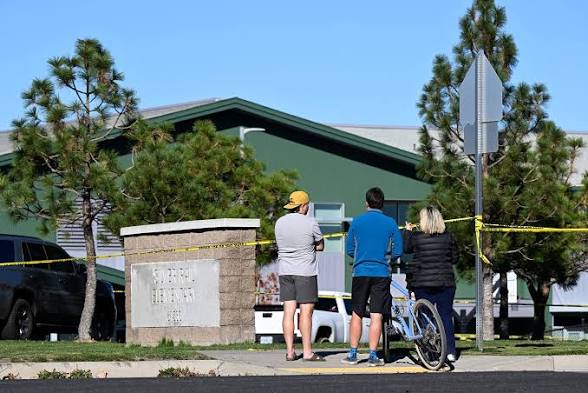
The latest escalation in the Tom Homan ICE NYC debate followed an incident in Marble Hill, a neighborhood in the Bronx borough of New York City.
On October 8, federal immigration agents shot and wounded 28-year-old Oscar Belgal during a targeted enforcement operation. A five-year-old child was in the vehicle at the time.
The incident prompted an immediate response from city officials and renewed questions about the use of force during immigration arrests.
What federal officials said
The Department of Homeland Security said agents were conducting a targeted operation to take Belgal into custody. Federal officials defended the agents’ actions, arguing that the situation presented a threat.
According to reporting by Reuters and the Associated Press, federal officials said Belgal’s vehicle struck government vehicles and accelerated toward agents. Authorities have presented this account as part of their explanation for the shooting.
These are the federal authorities’ stated reasons for the use of force. A complete assessment requires examination of the evidence and findings from the relevant investigation.
What city officials said
Mamdani strongly criticized the operation. He questioned the circumstances surrounding the shooting and the presence of heavily armed, masked officers in a residential area.
The NYPD said it had no involvement in the federal operation before the shooting. Local officers responded afterward, helped secure the scene, and provided assistance to the injured man.
The city also confirmed that the child was safe with a family member.
The difference between the federal and local accounts has intensified demands for transparency.
Important questions include whether the force used was justified, what happened immediately before the shooting, and whether the operation followed applicable procedures.
Until the evidence has been fully assessed, it would be premature to treat either side’s account as the final determination of what happened.
4. How the shooting intensified the ICE NYC controversy
The Marble Hill incident has become a focal point for a much broader disagreement about immigration enforcement.
For supporters of the administration, the operation demonstrates why federal agents need the authority and resources to pursue targeted arrests. They argue that officers must be able to respond when they believe a suspect poses an immediate danger.
Critics see the incident differently. They argue that armed operations in residential areas can expose children, bystanders, and other residents to serious risks.
The controversy also raises concerns about how federal agents identify themselves during operations and how members of the public can distinguish law enforcement activity from other potentially dangerous situations.
These questions are particularly important in densely populated neighborhoods, where an enforcement operation can affect people who have no connection to the individual being arrested.
The broader debate is therefore not limited to immigration status. It also involves officer safety, civilian protection, transparency, and public confidence in government institutions.
For Homan and the Trump administration, defending enforcement operations means explaining why the actions are necessary and how risks are managed. For Mamdani, challenging those operations means demonstrating how alternative policies can maintain public safety while protecting residents’ rights.
5. Federal enforcement and the claim that New York is becoming safer
The claim that federal immigration operations make New York safer is central to the political dispute.
Supporters argue that removing people convicted of serious crimes can prevent further offending. They also contend that federal enforcement can address cases that local authorities cannot resolve independently.
Homan has consistently advocated stronger immigration enforcement, including efforts to target individuals the administration considers dangerous.
However, measuring the results requires more than counting arrests or deportations.
What evidence would demonstrate improved safety?
A credible assessment should examine several indicators:
Violent crime trends: Whether serious assaults, robberies, and homicides decline over time.
Repeat offending: Whether targeted enforcement reduces subsequent crimes among individuals convicted of serious offenses.
Community cooperation: Whether witnesses and victims remain willing to report crimes and cooperate with investigators.
Operational safety: Whether enforcement activities minimize injuries to officers, suspects, children, and bystanders.
Long-term outcomes: Whether changes in public safety persist after accounting for other factors affecting crime.
These indicators help distinguish between enforcement activity and actual improvements in safety.
For example, an operation that produces a large number of arrests may demonstrate substantial enforcement activity. It does not automatically establish that overall crime has fallen.
Similarly, criticism of a particular operation does not, by itself, prove that every federal enforcement action is unnecessary or unlawful.
A balanced evaluation must consider both the intended benefits and the potential costs.
Why reliable crime data matters
Crime rates can change for many reasons, including economic conditions, policing strategies, reporting patterns, and demographic changes.
Therefore, analysts should compare reliable data across appropriate periods and locations before attributing a change to ICE operations.
The distinction matters because public safety is not a partisan objective. New Yorkers need policies that reduce harm, protect vulnerable residents, and allow law enforcement agencies to perform their lawful duties.
Until robust evidence establishes the effects of specific operations, claims that they have made the city safer should be presented as the administration’s position rather than an independently proven conclusion.
6. The legal battle over New York City’s sanctuary policies
The disagreement between Homan’s enforcement strategy and Mamdani’s policies extends beyond individual arrests.
On October 15, 2026, a federal judge dismissed the Trump administration’s lawsuit challenging New York City’s sanctuary laws. The lawsuit had sought to block city policies limiting certain forms of cooperation with federal immigration authorities.
The ruling was an important development in the dispute between the federal government and New York City.
According to Reuters, the judge rejected the administration’s challenge, including arguments concerning the city’s restrictions on local authorities detaining immigrants at federal requests and sharing certain custody information.
The decision addressed the government’s legal basis for challenging the policies. It did not eliminate federal immigration law or prevent ICE from carrying out all enforcement operations in New York.
That distinction is essential.
Federal agencies retain their own legal authorities, while state and local governments have their own responsibilities and legal protections. The boundaries of those powers often become contested when national immigration policy conflicts with local priorities.
What the ruling means for ICE operations
The ruling strengthens New York City’s position in defending its sanctuary policies, although the longer-term legal consequences may depend on subsequent proceedings and any further challenges.
For Mamdani, the decision supports the argument that city agencies should not be compelled to carry out federal immigration enforcement beyond what the law requires.
For the Trump administration, the ruling represents a setback in its effort to pressure sanctuary jurisdictions into greater cooperation.
The immediate result is a clearer political and legal divide, not an end to federal immigration enforcement.
The dispute may continue through other legal arguments, policy changes, and individual enforcement cases.
7. New York Democrats call on private parking operators to deny ICE access
The political response expanded on October 16, when Mamdani joined prominent Democratic leaders in urging private parking garage and lot owners not to make their properties available to ICE as staging areas for enforcement operations.
The appeal followed the Marble Hill shooting and concerns about the use of a nearby private parking lot before the incident.
More than 100 elected officials supported the letter, including Senate Democratic leader Chuck Schumer and House Democratic leader Hakeem Jeffries, according to the Associated Press.
The request highlights an important distinction between city-owned property and privately owned facilities.
New York City’s policies restrict the use of city property for certain federal immigration enforcement purposes, subject to applicable legal requirements and exceptions. Those restrictions do not automatically impose the same rules on private parking facilities.
The officials therefore appealed directly to private owners, asking them to refuse to rent or lend their properties to ICE for operational staging.
Federal officials sharply criticized the initiative. The Department of Homeland Security argued that ICE operations are necessary for public safety and defended agents conducting enforcement activities.
Why parking lots have become part of the dispute
Parking facilities can provide convenient locations for vehicles and personnel during law enforcement operations.
However, their use can also become controversial when residents believe an operation is threatening or disruptive to a neighborhood.
The dispute raises questions about property rights, public access, and the practical limits of local efforts to restrict federal enforcement.
Private owners must consider applicable law and their own legal obligations before deciding whether to accommodate a government agency.
The political campaign also shows how the immigration debate has moved beyond government offices and courtrooms into the everyday decisions of local businesses.
8. The wider implications for immigrant communities
New York City’s immigration debate has consequences for residents across the five boroughs.
The mayor’s office reported in October that more than 3.1 million New Yorkers were born outside the United States, representing over one-third of the city’s population. The administration also said immigrants account for a substantial share of the city’s workforce.
These communities contribute to businesses, hospitals, restaurants, construction, education, and other essential sectors.
For many immigrant families, enforcement activity creates uncertainty about daily life. Residents may worry about relatives, employment, school attendance, or encounters with government authorities.
Those concerns can influence whether people report crimes, seek medical assistance, or cooperate with local officials.
At the same time, residents who have experienced crime may welcome enforcement efforts they believe will remove dangerous offenders from their neighborhoods.
These perspectives are not necessarily mutually exclusive. Communities can demand effective action against serious crime while also expecting lawful procedures and accountability from law enforcement agencies.
The challenge for policymakers is to develop systems that address public safety without creating unnecessary fear or undermining confidence in public institutions.
9. What the debate means for law enforcement cooperation
The conflict between Homan and Mamdani also highlights the practical difficulties of cooperation between federal and local agencies.
Federal immigration authorities enforce national immigration laws. Local police departments, meanwhile, have broad responsibilities involving public safety, emergency response, investigations, and community relations.
Their priorities may overlap, but they are not identical.
Supporters of stronger cooperation argue that sharing appropriate information and coordinating custody arrangements can help federal authorities take dangerous individuals into custody more efficiently.
Opponents of expanded cooperation warn that involving local police in federal immigration enforcement can damage trust, especially among residents who fear that reporting a crime could expose themselves or their relatives to immigration consequences.
These competing concerns create difficult operational questions.
Should local agencies share particular types of information? Under what circumstances can someone be held for federal authorities? How should agencies coordinate when an enforcement action creates a risk to the public?
The answers depend on applicable laws, court rulings, and agency policies.
New York’s sanctuary framework attempts to establish boundaries around local participation. The Trump administration has sought greater cooperation to support its immigration agenda.
The recent court ruling reinforces the importance of determining these boundaries through law rather than assuming that federal policy automatically overrides every local restriction.
10. Accountability and transparency remain key issues
The Marble Hill shooting has also renewed attention to accountability during federal enforcement operations.
When an officer uses a firearm, investigators must establish what happened, what threat the officer perceived, and whether the use of force complied with applicable standards.
Such reviews can involve witness accounts, physical evidence, video recordings, communications, and other investigative material.
Transparency matters because the public needs credible information to assess official explanations.
However, investigators must also protect the integrity of an ongoing inquiry and respect the legal rights of everyone involved.
The October 8 incident illustrates why timely, reliable information is important. City officials and federal authorities offered different emphases in their public accounts, while key questions about the use of force remained subjects of scrutiny.
The broader controversy has also drawn attention to federal body-camera policies.
In an October 15 report, Reuters reported that the administration had declined a Government Accountability Office recommendation for automatic activation of immigration officers’ body-worn cameras under specified circumstances. The agency cited operational and privacy concerns, while the watchdog said stronger controls could improve transparency and public trust.
Body-camera footage is not a complete solution to disputes about enforcement. Nevertheless, recording policies, independent review, and clear public reporting can help establish what happened and identify lessons for future operations.
For federal authorities, accountability can strengthen the credibility of legitimate enforcement. For critics, meaningful oversight is essential to ensuring that public safety does not become a justification for unnecessary or unlawful force.
11. What happens next in the Tom Homan ICE NYC dispute?
The disagreement is likely to remain a significant issue in New York politics and national immigration policy.
Several developments could shape the next phase.
First, the investigation into the Marble Hill shooting may provide further clarity. Evidence concerning the operation and the use of force will be important in determining what happened.
Second, the federal government and New York City may continue their legal and political disagreements. The dismissal of the sanctuary-laws lawsuit does not resolve every dispute concerning immigration enforcement.
Third, the campaign involving private parking facilities may affect where federal agents can stage operations. Its practical effect will depend on decisions by property owners, the law, and the availability of alternative arrangements.
Fourth, public safety claims will remain under scrutiny. Officials will face pressure to explain whether their policies reduce crime, protect residents, and deliver measurable results.
For Homan, the central argument remains that stronger immigration enforcement is necessary to address unlawful immigration and public safety threats.
For Mamdani, the central argument is that enforcement tactics that frighten residents or create risks in neighborhoods can undermine safety rather than improve it.
The broader outcome will depend on legal decisions, operational practices, and evidence about the effects of federal enforcement.
Conclusion
The Tom Homan ICE NYC controversy reflects a growing conflict over immigration enforcement, local authority, and the meaning of public safety.
Homan and the Trump administration defend federal operations as necessary to enforce immigration laws and pursue individuals they consider dangerous. Mayor Zohran Mamdani argues that aggressive enforcement can put residents at risk and weaken trust between immigrant communities and government institutions.
The October 8 Marble Hill shooting brought those competing arguments into sharper focus. The subsequent dismissal of the federal lawsuit against New York City’s sanctuary policies and the October 16 campaign urging private parking operators to deny ICE staging access have further intensified the dispute.
However, the central question remains unresolved: whether specific enforcement strategies produce measurable improvements in safety while respecting legal protections.
Arrest figures, political statements, and individual incidents each provide only part of the picture. A complete assessment requires reliable crime data, transparent investigations, and a careful examination of the benefits and risks of enforcement.
Ultimately, New Yorkers need public safety policies that protect residents, uphold the law, and maintain accountability. Whether the federal and city governments can find common ground remains an important question for the future of immigration enforcement in the United States.
Frequently asked questions (FAQs)
1. Who is Tom Homan?
Tom Homan is a former acting director of U.S. Immigration and Customs Enforcement who serves as the Trump administration’s border czar. He is a prominent advocate of stronger immigration enforcement and deportation operations.
2. Why is Tom Homan involved in the ICE NYC controversy?
Homan has advocated stronger federal immigration enforcement in New York City. His approach has drawn opposition from Mayor Zohran Mamdani, particularly following a shooting involving ICE agents in Marble Hill on October 8, 2026.
3. Why does Mayor Zohran Mamdani oppose ICE operations in New York?
Mamdani argues that aggressive federal enforcement can threaten residents, frighten immigrant communities, and undermine public safety. Following the Marble Hill shooting, he called on the federal government to halt ICE enforcement operations in the city.
4. What happened during the October 8 ICE shooting?
Federal immigration agents shot and wounded 28-year-old Oscar Belgal during a targeted enforcement operation in Marble Hill. A five-year-old child was in the vehicle and was later confirmed safe. Federal officials defended the agents’ actions, while the mayor questioned the tactics used.
5. Does ICE enforcement make New York City safer?
The answer depends on measurable outcomes. Targeted arrests may remove individuals who pose serious threats, but arrest totals alone do not prove that overall crime has declined. Reliable crime statistics and evidence about enforcement outcomes are needed to evaluate the claim.
6. What are New York City’s sanctuary laws?
Sanctuary laws are local rules that limit certain forms of cooperation between city agencies and federal immigration authorities. They do not eliminate federal immigration law or prevent every ICE operation within the city.
7. What did the federal judge decide about New York’s sanctuary policies?
On October 15, 2026, a federal judge dismissed the Trump administration’s lawsuit challenging New York City’s sanctuary laws. The ruling was a setback for the administration’s attempt to compel greater local cooperation with immigration enforcement.
8. Why are New York officials asking parking garage owners to deny ICE access?
On October 16, Mamdani and more than 100 elected officials urged private parking operators not to provide facilities for ICE enforcement staging. The campaign followed the Marble Hill shooting and concerns about a nearby private parking lot used before the incident.
9. Can federal immigration agents operate in New York City despite sanctuary laws?
Yes. Sanctuary policies do not categorically prohibit federal immigration enforcement. ICE’s authority and the limits on cooperation by local agencies are separate legal questions governed by applicable federal, state, and local law.
10. What could happen next in the Tom Homan ICE NYC dispute?
Possible developments include further investigation into the Marble Hill shooting, continued legal disagreements over sanctuary policies, changes in operational arrangements, and additional debate over whether federal enforcement improves public safety.
How useful was this post?
Click on a star to rate it!
Average rating 0 / 5. Vote count: 0
No votes so far! Be the first to rate this post.
About the Author

usa5911.com
Administrator
Hi, I’m Gurdeep Singh, a professional content writer from India with over 3 years of experience in the field. I specialize in covering U.S. politics, delivering timely and engaging content tailored specifically for an American audience. Along with my dedicated team, we track and report on all the latest political trends, news, and in-depth analysis shaping the United States today. Our goal is to provide clear, factual, and compelling content that keeps readers informed and engaged with the ever-changing political landscape.