DONALD TRUMP KATIE ZACHARIA: President Urges White House Press Secretary To Reconsider Role Amid Credential Scrutiny
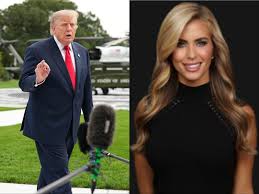
President Donald Trump’s decision to ask Katie Zacharia to reconsider her position as White House press secretary has triggered a major political and media controversy. Zacharia’s brief tenure attracted attention after her first press briefing drew criticism and questions emerged about her professional background and legal credentials.
According to Reuters, Trump told reporters on October 16 that he had advised Zacharia to reconsider whether the demanding communications role was right for her. Later that day, White House officials confirmed that she was leaving the position after less than a week in the job.
The episode has raised questions about the administration’s hiring decisions, the importance of professional transparency, and the pressures facing the person responsible for communicating the president’s policies to the American public.
It has also placed renewed attention on how the White House manages its relationship with journalists during a politically sensitive period ahead of the November 2026 midterm elections.
Important update: This article reflects reporting available as of October 17, 2026. The reported departure is no longer merely a possibility following Trump’s suggestion that Zacharia reconsider her role.
Who Is Katie Zacharia?
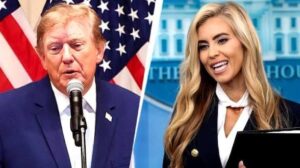
Katie Zacharia is a conservative political commentator who worked in communications roles connected to the Trump administration and Trump Media & Technology Group. Before her appointment as White House press secretary, she appeared regularly on conservative media outlets, including Fox News and Newsmax.
President Trump announced her appointment on October 9, 2026. She was selected to replace Karoline Leavitt, who had left the position in August. Zacharia began her new role on October 12 and delivered her first White House press briefing the following day.
Her appointment attracted attention because she had experience in political communications and advocacy. However, her rapid transition into one of the administration’s most visible positions left limited time for preparation.
The press secretary serves as the administration’s principal public spokesperson. The position requires clear communication, a strong understanding of government policy, and the ability to answer difficult questions under intense public scrutiny.
Zacharia’s short tenure demonstrated how quickly challenges can emerge when a new spokesperson faces both demanding media questions and controversy over her professional background.
Donald Trump Urges Katie Zacharia to Reconsider Her Role
The controversy escalated on October 16, when Trump publicly acknowledged discussing Zacharia’s future with her.
Speaking to reporters outside the White House, the president said he had suggested that she reconsider whether the role was right for her. He described the position as difficult and referred to the pressure she had experienced during her first days on the job.
Trump also argued that the media had treated Zacharia harshly. His comments suggested that he believed the demands of the position could make it difficult for her to remain comfortable in the role.
Reuters reported that Trump indicated he intended to speak with her again about the situation. However, the story developed rapidly, and White House officials subsequently confirmed that Zacharia was leaving the position.
The development was significant because the press secretary is responsible for defending administration policies, communicating presidential decisions, and responding to questions from journalists.
A change in that position after only a few days creates immediate questions about the administration’s communications strategy.
It also highlights the risks of appointing a spokesperson who must establish credibility while simultaneously managing a demanding national news cycle.
Legal Credentials Controversy Puts Zacharia Under Pressure
One of the central issues surrounding Zacharia’s appointment involved her descriptions of her legal background.
Zacharia graduated from Pepperdine University’s law school in 2011. Before joining the Trump administration, she had described herself as a lawyer and discussed work involving international legal transactions.
However, media reports raised questions about whether she had obtained a licence to practise law in the United States.
According to Reuters, investigators reviewing publicly available records could not find evidence that she was registered as an attorney or member of the bar in any US state or the District of Columbia.
The issue gained further attention after Trump described her as an attorney when announcing her appointment.
Zacharia subsequently clarified her examination history in television interviews.
During an interview with Fox News host Sean Hannity on October 15, she confirmed that she had not passed the bar exam and had not retaken it. She explained that she had expected to move to China after graduating and did not consider the examination result something she needed to pursue at that time.
Her explanation did not end the controversy. Instead, it intensified public discussion about the distinction between holding a law degree, describing oneself as a lawyer, and being licensed to practise law.
These distinctions matter because professional titles can communicate specific qualifications to employers, clients, and the public.
Nevertheless, it is important to distinguish questions about credentials from proven legal violations. Public reporting established that Zacharia did not pass the bar exam and that US licensing records did not show her as a licensed attorney. Any separate determination about unlawful conduct would require the appropriate legal process.
What Did Zacharia Say About Her Legal Experience?
Zacharia defended her professional background during the controversy.
In a statement reported by Reuters, she said she had practised international transaction law with the appropriate credentials. She also discussed her work in Beijing, where her professional experience included international legal and financial transactions.
In subsequent interviews, she explained that she had consulted people in the legal profession about how she could describe her qualifications. She maintained that she was careful about the distinction between offering legal analysis and presenting herself as a licensed attorney.
The controversy partly reflected differing interpretations of professional terminology.
A law degree demonstrates academic achievement, but it does not automatically authorise someone to practise law in a US state. Licensing requirements generally involve admission to the relevant state bar.
International legal work can also involve different responsibilities depending on local regulations, professional status, and the nature of the work.
For these reasons, accurate descriptions of qualifications are particularly important for people working in public-facing roles.
The controversy did not establish that Zacharia lacked all relevant professional experience. Rather, it focused on the precise nature of her credentials and whether her public descriptions created an inaccurate impression of her licensing status.
That distinction is important when assessing the issue fairly.
First White House Press Briefing Draws Criticism
Zacharia’s first briefing took place on October 13, just one day after she started the job.
The appearance lasted approximately 14 minutes. According to the Associated Press, she took questions from reporters representing three outlets: Breitbart News, Fox News, and the Daily Mail.
Her opening remarks focused heavily on praising Trump and highlighting his administration’s achievements.
However, the limited number of questions and the brief duration of the briefing drew criticism from media commentators and political observers.
Some critics questioned whether the format provided sufficient opportunity for journalists to examine administration policies. Others focused on Zacharia’s delivery and her apparent reliance on prepared notes.
The briefing also included a confusing exchange about her legal qualifications. When asked about passing the bar exam, she gave an answer involving her move to China, prompting further questions about her professional background.
A single briefing does not necessarily determine whether someone can succeed in a demanding communications role. New officials often need time to learn procedures, master policy details, and develop confidence in front of the press.
Nevertheless, the circumstances made Zacharia’s debut unusually difficult.
Instead of focusing exclusively on the administration’s message, subsequent coverage increasingly centred on her qualifications, performance, and future in the position.
Why the Press Secretary Position Matters
The White House press secretary occupies a central place in American political communication.
The role connects the president and senior officials with journalists, broadcasters, and the wider public. It also provides a regular forum for questions about domestic policy, foreign affairs, national security, and government decisions.
A successful press secretary needs several important skills:
Policy knowledge: Understanding the administration’s positions and explaining them accurately.
Clear communication: Delivering concise answers without creating unnecessary confusion.
Preparation: Anticipating difficult questions and coordinating with relevant government departments.
Professional credibility: Providing accurate information about qualifications and responsibilities.
Composure: Responding calmly when journalists challenge statements or request clarification.
The Zacharia episode brought these expectations into focus.
Her appointment occurred during a politically sensitive period, with the November midterm elections approaching. The administration needed a spokesperson capable of communicating its achievements while addressing questions about contentious policies.
When a press secretary becomes the centre of a controversy, the administration risks losing control of its intended message.
Instead of discussing policy proposals or government announcements, journalists may devote significant attention to the spokesperson’s personal background and professional standing.
This shift can make the communications role more difficult for both the individual and the administration.
White House Confirms Zacharia Is Leaving the Position
By October 16, the situation had moved beyond speculation.
Reuters reported that two White House officials confirmed Zacharia had been let go and was transitioning out of the press secretary position. Her departure came less than a week after she began the role.
The timing made the episode particularly striking.
Zacharia had barely completed her first week when her appointment ended. She had also delivered only one formal press briefing during her tenure.
The speed of the change raised questions about the administration’s selection process and the extent to which candidates for prominent communications roles are assessed before appointments are announced.
However, the public record does not establish that one single factor caused her departure. The episode involved several overlapping issues, including criticism of her first briefing, questions about her legal credentials, and the intense demands of the position.
Trump publicly suggested that the role might not be suitable for her, while reporting also described growing scrutiny inside and outside the White House.
It would therefore be inaccurate to attribute the outcome solely to the credential controversy or solely to her debut performance.
The combination of events created a difficult situation that developed over only a few days.
What Happens Next for Trump’s Communications Team?
Zacharia’s departure leaves the administration needing to maintain consistent communication with journalists and the public.
The White House press secretary is not simply a ceremonial spokesperson. The position requires close coordination with policy advisers, senior officials, government departments, and the president’s communications team.
A replacement will need to understand administration priorities quickly and respond effectively to questions on complex subjects.
The next appointment may also attract greater attention to professional experience, media performance, and the ability to handle difficult public exchanges.
Although the press secretary does not need a law degree or a law licence to perform the job, the controversy illustrates why an appointment’s background and public presentation can become important issues.
For the administration, a smooth transition would help restore attention to policy announcements and reduce uncertainty about its communications strategy.
As of October 17, 2026, the reporting cited here does not establish a confirmed timeline for naming Zacharia’s permanent replacement.
Until the administration announces a successor, questions about who will lead its press briefings are likely to remain part of the political conversation.
Political Implications Ahead of the 2026 Midterm Elections
The timing of the controversy adds another dimension to the story.
The November 2026 midterm elections are approaching, creating a period when the administration has a strong incentive to communicate its record and defend its policy decisions.
The press secretary helps deliver that message by answering questions, clarifying announcements, and explaining the administration’s position on developing events.
A sudden change in leadership can complicate those efforts.
First, the White House must ensure that communications remain consistent during the transition. Different spokespersons may use different approaches, making coordination especially important.
Second, a controversy involving a senior public official can distract from the administration’s political priorities. News coverage may focus on the personnel change rather than policy issues the White House wants to highlight.
Third, the episode may encourage closer examination of future appointments. Journalists and the public may pay greater attention to candidates’ qualifications and previous professional claims.
However, the political consequences remain uncertain. The available reporting does not establish that Zacharia’s departure will significantly affect election results or voter preferences.
Any assessment of those effects would require further evidence, including public opinion data and subsequent political developments.
For now, the clearest conclusion is that the episode created an avoidable communications challenge during a particularly sensitive period.
What the Controversy Reveals About Hiring and Credential Checks
The case also offers a broader lesson about professional appointments.
Public institutions, private companies, and political organisations often select candidates based on experience, communication skills, reputation, and trust. Those qualities matter, but they do not eliminate the need to verify important claims.
A structured appointment process can include several steps:
Confirming educational qualifications directly with the relevant institution.
Checking licences when a position or public claim depends on professional registration.
Reviewing previous employment and responsibilities.
Clarifying any differences between a candidate’s public statements and verified records.
Preparing candidates for the specific demands of the role.
These measures can help organisations identify discrepancies before they become public controversies.
The Zacharia episode also demonstrates why transparent explanations matter. When questions emerge about a professional title, clear documentation can help separate legitimate concerns from speculation.
At the same time, organisations should avoid treating every discrepancy as proof of misconduct. Investigations, complaints, and allegations must be distinguished from formal findings.
The central issue is not whether every political spokesperson must have a particular professional qualification. It is whether the appointment process establishes a reliable understanding of the candidate’s actual experience and credentials.
For high-profile government positions, that process can help protect public confidence and reduce unnecessary disruption.
Conclusion
The Donald Trump Katie Zacharia controversy developed rapidly from a new appointment into a major White House personnel story.
Trump initially defended his choice and praised Zacharia’s performance. However, criticism of her first briefing and questions about her legal credentials placed her under intense scrutiny. After publicly suggesting that she reconsider the job, Trump’s administration confirmed that she was leaving the position.
Her departure after less than a week highlights the demands of serving as the White House’s principal spokesperson. It also demonstrates how quickly questions about professional qualifications and public performance can overshadow an appointment.
The episode does not, by itself, establish legal wrongdoing. However, it reinforces the importance of accurate professional descriptions, careful candidate vetting, and transparent public communication.
The next steps for Trump’s communications team will be important. A new appointment could help restore stability, but the administration will need a spokesperson who can explain policy clearly, respond confidently to journalists, and maintain public credibility.
As the November midterm elections approach, the White House faces an immediate challenge: ensuring that its communications operation remains effective while attention shifts from Zacharia’s short tenure to the administration’s broader political agenda.
Frequently Asked Questions (FAQs)
1. Why did Donald Trump ask Katie Zacharia to reconsider her role?
Trump said he had encouraged Zacharia to reconsider whether the demanding press secretary position was right for her. His comments came after criticism of her first briefing and intense media scrutiny of her background.
2. Has Katie Zacharia left the White House press secretary position?
Yes. On October 16, 2026, White House officials confirmed that Zacharia was leaving the position after less than a week in the role.
3. What was the controversy surrounding Katie Zacharia’s legal credentials?
Zacharia had described herself as a lawyer, and Trump referred to her as an attorney. Reports found no evidence that she was licensed to practise law in a US state. She later confirmed that she had not passed the bar exam.
4. Did Katie Zacharia graduate from law school?
Yes. She graduated from Pepperdine University’s law school in 2011. However, a law degree alone does not automatically provide a licence to practise law in a US state.
5. How long did Katie Zacharia serve as press secretary?
She began the position on October 12, 2026, and her departure was confirmed on October 16. Her tenure lasted less than a week, making it exceptionally brief.
6. How did Katie Zacharia’s first press briefing go?
Her first briefing took place on October 13 and lasted approximately 14 minutes. She took questions from three media outlets, and the performance drew criticism over its brevity, delivery, and limited questioning.
7. Does the White House press secretary need to be a lawyer?
No. A law degree or bar licence is not a general requirement for serving as White House press secretary. The role primarily involves public communication, explaining policy, and responding to journalists.
8. Who will replace Katie Zacharia as White House press secretary?
As of October 17, 2026, the sources cited in this article do not confirm a permanent replacement or a specific appointment date.
9. Did the legal credentials controversy prove that Zacharia committed a crime?
No. Questions about her credentials and reports of complaints requesting an investigation do not establish criminal wrongdoing. Any legal violation would need to be assessed through the appropriate process.
10. Why is the Zacharia controversy significant ahead of the 2026 midterm elections?
The controversy comes shortly before the November midterm elections, when the administration needs effective communication to explain its record and respond to political challenges. A sudden change in spokesperson adds uncertainty to that effort.
How useful was this post?
Click on a star to rate it!
Average rating 0 / 5. Vote count: 0
No votes so far! Be the first to rate this post.
About the Author

usa5911.com
Administrator
Hi, I’m Gurdeep Singh, a professional content writer from India with over 3 years of experience in the field. I specialize in covering U.S. politics, delivering timely and engaging content tailored specifically for an American audience. Along with my dedicated team, we track and report on all the latest political trends, news, and in-depth analysis shaping the United States today. Our goal is to provide clear, factual, and compelling content that keeps readers informed and engaged with the ever-changing political landscape.