DEA CARTEL CRCRACKDOWN: Agency Administrator Announces Aggressive Transnational Operations And Fentanyl Supply-Chain Hunt
DEA Cartel Crackdown: Aggressive Transnational Operations Target Fentanyl Supply Chains
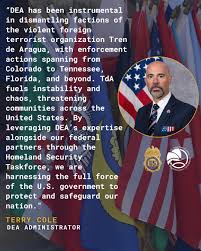
The U.S. Drug Enforcement Administration (DEA) is intensifying efforts to disrupt international drug trafficking networks, with a growing focus on cartel operations, fentanyl precursor chemicals, financial facilitators and cross-border supply chains. DEA Administrator Terrance Cole is leading the agency as it pursues a broader strategy to dismantle criminal organizations involved in the illicit synthetic opioid trade.
The crackdown reflects a shift toward targeting the entire criminal enterprise rather than focusing only on street-level drug dealers or individual shipments. Investigators are examining how chemical suppliers, brokers, manufacturers, transportation networks and money-laundering operations help cartels maintain their businesses.
In 2026, federal agencies have also expanded efforts to disrupt the international supply of chemicals used to manufacture illegal synthetic drugs. These measures include criminal investigations, coordinated enforcement operations, financial sanctions and cooperation with international partners.
However, the title’s specific wording about a newly announced operation should not be interpreted as the name of a separately confirmed DEA initiative. The developments below describe the documented enforcement strategy and recent actions behind the broader crackdown.
DEA Cartel Crackdown Expands Across International Drug Networks
The DEA cartel crackdown highlights the growing importance of international cooperation in the fight against synthetic opioids. Drug trafficking organizations increasingly depend on networks that cross national borders, making it difficult for one agency or country to dismantle an entire operation alone.
According to the DEA, Mexican criminal organizations, including the Sinaloa Cartel and the Jalisco New Generation Cartel (CJNG), play a significant role in the illicit fentanyl trade affecting the United States. These organizations operate through interconnected networks that can involve chemical procurement, clandestine manufacturing, wholesale distribution and financial transactions.
Consequently, investigators are increasingly looking beyond individual drug seizures. Their broader objective is to identify the people and businesses that supply essential materials, coordinate shipments, finance criminal operations and move illegal profits.
This strategy is designed to make it more difficult for cartels to replace seized drugs, recruit new intermediaries or quickly rebuild disrupted distribution networks.
The approach also reflects a recognition that the fentanyl problem cannot be addressed through border enforcement alone. Investigators must understand how illegal substances are produced, financed, transported and distributed before they reach American communities.
DEA Administrator Terrance Cole Leads the Enforcement Strategy
Under his leadership, the agency has emphasized dismantling criminal organizations responsible for the illegal drug trade. The focus includes identifying senior figures, disrupting international supply networks and pursuing the financial systems that allow trafficking groups to continue operating.
The strategy involves several interconnected priorities.
First, investigators seek to identify the organizations responsible for manufacturing and distributing fentanyl. Second, they work to establish how chemical supplies reach illicit production facilities. Third, they investigate the movement of proceeds generated by illegal drug sales.
These activities can involve coordination with federal prosecutors, financial investigators, customs authorities and foreign law enforcement agencies.
The purpose is to create lasting disruption rather than simply remove one shipment from circulation.
Nevertheless, the success of this approach depends on evidence, effective prosecutions and cooperation between countries. Arrests and seizures are important measures, but they do not automatically prove that an entire criminal organization has been dismantled.
Fentanyl Supply Chain Becomes a Major Investigative Target
The DEA’s supply-chain strategy targets the materials and services that make illegal production possible. This includes chemical suppliers, brokers, manufacturing facilities, distribution networks and financial intermediaries.
Investigators are also examining how apparently legitimate international trade can be exploited to obtain chemicals intended for unlawful drug production.
Why precursor chemicals matter
Precursor chemicals are substances used in manufacturing other compounds. Some have legitimate industrial or pharmaceutical applications, which makes enforcement complicated.
Authorities must distinguish lawful commercial activity from transactions linked to illegal drug production. That requires reliable intelligence, financial records, laboratory evidence and cooperation with relevant businesses and regulators.
A successful investigation can identify a network that supplies multiple production facilities rather than targeting only the people operating one laboratory.
This distinction matters because removing a single shipment may interrupt production temporarily, while dismantling a supplier network can make it harder for multiple criminal groups to obtain essential materials.
Investigating international chemical suppliers
In April 2026, the U.S. Treasury Department announced sanctions against 23 individuals and entities associated with a synthetic opioid procurement network linked to the Sinaloa Cartel. The department said the network included India- and Latin America-based entities involved in supplying precursor chemicals.
The action illustrates the international scope of the investigation. It also demonstrates that enforcement can extend beyond the countries where illegal drugs are manufactured or sold.
Sanctions and criminal prosecutions serve different purposes. Sanctions can restrict access to assets and financial systems under applicable law, while criminal cases seek to establish individual or corporate liability through legal proceedings.
Together with customs enforcement and international cooperation, these measures can put pressure on the businesses and intermediaries that support illicit production.
Mexican Cartels Remain a Central Focus
The DEA identifies the Sinaloa Cartel and CJNG as major organizations involved in the illicit fentanyl trade. Both have extensive criminal networks and operate across borders.
Their activities extend beyond the movement of finished drugs. Investigations may examine procurement, manufacturing, transportation, wholesale distribution, money laundering and relationships with other criminal groups.
Sinaloa Cartel investigations
The Sinaloa Cartel has long been a major focus of U.S. drug enforcement efforts. Authorities seek to identify the people who organize trafficking operations and the financial networks that allow those operations to continue.
Investigators may examine links between suppliers, brokers, transporters and individuals who manage the proceeds of drug sales.
These cases can require cooperation across several jurisdictions because evidence, suspects and financial assets may be located in different countries.
Jalisco New Generation Cartel
The Jalisco New Generation Cartel, commonly known as CJNG, is another major target of U.S. enforcement agencies.
The DEA describes CJNG as a powerful transnational criminal organization involved in the illicit drug trade. Its investigations seek to disrupt the organization’s leadership, supply networks and financial support systems.
However, targeting a cartel does not mean every person or business connected to a particular investigation has been proven guilty. Allegations must be assessed through the appropriate legal process.
Authorities also face the challenge of organizational adaptation. When one leader is arrested or one route is disrupted, other members may attempt to take over the operation or establish alternative arrangements.
For that reason, investigators aim to identify the broader network rather than relying exclusively on the arrest of prominent individuals.
Operation Fentanyl Free America Highlights Enforcement Activity
The broader crackdown also includes Operation Fentanyl Free America, an enforcement initiative that has featured nationwide seizures and arrests.
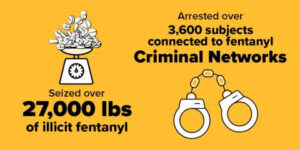
A report published in March 2026 by The Dallas Express, citing figures from the second phase of the operation, said authorities seized more than 4.7 million fentanyl pills and nearly 2,400 pounds of fentanyl powder between January 12 and February 10. The report also described seizures involving other illegal drugs and firearms, alongside more than 3,000 arrests.
These figures demonstrate the scale of enforcement activity reported during that period. They should not, however, be confused with the results of a single international operation or treated as a final measure of the entire fentanyl supply chain.
Drug seizures can prevent dangerous substances from reaching potential users. Arrests can also help investigators obtain evidence about suppliers and distributors.
At the same time, seizures alone cannot show how much illegal supply remains available. Criminal networks may have additional inventory, alternative suppliers or distribution arrangements that are not immediately visible to investigators.
What makes a nationwide operation significant?
A nationwide enforcement initiative can bring together investigations that would otherwise operate separately.
For example, information collected during a local drug seizure may help investigators identify a larger distribution network. Financial records from one case may connect suspects to businesses or transactions in another jurisdiction.
When agencies share intelligence, they may be able to connect individual cases and pursue higher-level organizers.
The broader objective is to turn isolated enforcement actions into coordinated investigations that target the infrastructure supporting illegal drug trafficking.
Money Laundering and Criminal Profits Under Scrutiny
Drug trafficking generates proceeds that criminal organizations may attempt to conceal or transfer through complex financial arrangements.
For this reason, the DEA’s broader strategy is closely connected to investigations into money laundering and illicit finance. The U.S. Department of Justice’s 2026–2030 strategic plan identifies financial facilitators, criminal proceeds and supply chains as important targets in dismantling the illegal drug trade.
Financial investigations can help authorities establish how a trafficking organization operates and identify people who may never directly handle illegal drugs.
Following the money
Investigators can examine financial records, business relationships and transactions for evidence connecting individuals or entities to illegal activity.
When supported by sufficient evidence, these investigations can lead to asset seizures, sanctions, indictments or other legal action.
Financial pressure can also affect the ability of a criminal network to pay suppliers, maintain facilities and compensate participants.
However, an unusual transaction or association is not, by itself, proof of a crime. Authorities must establish the relevant legal grounds for enforcement action.
Why financial investigations matter
Arresting a distributor may remove one participant from a trafficking network. Identifying the people who finance multiple operations may have a wider impact.
Financial investigations can therefore complement drug seizures and arrests by helping authorities identify the commercial and organizational structures behind illegal trafficking.
The challenge is to follow evidence across borders while respecting applicable laws and the legal rights of people under investigation.
International Cooperation Becomes Increasingly Important
Transnational drug trafficking creates challenges that cannot easily be resolved within one country’s borders.
A chemical supplier may operate in one country, a manufacturing facility in another and a distribution network in a third. Financial transactions may pass through additional jurisdictions.
As a result, the DEA works with domestic and international partners to investigate trafficking networks and share relevant information.
The U.S. Department of Justice has identified international cooperation, intelligence sharing, sanctions and coordinated enforcement as important elements of its strategy against transnational criminal organizations.
Cooperation with foreign authorities
International investigations can involve evidence collection, suspect identification, customs enforcement and coordinated legal proceedings.
The precise activities depend on the countries involved, the available evidence and the legal agreements governing cooperation.
Such partnerships can help authorities identify suppliers and financial facilitators who operate beyond the immediate reach of U.S. investigators.
They can also help distinguish legitimate chemical commerce from transactions connected to unlawful manufacturing.
The role of customs and border enforcement
Customs authorities can help identify suspicious shipments and enforce restrictions on controlled or illegally diverted substances.
However, border enforcement is only one component of a larger strategy. Criminal networks may use complicated commercial arrangements, intermediaries and changing transportation patterns.
Investigators therefore need to combine border intelligence with financial analysis, laboratory findings and evidence collected through criminal investigations.
The strongest enforcement results are likely to come from coordinated efforts that address several parts of the supply chain at once.
Fentanyl Overdose Prevention Remains a Public Health Priority
Although law enforcement plays an important role, the fentanyl crisis also requires public health measures.
Illicit fentanyl can appear in counterfeit prescription pills or be mixed with other substances. People may therefore consume it without knowing what a product contains.
This uncertainty increases the risk of accidental overdose and makes public awareness particularly important.
Why counterfeit pills are dangerous
Counterfeit pills can resemble legitimate prescription medicines in appearance. However, their contents and strength may be unpredictable.
A pill obtained from an unverified source cannot be assumed to contain the medication stated on its packaging. Even a small quantity of illicit fentanyl can cause a life-threatening overdose.
Public education campaigns encourage people to avoid counterfeit medication and seek legitimate medical care when they need prescription treatment.
Naloxone and emergency response
Naloxone is a medication that can rapidly reverse an opioid overdose. It is an important part of community overdose-response efforts.
Recognizing the signs of an opioid overdose and calling emergency services promptly can also save lives. People who suspect an overdose should not delay seeking professional medical assistance.
These interventions complement enforcement efforts by addressing the immediate health consequences of opioid exposure.
The wider response also includes treatment services, recovery support and education designed to prevent substance misuse.
How Will Authorities Measure the Success of the Crackdown?
The number of arrests or the quantity of drugs seized can provide useful information, but neither figure tells the entire story.
A meaningful assessment of the DEA cartel crackdown requires examining whether enforcement disrupts criminal organizations over time.
Several indicators can help measure progress.
Supply-chain disruption: Whether investigators identify and dismantle important supplier networks.
Successful prosecutions: Whether evidence supports convictions against individuals responsible for trafficking or financing illegal operations.
Financial disruption: Whether authorities identify and restrict criminal proceeds and financial facilitators.
International cooperation: Whether partner agencies can coordinate investigations and share evidence effectively.
Public health outcomes: Whether overdose deaths and other harms decline over time.
These indicators measure different aspects of the problem. A reduction in seizures, for example, does not automatically mean that trafficking has declined; it could also reflect changes in enforcement activity or reporting.
Likewise, a large seizure does not establish how much illegal supply remains in circulation.
The Department of Justice’s strategic plan includes performance measures related to disrupting and dismantling priority cartel-affiliated organizations and transnational criminal networks.
Tracking these measures alongside public health data can offer a more complete picture of progress.
Challenges That Could Limit the Crackdown
Despite expanded enforcement, dismantling international drug networks remains difficult.
Criminal networks can adapt
When authorities disrupt one supplier or transportation route, a criminal organization may attempt to establish another. This ability to adapt can reduce the long-term effect of isolated enforcement actions.
Investigators must therefore continue gathering intelligence and examining the relationships that connect different parts of a network.
Legitimate chemical trade complicates enforcement
Many chemicals have lawful industrial applications. Restrictions that are too broad could affect legitimate manufacturers and other businesses.
Authorities must therefore identify transactions linked to illegal activity while allowing lawful commerce to continue.
International investigations take time
Collecting evidence in multiple countries can involve different legal systems, languages and procedural requirements.
Investigators may need to coordinate with foreign authorities before obtaining records or pursuing suspects.
These obstacles mean that the effects of a major operation may take time to become clear.
Enforcement cannot replace prevention
Even an effective crackdown cannot eliminate overdose risks on its own. People may continue to face dangers from counterfeit medicines, contaminated drugs and other substances.
Treatment access, emergency response and public education remain essential parts of the broader strategy.
What Happens Next in the DEA Cartel Crackdown?
The DEA’s wider enforcement strategy points toward continued attention to fentanyl suppliers, precursor chemicals, cartel leadership and illicit financial networks.
Recent federal actions show that the effort extends beyond drug seizures to include investigations into international procurement networks and financial facilitators.
Future developments may include additional indictments, international cooperation, sanctions and coordinated enforcement actions. However, specific operations, arrest totals and future announcements should be confirmed through official releases before publication.
For readers following the story, the most useful indicators will be verified enforcement results, court proceedings and reliable public health data.
The central question is whether authorities can translate individual arrests and seizures into sustained disruption of the organizations responsible for manufacturing and distributing illicit fentanyl.
Ultimately, the DEA cartel crackdown represents one part of a much larger effort to reduce the availability of dangerous drugs, weaken transnational criminal organizations and prevent overdose deaths.
Its long-term impact will depend on the effectiveness of investigations, the strength of international partnerships and the ability of enforcement agencies to work alongside public health services.
Frequently Asked Questions (FAQs)
1. What is the DEA cartel crackdown?
The DEA cartel crackdown refers to enforcement efforts targeting drug trafficking organizations, including their fentanyl supply chains, chemical suppliers, distribution networks and financial facilitators.
2. Who is the current DEA administrator?
As of October 17, 2026, the DEA identifies Terrance Cole as its administrator. He was sworn into the position on July 23, 2025.
3. Which cartels are major targets of fentanyl investigations?
The DEA identifies the Sinaloa Cartel and the Jalisco New Generation Cartel as major organizations involved in the illicit fentanyl trade.
4. Why are fentanyl precursor chemicals important?
Precursor chemicals are used to manufacture other substances. Investigators target illegal procurement networks because disrupting access to essential materials may hinder illicit drug production.
5. What is Operation Fentanyl Free America?
Operation Fentanyl Free America is a DEA enforcement initiative involving efforts to disrupt fentanyl trafficking. Reported activities have included drug seizures, arrests and investigations into criminal networks.
6. How does the DEA investigate international trafficking networks?
Investigations may combine intelligence sharing, evidence collection, financial analysis, drug seizures and cooperation with domestic and foreign law enforcement agencies.
7. Why does the crackdown target money laundering?
Money laundering can help criminal organizations conceal and move the proceeds of illegal drug sales. Financial investigations aim to identify facilitators and disrupt the resources that support trafficking.
8. Can fentanyl enforcement alone end the opioid crisis?
No. Enforcement can disrupt illegal supply networks, but prevention, access to treatment, overdose education and emergency response are also necessary to reduce drug-related deaths.
9. How can people reduce the risk of fentanyl exposure?
People should avoid counterfeit pills and drugs from unverified sources, use prescribed medication as directed, learn to recognize overdose symptoms and seek emergency assistance when an overdose is suspected.
10. Where can readers find verified DEA crackdown updates?
Readers can check the official Drug Enforcement Administration website for agency announcements, enforcement reports and fentanyl supply-chain information. The DEA fentanyl supply-chain page is a useful starting point.
How useful was this post?
Click on a star to rate it!
Average rating 0 / 5. Vote count: 0
No votes so far! Be the first to rate this post.
About the Author

usa5911.com
Administrator
Hi, I’m Gurdeep Singh, a professional content writer from India with over 3 years of experience in the field. I specialize in covering U.S. politics, delivering timely and engaging content tailored specifically for an American audience. Along with my dedicated team, we track and report on all the latest political trends, news, and in-depth analysis shaping the United States today. Our goal is to provide clear, factual, and compelling content that keeps readers informed and engaged with the ever-changing political landscape.