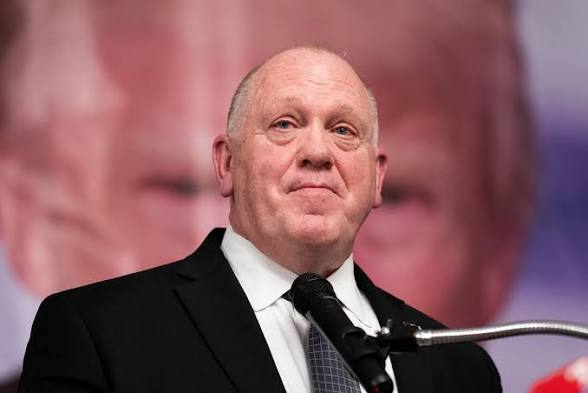
STEPHEN A SMITH WHITE HOUSE DINNER: ESPN Star Reveals What He Told President Trump During Private Meeting
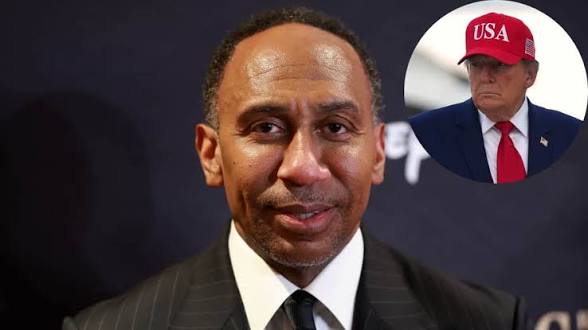
Stephen A. Smith’s White House dinner with President Donald Trump has become a major talking point after the ESPN personality revealed details of their lengthy private conversation. The meeting brought together four prominent public figures with different political backgrounds: Trump, Smith, comedian Bill Maher and musician Kid Rock.
However, the most significant part of the evening was not simply the guest list. Smith said he used the opportunity to raise issues affecting Black Americans, including Black unemployment, federal employment and funding for Historically Black Colleges and Universities (HBCUs).
In his account of the dinner, Smith described a lengthy, substantive conversation in which Trump answered questions and responded to criticism. Smith also explained why he accepted the invitation despite their previous public disagreements.
According to reporting published on October 16 and 17, 2026, the discussion lasted more than four hours. Smith’s comments have renewed debate about political dialogue, the role of media personalities and whether direct conversations with political leaders can produce meaningful results.
What happened at Stephen A. Smith’s White House dinner?
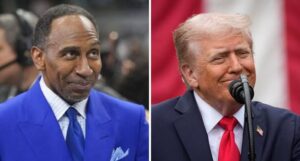
President Trump hosted Smith, Maher and Kid Rock at the White House on Thursday evening, October 15, 2026. Details of the gathering became public the following day, when Kid Rock discussed the dinner during a television appearance.
Kid Rock described the evening as an unusually wide-ranging conversation. He said the group discussed political differences, international affairs and domestic policy. His account also highlighted a shared opposition to socialism and communism gaining a foothold in the US government.
Smith later offered his own account through his Straight Shooter with Stephen A. podcast and television appearances. Rather than treating the dinner as a simple social occasion, he described it as an opportunity to speak directly with the president about issues he considers important.
The gathering attracted attention partly because the guests do not share identical political views. Trump is a Republican president, Kid Rock is a prominent Trump supporter, and Maher has a long history of criticizing Trump despite having met with him previously. Smith has also criticized the president publicly.
Consequently, the dinner created an unusual setting in which disagreement and direct conversation could take place away from the usual television debate format.
What did Stephen A. Smith tell President Trump?
Smith’s most important message concerned HBCUs, Black unemployment and the potential consequences of changes to diversity, equity and inclusion policies.
According to Smith’s account, he wanted to discuss how federal decisions and corporate funding affect educational opportunities for Black students. He also raised concerns about Black workers and employment opportunities within the federal government.
These subjects were central to his decision to attend the dinner. Smith explained that meeting with a political leader does not require agreeing with that leader on every issue. Instead, he believes direct engagement can create opportunities to ask difficult questions and advocate for communities that might otherwise be overlooked.
Reporting on Smith’s comments indicates that he challenged Trump on the relationship between the administration’s approach to DEI and private-sector financial support for HBCUs. Smith said Trump indicated that he would look into the funding concerns.
That response is important, but it should not be mistaken for a confirmed policy change. There has been no verified announcement in the reporting cited here that the dinner produced a new funding commitment or a formal agreement.
For Smith, the immediate objective was to raise the issue directly with the president and encourage further attention.
HBCU funding was a central concern
Historically Black Colleges and Universities have played a significant role in American higher education. These institutions educate students across a wide range of disciplines and have long contributed to the development of Black professionals, educators, researchers and community leaders.
Their financial health depends on several sources, including tuition, public funding, private donations, research grants and institutional partnerships. Changes in any of these areas can affect scholarships, academic programs and campus services.
Smith’s concern was that changes to federal DEI policy could also influence corporate decisions about donations and institutional partnerships.
During his account, he distinguished between government funding for HBCUs and the possibility that private companies might reconsider financial support. These are separate issues, even though both can affect the resources available to universities.
The discussion therefore raised a broader question: how can policymakers support educational opportunity while changing the rules and priorities that shape federal and corporate funding?
Smith wanted the president to address that question directly. Whether the conversation leads to additional funding or policy adjustments remains to be seen.
Black unemployment and federal jobs
Smith also raised concerns about Black unemployment and employment opportunities within the federal workforce.
Employment statistics can conceal important differences between communities, industries and age groups. Overall unemployment may improve while particular groups continue to face barriers to stable work, career advancement or access to well-paid positions.
Smith’s decision to raise the issue reflects his broader argument that political conversations should address the practical effects of government decisions on ordinary Americans.
Federal employment is another important part of this discussion. Government hiring policies, workforce reductions and changes in recruitment practices can affect workers and their families. However, the specific impact varies by agency, occupation and location.
Smith wanted Trump to engage with these concerns rather than limiting the conversation to general claims about economic performance.
The dinner did not establish that the president agreed with all of Smith’s arguments. Instead, Smith’s account presented the exchange as an opportunity to put those concerns directly before the administration.
Stephen A. Smith says Trump answered difficult questions
One of the most notable aspects of Smith’s account was his description of Trump’s willingness to engage with criticism.
Smith said the president answered the questions raised during the gathering, although he remained defiant when challenged or confronted with opposing views. Smith described the evening as respectful and substantive rather than a meeting in which disagreements were avoided.
That distinction matters because a conversation can be civil without producing consensus.
Political discussions often involve competing interpretations of economic conditions, government spending, employment and foreign policy. A participant may answer questions directly while continuing to reject the assumptions behind them.
Smith’s account suggested that Trump was prepared to defend his positions rather than withdraw from uncomfortable discussions. At the same time, Smith expressed reservations about the president’s attitude toward economic pressures and the difficulties facing some Americans.
The description offers a more nuanced picture than a simple story of political friendship or confrontation. Smith acknowledged the president’s hospitality while continuing to discuss areas of disagreement.
The economy, inflation and national concerns
The dinner reportedly touched on the economy, inflation, the national debt and international affairs.
These issues matter because presidential economic policies can affect household expenses, public spending, business decisions and employment. Inflation, in particular, remains a subject of public concern whenever prices rise faster than wages or household budgets become harder to manage.
However, a discussion about the economy does not establish that the participants reached agreement on its performance.
Smith’s account portrayed Trump as confident in his administration’s record while suggesting that the president was dismissive of some economic concerns and hardships facing Americans.
That contrast illustrates a familiar feature of political debate: leaders often emphasize broad indicators of success, while critics focus on the experiences of particular communities.
For Smith, raising questions directly was more important than simply accepting the president’s interpretation of events.
Foreign policy also entered the conversation
The discussion reportedly extended beyond domestic policy to international affairs, including the war involving Iran and concerns connected to Afghanistan.
Kid Rock described the evening as covering several difficult subjects, while other accounts indicated that the participants discussed trade and broader geopolitical questions.
Foreign policy can create common ground between people who disagree about domestic politics. At the same time, conversations about war, international security and America’s global responsibilities can reveal substantial differences.
The available accounts do not establish that every participant agreed on each foreign policy issue. Instead, they suggest that the dinner covered a broad range of subjects rather than focusing on a single political dispute.
Why did Stephen A. Smith accept Trump’s invitation?
Smith’s decision to attend was particularly notable because he and Trump had previously clashed publicly.
Earlier in 2026, Trump questioned Smith’s intelligence after disagreements involving sports and politics. Their history made the invitation an opportunity to address differences in person.
Smith explained that he accepted because he wanted to speak to the president directly. He also referred to an earlier connection involving Trump’s unsuccessful effort to purchase the Buffalo Bills in 2014, which Smith has discussed when describing their history.
According to reporting on his podcast, Smith saw value in being able to challenge the president face to face rather than relying entirely on public statements or televised exchanges.
His reasoning also reflected a wider principle: political access can be useful when it allows people to raise concerns with those who hold decision-making power.
Attending a dinner, however, does not automatically indicate political endorsement. Smith’s explanation emphasized advocacy and direct engagement rather than an announcement of support for Trump’s political agenda.
Smith says advocacy matters more than political labels
Smith’s comments about HBCUs provided the clearest explanation for his decision.
He argued that if institutions important to the Black community face difficulties, he will try to help where he can. That position, as he presented it, takes priority over disagreements with individual political figures.
His approach also challenges the expectation that public personalities must avoid interacting with people whose views differ from their own.
Supporters of direct engagement argue that access can create opportunities to raise overlooked issues. Critics, meanwhile, may worry that high-profile meetings lend legitimacy to political figures or create an impression of agreement.
Both concerns help explain why Smith’s visit generated debate.
The key distinction is between participating in a conversation and endorsing every position held by the person across the table.
Bill Maher and Kid Rock added to the political contrast
The presence of Bill Maher and Kid Rock helped make the gathering newsworthy.
Maher is known for political comedy and criticism of both major American political parties. Although he has frequently criticized Trump, he previously met with the president for a White House dinner in 2025.
Kid Rock, by contrast, has publicly supported Trump and appeared alongside him at political events.
Smith occupies a different position as a sports commentator who has increasingly discussed American politics, race, public policy and the direction of both major parties.
Bringing these personalities together created a setting where competing viewpoints could be discussed without the format of a traditional political debate.
Kid Rock said the participants shared opposition to socialism and communism, but that reported point of agreement does not mean they shared the same views on every policy question.
The guests’ differences were particularly relevant when the conversation turned to HBCU funding, DEI and employment. Those subjects involve complicated questions about education, federal policy, private-sector investment and equal opportunity.
The gathering demonstrated that political disagreements do not necessarily prevent a conversation, although the long-term value of such meetings depends on what follows.
Why the White House dinner is attracting attention
The story goes beyond the unusual combination of guests. It also highlights the increasingly blurred boundaries between sports commentary, entertainment and political discussion.
Smith built his public profile through sports broadcasting. Yet his recent commentary has increasingly addressed political leadership, elections, public policy and social issues.
His White House visit reflects that expansion of his public role.
For audiences, the main question is not simply whether Smith and Trump got along. It is whether a meeting of this kind can influence the conversation around issues that affect communities, institutions and workers.
The answer depends on what happens after the cameras turn away.
A public figure can raise an issue directly, but any resulting change may require additional meetings, administrative action, budget decisions or cooperation from private institutions.
In the case of HBCUs, meaningful progress could involve clearer funding commitments, sustained government support or efforts to encourage corporate partnerships. None of those outcomes should be assumed merely because a president agreed to discuss the subject.
The meeting is best understood as an opportunity for advocacy, not proof that a policy dispute has been resolved.
Could the dinner affect Trump’s relationship with Black voters?
Smith’s remarks may also influence discussion about the administration’s relationship with Black voters, particularly as the United States approaches the 2026 midterm elections.
Issues such as employment, education, affordability and access to economic opportunities can shape how voters assess political leadership. HBCU funding is especially significant because these institutions have longstanding ties to Black communities and play an important role in higher education.
Smith’s decision to raise these subjects placed practical concerns at the center of a meeting otherwise likely to attract attention for its celebrity guest list.
However, one conversation cannot establish how Black voters as a whole view the president. Political opinions vary widely, and individual voters weigh different issues when deciding whether to support a candidate or party.
Similarly, Smith’s willingness to meet Trump should not be interpreted as evidence that he speaks for every Black American or that his views represent a unified political position.
The broader significance lies in the questions he raised and whether the administration responds with measurable action.
What happens next after the Stephen A. Smith White House dinner?
The next stage will depend on whether the issues discussed lead to further conversations or concrete decisions.
Smith indicated that Trump said he would look into the concerns involving HBCU funding. He also suggested that the president might contact him about the matter. That is a reported indication of possible follow-up, not a confirmed funding agreement.
Several developments would be worth watching:
HBCU funding: Whether the administration provides additional clarification or announces measures affecting university funding.
Corporate partnerships: Whether businesses continue supporting HBCUs and related educational initiatives.
Employment policy: Whether the administration addresses concerns about Black unemployment and federal employment opportunities.
Further dialogue: Whether Smith or other participants report additional discussions with the president.
Political reaction: Whether the meeting changes public debate about engagement across political differences.
For now, the confirmed story is that Smith attended the dinner and publicly described the issues he raised. The ultimate policy consequences remain uncertain.
Conclusion: A conversation that goes beyond sports and politics
Stephen A. Smith’s White House dinner with President Donald Trump has attracted attention because it brought together public figures with different political backgrounds and gave Smith an opportunity to raise issues important to him.
His account emphasized HBCU funding, Black unemployment and concerns about the effects of DEI policy changes on private-sector support for educational institutions.
Smith also described Trump as willing to answer difficult questions, even when he responded defiantly to criticism. At the same time, Smith did not present the evening as evidence that their disagreements had disappeared.
Ultimately, the significance of the meeting will depend on what happens next. Direct access to a president can create an opportunity to advocate for change, but it does not guarantee results.
For readers following the Stephen A. Smith White House dinner, the most important development to watch is whether the conversation leads to concrete action on HBCU funding, employment and educational opportunity.
Frequently asked questions (FAQs)
1. Why did Stephen A. Smith attend the White House dinner with Trump?
Smith said he accepted the invitation because he wanted to speak directly with Trump and raise concerns about issues affecting Black Americans, especially HBCU funding and unemployment.
2. What did Stephen A. Smith tell President Trump?
Smith said he raised concerns about Black unemployment, federal employment and how changes to DEI policies could affect private-sector funding for Historically Black Colleges and Universities.
3. Who attended the White House dinner?
The dinner included President Donald Trump, ESPN personality Stephen A. Smith, comedian Bill Maher and musician Kid Rock. It took place on October 15, 2026, according to published reports.
4. How long did the meeting last?
Smith described the gathering as lasting more than four hours. His account characterized it as a lengthy discussion covering domestic policy, economic concerns and international affairs.
5. Did Trump agree to provide more funding to HBCUs?
The available reporting does not confirm a new funding commitment. Smith said Trump indicated that he would look into the concerns, but a follow-up statement or formal funding announcement would be needed to establish any concrete action.
6. Did Stephen A. Smith endorse Donald Trump?
Attending the dinner does not, by itself, establish a political endorsement. Smith explained that he wanted to engage directly with the president and advocate for issues he considers important.
7. What did Kid Rock say about the dinner?
Kid Rock described the gathering as an engaging evening involving political discussion, humor and difficult conversations. He also said the participants discussed socialism, communism, foreign policy and HBCU funding.
8. Why is the dinner attracting so much attention?
The meeting brought together figures with different political backgrounds and highlighted Smith’s growing involvement in political commentary. His remarks about HBCUs and Black unemployment also shifted attention toward substantive policy questions.
9. Will the White House dinner lead to policy changes?
That remains uncertain. Smith’s account suggests that HBCU funding concerns were raised directly with Trump, but no confirmed policy change or new funding commitment has been established in the cited reports.
10. Where can readers find more information about Stephen A. Smith’s comments?
Readers can consult reporting from Awful Announcing, [TheGr
How useful was this post?
Click on a star to rate it!
Average rating 0 / 5. Vote count: 0
No votes so far! Be the first to rate this post.
About the Author

usa5911.com
Administrator
Hi, I’m Gurdeep Singh, a professional content writer from India with over 3 years of experience in the field. I specialize in covering U.S. politics, delivering timely and engaging content tailored specifically for an American audience. Along with my dedicated team, we track and report on all the latest political trends, news, and in-depth analysis shaping the United States today. Our goal is to provide clear, factual, and compelling content that keeps readers informed and engaged with the ever-changing political landscape.