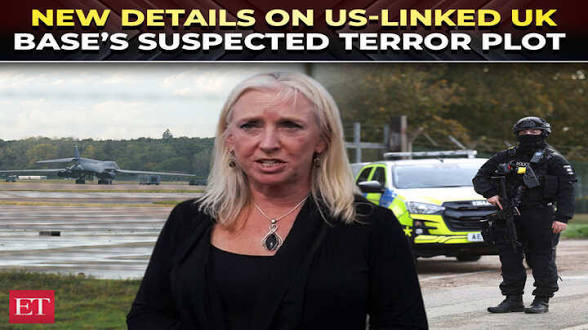
A major counter-terrorism investigation in the United Kingdom has triggered fresh questions about security, transparency and the handling of a suspected attack near RAF Fairford.
Five British men were arrested near the Gloucestershire airbase on Sunday, September 27, 2026, after police received a report about suspicious vehicles and people in the area. The incident prompted a major security operation, the evacuation of nearby residents and the deployment of bomb-disposal specialists.
However, the case quickly became more complicated.
The five suspects were released on police bail the following day without being charged. Counter Terrorism Policing said the men remain under investigation and face strict conditions concerning their movements and contact with others. Police are also examining several possible explanations for the incident, including whether a foreign state or proxy network could have been involved.
That development has fueled claims online and in political commentary about a possible “UK terror cover-up.” Yet the available evidence does not establish that authorities deliberately concealed a terrorist plot. Instead, the confirmed facts show an active investigation in which important questions remain unanswered.
What happened near RAF Fairford?
The incident began during the early hours of Sunday, September 27.
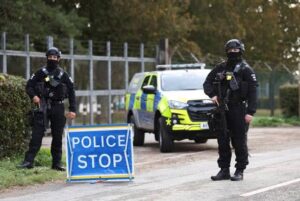
A local resident reported suspicious activity involving several vans near RAF Fairford. Armed police responded rapidly, and five men were arrested in the surrounding area.
The location immediately attracted attention because RAF Fairford is an important military facility with a long history of supporting United States Air Force operations.
Authorities established a large cordon around the vehicles while specialist teams examined them. Around 85 households were reportedly evacuated during the operation.
The men were initially arrested over suspected offences connected with explosives. Counter Terrorism Policing subsequently described the investigation as involving suspicion of preparing a terrorist act.
The arrests therefore represented a serious national-security incident, even though the investigation had not yet reached the stage of criminal charges.
Why RAF Fairford matters
RAF Fairford is not an ordinary military site.
The Gloucestershire base has been used extensively by the United States military and has hosted strategic aircraft. Its role became particularly significant during military operations involving Iran in 2026.
That background is important because investigators are considering whether the incident could have been connected to wider geopolitical tensions.
Counter Terrorism Policing has said it is examining multiple lines of inquiry. Those include the possibility that people involved could have been acting for, or on behalf of, a foreign state.
However, investigators have not publicly established which foreign state, if any, was responsible.
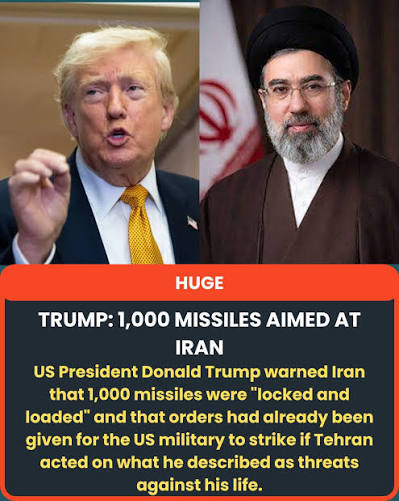
Iran has denied involvement, while public speculation has focused heavily on Tehran because of the military context surrounding RAF Fairford. U.S. officials have also referred to the possibility of a foreign actor, but those comments do not by themselves establish responsibility.
Five suspects released on bail
One of the biggest developments in the case came on Monday, September 28.
All five suspects were released on police bail.
That decision generated immediate public and political attention because the arrests had initially been described as a serious terrorism-related investigation.
However, release on bail does not mean investigators have concluded that nothing happened.
Counter Terrorism Policing chief Laurence Taylor said the suspects remain under investigation and are subject to stringent conditions concerning their movement and contact with other people.
The men have not been charged.
This distinction is important when assessing claims that authorities either “foiled” a confirmed terrorist attack or concealed one.
At this stage, police have confirmed an investigation into suspected terrorist activity. They have not publicly confirmed that an attack was certain to occur, nor have they announced that the five men have been charged with preparing an attack.
Does the evidence prove a UK terror cover-up?
No.
The phrase “UK terror cover-up” is being used as a headline or political allegation, but the evidence currently available does not prove that British authorities deliberately hid a terrorist operation.
There are, however, legitimate questions about communication.
For example, reports have raised questions about what intelligence agencies knew before the arrests, how the security response was coordinated and why suspects were subsequently released on bail.
Defence Secretary Wes Streeting indicated that security services had prior information about the group, although he did not disclose operational details because the investigation remains active.
That information creates an important distinction.
If intelligence agencies were already monitoring individuals later arrested near RAF Fairford, the case may have involved an intelligence operation before the public became aware of it.
That is not automatically evidence of concealment.
Security agencies routinely withhold operational information because revealing surveillance methods, sources or investigative techniques could compromise current or future cases.
Why the lack of charges matters
The legal status of the suspects is central to understanding the story.
Being arrested on suspicion of terrorism is not the same as being charged with terrorism. Likewise, being released on police bail does not constitute an acquittal.
The investigation can continue while prosecutors and police assess evidence.
In this case, Counter Terrorism Policing has explicitly said that the five men remain under investigation.
That means several possibilities remain open.
Investigators could eventually decide that sufficient evidence exists to charge one or more suspects. Alternatively, they could determine that the evidence does not support criminal charges.
The present status should therefore be described as an ongoing investigation rather than a completed terror case.
The suspicious vans and the security operation
The presence of multiple vans near RAF Fairford was one of the reasons the incident escalated rapidly.
Police treated the situation seriously enough to establish a substantial safety cordon and bring in specialist bomb-disposal resources.
Nearby residents were evacuated while officers assessed the vehicles.
Reports subsequently indicated that the materials initially feared to be viable explosives were not ultimately confirmed as usable explosive devices. That development helps explain why investigators are continuing to examine exactly what the suspects intended and what evidence can be established.
The distinction is important.
A suspicious vehicle containing materials associated with an alleged terrorist plan can generate a major emergency response even before investigators know whether those materials are operational, whether an attack was planned or whether the individuals involved had a criminal objective.
The local tip that triggered the response
One of the most notable elements of the case is the role of a local resident.
Reports say a farmer noticed suspicious activity involving vans and masked individuals near the base and contacted police.
Her report helped trigger the immediate police response.
That raises another question for the broader security debate: how much did local observation contribute to preventing a potentially dangerous incident?
Authorities have credited the rapid emergency response, while reports have also described criticism from residents concerning communication and security arrangements.
Those competing accounts illustrate why the incident is attracting attention beyond the immediate investigation.
Foreign-state involvement remains unproven
The international dimension has become one of the most closely watched aspects of the case.
Counter Terrorism Policing has said investigators are considering whether suspects may have acted as proxies for a foreign state, either knowingly or unknowingly.
That is an investigative avenue, not a final finding.
The possibility of an Iranian connection has received particular attention because RAF Fairford has been associated with U.S. military operations involving Iran.
However, no public evidence currently establishes that Iran ordered or directed the suspected operation.
Iran has denied involvement.
Other possibilities have also been discussed, demonstrating why investigators have avoided publicly assigning responsibility while inquiries continue.
Why authorities may reveal only limited information
Counter-terrorism investigations often involve information that cannot immediately be disclosed.
Investigators may need to protect intelligence sources, surveillance methods, witness identities and evidence that could eventually be presented in court.
There is therefore an inherent tension between public transparency and operational security.
The public wants to know what happened.
At the same time, releasing too much information during an active investigation can potentially undermine the investigation itself.
That does not mean authorities should never be questioned.
Instead, the appropriate questions concern whether officials have provided accurate information, whether public safety measures were adequate and whether important facts were withheld for legitimate operational reasons.
Those questions can be examined as more evidence becomes available.
Wider UK counter-terrorism picture
The RAF Fairford case comes against a broader background of counter-terrorism activity in Britain.
Home Office statistics show that there were 3,061 arrests for terrorism-related activity in the year ending March 2026. However, that headline number requires significant context: 2,819 arrests were linked to alleged support for Palestine Action following its proscription in July 2025. Excluding those cases, there were 242 terrorism-related arrests.
These figures demonstrate why raw arrest totals should not automatically be interpreted as the number of people involved in conventional terrorist attack plots.
The same official statistics show that among the 242 arrests not linked to Palestine Action, 67 resulted in charges. Of those charged, 52 were charged under terrorism-related legislation.
The figures also demonstrate an important feature of terrorism investigations: an arrest is an investigative step, not proof of guilt.
That principle applies to the RAF Fairford investigation as well.
What happens next?
The next phase of the investigation is likely to focus on evidence.
Police will examine the vehicles, communications, financial activity, digital material and relationships connected with the suspects. Investigators will also seek to establish whether the individuals acted independently or had connections to a wider organisation.
If evidence supports criminal charges, prosecutors can take the case forward.
If investigators cannot establish an offence, the case could develop differently.
The question of foreign involvement may also take time to resolve. Establishing whether a person acted independently, for an extremist organisation or on behalf of a state can require extensive intelligence work.
Questions about transparency will continue
The controversy surrounding the case is unlikely to disappear simply because the suspects were released on bail.
The public is likely to continue asking what intelligence agencies knew, when they knew it and why information was not made public sooner.
Those questions are reasonable in a democracy.
However, they should be separated from the stronger claim that authorities deliberately covered up a terrorist attack.
At present, the evidence establishes an active counter-terrorism investigation, five arrests, a major security response and the subsequent release of the suspects on bail.
It does not establish a government cover-up.
Future police statements, court proceedings or intelligence disclosures could provide a clearer picture.
What is confirmed and what remains uncertain?
Several facts are already established.
Five British men were arrested near RAF Fairford. The incident triggered a major police and security response. Nearby residents were evacuated. Counter Terrorism Policing became involved. The suspects were later released on police bail and remain under investigation.
Other issues remain unresolved.
Investigators have not publicly established whether an attack was definitely planned, who may have organized it or whether a foreign state was involved.
The possible Iran connection remains an investigative question rather than a proven conclusion.
Similarly, the claim of a “cover-up” remains an allegation rather than an established fact.
That distinction is especially important in terrorism reporting, where inaccurate claims can spread rapidly and potentially affect ongoing investigations.
Why this story matters
The RAF Fairford investigation highlights the difficult balance between security and transparency.
Britain must protect military installations and investigate credible threats. At the same time, officials must communicate enough information to maintain public confidence.
The case also demonstrates how quickly a local security incident can become an international story when a strategically important military facility is involved.
For now, the investigation remains open.
The five suspects have not been charged, and Counter Terrorism Policing says they remain under investigation.
As a result, the most accurate description of the controversy is not that a UK terror cover-up has been proven. Instead, the evidence points to an unresolved suspected terror incident that has generated serious questions about security, intelligence, communication and foreign-state involvement.
More answers are likely to emerge as investigators continue their work.
Frequently Asked Questions
What happened at RAF Fairford?
Five men were arrested near RAF Fairford in Gloucestershire on September 27, 2026, during an investigation into suspected terrorism and explosives offences. The incident triggered a major security response and the evacuation of nearby residents.
Were the five men charged with terrorism?
No. The five suspects were released on police bail and remain under investigation. Police said they are subject to strict conditions concerning their movements and contact with others.
Is the RAF Fairford incident linked to Iran?
A possible foreign-state connection, including the possibility of Iranian involvement, is being examined. However, no public evidence has established that Iran was responsible. Iran has denied involvement.
Was a terrorist attack definitely planned?
Authorities have not publicly established that an attack was certain to occur. The suspects were arrested on suspicion of preparing a terrorist act, but the investigation remains ongoing.
Why were the suspects released on bail?
Police released the five men after extensive interviews and inquiries while keeping the investigation open. Bail does not mean the investigation has ended or that the suspects have been cleared.
Is there proof of a UK terror cover-up?
There is currently no public evidence proving that British authorities deliberately covered up a terrorist plot. There are questions about intelligence, communication and security, but those questions remain separate from proof of deliberate concealment.
Why is RAF Fairford important?
RAF Fairford is a strategically important British airbase that has long supported U.S. military operations. Its role in the 2026 conflict involving Iran has increased attention on the facility.
What happens next in the investigation?
Counter Terrorism Policing is expected to continue examining evidence, including possible links between the suspects and any wider network. Investigators may later make charging decisions depending on the evidence obtained.
Final Takeaway
The RAF Fairford incident has created a major UK security story, but the facts should be separated from speculation.
Five men were arrested near a strategically important military base. Police launched a major counter-terrorism investigation, residents were evacuated and specialist teams examined suspicious vehicles. The suspects were subsequently released on bail without charge and remain under investigation.
Questions about what authorities knew and when they knew it are likely to continue.
For now, however, the available evidence does not prove a deliberate UK terror cover-up. The investigation remains active, and important questions about the suspects’ intentions, possible foreign connections and the security response have yet to be answered.
About the Author