MIGRANT CARAVAN SURGE: DHS issues strict warning, hundreds march north
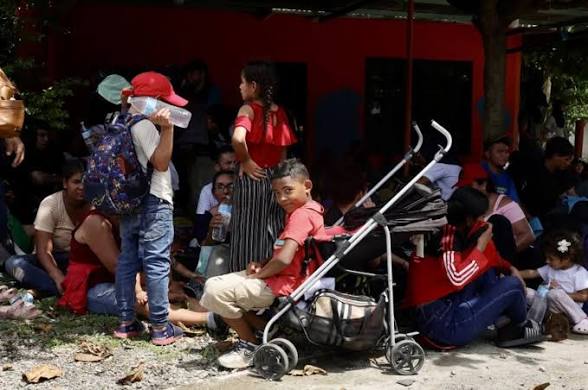
A new migrant caravan surge is drawing attention across Mexico and the United States as hundreds of migrants continue moving north through Mexico. The group, known as “Fey y Esperanza,” or “Faith and Hope,” reportedly began its journey from Honduras and has grown to roughly 600 people.
The caravan is currently traveling through southern Mexico, with migrants reported near Tapachula. Reports say the group includes people from Honduras, El Salvador, Guatemala, Ecuador and Haiti. Families with children are also among those traveling north.
The development has renewed attention on U.S. border enforcement. U.S. authorities have emphasized that migrants attempting to enter the country illegally can face enforcement consequences under current immigration policies.
However, the caravan is still far from the U.S.-Mexico border. Reports place it more than 1,000 miles from the nearest crossing in Brownsville, Texas. There is also no confirmed indication that the entire group will ultimately reach the United States.
Where Is the Migrant Caravan Now?
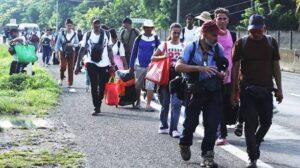
The caravan is moving through southern Mexico after beginning its journey in Honduras.
According to recent reporting, the group initially consisted of approximately 200 to 400 Honduran migrants. Its numbers increased as other migrants joined the journey.
The group has reportedly reached approximately 600 people.
The caravan’s movement is taking place under difficult conditions. Tropical Storm Rachel has affected parts of the region, creating additional challenges for people traveling on foot or in large groups.
The route through Mexico is long and unpredictable. Migrant groups can change size as people join, leave, take alternative transportation or decide not to continue.
That means the current estimate should not be treated as a fixed number.
The Caravan Includes Families
Reports indicate that families and children are traveling with the group.
That detail is important because migrant caravans are not necessarily made up of a single category of traveler. Some participants may be seeking employment, while others may be seeking protection, family reunification or other forms of migration.
Individual immigration circumstances can therefore vary considerably.
The term migrant caravan describes the way people travel together. It does not, by itself, establish whether each individual has a legal claim to enter or remain in another country.
What Has DHS Warned?
The U.S. Department of Homeland Security has continued to emphasize strict immigration enforcement.
DHS has also used social media messaging to highlight border security as the caravan receives renewed attention.
One recent DHS social-media post used footage featuring former NFL safety Brian Dawkins while discussing the reported caravan. The NFL subsequently asked DHS to remove the video, saying Dawkins’ likeness had been used without permission.
The episode illustrates how quickly a developing migration story can become part of a wider public debate.
For migrants considering unauthorized entry, the central message from U.S. authorities remains that immigration laws are being actively enforced.
At the same time, the existence of a caravan does not mean that an imminent mass border crossing has been confirmed.
Is the Caravan Heading Directly to Texas?
There is currently no confirmed evidence that every person in the caravan is heading to a particular U.S. border crossing.
Some reports have raised the possibility that the group could eventually travel toward the Texas border. However, the caravan remains hundreds of miles from the United States, and its route can change.
The group is reportedly more than 1,000 miles from Brownsville, Texas.
That distance matters.
Migrants traveling through Mexico may encounter immigration enforcement, transportation problems, weather conditions, financial difficulties and other obstacles. Some groups also fragment before reaching the northern border.
Therefore, describing the caravan as already approaching the U.S. border would be misleading.
Why Is the Caravan Receiving So Much Attention?
The timing has contributed to the intense attention.
Immigration and border security remain major subjects in U.S. politics and public debate. The emergence of a new caravan therefore attracts significant media coverage even when the group remains far from the border.
The current situation is also notable because migrant movement toward the United States has changed substantially under stricter U.S. enforcement policies.
A Reuters report published earlier in September found that migrant shelters in Mexico’s northern border region were experiencing substantially lower occupancy than in previous periods. The report linked the decline to stricter U.S. immigration policies and changes in available pathways for migrants.
This broader context makes the new caravan notable.
A visible group of several hundred migrants moving north does not necessarily indicate that overall migration is increasing at the same rate.
How Large Is the Caravan?
Current reports put the caravan at approximately 600 people.
However, the number can change quickly.
Migrants may join the group at different points. Others may leave because of weather, health concerns, financial problems or Mexican immigration enforcement.
For that reason, estimates should be treated as snapshots rather than permanent figures.
The group reportedly started with approximately 200 to 400 Honduran migrants before expanding as people from several other countries joined.
Countries Represented
Reports have identified migrants from:
- Honduras
- El Salvador
- Guatemala
- Ecuador
- Haiti
The presence of people from multiple countries demonstrates that the caravan is not limited to one national group.
Nevertheless, each migrant’s individual immigration circumstances are different.
What Happens If Migrants Reach the U.S. Border?
Reaching the U.S.-Mexico border does not automatically mean migrants will be admitted into the United States.
U.S. immigration authorities apply federal immigration laws and procedures at ports of entry and along the border.
People attempting unauthorized entry can encounter Border Patrol or other federal authorities. Depending on individual circumstances, migrants may be detained, processed, removed or placed into immigration proceedings.
People seeking asylum also have specific legal procedures and eligibility requirements.
The important distinction is that being part of a caravan is not itself an immigration status.
Each person’s case depends on their circumstances and the applicable law.
Why Migrants Travel in Caravans
Migrants may travel collectively for several reasons.
A large group can provide a greater sense of security during a long journey. People may also share transportation, food, information and other resources.
For some migrants, traveling together can reduce the risks associated with traveling alone.
However, traveling as a large group also creates challenges.
Authorities can easily identify a caravan. Large groups can attract media attention and may encounter additional law-enforcement scrutiny.
The current caravan is also dealing with difficult weather conditions in southern Mexico.
Mexico’s Role in the Journey
Mexico plays a crucial role because migrants traveling from Central America must cross large portions of the country before reaching the U.S. border.
Mexican authorities can enforce immigration rules within Mexican territory. Migrants may therefore encounter checkpoints and other enforcement measures during their journey.
Mexico’s immigration environment has also changed as the United States has tightened its border policies.
Reuters reported earlier this month that some migrants who once planned to reach the U.S. border are instead remaining in Mexican cities because of the increased difficulty of entering the United States.
That makes the current caravan’s progress particularly difficult to predict.
The Difference Between a Caravan and a Border Surge
The phrase “caravan surge” can create the impression of an immediate border crisis.
However, a migrant caravan and a nationwide increase in unauthorized border crossings are not the same thing.
A caravan is a specific group traveling together.
A border surge refers to a broader increase in migration activity at the U.S. border.
The current group is still in southern Mexico. Therefore, its existence alone does not establish that there has been a comparable increase in U.S. border crossings.
Recent reporting has also indicated that migration pressures along parts of Mexico’s northern border have decreased under stricter U.S. enforcement policies.
What Could Happen Next?
Several outcomes remain possible.
The caravan could continue north toward central and northern Mexico. It could also shrink as migrants leave the group.
Some migrants may request assistance or pursue legal pathways. Others could remain in Mexico rather than continuing toward the United States.
The group’s eventual destination is therefore not certain.
Weather could also affect its movement. Tropical Storm Rachel has already created difficult conditions in the region.
Because the group remains far from the U.S. border, developments over the coming weeks will determine whether it continues moving north in its current form.
DHS and Border Enforcement Remain Closely Watched
The Biden-era immigration framework has been replaced by a much stricter enforcement approach under the Trump administration, and DHS has made immigration enforcement a major priority.
The department has emphasized arrests, removals and border security.
Recent reporting also shows that DHS is pursuing other immigration enforcement measures beyond the southern border. For example, the administration has sought to continue its third-country deportation policy while legal challenges proceed.
These policies form the larger backdrop to the current caravan story.
However, it is important to separate confirmed developments from political commentary.
The confirmed fact is that a caravan of several hundred people is moving through Mexico. The future size, route and destination of the group remain uncertain.
What the Migrant Caravan Means for the U.S. Border
The caravan has renewed attention on the U.S.-Mexico border at a time when immigration enforcement remains a major federal priority.
Yet its immediate impact should not be overstated.
The group is still far from the United States, and there is no confirmation that all 600 people will attempt to cross the border.
Previous migrant caravans have often changed substantially during their journeys.
Some groups have broken apart, while individuals have chosen different routes or destinations.
Consequently, monitoring the caravan’s progress is more informative than assuming its eventual outcome.
A Developing Immigration Story
The migrant caravan surge remains a developing story.
Approximately 600 migrants are currently reported to be traveling through southern Mexico after beginning their journey in Honduras. The group has expanded to include people from several other countries.
U.S. authorities are maintaining a strict border-enforcement message, while the caravan remains more than 1,000 miles from the nearest U.S. border crossing in Brownsville.
For now, the most significant facts are the group’s current location, its estimated size and the uncertainty surrounding its eventual route.
As the caravan moves through Mexico, those details could change rapidly.
The situation also demonstrates why immigration stories require careful attention to verified numbers, geography and individual legal circumstances.
A large group traveling north can attract enormous attention. But the ultimate significance of the movement will depend on what happens next.
Frequently Asked Questions
1. What is the current migrant caravan?
The current caravan is reportedly known as “Fey y Esperanza,” meaning “Faith and Hope.” It began in Honduras and has grown to approximately 600 people while traveling through southern Mexico.
2. How many people are in the migrant caravan?
Recent reports estimate that approximately 600 migrants are currently part of the caravan. The number can change as people join or leave.
3. Where is the migrant caravan now?
The group has been reported in the Tapachula area of southern Mexico. It remains more than 1,000 miles from the nearest U.S. border crossing in Brownsville, Texas.
4. Is the caravan definitely heading to Texas?
No. Reports have discussed the possibility of movement toward the U.S. border, but there is no confirmation that the entire group is headed to a specific Texas crossing.
5. What countries are represented in the caravan?
Reports identify migrants from Honduras, El Salvador, Guatemala, Ecuador and Haiti.
6. What has DHS said about the caravan?
DHS has maintained a strict border-security and immigration-enforcement message. Recent DHS social-media activity also referenced the reported caravan.
7. Does joining a caravan give migrants legal permission to enter the United States?
No. Traveling in a caravan does not itself provide immigration status or authorization to enter the United States.
8. Could the caravan break apart?
Yes. Migrant caravans can change size during long journeys. Weather, enforcement, transportation and individual decisions can all affect participation.
9. Why are migrant caravans formed?
People may travel together for safety, shared resources, transportation and mutual support during long journeys.
10. Is the migrant caravan already at the U.S. border?
No. Recent reporting places the group in southern Mexico and more than 1,000 miles from the nearest U.S. border crossing in Brownsville.
11. Why is this caravan receiving major attention?
Immigration and border security remain major issues in the United States. The emergence of a new caravan has therefore attracted substantial media and government attention.
12. What happens next?
The caravan’s route and final destination remain uncertain. Its size, location and composition may change as it travels through Mexico.
How useful was this post?
Click on a star to rate it!
Average rating 0 / 5. Vote count: 0
No votes so far! Be the first to rate this post.
About the Author

usa5911.com
Administrator
Hi, I’m Gurdeep Singh, a professional content writer from India with over 3 years of experience in the field. I specialize in covering U.S. politics, delivering timely and engaging content tailored specifically for an American audience. Along with my dedicated team, we track and report on all the latest political trends, news, and in-depth analysis shaping the United States today. Our goal is to provide clear, factual, and compelling content that keeps readers informed and engaged with the ever-changing political landscape.