SPACE WEAPONS DEPLOYED: Pentagon confirms orbit defense, China Russia warned, high stakes
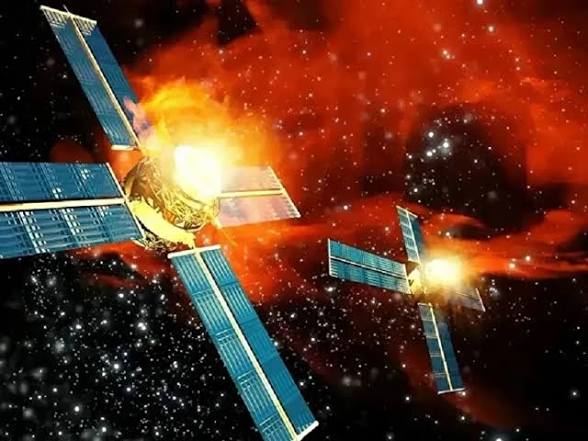
The United States has publicly confirmed a major development in military space policy: it has deployed “on-orbit space control weapons” capable of defending U.S. forces against hostile actions.
U.S. Air Force Secretary Troy Meink made the disclosure on September 14, 2026, during the Air, Space & Cyber Conference in Maryland. However, officials have not identified the weapons, explained exactly how they work, or confirmed when they were deployed.
The announcement is significant because Washington has historically been cautious about publicly discussing offensive capabilities in orbit.
Meink said the United States needs to remain prepared for threats in space. He also connected the new capability to growing concerns about China and Russia.
The announcement does not mean that the United States has disclosed a specific satellite-killing weapon. Instead, the Pentagon has confirmed the existence of a broader category of systems described as space control weapons.
That distinction is important.
The disclosure has nevertheless intensified debate about the future of military competition beyond Earth.
Why the Space Weapons Announcement Matters
Satellites already play a central role in modern military operations.
They support communications, navigation, intelligence collection, missile warning, weather monitoring and targeting. Commercial satellite networks have also become increasingly important during conflicts.
As a result, controlling access to space can influence military operations on Earth.
The U.S. Space Force says China and Russia are developing counterspace capabilities intended to disrupt or degrade American space-enabled systems. The agency describes China as the primary long-term strategic challenge in the space domain while also identifying Russian counterspace developments.
The latest U.S. disclosure therefore comes against a background of growing competition.
Rather than treating space as a supporting military environment, major powers increasingly view it as an operational domain in its own right.
That shift explains why the phrase space weapons deployed has attracted international attention.
What Did the Pentagon Actually Confirm?
The wording used by Meink is central to understanding the announcement.
He said the United States now has “on-orbit space control weapons” capable of defending the Joint Force against hostile adversary action.
However, several important questions remain unanswered.
Officials have not publicly disclosed:
- The number of weapons deployed
- Their orbital locations
- Their exact capabilities
- Whether they have been tested against targets
- Whether they are designed to physically destroy satellites
- Whether they use electronic warfare
- Whether they involve directed energy
- When deployment began
Therefore, headlines describing a specific type of orbital weapon should be treated carefully.
The available public information establishes that the U.S. has acknowledged space control weapons in orbit, but it does not establish the precise weapon technology.
Reuters reported that U.S. Space Force officials also confirmed the existence of defensive space-control capabilities without providing their technical details.
What Are Space Control Weapons?
The term “space control” can cover several different technologies.
Some systems can interfere with an adversary’s ability to use satellites. Others can protect friendly satellites or provide military commanders with options for responding to attacks.
Possible categories discussed publicly by experts include:
Electronic Warfare
Electronic warfare systems can interfere with communications, navigation or satellite signals.
Jamming is one example. Instead of physically destroying a satellite, a jammer attempts to prevent the satellite or its users from communicating effectively.
Directed Energy
Lasers and other directed-energy systems can potentially interfere with sensors or other satellite functions.
The U.S. and other countries have studied directed-energy technologies for years.
Kinetic Anti-Satellite Weapons
Kinetic systems physically strike a satellite.
Such attacks can create large amounts of orbital debris. That debris can threaten other spacecraft, including satellites belonging to the country conducting the attack.
Cyber Capabilities
Cyber operations can target ground infrastructure, satellite networks or associated command systems.
These capabilities may affect space operations without physically attacking a spacecraft.
Importantly, the Pentagon has not confirmed that all or any particular one of these categories represents the newly disclosed orbital weapons.
China Responds to the U.S. Space Weapons Disclosure
China reacted strongly after Washington acknowledged the deployment.
Chinese Foreign Ministry spokesperson Guo Jiakun said Beijing opposed the militarization of outer space and urged the United States to stop expanding military activity there.
Chinese state media also warned that the U.S. announcement could contribute to an arms race in space.
That response reflects a broader Chinese position: Beijing argues that increasing military deployments in orbit could undermine strategic stability.
At the same time, the United States points to China’s rapidly expanding space capabilities as one reason for strengthening American defenses.
This creates a classic security dilemma.
One country can describe a new capability as defensive, while another country may view the same capability as potentially offensive.
That difference in perception can encourage further military investment.
Russia and the Growing Counterspace Competition
Russia has also been a major focus of U.S. concerns about military space capabilities.
The U.S. Space Force says Russia is developing and deploying counterspace systems and has conducted satellite maneuvers that U.S. officials consider potentially threatening.
U.S. Strategic Command has also described the space environment as increasingly contested and has cited Russian and Chinese developments as significant concerns.
One especially sensitive issue is Russia’s reported interest in an orbital nuclear anti-satellite capability.
However, allegations concerning specific Russian programs should be distinguished from confirmed operational deployments.
The public record contains assessments and warnings from U.S. officials, but many technical details remain classified.
Why Satellites Are So Important to Modern Warfare
The significance of orbital weapons becomes easier to understand by looking at how dependent modern militaries are on satellites.
A military force can use satellites for:
- Secure communications
- Navigation
- Missile warning
- Intelligence gathering
- Reconnaissance
- Weather information
- Targeting
- Battlefield connectivity
- Strategic command and control
If those capabilities are disrupted, military operations can become more difficult.
That is why protecting satellites has become a major national-security priority.
The United States has invested heavily in resilient satellite architectures, including networks designed to distribute capabilities across many spacecraft rather than relying on a small number of extremely expensive satellites.
China is pursuing large satellite constellations as well.
The U.S. Space Force reports that China had more than 1,500 orbital payloads by June 2026 and was pursuing large communications constellations in low Earth orbit.
Space Is Becoming More Contested
For decades, space was primarily associated with scientific exploration, communications and satellite services.
Military competition was present, but many capabilities remained classified.
That environment has changed.
Military officials now openly discuss:
- Counterspace operations
- Satellite protection
- Electronic warfare
- Space domain awareness
- Orbital maneuvering
- Resilient satellite networks
- Anti-satellite capabilities
The U.S. Space Force was established in 2019 as a separate military service focused on space operations.
Since then, Washington has increasingly emphasized the need to protect space-based infrastructure.
The latest announcement represents another step in that evolution.
Does This Mean the U.S. Has Weapons That Can Destroy Satellites?
Not necessarily.
This is one of the most important points surrounding the announcement.
The term space control weapons is broader than “satellite-killing weapons.”
Officials have not publicly stated that the newly acknowledged systems are kinetic anti-satellite weapons.
Ars Technica reported that experts have discussed possibilities ranging from jammers to other counterspace technologies, while noting that the Pentagon has not identified the actual systems.
That uncertainty is deliberate.
Military capabilities are often kept classified because revealing technical details could reduce their effectiveness.
It also means that outside observers cannot confidently determine the exact operational purpose of the weapons based solely on the announcement.
Why Space Debris Is a Major Concern
A major concern surrounding anti-satellite warfare is orbital debris.
When a large satellite is destroyed through a kinetic attack, thousands of fragments can spread through orbit.
Those fragments can collide with other spacecraft.
This creates a cascading risk.
Military satellites are not the only systems potentially affected. Commercial communications satellites, scientific spacecraft and crewed missions could also face danger.
For that reason, space security experts have repeatedly raised concerns about destructive anti-satellite tests.
The United States has also emphasized counterspace options that do not necessarily create large debris fields.
The debate is therefore not simply about whether countries possess space weapons. It is also about how those weapons could be used.
The Golden Dome Connection
The space weapons disclosure also comes as the United States develops the Golden Dome missile-defense initiative.
The proposed architecture involves space-based components and other technologies intended to improve missile detection and interception.
The Washington Post reported that the United States is developing a network of space-based missiles envisioned as part of the future Golden Dome system.
However, Golden Dome and the newly acknowledged orbital weapons should not automatically be treated as the same program.
They involve overlapping discussions about missile defense and space-based military capabilities, but the Pentagon has not publicly said that the newly acknowledged “space control weapons” are Golden Dome interceptors.
That distinction matters when evaluating claims about the announcement.
A New Era of Space Military Competition?
The latest disclosure could influence how China, Russia and other countries think about their own space capabilities.
If governments believe another country has an advantage in orbit, they may invest more heavily in counterspace systems.
This can create a cycle:
New capability → perceived threat → military response → new capability.
That cycle is one reason international space security has become increasingly important.
Reuters reported that Chinese officials warned the U.S. deployment could contribute to a global space arms race.
U.S. officials, meanwhile, argue that American capabilities are necessary because China and Russia are already developing systems that could threaten U.S. satellites.
Both perspectives are now part of the public debate.
What Happens If Space Warfare Expands?
A conflict involving satellites could affect much more than military spacecraft.
Modern economies depend on space infrastructure.
Satellite services support:
- Banking
- Aviation
- Shipping
- Telecommunications
- Weather forecasting
- Emergency services
- Navigation
- Internet connectivity
A major disruption could therefore have consequences beyond the battlefield.
At the same time, military planners are developing systems designed to make their space networks more resilient.
This includes using more satellites, distributing functions across multiple spacecraft and developing alternative communications systems.
The goal is increasingly to ensure that losing one satellite does not mean losing an entire capability.
The Biggest Unknowns After the Announcement
Despite the dramatic headlines, many details remain classified.
The most important unanswered questions include:
What weapons are actually in orbit?
The Pentagon has not said.
How many are deployed?
No public number has been provided.
Are they defensive or offensive?
Officials describe them as capable of defending U.S. forces, but the broader term “space control” can encompass several capabilities.
Have they been used?
There is no public confirmation that the newly acknowledged systems have been used against another country’s spacecraft.
Where are they located?
Their orbital positions have not been disclosed.
These unanswered questions make it difficult to assess the exact military significance of the deployment.
Why the Announcement Is Significant
The most important development is not necessarily the technology itself.
It is the public acknowledgment.
For years, governments have discussed the possibility of space warfare while keeping many capabilities classified.
Now, a senior U.S. military official has publicly confirmed that American space-control weapons are already operating in orbit.
That changes the public discussion.
It also sends a strategic message to competitors.
The United States is signaling that it intends to protect its space capabilities and maintain the ability to respond if its satellites or space-dependent forces face hostile action.
China has criticized the development and warned about the consequences for strategic stability.
Russia’s space capabilities remain another major focus of U.S. military planning.
The result is an increasingly competitive environment in orbit.
What This Means for the Future of Space Security
The deployment of space weapons does not automatically mean that a space war is imminent.
There has been no public confirmation that the newly disclosed systems have been used in combat.
However, the announcement demonstrates how seriously major powers now treat space as a military domain.
Future competition could focus on:
- Protecting satellite constellations
- Disrupting enemy communications
- Improving space surveillance
- Developing electronic warfare
- Increasing satellite maneuverability
- Building resilient networks
- Preventing debris-generating attacks
- Establishing international rules
The challenge will be balancing deterrence with stability.
If countries reveal too little about their capabilities, opponents may assume the worst. If they reveal too much, they may expose sensitive military information.
That makes transparency and communication increasingly important.
Final Thoughts on Space Weapons Deployed
The U.S. confirmation of space weapons deployed in orbit marks an important moment in the evolution of military space policy.
Air Force Secretary Troy Meink confirmed that the United States has on-orbit space control weapons designed to defend the Joint Force from hostile action. Yet the Pentagon has not disclosed what those systems are or exactly how they operate.
China has criticized the move and warned that greater military expansion in space could fuel an arms race.
Meanwhile, U.S. officials continue to identify Chinese and Russian counterspace capabilities as major security concerns.
The key issue is therefore broader than one newly acknowledged weapon.
Space has become an increasingly contested strategic environment.
As military forces depend more heavily on satellites, the ability to protect, disrupt or defend orbital infrastructure will remain a central issue in international security.
For now, the most important facts are clear: the United States has acknowledged weapons in orbit, their exact capabilities remain classified, and China and Russia are closely connected to the strategic debate surrounding America’s decision.
FAQs
What did the Pentagon confirm about space weapons?
Air Force Secretary Troy Meink confirmed that the United States has deployed “on-orbit space control weapons” capable of defending the Joint Force against hostile action. The specific systems remain undisclosed.
Are U.S. space weapons designed to destroy satellites?
The Pentagon has not publicly confirmed that the newly acknowledged weapons are kinetic anti-satellite systems. “Space control” can include several types of capabilities.
Why are China and Russia concerned about U.S. space weapons?
China has warned that U.S. military expansion in space could contribute to an arms race and undermine strategic stability. Russia has also been a major focus of U.S. concerns about counterspace capabilities.
What are counterspace weapons?
Counterspace weapons are systems designed to interfere with, disrupt, degrade or potentially destroy another country’s space-based capabilities.
Why are satellites important in warfare?
Satellites support communications, navigation, intelligence, missile warning, targeting and other military functions.
Can destroying satellites create space debris?
Yes. Kinetic anti-satellite attacks can produce large debris fields that may threaten other spacecraft.
Has the United States used the newly disclosed orbital weapons?
There is no public confirmation that these newly acknowledged systems have been used against another country’s spacecraft.
Does the announcement mean a space war is coming?
The announcement confirms a new level of public disclosure about U.S. military space capabilities, but it does not establish that a space war is imminent.
What is the Space Force?
The U.S. Space Force is a U.S. military service responsible for organizing and conducting military operations in the space domain.
Why is space becoming a military priority?
Modern militaries increasingly depend on satellites for communications, navigation, intelligence and missile warning. Protecting those capabilities has therefore become a major national-security priority.
How useful was this post?
Click on a star to rate it!
Average rating 0 / 5. Vote count: 0
No votes so far! Be the first to rate this post.
About the Author

usa5911.com
Administrator
Hi, I’m Gurdeep Singh, a professional content writer from India with over 3 years of experience in the field. I specialize in covering U.S. politics, delivering timely and engaging content tailored specifically for an American audience. Along with my dedicated team, we track and report on all the latest political trends, news, and in-depth analysis shaping the United States today. Our goal is to provide clear, factual, and compelling content that keeps readers informed and engaged with the ever-changing political landscape.