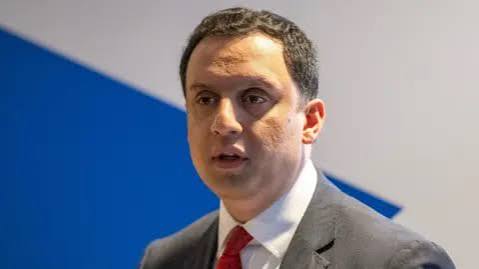
The Anas Sarwar Starmer revolt became one of the most significant internal Labour Party disputes of 2026. On 9 February, Sarwar, then leader of Scottish Labour, publicly called on Prime Minister Keir Starmer to resign. His intervention came during a major political crisis surrounding Starmer’s decision to appoint Peter Mandelson as Britain’s ambassador to the United States.
Sarwar’s intervention was significant because he was one of the most senior Labour figures to openly demand Starmer’s departure. The move exposed serious divisions within the governing party at a politically sensitive moment.
However, the story did not end with Sarwar’s February revolt. Starmer initially resisted calls to leave. He remained Labour leader for several more months before announcing his resignation in June. Andy Burnham subsequently became prime minister. Sarwar himself later resigned as Scottish Labour leader and joined Burnham’s government.
The sequence of events provides important context for understanding what became known as a Labour leadership crisis.
Why Anas Sarwar Called for Starmer to Resign

Anas Sarwar’s decision came amid intense pressure on Starmer following controversy surrounding Peter Mandelson.
Starmer had appointed Mandelson as ambassador to Washington in 2024. Mandelson’s historic association with Jeffrey Epstein later became the focus of renewed scrutiny after the release of additional material about their relationship.
The controversy became a major political problem for the Labour government.
Starmer faced criticism over the decision to appoint Mandelson despite concerns about Mandelson’s past relationship with Epstein. Starmer subsequently apologised for the appointment and said he had been misled about the extent of Mandelson’s relationship with Epstein.
The crisis also led to senior departures from Downing Street.
Against this backdrop, Sarwar argued that Labour needed a change of leadership. The Scottish Labour leader said there had been too many mistakes and that the leadership in Downing Street needed to change.
Sarwar’s intervention therefore went beyond ordinary criticism. He was explicitly calling for the prime minister to leave office.
Sarwar’s Position Created a Major Labour Rift
The Anas Sarwar Starmer revolt immediately created political tension within Labour.
Sarwar was not an opposition politician. He was the leader of Scottish Labour and a prominent figure within the wider Labour movement.
His intervention therefore carried more weight than criticism from Conservative, Reform UK, SNP or other opposition politicians.
At the same time, senior Labour politicians rallied around Starmer.
Deputy Prime Minister David Lammy and other senior figures publicly supported the prime minister. Starmer also addressed Labour MPs and made clear that he intended to remain in office.
The result was a sharp contrast inside the party.
One group argued that Starmer’s leadership had become a political liability. Others maintained that Labour should remain united behind the prime minister.
That division became an important feature of the Labour crisis.
What Was the Starmer-Mandelson Controversy?
The immediate background to Sarwar’s resignation demand was the controversy involving Peter Mandelson.
Mandelson was a veteran Labour politician and former government minister. Starmer appointed him as Britain’s ambassador to the United States in 2024.
Later revelations about Mandelson’s relationship with Jeffrey Epstein created serious political pressure.
The controversy focused particularly on whether the government had adequately considered Mandelson’s history before making the appointment.
Starmer ultimately acknowledged that the appointment had been a mistake.
According to the Associated Press, Starmer apologised to Epstein’s victims and said Mandelson had misrepresented aspects of his relationship with Epstein.
The issue quickly moved beyond Mandelson himself.
It became a question about political judgment, government decision-making and the prime minister’s leadership.
That distinction is important. Sarwar’s intervention was not simply about one controversial appointment. He argued that the wider pattern of mistakes had damaged Labour’s political prospects.
Starmer Refused to Leave in February
Despite Sarwar’s demand, Starmer did not immediately resign.
Instead, he sought to demonstrate that he still had sufficient support among Labour MPs.
Senior ministers publicly backed him, while potential leadership rivals also avoided immediately launching a formal challenge.
The Associated Press reported that Labour MPs ultimately rallied behind Starmer during the February crisis, allowing him to survive the immediate threat to his leadership.
This meant that Sarwar’s revolt did not produce an immediate leadership change.
Nevertheless, it exposed the vulnerability of Starmer’s position.
The episode also showed how quickly a government with a large parliamentary majority could face internal pressure when senior figures publicly challenged its leader.
The Political Crisis Continued Beyond February
The February dispute was only one stage in the wider Labour leadership crisis.
Starmer faced additional political pressure during the months that followed. Labour subsequently suffered difficult election results and growing internal criticism.
By June, Starmer announced that he would resign as Labour leader.
In his resignation statement, Starmer acknowledged that the question facing Labour was no longer whether he had been the right person to transform the party and win power. Instead, he said the parliamentary party had concluded that he was not the person they wanted to lead Labour into the next general election.
This marked a major change from February.
At that time, Starmer had rejected calls to leave. Four months later, he accepted that he no longer had the necessary political support to continue as Labour leader.
Keir Starmer Eventually Left Downing Street
Starmer’s resignation became official in July after a Labour leadership process.
The UK government records Starmer’s final speech as prime minister on 20 July 2026. In that speech, he said he was passing the baton to Andy Burnham and wished his successor well.
Andy Burnham subsequently became prime minister without a general election.
This was possible because Labour still held a parliamentary majority following its 2024 general election victory. Under Britain’s parliamentary system, a governing party can replace its leader and therefore change prime minister without immediately holding another nationwide election.
Therefore, the phrase “Starmer exit call” has to be understood in two stages.
First came Sarwar’s February demand.
Later came Starmer’s actual resignation.
The two events were connected, but they were not the same event.
What Happened to Anas Sarwar?
Sarwar’s own political career also changed dramatically.
After leading Scottish Labour through the May 2026 Scottish Parliament election, Sarwar resigned as Scottish Labour leader.
He subsequently joined Andy Burnham’s government as a minister and was given a peerage.
The Guardian reported in July that Sarwar had become a peer and joined Burnham’s administration after previously being the first senior Labour figure to publicly call for Starmer’s resignation.
This created an unusual political sequence.
Sarwar had demanded a change in Labour’s UK leadership. Months later, he became part of the administration led by the politician who eventually replaced Starmer.
His departure also triggered a new leadership contest within Scottish Labour.
Michael Marra Takes Over Scottish Labour
On 19 September 2026, Michael Marra was elected as the new leader of Scottish Labour.
Marra won 63.2% of the vote against Joe Fagan, according to reports on the leadership contest. He replaced Sarwar after Scottish Labour’s difficult performance in the May election.
The change means that the Scottish Labour leadership has moved into a new phase.
Marra faces the task of rebuilding the party’s position in Scotland after Labour won 17 seats at Holyrood in May, its lowest total since the Scottish Parliament was established.
The new leader has emphasised reconnecting Labour with Scottish voters and broadening the party’s appeal.
His victory therefore represents another consequence of the political turbulence that began during Sarwar’s leadership.
Was the Labour Party Really in “Meltdown”?
The phrase “Labour meltdown” has been used in political commentary to describe the scale of disagreement and electoral pressure facing the party.
However, it is important to separate political language from established facts.
There were clear signs of internal disagreement.
Sarwar publicly called for Starmer’s resignation. Other Labour MPs also criticised the prime minister during different stages of 2026. Starmer eventually resigned as Labour leader. Scottish Labour later changed leaders as well.
At the same time, Labour remained the governing party.
The party retained its parliamentary majority and transferred the premiership to Burnham without a general election.
Therefore, “meltdown” is best understood as a description used by commentators rather than a formal political classification.
Why Scotland Was Central to the Dispute
Scotland played an especially important role in the Sarwar-Starmer dispute.
Scottish Labour had been attempting to rebuild its position after years of electoral decline.
The party faced competition from the SNP, Scottish Conservatives, Scottish Greens and Reform UK.
Sarwar’s argument was partly connected to Labour’s prospects in Scotland.
He believed that continued problems at Westminster could damage Scottish Labour ahead of the Scottish Parliament election.
The subsequent election results provided evidence of the scale of the challenge.
Scottish Labour won 17 seats in the May 2026 Holyrood election. Reform UK also won 17 seats, while the SNP remained the dominant party in the Scottish Parliament.
Those results became part of the political context surrounding Sarwar’s eventual resignation as Scottish Labour leader.
What Does the Leadership Change Mean for Labour?
The leadership changes created several new political questions for Labour.
First, Andy Burnham inherited the UK government after replacing Starmer.
Second, Michael Marra inherited Scottish Labour after Sarwar.
Third, Labour must rebuild its relationship with voters while dealing with competition from several parties.
The new Scottish Labour leadership has already indicated that reconnecting with voters will be a major priority.
Marra has also backed a pragmatic approach to energy policy, including support for the Rosebank and Jackdaw oil and gas projects.
That position illustrates how the new Scottish Labour leadership may seek to address economic and regional concerns alongside traditional Labour priorities.
The Wider Lesson From the Sarwar Revolt
The Anas Sarwar Starmer revolt demonstrates how internal party politics can influence national government.
Sarwar’s February intervention did not immediately remove Starmer.
Instead, Starmer survived the immediate crisis and continued as prime minister for several months.
Eventually, however, Starmer resigned after wider political pressure and a loss of confidence within the parliamentary Labour Party.
This distinction matters when looking back at the timeline.
Sarwar did not directly force Starmer out of office.
His intervention was one part of a broader sequence of events that eventually resulted in Starmer’s resignation.
That makes the episode important, but it should not be presented as a single-cause explanation for the change of prime minister.
What Comes Next for Labour?
Labour now faces a substantially different political environment from the one it entered after the 2024 general election.
Andy Burnham leads the UK government, while Michael Marra leads Scottish Labour.
The two leadership changes create opportunities for Labour to develop new political strategies.
However, the party also faces substantial challenges.
In Scotland, Labour needs to recover electoral support while competing against established nationalist parties and newer challengers.
At Westminster, Burnham’s government must manage economic pressures, public services, taxation and relations between the UK government and the devolved administrations.
The Labour Party’s ability to maintain unity will therefore remain an important political issue.
Final Takeaway
The Anas Sarwar Starmer revolt began on 9 February 2026, when the Scottish Labour leader publicly called for Keir Starmer to resign during a major political crisis.
Starmer rejected the immediate pressure and survived the February confrontation.
However, his leadership came under further pressure during the following months. In June, he announced his resignation as Labour leader, and he formally left Downing Street in July.
Andy Burnham then became prime minister.
Sarwar subsequently resigned as Scottish Labour leader and joined Burnham’s government, while Michael Marra was elected Scottish Labour’s new leader in September.
The timeline therefore stretches far beyond the original February confrontation. It represents a series of leadership changes that reshaped Labour in both Westminster and Scotland during 2026.
For readers following UK politics, the key point is that Sarwar’s exit call was an important moment in the wider Labour leadership crisis, but Starmer’s eventual resignation resulted from a broader political process rather than from Sarwar’s intervention alone.
FAQs
1. When did Anas Sarwar call for Keir Starmer to resign?
Anas Sarwar called for Keir Starmer to resign on 9 February 2026. At the time, Sarwar was the leader of Scottish Labour.
2. Why did Anas Sarwar want Starmer to resign?
Sarwar cited what he described as a series of mistakes by the Starmer government. His intervention came amid the controversy surrounding Peter Mandelson’s appointment as ambassador to the United States and the revelations concerning Mandelson’s relationship with Jeffrey Epstein.
3. Did Keir Starmer resign immediately after Sarwar’s call?
No. Starmer rejected the immediate calls for his resignation and received public backing from senior Labour figures. He remained prime minister for several more months.
4. When did Keir Starmer resign?
Starmer announced his resignation as Labour leader on 22 June 2026. He remained prime minister until a successor was chosen and formally left Downing Street in July.
5. Who replaced Keir Starmer as prime minister?
Andy Burnham became prime minister after Starmer’s departure. Burnham became prime minister without a general election because Labour continued to hold a parliamentary majority.
6. What happened to Anas Sarwar after he left Scottish Labour?
Sarwar resigned as Scottish Labour leader and joined Andy Burnham’s government. He was also given a peerage and a ministerial role.
7. Who replaced Anas Sarwar as Scottish Labour leader?
Michael Marra was elected Scottish Labour leader on 19 September 2026, succeeding Sarwar.
8. How many seats did Scottish Labour win in the 2026 Holyrood election?
Scottish Labour won 17 seats in the May 2026 Scottish Parliament election. The result represented a significant challenge for the party’s new leadership.
9. Was Anas Sarwar responsible for Starmer’s resignation?
Sarwar’s resignation demand was an important moment in the February leadership crisis, but Starmer remained in office afterward. Starmer eventually resigned following broader political pressure and a loss of confidence within the parliamentary Labour Party.
10. Is Keir Starmer still the UK prime minister?
No. As of September 2026, Keir Starmer is no longer prime minister. Andy Burnham succeeded him in July 2026.
About the Author