The latest CENTCOM warning to Iran has sharply escalated tensions across the Middle East after the United States struck three Iranian oil tankers following missile attacks on American warships.
U.S. Central Command, or CENTCOM, said American forces targeted three Iranian crude oil carriers on September 5 after Iran’s Islamic Revolutionary Guard Corps launched missiles toward two U.S. Navy ships. No American personnel were reported injured in the attacks.
The response was significant because the targets were not simply military installations. The United States struck Iranian oil tankers that CENTCOM described as part of a shadow network connected to the Islamic Revolutionary Guard Corps and its regional activities.
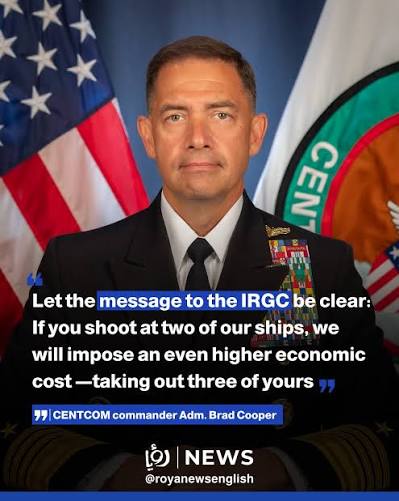
Admiral Brad Cooper, commander of CENTCOM, delivered an especially strong warning to Tehran. He said the United States would defend its forces and, if necessary, destroy Iran’s limited and exposed oil fleet.
The warning adds a major economic dimension to the continuing military confrontation between Washington and Tehran.
What Triggered the CENTCOM Warning?
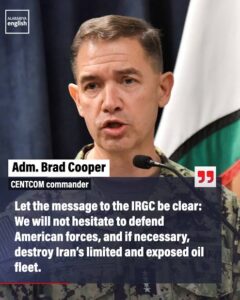
The immediate trigger was an Iranian missile attack directed at two U.S. Navy warships.
According to U.S. officials, American forces responded by striking three Iranian crude oil tankers. CENTCOM said two of the vessels were permanently disabled while another was destroyed. The strikes occurred around strategically important waters near Kharg Island and Jask.
The U.S. military portrayed the operation as both a defensive response and an economic countermeasure.
Cooper’s message was straightforward: an attack on American naval forces could result in a significantly larger cost for Iran.
CENTCOM said the three targeted vessels were connected to a multibillion-dollar shadow network that supports Iran’s Revolutionary Guard and its regional proxies.
That framing is important because Iran’s oil industry remains central to the country’s economy and international influence.
Targeting oil transportation therefore puts pressure on Tehran beyond the traditional battlefield.
Admiral Brad Cooper’s Strong Warning to Iran
Admiral Brad Cooper’s statement has become the central focus of the latest escalation.
The CENTCOM commander said that if Iran continues attacking American forces, Washington could impose even greater economic costs.
His warning followed the destruction or disabling of three Iranian oil tankers after two U.S. ships came under missile attack.
The statement does not necessarily mean that the United States has announced plans to destroy every Iranian oil vessel.
Instead, Cooper’s wording establishes a conditional threat.
The message is that continued attacks against U.S. forces could lead to additional strikes against Iran’s oil-shipping infrastructure.
That distinction matters when assessing the latest development.
The headline “US Will Destroy Iran’s Oil Fleet” captures the seriousness of the warning, but the official language is conditional: the United States says it will not hesitate to destroy the oil fleet if necessary to defend American forces.
Why Iran’s Oil Fleet Matters
Iran’s oil sector is one of the most important components of its economy.
Oil exports provide Tehran with foreign currency and help finance government spending. They also give Iran leverage in international energy markets.
Much of Iran’s oil exports move through the Persian Gulf and nearby maritime routes.
Kharg Island is particularly important because it has long served as a major Iranian oil export hub.
That makes Iranian oil tankers strategically important targets in any confrontation involving the United States and Iran.
The current crisis is therefore about more than individual ships.
It involves the broader question of whether Iran can continue using maritime routes to export oil while simultaneously challenging U.S. naval forces.
US Strikes Three Iranian Oil Tankers
The latest operation represents a major escalation because American forces moved directly against commercial oil carriers.
CENTCOM reported that three Iranian crude oil tankers were struck on September 5. Official U.S. military material identifies the operation as “CENTCOM Destroys 3 IRGC Oil Tankers After Iran Targets 2 U.S. Navy Warships.”
The U.S. military said the vessels were associated with Iran’s shadow oil network.
The three ships included vessels operating near Kharg Island and Jask. Reporting from multiple outlets also confirmed that Iran acknowledged the attacks on the tankers.
The action demonstrates how rapidly the conflict can move between military and economic targets.
A missile attack can now lead to a response against oil infrastructure, potentially creating consequences for global energy markets.
Iran’s Missile Attacks Raise the Stakes
Iran’s decision to launch missiles toward U.S. Navy ships has created a dangerous new phase in the confrontation.
American warships are deployed in waters that are critical to global energy transportation.
Iran, meanwhile, has repeatedly demonstrated that it can threaten shipping and military assets across the region.
The September attacks therefore create a difficult strategic calculation for both sides.
Washington wants to prevent attacks on American personnel and maintain freedom of navigation.
Tehran wants to preserve its leverage over maritime routes and resist American military and economic pressure.
Every new attack creates the possibility of another cycle of retaliation.
Strait of Hormuz Remains at the Center
The Strait of Hormuz is one of the most important strategic waterways in the world.
Large volumes of oil move through the narrow waterway connecting the Persian Gulf with the Gulf of Oman.
Any prolonged disruption could affect oil prices, shipping costs, insurance rates and global inflation.
Recent reporting has highlighted how the United States has sought to maintain maritime access while Iran has attempted to use the strategic waterway as leverage. Reuters reported on September 6 that the U.S. campaign has significantly weakened Iran’s leverage over the Strait of Hormuz, although the situation remains highly unstable.
The confrontation around Hormuz therefore has consequences far beyond the United States and Iran.
Countries in Asia and Europe depend heavily on energy shipments moving through the region.
Any additional attacks on oil tankers could quickly affect international markets.
Oil Prices React to the Escalation
The latest confrontation has already placed renewed pressure on oil markets.
Reuters reported that Brent crude had climbed above $96 per barrel during the recent escalation.
Higher oil prices can affect transportation, manufacturing, electricity generation and consumer prices.
The economic impact can therefore spread quickly from the Middle East to countries thousands of miles away.
This is one reason why the United States has a strong interest in maintaining secure shipping routes.
At the same time, Iran can potentially use threats against energy transportation as a source of geopolitical leverage.
That creates a difficult balance.
The United States wants to punish attacks without triggering a prolonged energy crisis, while Iran may seek to demonstrate that pressure on its oil exports comes with consequences for global markets.
What Does the Oil Fleet Warning Mean?
The CENTCOM warning to Iran should be viewed as a deterrence message.
Washington is attempting to make Tehran understand that attacks against American forces will have consequences.
The three tanker strikes provide an example of what those consequences could look like.
The United States is effectively warning that future attacks could produce additional economic and military action.
However, the statement does not automatically mean that every Iranian tanker is now a target.
The circumstances surrounding future attacks would likely determine the U.S. response.
This distinction is important because a broader campaign against Iran’s oil fleet could have major consequences for the global economy.
Iran’s Shadow Oil Network
The United States has increasingly focused on Iran’s shadow fleet as part of its broader economic pressure campaign.
Shadow fleets generally involve networks of vessels, ownership structures and trading arrangements designed to move sanctioned oil while making it harder for authorities to identify the parties involved.
Washington argues that such networks allow Iran to generate revenue despite sanctions.
CENTCOM’s latest statement specifically connected the targeted tankers to a network that it said finances Iran’s Revolutionary Guard and regional proxies.
By targeting these vessels, the United States is attempting to connect military deterrence with economic pressure.
The strategy could make it more difficult for Tehran to finance its activities through oil exports.
Could the US Destroy More Iranian Tankers?
That possibility now appears to be part of Washington’s warning.
Admiral Cooper explicitly said the United States would not hesitate to destroy Iran’s limited and exposed oil fleet if necessary.
However, whether further strikes occur will depend on developments in the conflict.
If Iranian attacks against American warships stop, Washington may have less reason to expand the campaign.
If additional missiles or drones are launched against U.S. forces, the United States could respond with additional military or economic measures.
That makes the coming days particularly important.
Risk of a Wider US-Iran Conflict
The latest tanker strikes raise concerns about a wider regional conflict.
The United States and Iran have already spent months trading military and economic pressure.
Recent fighting has involved missiles, drones, naval operations, sanctions and attacks on infrastructure.
The danger is that each side could interpret defensive action by the other as an escalation requiring retaliation.
This creates a cycle that can become increasingly difficult to control.
The presence of American warships, Iranian missile systems and commercial vessels in the same strategic region increases the possibility of miscalculation.
Global Shipping Faces Greater Uncertainty
Commercial shipping companies are closely watching the situation.
Even when ships are not directly targeted, rising military tensions can increase insurance premiums and shipping costs.
Companies may also change routes if they believe particular waterways are becoming unsafe.
The Strait of Hormuz is particularly sensitive because of the amount of energy passing through the region.
The Financial Times recently reported on continuing U.S. efforts to clear mines and improve maritime security in the strait, while noting that concerns over missiles, drones and shipping risks remain.
A prolonged confrontation could therefore affect global supply chains even without a complete closure of Hormuz.
Diplomatic Options Remain Important
Military pressure is only one part of the U.S.-Iran confrontation.
Diplomatic channels remain important because neither side can easily predict the consequences of a prolonged escalation.
Recent reporting indicates that negotiations over Iran’s nuclear program and the future of the Strait of Hormuz have faced significant difficulties.
For Washington, the challenge is to pressure Tehran without creating an uncontrollable regional conflict.
For Iran, the challenge is to resist American demands while protecting its economy and maintaining strategic leverage.
The tanker strikes could make diplomacy harder, but they could also increase pressure on both sides to find a mechanism for de-escalation.
What Happens Next?
The next stage of the crisis will likely depend on Iran’s response.
Tehran could retaliate against American military assets, attempt to increase pressure on shipping, or seek diplomatic channels.
Washington, meanwhile, has demonstrated that it is prepared to target Iranian economic assets following attacks on American forces.
The latest CENTCOM statement makes clear that the United States wants Iran to understand that the cost of attacking U.S. warships could extend directly into the country’s oil economy.
That is a significant strategic shift in the messaging surrounding the conflict.
Conclusion
The latest CENTCOM warning to Iran represents one of the clearest signals yet that Washington is prepared to combine military force with economic pressure.
After Iranian missile attacks targeted two U.S. Navy warships, American forces struck three Iranian oil tankers. CENTCOM said the vessels were connected to an Iranian shadow network and described the operation as an economic response to the attacks.
Admiral Brad Cooper then issued a direct warning that the United States would defend its forces and, if necessary, destroy Iran’s limited and exposed oil fleet.
The statement raises the possibility of additional strikes against Iranian oil shipping if the military confrontation continues.
For global markets, the biggest concern is the potential impact on oil supplies and shipping through the Strait of Hormuz.
For the United States and Iran, the immediate challenge is preventing another round of retaliation from developing into an even larger conflict.
The situation remains fluid, and further military action could have consequences well beyond the Middle East.
FAQs
1. What did CENTCOM warn Iran about?
CENTCOM commander Admiral Brad Cooper warned that the United States would defend American forces and could destroy Iran’s limited and exposed oil fleet if necessary.
2. Why did the US strike Iranian oil tankers?
The U.S. military said it struck three Iranian crude oil tankers after Iranian forces launched missiles toward two U.S. Navy warships.
3. Who is Admiral Brad Cooper?
Admiral Brad Cooper is the commander of U.S. Central Command, the military command responsible for American operations across a large area that includes the Middle East. CENTCOM’s official media pages identify Cooper as its commander.
4. Did the US destroy Iran’s entire oil fleet?
No. The United States struck three Iranian oil tankers in the latest operation. Cooper’s broader warning that the oil fleet could be destroyed was conditional on the need to defend American forces.
5. Why is Iran’s oil fleet important?
Iran’s oil exports provide important revenue and foreign currency. Oil shipping is therefore a major component of Tehran’s economy and geopolitical influence.
6. Why is the Strait of Hormuz important?
The Strait of Hormuz is a critical global energy chokepoint. Disruption in the waterway can affect oil supplies, shipping costs and energy prices worldwide. Recent tensions have already contributed to higher oil prices.
7. Could the US strike more Iranian oil tankers?
Additional strikes are possible if the confrontation continues, but Admiral Cooper’s statement was conditional. Future U.S. actions will depend on developments and any further attacks against American forces.
8. Will the US-Iran conflict affect oil prices?
It could. Any prolonged disruption to oil production or shipping in the Persian Gulf could place upward pressure on global crude prices. Brent crude recently moved above $96 per barrel amid the latest escalation.
9. What is Iran’s shadow fleet?
Iran’s shadow oil network refers to shipping and trading arrangements used to transport oil despite sanctions and restrictions. The United States says some of these networks generate revenue for the Iranian Revolutionary Guard and associated groups.
10. What happens next between the US and Iran?
The next phase will depend heavily on whether Iran carries out further attacks against American forces and whether Washington expands its military or economic response. Diplomatic efforts could also influence the direction of the crisis.
About the Author