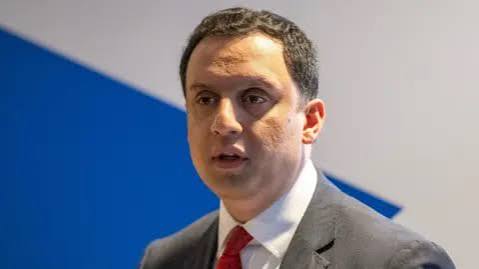
Anas Sarwar’s decision to call for Keir Starmer to step down became one of the most dramatic internal Labour rebellions of 2026. The intervention by the then Scottish Labour leader marked a remarkable break with Starmer, whom Sarwar had previously supported closely.
Sarwar argued that the situation at Downing Street had become unsustainable and that Labour needed a change of leadership. His intervention immediately intensified questions about Starmer’s authority, Labour’s electoral prospects and the growing frustration inside the party.
The Anas Sarwar Starmer exit call was particularly significant because it came from one of Labour’s most senior figures outside Westminster. Rather than being an anonymous briefing or a backbench complaint, Sarwar publicly demanded a change at the top.
However, the political story did not end there. In the months that followed, Labour experienced further turmoil, Scottish Labour suffered a severe setback at the Holyrood election, and Sarwar himself eventually left the Scottish Labour leadership after accepting a role in the House of Lords.
Why Did Anas Sarwar Call for Starmer to Quit?

Sarwar’s decision was driven by concerns about Labour’s political performance and the impact of Westminster turmoil on Scottish Labour.
In February 2026, Sarwar said that the “distraction” needed to end and that leadership in Downing Street had to change. He argued that too many mistakes had been made and that the situation was damaging Labour’s ability to win support in Scotland.
The timing was important.
Scottish Labour was preparing for the May Holyrood election, while its polling position had deteriorated. According to analysis published at the time, Scottish Labour’s support had fallen substantially from the strong performance it achieved during the 2024 general election.
Sarwar therefore faced a difficult calculation.
If Starmer remained unpopular, Scottish Labour risked being associated with Westminster problems. But if Sarwar openly challenged the prime minister, he risked creating an even bigger Labour civil war.
He chose confrontation.
The Starmer-Sarwar Relationship Takes a Dramatic Turn
The rebellion was especially striking because Sarwar had previously been regarded as a strong Starmer ally.
The two politicians had appeared together at Labour events and worked toward the party’s 2024 general election victory. Scottish Labour’s performance in that election was particularly strong, helping Labour regain a large number of seats north of the border.
But political relationships can change rapidly when electoral pressures increase.
By early 2026, Sarwar and his advisers were increasingly concerned that the problems surrounding the UK government were becoming an electoral liability in Scotland. The Guardian reported that Scottish Labour’s polling position had deteriorated sharply and that Sarwar believed the situation justified taking the political risk of challenging Starmer.
That made the revolt more than a personal disagreement.
It was a strategic gamble.
Sarwar was effectively saying that Scottish Labour could not afford to wait for Downing Street to recover.
Labour Meltdown: Why the Revolt Mattered
The phrase “Labour meltdown” captured the atmosphere surrounding the dispute, but the situation was more complicated than a simple leadership rebellion.
Sarwar was not immediately backed by a unified Labour parliamentary movement.
In fact, Downing Street moved quickly to demonstrate that Starmer still had support among senior Labour figures. Several ministers publicly defended the prime minister, while Number 10 emphasized that Starmer had won a general election and had a mandate to govern.
Reports also suggested that Downing Street initially feared Sarwar’s intervention could be part of a wider coordinated challenge. It later became more confident that Sarwar had acted independently rather than as the frontman for an organized leadership plot.
That distinction mattered.
A successful leadership challenge requires numbers. One senior politician publicly demanding a resignation can create headlines, but it does not automatically remove a prime minister.
Sarwar had created a political earthquake, but he had not necessarily created a parliamentary majority for change.
Starmer Faces Pressure From Within Labour
The rebellion nevertheless exposed serious questions about Starmer’s leadership.
Political parties are particularly vulnerable when criticism comes from figures who were previously considered allies. It can suggest that frustration has moved beyond traditional ideological divisions.
For Starmer, the challenge was therefore twofold.
First, he had to convince Labour MPs and ministers that he could recover politically.
Second, he had to convince voters that internal Labour disputes were not preventing the government from addressing everyday issues such as living costs, public services and economic pressures.
Some Labour figures argued that removing the prime minister would only create further instability. Others believed that continuing with the existing leadership could make Labour’s electoral problems worse.
That disagreement became a central feature of the Labour crisis.
Scotland Was at the Heart of Sarwar’s Argument
The Scottish dimension is essential to understanding the Anas Sarwar Starmer exit call.
Sarwar’s primary political responsibility was Scotland. His argument was that Westminster problems were making it harder for Scottish Labour to compete against the SNP and other parties.
Scottish politics has long been unusually challenging for Labour. The SNP transformed the political landscape, while Labour has struggled to rebuild the dominant position it once enjoyed.
Sarwar had hoped to position Scottish Labour as a credible alternative.
But the pressure increased as polling weakened.
The Guardian reported at the time that Scottish Labour’s support had fallen to around 18%, a dramatic decline from its 2024 general-election performance.
That helps explain why Sarwar took such a dramatic step.
From his perspective, waiting for Starmer to recover could have meant allowing Scottish Labour to enter an important election campaign with a major political weakness.
The Risk of a Labour Leadership Contest
Sarwar’s call created another problem: what would happen if Starmer actually resigned?
A Labour leadership contest could potentially give the party an opportunity to reset.
A new leader could distance Labour from unpopular decisions, present a new political message and attempt to reconnect with voters who had moved toward other parties.
But leadership contests can also be dangerous.
They can expose ideological divisions, produce damaging public arguments and dominate political coverage for weeks or months.
Instead of talking about the economy, NHS, housing or public services, Labour could find itself talking about itself.
That was one of the strongest arguments used by Starmer supporters.
They believed that changing leaders would not necessarily solve Labour’s underlying political problems.
Sarwar Defends His Decision
Despite criticism, Sarwar did not immediately retreat from his position.
He argued that his intervention represented honesty rather than disloyalty.
He also maintained that his loyalty was ultimately to Scotland and to the interests of Scottish Labour.
The argument was politically important because Sarwar needed to explain why a politician who had previously worked closely with Starmer had suddenly demanded his departure.
His answer was essentially that circumstances had changed.
The situation at Downing Street, he believed, had become damaging enough that remaining silent would itself have been politically irresponsible.
That argument appealed to some Labour critics but angered others.
Several Labour figures publicly rejected Sarwar’s intervention and defended Starmer, arguing that the country needed stability rather than another leadership contest.
The Revolt Did Not Immediately Remove Starmer
One of the most important points for readers is that Sarwar’s exit call did not automatically force Starmer out.
The British political system does not allow a party leader to be removed simply because another senior politician demands resignation.
A prime minister remains in office while retaining sufficient parliamentary and political support.
Sarwar’s intervention therefore represented pressure rather than an immediate change of government.
This distinction is important because dramatic headlines about a “Starmer exit” can sometimes create the impression that a resignation has already happened.
At the time of Sarwar’s February intervention, Starmer remained prime minister and senior Labour figures rallied around him.
What Happened to Anas Sarwar After the Revolt?
The subsequent political developments made the story even more remarkable.
By July 2026, Sarwar was preparing to leave his position as Scottish Labour leader and take a seat in the House of Lords, joining the government under Prime Minister Andy Burnham. Reports said he was due to take a ministerial role connected with the Department for Business, Innovation, Science and Trade.
That development transformed the political context around his earlier revolt.
Sarwar had gone from being one of Starmer’s closest Scottish allies, to becoming the first senior Labour figure to publicly call for Starmer to quit, and then to taking up a role in a government led by Andy Burnham.
His political journey therefore became part of the wider story of Labour’s dramatic changes during 2026.
Scottish Labour’s Electoral Setback
The May 2026 Holyrood election added another layer to the crisis.
Scottish Labour suffered a major setback, returning only 17 MSPs according to later reporting.
That result raised serious questions about the strategy pursued under Sarwar.
His argument had been that Westminster instability was damaging Labour’s prospects in Scotland. But after the election, critics could reasonably ask whether the party’s problems were deeper than Starmer alone.
Scottish Labour still faced the fundamental challenge of convincing voters why Labour was necessary in a political environment dominated for years by the SNP and increasingly contested by other parties.
Changing leaders could not automatically solve that problem.
A New Scottish Labour Leadership Battle
Sarwar’s departure opened another leadership contest.
By August 2026, the contest had narrowed considerably, with Michael Marra and Joe Fagan emerging as the leading candidates after Monica Lennon failed to secure enough nominations to remain on the ballot.
The leadership contest demonstrates that Labour’s problems in Scotland are not simply about one politician.
The party is debating its identity, political strategy and relationship with voters.
There are disagreements over policy, internal party democracy and how aggressively Labour should challenge the SNP.
That means the “Labour meltdown” narrative has evolved.
It is no longer simply a story about Sarwar versus Starmer.
It has become a broader debate about what Labour should represent in Scotland and across Britain.
What Does the Sarwar Revolt Mean for Labour?
The biggest lesson from the Anas Sarwar Starmer exit call is that political loyalty has limits.
Sarwar calculated that defending the existing leadership was becoming more damaging to his Scottish political ambitions than challenging it.
Whether that calculation was correct remains debatable.
His intervention certainly changed the political conversation.
It showed that Starmer faced serious internal criticism and demonstrated that concerns about Labour’s electoral performance had reached senior levels.
But it also created a difficult question for Sarwar himself.
If he demanded a leadership change because Starmer was damaging Labour in Scotland, then Scottish Labour’s subsequent electoral performance would inevitably be used to judge whether his strategy had worked.
Is Labour Really in Meltdown?
The word “meltdown” is useful for describing the intense political turmoil, but it should not be taken to mean that Labour ceased functioning as a political organization.
The party continued to govern, ministers continued working and political contests continued through normal democratic processes.
The deeper problem was credibility.
Labour needed to convince voters that it could provide stable government while also convincing its own supporters that its political direction was working.
Internal revolts make that task harder.
The Sarwar episode therefore matters because it exposed a gap between Labour’s formal political authority and its internal confidence.
The Bigger Political Picture
The Sarwar-Starmer dispute also illustrates how quickly political alliances can change.
In 2024, Labour was celebrating a major general-election victory. Scottish Labour had benefited from the broader Labour surge.
By 2026, the party was dealing with leadership disputes, electoral setbacks and intense internal criticism.
That transformation demonstrates how quickly political momentum can disappear.
For Labour, the challenge is not simply choosing another leader.
The party needs to establish a clear message on the economy, public services, constitutional politics and Scotland’s future.
It also needs to rebuild trust among voters who have become politically mobile.
Conclusion: Anas Sarwar’s Starmer Exit Call Changed Labour Politics
The Anas Sarwar Starmer exit call was a defining moment in Labour’s turbulent 2026.
Sarwar broke with a former ally and publicly argued that Keir Starmer should step aside. His intervention exposed the depth of frustration inside Labour and highlighted the special pressure facing Scottish Labour.
But the rebellion did not immediately remove Starmer.
Instead, it became the beginning of a much wider political story involving leadership battles, electoral disappointment and the eventual departure of Sarwar from Scottish Labour.
By August 2026, the political landscape had changed dramatically. Sarwar was moving to the House of Lords and a new Scottish Labour leadership contest was underway.
The lasting question is whether Labour can turn this period of internal conflict into political renewal.
For Scottish Labour, the challenge is even greater: it must persuade voters that the party offers something distinctive and effective at a time when Scotland’s political landscape remains highly competitive.
The Sarwar revolt may therefore be remembered not simply as a failed attempt to force a prime minister out, but as a warning about the consequences of losing political confidence.
FAQs
1. What was Anas Sarwar’s call to Keir Starmer?
Anas Sarwar publicly called on Keir Starmer to step down as prime minister in February 2026, arguing that Downing Street’s leadership had made too many mistakes and was damaging Labour’s prospects in Scotland.
2. Did Keir Starmer resign because of Anas Sarwar?
No. Sarwar’s demand did not automatically remove Starmer from office. Starmer remained prime minister after the intervention, with senior Labour figures publicly supporting him.
3. Why did Sarwar oppose Starmer?
Sarwar argued that continuing problems at Downing Street were becoming a serious political distraction and were hurting Labour’s ability to win support in Scotland.
4. Was Anas Sarwar previously a Starmer ally?
Yes. Sarwar had previously worked closely with Starmer and was considered one of his important political allies in Scotland.
5. What happened to Sarwar after he called for Starmer to quit?
Sarwar later stepped down as Scottish Labour leader and moved to the House of Lords, where he was expected to take a ministerial role in the government led by Andy Burnham.
6. How did Scottish Labour perform in the 2026 Holyrood election?
Scottish Labour suffered a major setback and returned 17 MSPs, according to reporting after the election.
7. Is Scottish Labour holding a new leadership contest?
Yes. Following Sarwar’s departure, Scottish Labour began a new leadership contest. By August 2026, the contest had narrowed to Michael Marra and Joe Fagan after Monica Lennon failed to secure sufficient nominations.
8. Why is the Sarwar revolt important?
It was significant because Sarwar was the first senior Labour figure to publicly call for Starmer to quit, exposing serious internal tensions within the governing party.
9. Does Sarwar’s revolt prove Labour was in complete meltdown?
Not necessarily. The episode demonstrated significant internal divisions and political instability, but Labour continued governing. The phrase “meltdown” is best understood as a description of the intense political turmoil rather than a literal collapse of the party.
10. What is the biggest challenge facing Scottish Labour now?
The central challenge is rebuilding voter support and establishing a clear political identity that can compete effectively with the SNP and other parties. The new leadership contest is therefore about much more than replacing Sarwar; it is about deciding the party’s future direction.
About the Author