Hormuz Fate Alert:Hoffman Exposes Iran Demands,Panic,WW3
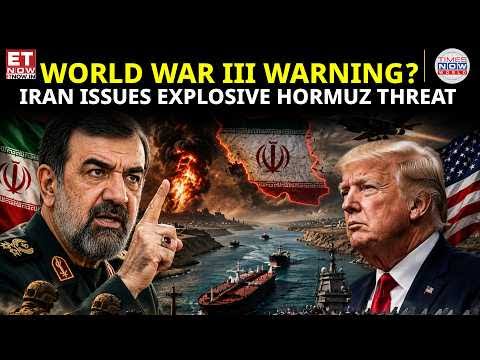
The Strait of Hormuz has once again become the center of global attention as Iran attaches sweeping conditions to the reopening of one of the world’s most important maritime energy routes. The latest developments have intensified concerns over shipping, oil supplies, regional security and the possibility of a broader military escalation.
Recent reports indicate that Iranian officials are demanding major concessions from the United States before the waterway can return to normal operations. Those demands reportedly include an end to U.S. military operations, sanctions relief, compensation for war damages, the release of frozen Iranian assets and the withdrawal of American forces from the region.
Against that backdrop, comments attributed to Hoffman have added another layer to the debate, particularly over what Iran’s demands could mean for Washington and the wider Middle East.
However, while the rhetoric is alarming, a World War III scenario is not inevitable. Diplomatic negotiations remain active, and Iran and Oman have reportedly been working toward arrangements designed to facilitate maritime traffic through the strait.
Why the Strait of Hormuz Matters
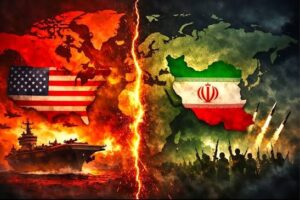
The Strait of Hormuz is one of the world’s most strategically important maritime chokepoints. It connects the Persian Gulf with the Gulf of Oman and the Arabian Sea, making it a critical route for energy exports.
A prolonged disruption can affect far more than countries located around the Persian Gulf. Oil prices, shipping insurance, transportation costs, electricity markets and consumer prices can all respond to uncertainty surrounding the waterway.
Recent reporting has emphasized that roughly one-fifth of globally traded oil and natural gas has historically passed through the strait, illustrating why governments and energy markets are watching developments closely.
That strategic importance gives Iran significant leverage.
At the same time, it also creates pressure on Tehran because prolonged restrictions can damage regional economies and Iran’s own economic interests.
Iran’s Demands Raise the Stakes
The latest Iranian demands have significantly complicated efforts to restore normal traffic.
According to recent reporting, Iranian officials have linked the reopening of the Strait of Hormuz to several conditions involving U.S. military policy and economic sanctions. The demands reportedly include the withdrawal of U.S. forces, an end to military action, sanctions relief, compensation and the return of frozen Iranian assets.
These are not minor technical disagreements over maritime navigation.
They touch directly on the larger confrontation between Tehran and Washington.
That is why the Hormuz dispute is being closely watched as a potential test of whether diplomacy can contain the wider crisis.
Iran appears to view the strait as a source of strategic leverage. The United States, meanwhile, has an interest in ensuring that international commercial shipping remains open without accepting arrangements that would effectively give Tehran excessive control over international navigation.
The result is a difficult negotiating environment.
Hoffman Warning Adds Political Pressure
Hoffman’s reported warning comes at a particularly sensitive moment.
The central question is not simply whether Iran wants the strait reopened. The bigger issue is what conditions Tehran expects in exchange for reopening it.
If the demands are viewed in Washington as unacceptable, negotiations could become more difficult. If talks collapse, the risk of prolonged disruption could increase.
But political warnings should not automatically be interpreted as predictions of imminent war.
The language surrounding the Hormuz crisis has become increasingly dramatic because the consequences of failure are potentially global. Policymakers must consider energy markets, military deployments, commercial shipping and the possibility that an isolated maritime confrontation could trigger a chain reaction.
That makes measured diplomacy particularly important.
Iran-Oman Talks Offer a Possible Off-Ramp
Despite the confrontational rhetoric, there is also evidence of diplomatic movement.
Iran and Oman have reportedly been negotiating arrangements concerning shipping through the Strait of Hormuz. Iranian Foreign Minister Abbas Araqchi said on August 9 that an agreement with Oman concerning the waterway was nearing completion, although he stressed that the arrangement would not automatically mean an immediate reopening.
Earlier reports also said Iran and Oman had agreed on the geographical route for a proposed shipping corridor.
This is important because it demonstrates that the crisis is not limited to military confrontation.
Diplomatic channels remain available.
Oman has historically played a role in facilitating communication between Iran and Western governments, making Muscat an important intermediary in the current situation.
The challenge is translating technical maritime arrangements into a broader political agreement.
The Battle Over Control of Shipping
One of the most sensitive issues concerns who controls shipping movements through the strait.
Reuters reported that Iran sought control over inbound shipping and visibility over outbound traffic under a temporary arrangement being discussed with Oman.
From Tehran’s perspective, greater control could provide security guarantees and reinforce its sovereignty claims.
From the perspective of other countries, however, excessive Iranian control could create uncertainty for international commercial vessels.
That disagreement could become one of the biggest obstacles to a lasting agreement.
A temporary navigation arrangement might therefore be easier to achieve than a permanent political settlement.
Why WW3 Fears Are Spreading
Whenever the United States, Iran, Israel and Gulf countries become involved in a major confrontation, fears of a wider war quickly spread across social media and news platforms.
The Strait of Hormuz makes those fears particularly intense because the waterway sits at the intersection of military and economic interests.
A serious incident involving a commercial vessel, Iranian forces or U.S. military assets could rapidly increase tensions.
But escalation does not automatically equal world war.
For a conflict to develop into a genuine global confrontation, multiple major powers would have to become directly involved in sustained military operations.
At present, diplomacy remains an important factor.
The existence of negotiations involving Iran, Oman and the United States means there are still mechanisms through which escalation could potentially be contained.
Oil Markets Are Watching Closely
The economic consequences of the Hormuz crisis may become visible long before any broader military escalation.
Energy traders closely monitor shipping disruptions because even uncertainty can increase the cost of transporting oil and gas.
Higher shipping risks can increase insurance premiums. Longer routes can increase fuel consumption and transportation costs. Reduced supply can put upward pressure on energy prices.
Those effects can eventually reach consumers through higher prices for fuel, transportation and manufactured goods.
For countries heavily dependent on energy imports from the Gulf, the stakes are particularly high.
India, China, Japan, South Korea and other Asian economies have major interests in maintaining stable energy flows from the region.
That means the Hormuz dispute is not simply a U.S.-Iran confrontation.
It is a global economic issue.
Gulf States Face Their Own Risks
Countries surrounding the Persian Gulf have a direct interest in preventing the crisis from becoming permanent.
The UAE, Saudi Arabia, Qatar, Bahrain, Kuwait and Oman all have economic and security interests connected to maritime stability.
Recent tensions have already demonstrated how vulnerable commercial shipping can become during periods of military confrontation.
The UAE has accused Iran of attacking an ADNOC-linked vessel, while Iranian officials have continued to defend their position over the waterway.
Such incidents increase the pressure on governments to find a mechanism that prevents further attacks and allows commercial traffic to resume.
Could the Strait Reopen Soon?
A reopening remains possible, but the latest developments suggest that the process may be gradual rather than immediate.
Iran’s foreign minister has indicated that an Iran-Oman arrangement could establish shipping routes, but implementation depends on wider conditions involving the United States.
That distinction is crucial.
An agreement on navigation does not necessarily resolve the larger political dispute.
The two sides still have disagreements over sanctions, military forces, maritime control and compensation.
As a result, a limited shipping corridor could potentially emerge before a comprehensive political settlement.
That would represent progress without necessarily ending the broader crisis.
What the United States Wants
Washington has its own priorities.
The United States wants commercial shipping to move without unacceptable restrictions and has resisted arrangements that would give Iran effective control over international maritime traffic.
The American position is therefore fundamentally different from Tehran’s.
Iran wants guarantees and concessions before fully reopening the waterway.
The United States wants reliable freedom of navigation as part of any agreement.
Bridging those positions will require significant diplomatic compromise.
What Happens If Talks Fail?
The consequences of failed negotiations could be serious.
First, commercial shipping could remain heavily restricted.
Second, energy prices could face additional volatility.
Third, military forces in the region could remain on heightened alert.
Fourth, the possibility of further attacks against shipping could increase.
And finally, diplomatic relations between Iran and the United States could deteriorate further.
However, failure of negotiations does not automatically mean an immediate military conflict.
Governments have multiple options between diplomacy and full-scale war, including sanctions, naval patrols, international mediation and temporary maritime arrangements.
That is why analysts should distinguish between escalation risk and inevitable war.
The Bigger Strategic Picture
The Hormuz crisis demonstrates how geography can become a major instrument of geopolitical power.
Iran’s location gives it proximity to the waterway, while the United States possesses substantial military capabilities in the broader region.
Gulf countries have economic infrastructure and alternative export routes, but those alternatives cannot necessarily replace Hormuz immediately.
That creates a complicated balance.
Iran can use the threat of disruption as leverage, but prolonged disruption can also hurt Iran and its neighbors.
The United States can attempt to protect shipping, but military action carries the risk of further escalation.
Gulf states want security but may prefer diplomacy over becoming directly involved in another major conflict.
Oman, meanwhile, has an opportunity to act as a mediator.
These competing interests explain why negotiations remain so difficult—and why they remain necessary.
What to Watch Next
Several developments will be especially important in the coming days.
First, watch whether Iran and Oman finalize their proposed shipping arrangement.
Second, monitor whether Washington accepts the proposed navigation framework.
Third, watch for any new attacks involving commercial vessels.
Fourth, follow changes in sanctions or U.S. military policy.
Fifth, watch energy prices and shipping insurance costs for signs of increasing market stress.
Any one of these developments could influence the direction of the crisis.
Is World War III Really Imminent?
There is currently no basis for stating that World War III is inevitable.
The Hormuz confrontation is unquestionably dangerous, but global conflict depends on decisions made by multiple governments.
Diplomatic negotiations are still taking place.
Iran and Oman are working on maritime arrangements, while indirect communication involving the United States continues.
That means there remains an opportunity to reduce tensions.
The most dangerous scenario would involve repeated attacks on commercial vessels, direct U.S.-Iran military clashes and the collapse of diplomatic channels simultaneously.
Avoiding that combination is likely to be the central objective for regional and international policymakers.
Conclusion
The latest Iran Hormuz demands have transformed the Strait of Hormuz into an even more important flashpoint in the Middle East crisis.
Hoffman’s warnings add political urgency to a dispute already involving major disagreements between Tehran and Washington. Iran is demanding sweeping concessions, while the United States wants secure and unrestricted commercial navigation.
At the same time, diplomatic efforts involving Oman provide a potential path away from further escalation.
The fate of Hormuz therefore remains uncertain.
A negotiated reopening could stabilize shipping and reduce pressure on global energy markets. A breakdown in talks could prolong disruption and increase the risk of further incidents.
For now, the most responsible conclusion is not that World War III is inevitable, but that the Strait of Hormuz remains a major geopolitical danger zone where diplomacy could determine whether tensions decline or escalate further.
FAQs
1. What are Iran’s demands over the Strait of Hormuz?
Recent reports say Iran wants major concessions before fully reopening the waterway, including changes to U.S. military operations, sanctions relief, compensation and the release of frozen assets.
2. Why is the Strait of Hormuz so important?
The strait is a critical global energy route. A significant share of internationally traded oil and natural gas has historically passed through it, making disruption capable of affecting global energy markets.
3. Is the Strait of Hormuz currently fully open?
Current reporting indicates that normal traffic has not been restored. Iran and Oman are working on arrangements for shipping, but Iranian officials have said broader conditions must also be addressed.
4. What role is Oman playing?
Oman is acting as an important intermediary in efforts to establish a workable shipping arrangement and facilitate communication between the parties.
5. Could the Hormuz crisis cause higher oil prices?
Yes. Prolonged disruption can increase supply concerns, shipping costs and insurance expenses, potentially putting upward pressure on energy prices.
6. Does the Hormuz crisis mean World War III is coming?
No. The situation presents serious escalation risks, but World War III is not an established or inevitable outcome. Diplomatic efforts remain active.
7. What does Hoffman warn about?
The warning centers on the strategic implications of Iran’s demands and the risks created if negotiations over Hormuz fail.
8. What happens if Iran and the U.S. cannot reach an agreement?
A failure could mean prolonged shipping disruption, greater economic uncertainty and potentially higher regional military tensions. However, several diplomatic and security options remain available.
9. Can another route replace the Strait of Hormuz?
Some Gulf producers have alternative pipelines and export routes, but these cannot fully substitute for the capacity and strategic importance of Hormuz.
10. What should readers watch next?
The most important developments are the Iran-Oman shipping arrangement, U.S.-Iran diplomatic contacts, attacks involving commercial vessels, sanctions policy and changes in maritime traffic.
How useful was this post?
Click on a star to rate it!
Average rating 0 / 5. Vote count: 0
No votes so far! Be the first to rate this post.
About the Author

usa5911.com
Administrator
Hi, I’m Gurdeep Singh, a professional content writer from India with over 3 years of experience in the field. I specialize in covering U.S. politics, delivering timely and engaging content tailored specifically for an American audience. Along with my dedicated team, we track and report on all the latest political trends, news, and in-depth analysis shaping the United States today. Our goal is to provide clear, factual, and compelling content that keeps readers informed and engaged with the ever-changing political landscape.